
The Blog
Recently Featured

All Blogs






People Pleasers Anonymous
“No matter how difficult and painful it may be, nothing sounds as good to the soul as truth."
- Martha Beck
Are you a people pleaser?
I know I am. But I’m working on it.
And you know what? I think this whole topic of being one gets a bad wrap. We beat ourselves up for trying to shape-shift and accommodate, yet oftentimes, we never really had the chance to choose something different.
It’s rewarded culturally, relationally, and emotionally as the pay off is so BIG. We get to be liked. That’s a huge hit of dopamine to the system right there.
So why wouldn’t you be one?
Being a people pleaser is a learned skill, really. It can be baked into our personality type as well, so the skill forms unconsciously by learning what behaviors are praised by others around us growing up.
Some personality types have more of this tendency than others. For example, 2’s, 3’s, and 4’s are close to, if not at, the top as the heart types tend to be the most image conscious on the Enneagram. They depend on the opinion of others to give them information about how to be in the world. So they have to work a bit harder in order to balance out this tendency.
I believe any personality type can struggle with pleasing people to some degree, though. Beyond a type, we are humans and humans are in the big business of survival. I like how Lynda Roberts explains the ego. She says, “The ego is our survival strategy for planet earth.” Simply put, our ego helps us survive in a scary world.
If something has worked for you for a long time, it’s tough to suddenly shift gears. That positive feedback becomes so ingrained, it’s almost undetectable.
So what do we do?
I love what an old therapist of mine used to say, “People pleasing is really just lying.”
Ouch!
I’d never really thought of it that way before, but it makes sense. After reading Martha Beck’s latest book, The Way of Integrity, (which I HIGHLY recommend), I became so aware of how unhappy we are in life when we are not in integrity with our truth. Essentially, when we aren’t telling the truth, we suffer.
So, as I’ve started to become aware of my own subtle tendency to people-please, I now see it as not telling the truth, and as a result, damaging my life and the person I’m lying to in the name of being sweet.
I’ve become more comfortable with saying “no” as a complete sentence as well as using responses such as, “I don’t know,” and “Let me think about that,” or “That doesn’t feel true for me.”
If you’re a people pleaser, I challenge you to adopt these small movements, because over time, I believe they get us closer to where we ultimately want to be…home to the truth of who we are.

The Art of Unbecoming
“Maybe it's about un-becoming everything that isn't really you, so you can be who you were meant to be in the first place."
- Paulo Coelho

What if the real way of personal transformation is more about subtraction than addition?
What if, instead of white-knuckling our way through life, straining to gain more and more self-worth, meaning, and fulfillment, we could find a release in letting go?
When we use the Enneagram for deepening self-awareness and understanding, part of the special sauce includes unlearning—unbecoming the conditioned self or ego.
Sounds a bit wacky, right? I know...but doesn’t it also bring a bit of relief?
Part of the reason we get stuck in the first place is by living out of old, broken narratives that don’t fit and aren’t true for us anymore. Sure, they may have made sense to us early on in life when we were trying to navigate how to show up and be accepted in this world. Yet, as we mature and become adults, life becomes more complex—more nuanced.
The black and white stories of our youth won’t suffice in a world full of grey.
Consider this, the Greek word for “personality” is persona, meaning “mask.” Isn’t that interesting? This helps me understand just how much we wear our masks of personality in order to protect our true identity, or the more vulnerable parts of ourselves we aren’t too sure about.
I mean, what if I were to truly be seen for who I am? I could be rejected, found out, for the fraud I really am?
As an Enneagram four, I’ve had that thought more times than I care to count.
The great news is our Enneagram type actually helps us identify the personality story we’ve been living out of for better or for worse. By learning and understanding what that is, we bring more self-awareness into our moment by moment experience, allowing us to slow down our process and respond to life’s curve balls rather than reacting to them.
As we slow that process down, we can choose something novel, something different—and better. We can un-become the limiting parts of our stories that were written a long time ago and desperately need editing by our adult selves.
What parts of your personality story keep you stuck? What areas in your life do you long to unlearn—to release?
Simply start there. And ask yourself, “What would my life look like right now if I didn’t believe this story?”
Want to dig a bit further? I’d love to be your guide….

Tiny Changes, Big Results
“True life is lived when tiny changes occur.”
- Leo Tolstoy
You’ve heard the saying, “Rome wasn’t built in a day.”
So why have these crazy unrealistic expectations of ourselves?
I have thoughts on this.
For most people, extremes are easier than balance. Unless we’ve arrived in the vibrant land of Growth Mindset, we tend to get stuck in the purgatory of all or nothing.
Black and white, dualistic belief systems keep us stuck in the rigidity of a fixed mindset.
Here’s an example most of us can relate to. You’ve indulged in way too much of Jeni’s Salted Caramel ice cream. I mean holy dairy that stuff is like crack. You’re feeling the sugar coma set in along with a delayed wave of shame and a stomach ache.
So you beat yourself up and swear you won’t touch it again for the foreseeable future. In fact, you’ve been flirting with the idea of going Keto so this is your shining opportunity.
Sound familiar? Or am I the only one who loses all self-control in the face of temptation?
That type of all-or-nothing behavior is baked into our DNA as humans. Opening up to a growth, or responsive mindset rather than a reactionary one typically must be learned.
And yet when do we actually learn this mature approach to self-development? It’s something that has been a powerful exploration in my life as I’m a total perfectionist in recovery.
A growth mindset is all about both/and.
A fixed mindset is all about either/or.
A growth mindset says, "I ate too much ice cream, I’ll choose something healthy for dinner.”
A fixed mindset says, “I ate too much ice cream. I’m going to go run six miles to burn it off.”
One feels kinder, more spacious…and more balanced. Unless you really just love running 6 miles with a belly ache.
A growth mindset also is built on the firm foundation of consistent, small changes over time. It allows for doable goal setting and implementation rather than extreme makeovers in less than a week. Why? Because that kind of hustle can’t ultimately be sustained. It will likely throw us back into a yo-yo approach to relationship with self and others.
Just like when you board a plane to LA, if the pilot is just two degrees off in navigation, you’ll likely end up in Seattle. Tiny shifts, over time, create big results.
What are some desired outcomes you’d like to see in your life right now? Give yourself plenty of time to get there and break it down into bite-size changes that will help you get there.
As always, I’m here for you if you need a little extra support on the journey.

The Enneagram as a Holistic Tool
- Harbhajan Singh Yogi

One of my favorite things about the Enneagram is its holistic capacity to bring balance and integration to our overall experience. I’ve heard it described as a psycho-spiritual tool, one that provides benefits on a psychological and spiritual plane. It definitely does this. However if we dismiss the rich insight the Enneagram provides to us on a somatic level, we are missing out on the gifts it brings to our physical wholeness day after day.
You may have heard about the concept of three intelligence centers—body, heart, and mind—frequently taught in Enneagram circles. Basically, this proves that we are actually three-brained beings (heart, body, mind) instead of one-brained beings (mind), as has been elevated in our western modern world. Recent scientific studies are finally catching up to this ancient wisdom of the Enneagram by proving we have neural cells not just in our brains, but in the lining of our stomachs and hearts. Crazy, right?
So why does this matter to you and me? Excellent question.
It matters because depending on your Enneagram type, you experience the world most vividly through one of these intelligence centers. Eights, Nines, and Ones—through the body center of intelligence, Twos, Threes, and Fours—through the heart center of intelligence, and Fives, Sixes, and Sevens—through the head center of intelligence.
Whichever triad you fall into is like your home base, or go-to intelligence. Of course we have all three, however one is dominant.
This is good information because it also informs where we may be out of balance. As a type four, I tend to be a little too governed by my feelings. I can’t feel my way to a deadline. I need to bring in agencies such as fact-checking and action in order to round out my squishy over-identification with feelings.
The Enneagram is all about bringing balance and openness where there is imbalance and contraction.
When we do the work of the Enneagram, we discover our personality type and deeper character structure are held into place by our type’s emotional patterns, thought patterns, and somatic profile. I love getting to work with clients to bring awareness to this unique type-specific picture and begin to relax these often limiting patterns. As we relax those conditioned patterns, we are able to open up to the true, or unconditioned self that has been buried under years of habit and automatic behaviors.
Do you long to experience a more embodied, balanced life? If so, you’ve come to the right place.

Finding Peace with Food
Learning to partner with your body
with Mary Crimmins
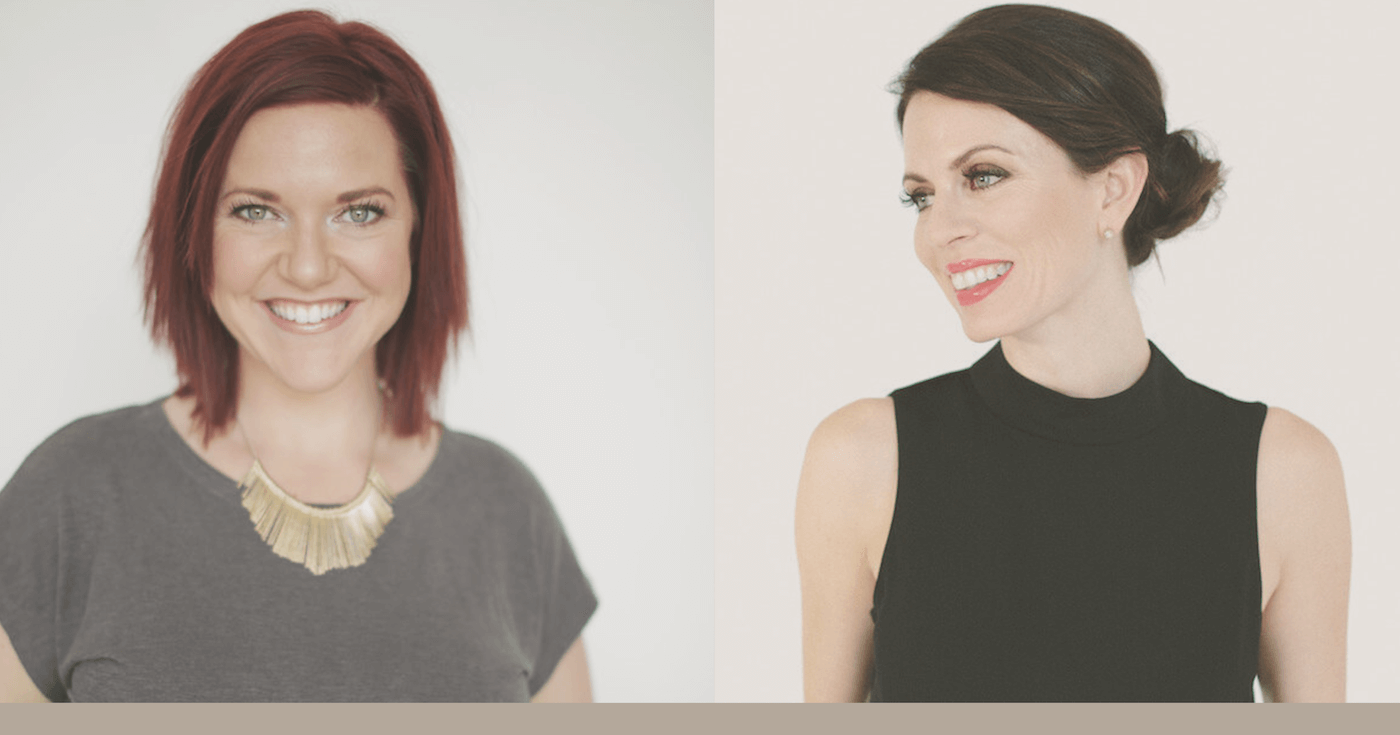
I am beyond excited about today’s topic of conversation. Here’s some back story. Several weeks ago, I sat down with my friend and fellow wellness enthusiast, Mary Crimmins. Mary is one inspiring lady who wears all kinds of hats like holistic lifestyle advocate, wellness advocate, yogi, mentor, personal life and business coach, and speaker among other things. Needless to say, she stays pretty busy! We stumbled upon the topic of relationship with self/food as much of our work in coaching and therapy overlaps there. Her personal journey and passionate insight pretty much blew me away so I asked her to share with us today. She graciously accepted and sat down to answer a few questions I think you will find, well, life changing. I do hope you enjoy!
**Also, be sure and stay tuned for a much-anticipated one-day workshop on Mind-Body Connection coming up in the fall! Okay, let’s hear from Mary…
Learning to partner with your body
with Mary Crimmins
I am beyond excited about today’s topic of conversation. Here’s some back story. Several weeks ago, I sat down with my friend and fellow wellness enthusiast, Mary Crimmins. Mary is one inspiring lady who wears all kinds of hats like holistic lifestyle advocate, wellness advocate, yogi, mentor, personal life and business coach, and speaker among other things. Needless to say, she stays pretty busy! We stumbled upon the topic of relationship with self/food as much of our work in coaching and therapy overlaps there. Her personal journey and passionate insight pretty much blew me away so I asked her to share with us today. She graciously accepted and sat down to answer a few questions I think you will find, well, life changing. I do hope you enjoy!
**Also, be sure and stay tuned for a much-anticipated one-day workshop on Mind-Body Connection coming up in the fall! Okay, let’s hear from Mary…
(KG): You are involved in so many cool, inspiring things! How did your journey evolve professionally/personally and attract all of these opportunities, especially with regards to mentoring?
(MC): Thanks Katie. I absolutely love what I do! I basically put myself through “self-discovery school” a couple of years ago. I was so unhappy with where I was. Flat out miserable in fact. I finally arrived at the place where I had enough and wasn’t willing to live another year in physical and emotional misery. I was 70 lbs. heavier than I am now, suffered from massive emotional imbalance and lots of hormonal imbalance. As I began reading everything that I could get my hands on about how to create a life that you love, I realized that it all came back to thoughts.
I suddenly was able to take full responsibility that I got myself where I was because of my thoughts.
I had several limiting beliefs that kept me stuck, a strong victim mentality that made all kinds of excuses, and years of being completely numb. It was then that I started to investigate my thought patterns and realize I could change them to get different results. What if I believed that I was loveable? What if I believed that I deserved to be fully alive? What if I believed that I had everything I needed to live a life that I loved? I began re-wiring my brain and working with new belief patterns and affirmations.
Slowly but surely, I began to see my life change. I became a magnet for change and transformation. And I started attracting some amazing people as well. I hired a fabulous coach and several months later, I enrolled my first coaching client myself. I embarked on a journey of being a life coach and wellness advocate and now empower people to love themselves and be fully alive and engaged with life.
(KG): A big population I work with in therapy struggle a good bit with body image and relationship with food. You have tons of insight in this department. Tell us what sparked your interest in this and what some of the biggest “aha moments” have been along the way.
(MC): It was absolutely my personal journey. Being 240 lbs. was a space that I found myself in at the age of 26. Everything hurt, and I was sick of trying diet after diet that always failed. I felt
like a failure. I thought something was wrong with me until I learned about Intuitive Eating. That concept set me free.
Instead of hating my body and seeing it as the enemy, I began to partner with my body.
I began to see it as if it were on the same team as me, and not something that was trying to destroy me. I met my body with new compassion and understanding. It was talking to me. My body was always there for me, protecting me. This completely shifted my relationship with food. No more diets.
In fact, I learned how to reject the whole diet mentality and instead come to a place of trusting my intuition and my body let me know what I needed to eat that would bring me back to balance and vitality.
Somedays it’s a kale salad. Somedays it’s a plate of nachos. I learned how to make peace with food and honor my hunger from a place of total non-judgement. Food wasn’t the enemy; my body wasn’t the enemy. I learned how to be satisfied with food and I stopped binging. Partnering with yourself and loving yourself enough to listen to your intuition is a game changer. It took time for me, but now I don’t have any “good” or “bad” foods or “shoulds” or “shouldn’ts” in relationship to food and exercise. I just listen and honor the answer.
(KG): It is glaringly true just how much of a connection our emotions and eating habits have. Can you speak directly to that connection?
(MC): Absolutely. Eating has shifted from something of pleasure, nourishment and survival to a way of coping. We literally “stuff” our feelings. We numb. It is a very effective way to process our beliefs, fears, and emotions. Whether we overeat or starve ourselves, we feel like we have a little bit of control over our life. When we feel anxiety, we eat a cupcake and instantly that anxiety goes away.
We feel shame and guilt about overindulging so then we purge. Some people drink, some overwork, some shop, and some of us eat or don’t eat. We experience both punishment and pleasure from food. Food is a tool that many of us use to work out our emotions. If we feel too tired, too lonely, too angry, or aren’t practicing enough self care, we eat. It numbs us out. It stops the pain for a brief moment. We do it because it works. Except it’s not a long-term solution and we wake up and think “This is not me, how did I get there?”. Then overwhelming shame kicks in and we eat again to numb out, starting the whole cycle over again.
(KG): In my personal experience and with that of several clients, balance is far more difficult to achieve than extremes. How would you encourage someone who struggles with balance in relationship with food?
(MC): It honestly starts with releasing the shame. Balance comes from trusting yourself. Most people don’t trust themselves. They think if they take all the rules off, they will just go crazy and they won’t stop. They will eat everything in sight. This comes from a deep-seated misbelief that our will and bodies are disconnected from ourselves and will hijack us and take over. This is a lie. Our bodies always want what is best. It’s always trying to help. It’s learning how to make peace with food and give up all the rules— and TRUST.
You can begin to ask yourself on this journey, “If I did trust my body, what would it be telling me right now?” “If I did trust my intuition, what do I want to eat right now?” “If I did trust my body,
how would it ask to be moved today?” As you begin to partner with your body and your intuition you realize it doesn’t operate in extremes. It is always seeking balance. It will find its equilibrium. And of course, read Intuitive Eating, by Evelyn Tribole and Elyse Resch!!!
(KG): You always look and seem so energetic and present! How do you maintain self-care despite such a busy schedule?
(MC): I absolutely have non-negotiables. I trust my body when it says it needs a nap and I honor that request. I trust my body, when it says it needs some extra green juice. I trust my body when it asks for a slow walk instead of an intense workout. I listen. I honor it. Self care isn’t a luxury in my book. It’s a non-negotiable. It is what allows me to do everything in my life. It gives me energy. It replenishes me. It sets me up for success. I realized a long time ago that self care is the key to balance. When I slow down to love myself and my body I don’t have to overeat or numb. I address what I really need and take care of myself in a deep and powerful way.
(KG): Lastly, if you could give us one hopeful nugget or take away regarding relationship with food and emotions, what would it be?
(MC): You can come back into balance. Your body knows. Your heart knows. Our bodies speak to us all the time. Trust your body. Listen deeply. Your intuition is your strongest asset. It is the voice that is above all the lies. It is the voice above all the fads. It is the voice that will always lead you to your best, healthiest, and most vibrant self. Learn to trust that and to cultivate a relationship with your intuition.
Ask yourself this, “What am I really hungry for?” emotionally speaking of course, and bravely listen and then honor the answer.
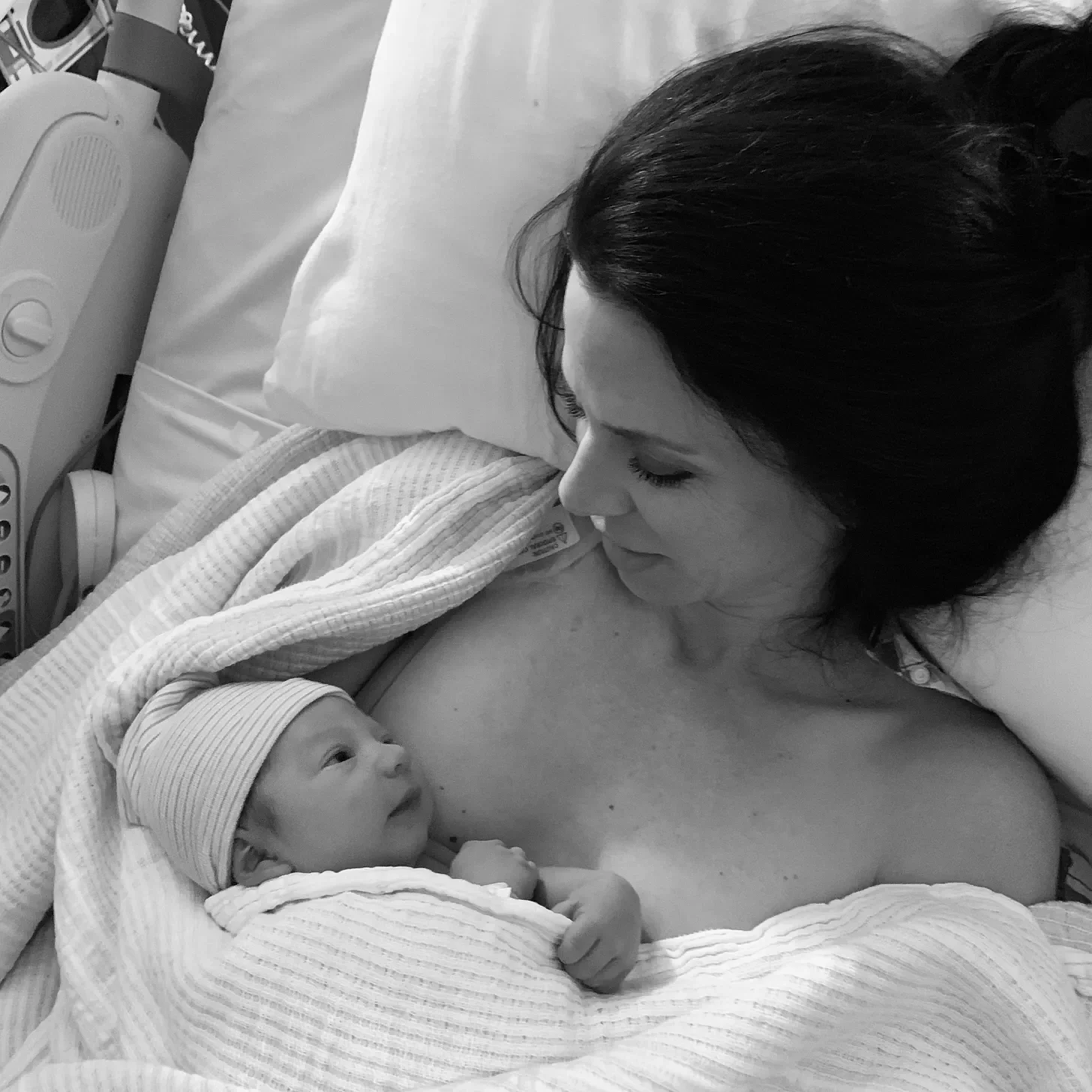
Thoughts on motherhood, breast cancer, and what attachment theory and the Enneagram taught me about being loved