
The Blog
Recently Featured

All Blogs






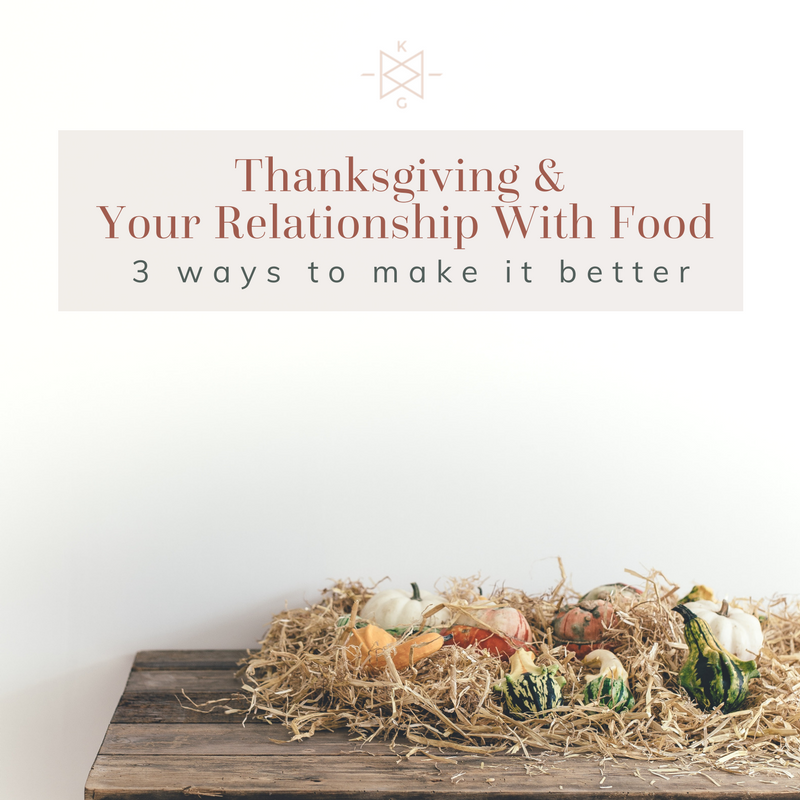
Thanksgiving & Your Relationship with Food: 3 Ways to Make it Better
Thanksgiving is upon us....
Thanksgiving is upon us. I’ve said it before, and I’ll say it again: it’s my favorite holiday, hands down. There is a waft of generosity and anticipation in the air without the added pressure to fill up stockings or run around on a mission to find just the perfect gift while fighting back the road rage.
Often, there is an excuse to spend the afternoon with friends and family (read: FOO or FOC…*family of origin or family of choice). Oh, and the embrace of crisp, clean air beckons a cozy fire and hall pass to straight chill.
Am I missing something? Oh right, then there’s the minor, insignificant detail of the day: FOOD.
You know, that give or take, decadent Thanksgiving meal that wouldn’t be complete without turkey (we throw in duck, too), dressing, pumpkin pie, and all those very comforting sides that I eat for days in various creative renditions. I mean, who says you can’t have pecan pie with your coffee for breakfast? (Maybe leave off the heavy whipping cream… or just go ahead and repurpose it in your coffee, you choose.)
Sarcasm aside, food is hands down the main event of the day.
It should be easy, right? A rich and delicious meal, good people, gratitude…?
Not so fast. My guess is you may have had some not so friendly dealings in your day with food as a result of body image challenges. I know I have.
In fact, I’ve worked really hard to enjoy food at Thanksgiving. My relationship with food was once hateful and toxic. I developed anorexia nervosa when I was 15. One day, I stepped on a scale and the number staring back at me was in my estimation, too high. So, I did what I do, and I took control, or so I thought. I began running and eating super clean.
Like so many extremes, this one started off pure, with a desire to be healthy and feel good about myself. It went downhill fast, and pretty soon, at 5’6”, the number staring back at me was an emaciated 88 pounds. NOT a good look.
I was in a critical health crisis, and my doctor swore she’d throw my butt into inpatient care and stick feeding tubes in me faster than I could say kale chips if I didn’t agree to her plan of action.
The fact that I’ve cultivated a loving relationship with food is a glorious miracle I thank God for daily. And, my oh my, do I love food. I’ve come to love it in a way that respects it instead of manipulates it.
Think about it, what if you treated a friend in a way that felt manipulative and scarce as we often do food? What if we had thoughts about a loved one as we have about food?
“I’m going to starve all day Wednesday so I can binge on Thanksgiving.”
“If I lose ten pounds, I’ll be beautiful and worthy of love.”
I mean, seriously, I can’t imagine my relationships with people existing of such controlling and relentless behavior. I definitely wouldn’t be my friend.
So why do we treat food and our bodies with such fear and manipulation?
Mean Girls aside, as you glide into the homestretch of Thanksgiving Day fixin’s and the ongoing feast of the season, here are three simple tips for you bring to the table.
1) Focus on the connection, not just the consumption.
My favorite thing about a dinner party, or family dinner, or lunch date with a friend isn’t entirely the food, although that’s a fun piece of it. It’s about the connection happening in the midst of it. A humbling practice I learned in recovery is this beautiful notion of letting a meal be more about connecting with yourself and others than solely about consuming food.
Thanksgiving’s central focus is gratitude; the meal is a mere vehicle of this. As you fill your plate to the very edge this Thursday and sit down to enjoy, remember to lean into conversation and connection around you. This allows us to really slow down and I promise the food will taste that much better.
2) Taste your food.
This may sound basic, but it’s actually a lot harder than you think. In our microwave society of instant gratification and epic consumerism, slowing down to taste food is a rare art form. To fully enjoy, we must connect with our senses, and this takes a bit more awareness and time than does shoveling stuffing down the hatch.
Immerse yourself in the experience: the smells, the texture, the spices, and maybe even what it reminds you of, if anything. Allow yourself to be all in, again, not simply inhaling in order to get first dibs on seconds.
3) Listen to your body.
We must honor our bodies and our food by slowing down enough to hear when we’re approaching food coma status. (And we all go there from time to time!)
It takes 20 minutes for our bodies to register fullness. I am queen of eating so fast I think I may need a stretcher and the ER because I’ve just inhaled entirely too much food, (Mexican food does it every time). I didn’t give my brain enough time to tell my stomach we were maxed out—no bueno.
Sure, we typically overdo it on Thanksgiving, and that’s okay! It’s good to allow ourselves the grace to do so from time to time. My hope for you and this Thanksgiving is that you will simply embrace it with open arms and a hungry heart (as well as belly). Loosen the grip of fear that wants to control and manipulate, and bring your whole being into the occasion. Let gratitude blanket your experience as you marinate in the richness of connection.
Now, I’m officially hungry!
Happiest of Thanksgiving to you and yours!
Gratitude & Love,
Katie
xoxo

Finding Peace with Food
Learning to partner with your body
with Mary Crimmins
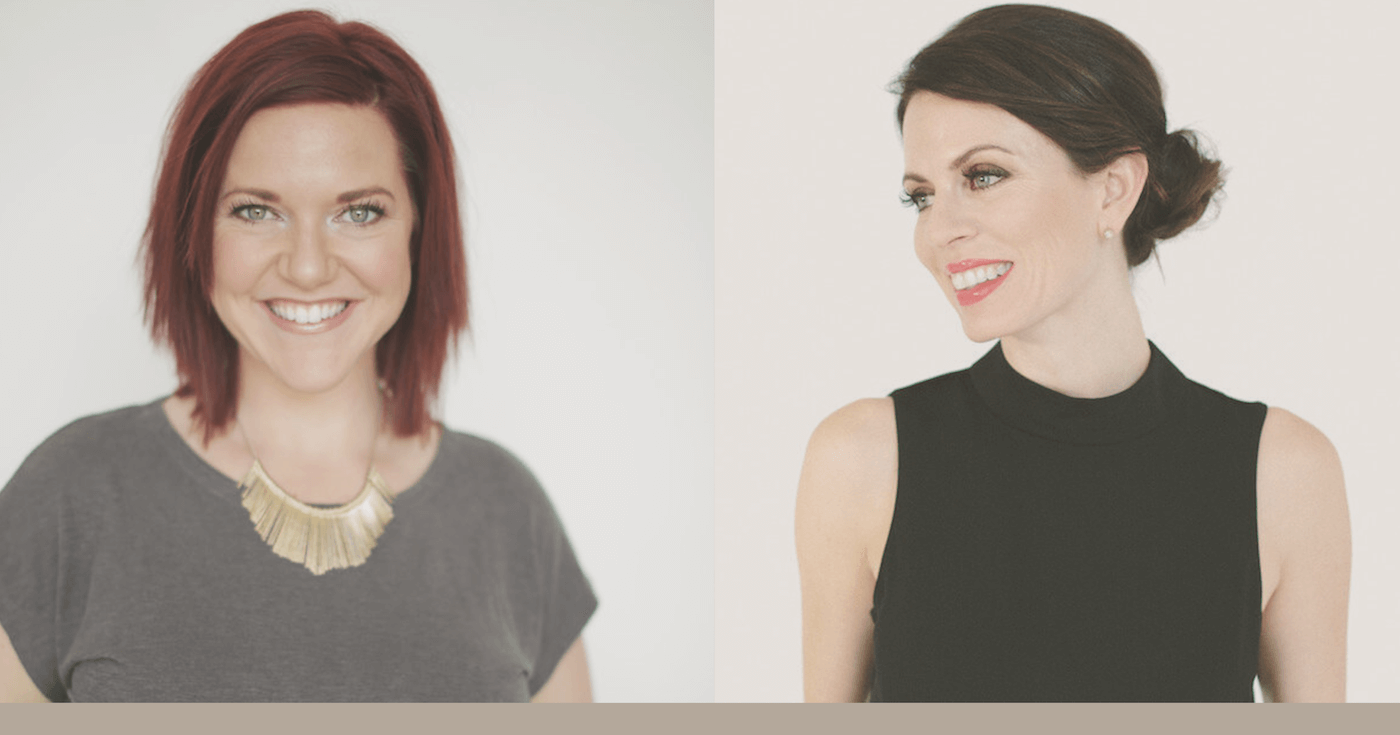
I am beyond excited about today’s topic of conversation. Here’s some back story. Several weeks ago, I sat down with my friend and fellow wellness enthusiast, Mary Crimmins. Mary is one inspiring lady who wears all kinds of hats like holistic lifestyle advocate, wellness advocate, yogi, mentor, personal life and business coach, and speaker among other things. Needless to say, she stays pretty busy! We stumbled upon the topic of relationship with self/food as much of our work in coaching and therapy overlaps there. Her personal journey and passionate insight pretty much blew me away so I asked her to share with us today. She graciously accepted and sat down to answer a few questions I think you will find, well, life changing. I do hope you enjoy!
**Also, be sure and stay tuned for a much-anticipated one-day workshop on Mind-Body Connection coming up in the fall! Okay, let’s hear from Mary…
Learning to partner with your body
with Mary Crimmins
I am beyond excited about today’s topic of conversation. Here’s some back story. Several weeks ago, I sat down with my friend and fellow wellness enthusiast, Mary Crimmins. Mary is one inspiring lady who wears all kinds of hats like holistic lifestyle advocate, wellness advocate, yogi, mentor, personal life and business coach, and speaker among other things. Needless to say, she stays pretty busy! We stumbled upon the topic of relationship with self/food as much of our work in coaching and therapy overlaps there. Her personal journey and passionate insight pretty much blew me away so I asked her to share with us today. She graciously accepted and sat down to answer a few questions I think you will find, well, life changing. I do hope you enjoy!
**Also, be sure and stay tuned for a much-anticipated one-day workshop on Mind-Body Connection coming up in the fall! Okay, let’s hear from Mary…
(KG): You are involved in so many cool, inspiring things! How did your journey evolve professionally/personally and attract all of these opportunities, especially with regards to mentoring?
(MC): Thanks Katie. I absolutely love what I do! I basically put myself through “self-discovery school” a couple of years ago. I was so unhappy with where I was. Flat out miserable in fact. I finally arrived at the place where I had enough and wasn’t willing to live another year in physical and emotional misery. I was 70 lbs. heavier than I am now, suffered from massive emotional imbalance and lots of hormonal imbalance. As I began reading everything that I could get my hands on about how to create a life that you love, I realized that it all came back to thoughts.
I suddenly was able to take full responsibility that I got myself where I was because of my thoughts.
I had several limiting beliefs that kept me stuck, a strong victim mentality that made all kinds of excuses, and years of being completely numb. It was then that I started to investigate my thought patterns and realize I could change them to get different results. What if I believed that I was loveable? What if I believed that I deserved to be fully alive? What if I believed that I had everything I needed to live a life that I loved? I began re-wiring my brain and working with new belief patterns and affirmations.
Slowly but surely, I began to see my life change. I became a magnet for change and transformation. And I started attracting some amazing people as well. I hired a fabulous coach and several months later, I enrolled my first coaching client myself. I embarked on a journey of being a life coach and wellness advocate and now empower people to love themselves and be fully alive and engaged with life.
(KG): A big population I work with in therapy struggle a good bit with body image and relationship with food. You have tons of insight in this department. Tell us what sparked your interest in this and what some of the biggest “aha moments” have been along the way.
(MC): It was absolutely my personal journey. Being 240 lbs. was a space that I found myself in at the age of 26. Everything hurt, and I was sick of trying diet after diet that always failed. I felt
like a failure. I thought something was wrong with me until I learned about Intuitive Eating. That concept set me free.
Instead of hating my body and seeing it as the enemy, I began to partner with my body.
I began to see it as if it were on the same team as me, and not something that was trying to destroy me. I met my body with new compassion and understanding. It was talking to me. My body was always there for me, protecting me. This completely shifted my relationship with food. No more diets.
In fact, I learned how to reject the whole diet mentality and instead come to a place of trusting my intuition and my body let me know what I needed to eat that would bring me back to balance and vitality.
Somedays it’s a kale salad. Somedays it’s a plate of nachos. I learned how to make peace with food and honor my hunger from a place of total non-judgement. Food wasn’t the enemy; my body wasn’t the enemy. I learned how to be satisfied with food and I stopped binging. Partnering with yourself and loving yourself enough to listen to your intuition is a game changer. It took time for me, but now I don’t have any “good” or “bad” foods or “shoulds” or “shouldn’ts” in relationship to food and exercise. I just listen and honor the answer.
(KG): It is glaringly true just how much of a connection our emotions and eating habits have. Can you speak directly to that connection?
(MC): Absolutely. Eating has shifted from something of pleasure, nourishment and survival to a way of coping. We literally “stuff” our feelings. We numb. It is a very effective way to process our beliefs, fears, and emotions. Whether we overeat or starve ourselves, we feel like we have a little bit of control over our life. When we feel anxiety, we eat a cupcake and instantly that anxiety goes away.
We feel shame and guilt about overindulging so then we purge. Some people drink, some overwork, some shop, and some of us eat or don’t eat. We experience both punishment and pleasure from food. Food is a tool that many of us use to work out our emotions. If we feel too tired, too lonely, too angry, or aren’t practicing enough self care, we eat. It numbs us out. It stops the pain for a brief moment. We do it because it works. Except it’s not a long-term solution and we wake up and think “This is not me, how did I get there?”. Then overwhelming shame kicks in and we eat again to numb out, starting the whole cycle over again.
(KG): In my personal experience and with that of several clients, balance is far more difficult to achieve than extremes. How would you encourage someone who struggles with balance in relationship with food?
(MC): It honestly starts with releasing the shame. Balance comes from trusting yourself. Most people don’t trust themselves. They think if they take all the rules off, they will just go crazy and they won’t stop. They will eat everything in sight. This comes from a deep-seated misbelief that our will and bodies are disconnected from ourselves and will hijack us and take over. This is a lie. Our bodies always want what is best. It’s always trying to help. It’s learning how to make peace with food and give up all the rules— and TRUST.
You can begin to ask yourself on this journey, “If I did trust my body, what would it be telling me right now?” “If I did trust my intuition, what do I want to eat right now?” “If I did trust my body,
how would it ask to be moved today?” As you begin to partner with your body and your intuition you realize it doesn’t operate in extremes. It is always seeking balance. It will find its equilibrium. And of course, read Intuitive Eating, by Evelyn Tribole and Elyse Resch!!!
(KG): You always look and seem so energetic and present! How do you maintain self-care despite such a busy schedule?
(MC): I absolutely have non-negotiables. I trust my body when it says it needs a nap and I honor that request. I trust my body, when it says it needs some extra green juice. I trust my body when it asks for a slow walk instead of an intense workout. I listen. I honor it. Self care isn’t a luxury in my book. It’s a non-negotiable. It is what allows me to do everything in my life. It gives me energy. It replenishes me. It sets me up for success. I realized a long time ago that self care is the key to balance. When I slow down to love myself and my body I don’t have to overeat or numb. I address what I really need and take care of myself in a deep and powerful way.
(KG): Lastly, if you could give us one hopeful nugget or take away regarding relationship with food and emotions, what would it be?
(MC): You can come back into balance. Your body knows. Your heart knows. Our bodies speak to us all the time. Trust your body. Listen deeply. Your intuition is your strongest asset. It is the voice that is above all the lies. It is the voice above all the fads. It is the voice that will always lead you to your best, healthiest, and most vibrant self. Learn to trust that and to cultivate a relationship with your intuition.
Ask yourself this, “What am I really hungry for?” emotionally speaking of course, and bravely listen and then honor the answer.
Thoughts on motherhood, breast cancer, and what attachment theory and the Enneagram taught me about being loved