
The Blog
Recently Featured

All Blogs










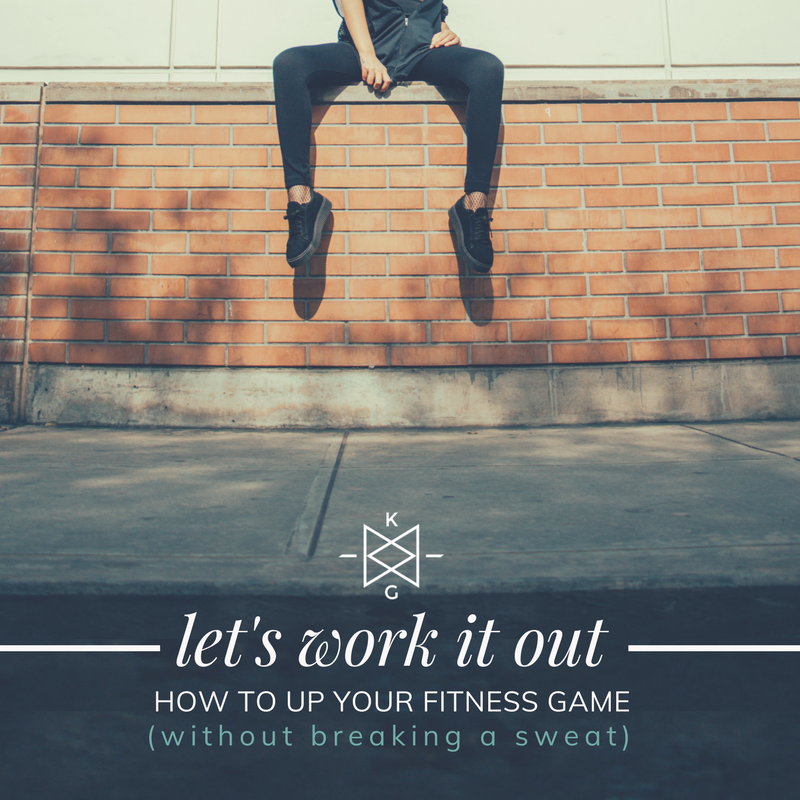
Let's Work It Out: How To Up Your Fitness Game (Without Breaking a Sweat)
“Until you make the unconscious conscious, it will direct your life and you will call it fate.”
-C.G. Jung
This is not a post about working out, I assure you. I would not pretend to know what the optimal picture of physical fitness/health looks like for you or what your body needs to feel alive and balanced. Everyone’s needs vary.
What I do know, however, from decades of trial and error, passionate research, and education is one very simple concept: messaging and intention are everything.
What does that even mean?
It means that you and I readily respond to messages that speak to our core values and desires. Based on those messages, we respond in action through intention. We identify what we want, and we intentionally set out to achieve that thing.
I’ll put some skin on this one.
The diet and exercise industry is a multi-billion dollar industry. Yes, the “B” word.
It caters to the desire in you and me to look and feel our best, albeit sometimes through the vehicle of shame. You know the drill, “Once you lose those last ten pounds, you will be happy—you will be okay.”
They tell us all about the latest fitness trends, green juice, protein shakes, cool down stretches, and recovery meals so we can stay on top of our game.
Guess what?
The messaging works. Their savvy adverts successfully appeal to the desires of consumers everywhere, hence the “B” word. My recent personal favorite messaging trend is: “Sitting is the new smoking.” So good, right?
There is a massive gap though.
We live in the most overfed, undernourished, obese, and sedentary culture in American history.
The intention may very well be present, but the action is missing.
I believe this speaks to a heart problem, not a willpower problem.
You see, I believe we’re going about it in reverse. I believe we need to take this brilliant fitness messaging model and apply it to our emotions before we put all our eggs in the fifteen-minute magic routine you saw in the latest Shape magazine.
Don’t get me wrong, I am an exercise evangelist. I started running at age twelve and have made daily physical movement a part of my life ever since. For me, it transcended vanity a long time ago, providing me the much-needed sanity space and release to balance out the crazy in my head.
I bet you know a thing or two about physical fitness, even if you hate working out. This is due to the constant messaging; It’s everywhere.
What we often fail to realize is our emotional health doesn’t run on autopilot, and the messaging here is a bit more subtle if not lacking.
We must develop an emotional fitness regime just as we do a physical fitness one. We must learn where the pitfalls are and when we typically hit the proverbial wall and have a meltdown. We must learn what makes us anxious and how to preemptively practice mindfulness and deep breathing along the way so as to keep it in check. We must learn to rest and practice self-compassion.
Awhile back, I interviewed Miles Adcox, CEO of Onsite Workshops (among a zillion other impressive things), for my podcast. He explained how this concept of emotional fitness must start small, with tiny two-degree shifts in mindset and behavior as opposed to extreme overhauls that typically don’t stick (think: New Year’s Resolutions). To hear that interview,click here.
Later on this week, I’ll be giving you a few practical tools for tweaking your emotional fitness regime, so stay tuned for that.
If this all sounds airy-fairy and frustrating, take heart; it is very much a process. Just as it takes months and often years to get in tune with your body and what it needs, so is the case with our emotional journey. It’s not perfect by any means—humans are messy.
However, I can promise you this process will help take some of the guesswork out of what it looks like to consistently feel better from day to day
You see? This was painless, treadmill-free, and I bet you didn’t even break a sweat!
Love & Gratitude,
Katie

A Direct Flight: Your Best Route to More Connection & Influence
“People don’t want to be impressed, they want to be seen.”

I have a massive confession to make.
Quite honestly, I’m embarrassed to go there, but in line with my desire for transparency and vulnerability, it’s hopeless and there’s no turning back.
In my own struggle with low self-worth and insecurity throughout the years, I’ve damn near died trying to be impressive—to be liked. I’ve pitted myself against “everyone” (which in reality, is a collective of probably six people in the world) in a hard effort to show up and be seen. I desperately want you to accept me and deem me worthy to enter those sparkly rooms you hold the key for.
This has taken many different shapes throughout the last three-plus decades: an eating disorder, good grades, perfectionism, unhealthy relationships, a music career, a graduate degree, a blog, shiny social media boxes, and the list goes on.
Don’t get me wrong, most of these pursuits started off clean—based in desire. However, if I’m totally honest, some got a little muddied by an unrelenting need to be seen. Not only that but to be seen as clever.
Guess what? It’s an exhausting, isolating way to live. Also, it doesn’t work. Period.
It’s kind of like landing thirty minutes late at the Atlanta airport, hustling and schlepping to make the connecting flight only to show up at the gate to be met by a very perky flight attendant with red lipstick and coiffed hair who politely informs you “I’m sorry, you’re just too late. The plane left ten minutes ago.”
Damn. Now you’ve got a couple of options; you can either bury your face in a pint of Ben & Jerry’s or a pint of Stella Artois... Pick your poison.
Guess what? We all have a deep need and desire to be seen. We were created to succeed and thrive in our own unique ways. However, what I’ve found the hard way is that there is a better, more effortless way to arrive. Take a deep breath and a load off; you don’t have to be so impressive.
Your ticket on this direct, first-class flight is called radical empathy.
Radical empathy is the choice to practice empathy relentlessly and continuously in our everyday interactions with people.
Brené Brown asserts that “Empathy and shame are on opposite ends of a continuum. Shame results in fear, blame (of self or others), and disconnection. Empathy is cultivated by courage, compassion, and connection, and is the most powerful antidote to shame."
We don’t get there by being interesting; we get there by being interested. We don’t get there by performing; we get there by listening. We don’t get there by striving; we get there by softening.
Last night I hosted ten incredibly courageous and beautiful women at a monthly gathering I’ve just started called The Bloom Groups. For the most part, these women were strangers.
They came from different cities, different cultures, different stories, yet all were there because they wanted the same thing: connection.
We did an exercise where we sat on the floor with a massive piece of paper and a bunch of magic markers to share. The instructions were to each draw a painful experience had before the age of 18 and enclose it in some type of container (box, circle, heart).
We went to town like ants in a dirt pile.
Ten minutes later, everyone’s picture was completed, almost. We went around the circle and told a brief synopsis of the story behind the picture. Tears streamed. Some F-bombs dropped.
The last piece of the exercise was for each one to draw a line from their container to any of the other containers or stories they related to.
Guess what? Every single one of us connected to parts of each other’s stories. We were all connected by the collective pain of our stories. The picture was now complete, and it was powerful beyond words.
After just two hours, ten strangers had experienced what it truly means to see one another, and in doing so, had practiced radical empathy by also seeing themselves in each other’s stories.
Every day I’m learning just how desperately people long to be seen rather than impressed. Sure, it’s important to use our gifts and talents to bring value to the world and lives around us, but this should never be fueled by the fear of insecurity, but instead by the desire for connection.
You are indeed wired for success and influence. I need to see you soar because it inspires the greatness in me. I’ve got some really good news for you as well; you can drop the act. You don’t have to work so hard. There is no missing hardware. You’ve got everything you need.
Believe me, there’s no room for scarcity where we’re going. Once you get there, you’ve officially arrived.
It’s time to start seeing the one in front of you; the one you may feel the need to win over. Look for the beauty and mystery in her eyes. There’s a fascinating story in there. Chances are, you may even know that story by heart.
Love & Gratitude,
Katie

Leaning into Loss- 4 Lessons on Grief
“Resilience comes from deep within us and from support outside us. It comes from gratitude for what’s good in our lives and from leaning in to the suck.”
Sheryl Sandberg
I recently attended an all-day workshop led by David Kessler, self-help author and grief guru. He is most well known for his groundbreaking work with Elisabeth Kubler Ross, a Swiss-American psychiatrist who pioneered what we know as hospice care as well as the Kubler-Ross model, or the five stages of grief (denial, anger, bargaining, depression, acceptance).

“Resilience comes from deep within us and from support outside us. It comes from gratitude for what’s good in our lives and from leaning in to the suck.”
Sheryl Sandberg
I recently attended an all-day workshop led by David Kessler, self-help author and grief guru. He is most well known for his groundbreaking work with Elisabeth Kubler Ross, a Swiss-American psychiatrist who pioneered what we know as hospice care as well as the Kubler-Ross model, or the five stages of grief (denial, anger, bargaining, depression, acceptance).
Despite Kessler’s expertise in death and grieving, he is hilarious. He cracked jokes throughout the entire day, poking fun at himself and taking some light-hearted stabs at the afterlife. I found this profound in light of his work’s focus.
It’s impossible to funnel all the takeaways into 500 words or less, but I’m going to do my best to share some punchy truths about grief that rocked me to the core.
Here are four key insights to remember about grief and the grieving process:
We Grieve in Character
Have you ever known someone who is super level-headed, maybe even annoyingly practical and even-keel, experience a major loss and recover with seamless resilience? Perhaps to the point you even asked them, “Are you sure you’re okay? You don’t even seem like this phased you!”
Unless there is a very small chance (less than 15% I learned at the workshop) they’re experiencing delayed grief, he/she is grieving in character, meaning— the way we normally do life is the way we also grieve.
Me, on the other hand, grieve all colors of the rainbow; with intensity and every shade of emotion. However, as an Enneagram four, my feelings even have feelings, so this is par for the course.
Suffering is Optional
Throughout the day, Kessler kept coming back to this truth bomb: Pain is inevitable; suffering is optional.
Pain and loss are absolutely a part of life. Suffering, however, is the story we make up about our pain. For example, “This shouldn’t be happening to me” or “It wasn’t supposed to end this way.” We quickly forget how much a part of life loss is as the proverbial record gets stuck on that screeching note of overwhelming shock and awe.
The upside to this is we have complete power over whether we suffer long-term or not. When we suffer, we live in our heads and attach to narratives of futile embellishments…”why me?”
This is where resilience shines center stage as we courageously “lean into the suck” as Sheryl Sandberg cleverly puts it in her latest book Option B. Loss is painful, and the quickest way to the other side is through it, not around it.
Fixing Doesn’t Work
There is no rational way to fix traumatic loss just like there is no way of scientifically explaining romantic love. It just is.
Grief must be witnessed, not explained. When I try to relate to someone in their grief by offering up a “me too,” what I’m doing is making it about me, not actively listening, and in doing so, cheapening their very real experience. Don’t worry, grief will inevitably run its complex and necessary course. We don’t have to, nor can we ever simply fix it. A hug, an open ear, and a shoulder to cry on will work far better.
From my own experience, I’m reminded that isolation wreaks havoc on the grieving soul. No, I’m not saying we need to extrovert-up and throw ourselves into social chaos. However, knowing we’ve got a few safe people who will witness our grief is vital.
We’re not meant to go this road alone.
Math
As I wrap up this recap, I am sort of cringing on the inside. It’s so pat…so formulaic. The grieving process is far from math. It’s ghastly. It feels like death. It’s bigger than space and time and breaks us in a way that feels violent, wrong. So how do we intentionally bring awareness to this part of life, even when what we currently experience feels light and joyful? I think it’s a combination of two things: we give thanks a helluva lot more for the things we have that bring life, laughter, and meaning. We also talk more openly about the reality of loss, not to focus on the negative, but mindfully acknowledge the fragility of it all. These two go hand in hand.
If you or someone you know is alone in their grief, know that there are options. Please reach out if your grief needs a witness.
It won’t stop the pain, but it might ease the suffering.
Love & Gratitude,
Katie
A Brainspotting Session with Dr. Grand
“Where we look affects how we feel.”
-Dr. David Grand
It’s 4:30 am and I’m wide awake. In fact, I haven’t slept a wink. Sure, I struggle on and off with insomnia, but that isn’t the reason for this lack-of-shut-eye situation.

“Where we look affects how we feel.”
-Dr. David Grand
It’s 4:30 am and I’m wide awake. In fact, I haven’t slept a wink. Sure, I struggle on and off with insomnia, but that isn’t the reason for this lack-of-shut-eye situation.
I’ve got a bad case of fan girl. By the time you read this, I will have already had my highly anticipated, seriously geeked out over, 90-minute session with Dr. David Grand, psychotherapist, writer, humanitarian, and performance coach, perhaps most well known for developing brainspotting. That’s right, I’m about to get brainspotted by the original brainspotter.
If you are unfamiliar with Dr. Grand and his groundbreaking method, hop on YouTube and check out his informative 101 video. It’s a great introduction.
Throughout the last several years, I’ve become more and more fascinated by the brain, its incredible capacity to heal itself, and the beautiful mind-body connection. I’ve experienced remarkable personal breakthrough throughout the past year using brainspotting in my own therapy, so naturally, when the opportunity arose to connect with Dr. Grand at his NYC office this week, I did a triple salchow at the chance. (Or something like that.)
I’m beyond grateful for this opportunity and can’t wait to share how it goes with you (video below).
If you’re intrigued, want to learn more about, or set up a brainspotting session, I’d love to connect. It’s a powerful resource that offers accelerated breakthrough for past trauma, emotional pain, as well as performance anxiety and enhancement.
Alright my friends, I’ll see you on the other side…and then…it’s nap time.
Love & Gratitude,
Katie
xoxo
LOOKING FOR MORE INFO ON BRAINSPOTTING?
Read: “Forgiveness: How to Find Freedom from the Past“

Hiking, Stephen Colbert, and the Importance of Celebration
Each day holds a surprise. But only if we expect it can we see, hear, or feel it when it comes to us. Let’s not be afraid to receive each day’s surprise, whether it comes to us as sorrow or as joy It will open a new place in our hearts, a place where we can welcome new friends and celebrate more fully our shared humanity.
Henri Nouwen

Each day holds a surprise. But only if we expect it can we see, hear, or feel it when it comes to us. Let’s not be afraid to receive each day’s surprise, whether it comes to us as sorrow or as joy It will open a new place in our hearts, a place where we can welcome new friends and celebrate more fully our shared humanity.
Henri Nouwen
Dad
I woke up this past Saturday morning delighted to find a text from my Dad inviting me to join him for a long hike at Percy Warner Park followed by breakfast. Despite having planned out my precious Saturday with a to-do list a mile long, I rolled over in bed after reading the text, thought about the generous offer, played a little pro/con, and jolted out of bed to suit up for the hike. There was little debate in my mind as it’s not often you get to spend a whole morning on the magical trails of Percy Warner with such a wise, kind-hearted man as my Father. This is the stuff of father-daughter date platinum dipped gold.
Conversation
I’ve always thought the best conversations happened while walking. I don’t know what it is. Maybe the flow of endorphins or the scenery or the overachiever in me that likes to kill two birds with one stone. Whatever the case, I love conversations on the trail, especially with Gerrit.
Ideas
We talk about everything: history, family, work, music, God, and ideas—especially ideas. We’re both big picture people who are easily excitable when it comes to new ideas and figuring out ways to propel them forward. I discovered the importance of having a strong vision for life from him, a consummate dreamer and visionary. For this I’m grateful.
Power Chord
Something my Dad shared with me really struck a resounding power chord in my heart. I asked what advice he would offer his 25 year-old self now if he could. He said, “I’d encourage him to value relationships far more than ideas.” That leveled me pretty hard. SO good.
Contingency
I’ve been mulling this over for almost a week now as it’s unlocked something curious inside me. This relates to you too, so don’t bail on me. We tend to run on a vicious treadmill of contingency living. By this I mean we live on the verge of happiness as it’s always contingent on the next milestone or achievement we’re after we think will provide some level of satisfaction or contentment.
Carrots
You know the drill: once I lose weight, or make more money, or meet someone special, then I’ll be okay. Yet a bigger, sexier carrot always seems to dangle ten feet after we’ve achieved our goal. Often times I’ll get these great ideas (or so I perceive them to be) only to cross their threshold and be left in the dust wanting more. This drug-like promise of “more, more, more” can be so seductive we often forget or abandon the most life-giving things in life: relationships.
Twisted
If there is anything I’m convinced of it is the power of our desire. I want so many things for myself and for other people in this life it can feel overwhelming at times, stealing my focus and energy from that which all this desire is meant to prop up: thriving connection with others. We must identify the defining line between living freely out of our desires and being enslaved to a twisted version of them.
Dinner Party
Let’s be honest. We all secretly want to be our own version of Stephen Colbert, right? He’s so stinking funny, smiley, charming, successful, witty, and annoyingly energetic. Does the man ever wake up on the wrong side of the bed with a bad attitude? And what kind of vitamins does he shovel in each morning, pray tell!? If I had a dinner party and could invite anyone in the world to be there, he’d surely be there along withBono, Ellen DeGeneres, my husband, Richard Rohr, Oprah, Jesus and Audrey Hepburn (in no particular order, of course.)
Now
If I boil it all down, Stephen Colbert inspires me to laugh more, succeed without taking myself too seriously, and live in the moment. This brings me to my question for us today: how can we fully love life right now? Not tomorrow, not when we figure it all out, not when we “arrive” at our ideal destination. How can we desire and dream from a place of abundance instead of lack? How do we long for more and stay tethered to the beauty and fullness of now? I’ve got a few ideas I’ve been rolling around…
Meraki
Meraki is a Greek word that means “to do something with soul, creativity or love; as you would when you leave a piece of yourself in your work.” I just discovered this word and LOVE it. I remember training as a sous chef in a little local wine bar back in the day. Hernon, the head chef, is Argentinian and made cooking a simple marinara sauce look like a sacred, sensual dance with tomatoes. Imagine the Waltz of the Sugar Plum Fairies in the Nutcracker only savory and Spanish. Hernon did not simply cook, he sifted in a heavy dose of his heart and soul into each and every dish. He was dripping with Meraki and his food proved it time and time again.
Ooze
We must learn how to fully engage and celebrate the tiny slivers of good throughout our day. This is more than gratitude, this is Meraki and it’s oozing with a soulful flavor only you can bring to the present moment. Have you ever noticed how easy it is to live in a constant state of “out there”, or future-based thinking? In my observation, we slip into this behavior like a well-worn pair of jeans. It takes us away from the simple celebration of now.
Velcro
If we don’t celebrate well, we become hard-hearted, cynical, and often burn out. This week, bring your whole heart into every moment, despite what you’re doing. Be velcro for good news and positivity, not only receiving it, but stopping to celebrate it, and thus, sealing it in. Practice laughing and smiling more. We are maxed out on serious, folks.
Joy
I don’t know about you, but what motivates so much of my daily energy, choice, and action is simply to create more opportunity for joy in my own experience as well as others. Sometimes I forget that joy is everywhere—it’s there for the taking! I simply need to slow down and faithfully tap into it, like charging an iPhone or something. When we’re charged, we connect to so much more. This joy is contagious, I swear. So go forth and celebrate: the small, the beautiful, the weird, the unexpected. Meraki with abandon and leave that authentic, soulful mark that only you can leave.
Love & Gratitude,
Katie
xoxo
In April, I bombed a keynote—45 minutes late, broken A/V, a room that wanted their drink tickets.
Here's what that failure taught me about participation, discernment, and why every Enneagram type has its own sophisticated reason to wait until it's "ready."