The Blog

Your Story: How’s it working for you?

“Each of us is an artist of our days: the greater our integrity and awareness, the more original and creative our time will become.”

- John O’Donohue

9.24-27.png

When was the last time you thought of yourself as “the artist of your days” as John O’Donohue handily puts it? 

Me? Not very often. 

In fact, I feel most days, the ballot’s still out depending on the quality of sleep I got the night before, strength of my morning coffee, and rigor of my to-do list. 

Wait a minute, though.  That feels victim-y and weak??  Hmm, perhaps.  Yet no matter how much A-Game we tackle our days with, we can all fall into that trap along the way.

Why?  Because we live out of stories.  Hundreds of thousands of stories we make up about ourselves and our lives every single day. 

Part of our work in self-development and therapy (especially when using the Enneagram) is to wake up to the stories we’ve been living out of, albeit unconsciously, for a very long time.  Often these stories are limiting, keeping us cramped and fixated in ways that hold us back from our fullest potential. 

It took landing myself at Vanderbilt Psychiatric Hospital for a week after a scary encounter with debilitating depression and resulting amnesia to wake up to the fact that my story was indeed, not working for me anymore.  That rock bottom crash shook me to that core.  Finally, I knew I needed to begin to write a new story…something kind and compassionate—something true.

And I did. 

The Enneagram has been a big part of this shift.  I believe it can be for you as well. 

Here’s even better news: you don’t have to check in to your nearest psychiatric hospital to experience this wake up call and resulting transformation.  I believe it awaits you now, as you read these words and go about your day. 

Here’s the deal though: waking up can be stressful.  It’s far easier to coast through life unaware.  (Well, until it’s not.) 

We all need support on this path of transformation.  We need light and encouragement to help us get from where we’ve been to where we long to go.  I believe we’re all on a similar journey in that we want to go home—home to the truth of who we are—home to all God has for us.   

If you feel stuck in the story you’ve been living, you’re not alone.  You don’t have to figure it all out from here, either.  I’d love for you to join my Enneagroup, an intimate, therapeutic monthly group where likeminded travelers unpack their stories and desires in order to discover their true north in the safety of community using the Enneagram as a roadmap. 

For more details or to sign up, click here.  I can’t wait to hear your story…and grow in our unique artistry—together!


Love & Gratitude,


Katie

 
Read More

How to feel better...effortlessly

“Neuroscience research shows that the only way we can change the way we feel is by becoming aware of our inner experience and learning to befriend what is going inside ourselves.”

-Bessel van der Kolk

batchKGworkingfile-25.png

Does this whole self-development-emotional wellness-healing journey feel all too uphill to you at times?  Like you’re doing all the stuff and reading all the books and the needle simply isn’t budging? 

If so, I feel you. 

I can honestly say I’ve come so close to bailing on this whole therapy gig more than once because of my frustration with the process. 

Yet the process is good and necessary.  It’s played a huge part in my story and countless others'.  It’s unfair to throw the baby out with the bathwater as they say. 

For me, one of the flaws in the system has always been the ineffective nature of therapy when we rely solely on talking about our trauma and other issues that landed us in therapy to begin with.  

Is it necessary to unpack our story? Absolutely.

Is it helpful to stay focused on that story? Not so much.  

I believe we need a deeper, more effective way to unlock healing and transformation.  

I don’t think fixating on the problem is the answer. 

Neuroscience and brain-based therapies have become a huge passion of mine throughout the past several years.  I’ve learned that oftentimes when we feel stuck in the past or a painful emotional experience, we can’t merely talk our way out of it in therapy.  We need something deeper—more effective and transformative—to compliment the process.   

This fall, I’m beyond thrilled to partner with NeurofeedbackNashville and offer you an opportunity to heal in a deeper way without working so hard in therapy.  Neurofeedback is a totally passive, restful experience that provides the following results (to name a few):           

  • Increased self-awareness as your brain witnesses itself and its patterns in real time

  • Your brain begins to mindfully choose its preferred optimal responses to life rather than defaulting to the same old feedback loops

  • As your brain keeps training, this learned resilience—rather than reactivity—becomes a new unconscious skill

  • In turn, you feel calmer (or more focused, joyful, or whatever it is that your unique brain knows you need)…without having to work so hard in talk therapy

Hear me out: it’s vital to do the necessary work in therapy to better understand your story and receive trusted support and guidance in seasons of need.  My desire for clients (and beyond) is to effectively and thoroughly work through those seasons and get back to living—and thriving—quickly.   

I believe brain-based therapies like Neurofeedback, are an excellent way to accelerate this process.   

Like most things I’m passionate about and want to share with you, Neurofeedback has been an important part of my personal and pregnancy journey as of late. Pregnancy was a mixed bag for me.  I loved the purpose and excitement of growing a human inside my body, yet I dealt with a good bit of depression and unexpected grief throughout.  I started doing Neurofeedback out of curiosity and was truly amazed by the results.  I don’t know how to describe it other than I felt more and more like the truest, most grounded version of myself.  I felt open, curious, and an increased sense of calm.  It allowed me to let go of some automatic fear responses I’d been stuck in for a long time.  

It’s not a magic pill, mind you.  We must live consciously in our daily experience, choosing truth and compassion over fear.  And yet I believe Neurofeedback makes this choice quite a bit easier. 

If you live in the Nashville area, I’d love to extend an incredible offer to you.  From now through Oct. 31, we’re offering nearly 50% off unlimited individual sessions when you use the code (TRAIN75).  Click here to schedule your first session.  (If you live elsewhere, I encourage you to find a Neurofeedback provider in your area!)  

As always, if you have any questions, reach out!  

Love & Gratitude,

Katie


Read More

The Darkest Hour...let's talk about suicide

“Hope is being able to see that there is light despite al of the darkness.”

- Desmond Tutu

laboroflove8-08.png

Back in June, the world lost a dear soul to suicide.  My community of friends and I lost a precious friend.  I’m still reeling in the wake of his departure.  All who know him are.  He lit up every room he entered with sheer joy and delight.  He made you feel like you were the only person on the planet in conversation.   He made me, and all who had the pleasure of knowing him, want to be a better person.  He was one of those people who, through and through, was good and true.  

Every year in honor of suicide awareness week, I make a point to send out a conversation starter of sorts here on the blog to help break the silence of one of the most complex epidemics of our time.  As someone who’s walked through long, dark corridors of chronic depression, I feel a responsibility to talk about it.  After all, it’s a big reason I do what I do. 

I hate these unfair reminders along the way, yet come back to what I know:  we must be wakeful and proactive in our daily experience to those around us who are deeply hurting, if unsuspecting. 

I’ve been pushed to the edge of this life in the throes of crippling depression and self-loathing—every inkling of hope photoshopped out.   I didn’t have the rational mind to reach out during those times.

Thankfully, I had enough people around me who did and could carry my misguided heart into truth and light.

Left to my own devices though, I’m not entirely sure I’d be here today.

I’m certain you or someone you know has had a similar story.

In my rational adult mind, I’ve learned to practice (and love) asking for help.  Hell, they’d know it all the way in Dubai in less than a minute if I stumped my big toe.

However, the fact is, depression (and mental illness at large) can be a fatal disease.  This logical ability to reach out and “ask for help” simply isn’t baked in. 

I’ve heard suicide described as a “selfish act.” I struggle with this sentencing because if it is in fact, a symptom of a crippling disease, I find it difficult to judge someone in this way who suffers from an impairment that gives them no other way out. 

In my experience, I use this brand of diagnosis or judgment when I need certainty or  understanding around something that really scares me. 

In tennis, there are these things called unforced errors.  They are missed points due to avoidable mistakes.  I grew up binging on televised tennis tournaments with my big sister Kristen, who was a tennis champ herself.  We bickered over clothes and material things a lot, but you better believe, when Wimbledon came around every year, we were strangely harmonious.

Andre Agassi (the crush of our lives as we knew it then) would barely miss a shot, double fault a serve, or get flustered by Pete Sampras’ clever drop-shot—fair enough.  However, an unforced error was simply tragic, eliciting a loud, synchronized gasp from the entire poshly- dressed audience. 

I think of suicide as the ultimate unforced error, the ultimate loss.  Unlike the game of tennis, you can’t come back and redeem yourself in the next tournament.  There’s no do-over.

It’s a permanent solution to a temporary feeling.  

And we know that no feeling is final.  You and I get the math here, yet for those who commit suicide, math doesn’t matter.  In their minds, there is no other choice.  

I wish I could land this plane with a redemptive thought, a happy ending, or some silver lining.   I got nothing. 

Yet here’s what I do have—a voice and a story. So do you. From my work on both sides of the couch in therapy, I’m convinced we must use both regularly and with intention. Shame begs us to stay quiet in our pain.

​​And believe me, you don’t have to have a history of major depression or mental illness to flirt with suicide. There are exceptions to every rule.

​Take my friend for example. He was actively seeking support both in therapy and from his vast community of friends and loved ones. He was doing his work.

In light of these exceptions, we know that this epidemic requires more open dialog about what's going on with those who care because the less loneliness and despair we feel in our pain, the less likely we will act out of our broken narratives. ​​

Do me a favor: write down your story as it reads today.  The good, the bad, and the ugly.  Don’t stop there.  Courageously share it with a trusted friend or therapist.  Also, let’s be awake in your daily experience to others’ pain or inconsistencies.  We must ask thoughtful questions in order to fully understand. 

Knowing your story and those of loved ones connects us.  The strange yet binding connective tissue of those stories?—our pain and human frailty. 

I believe we have the privilege and responsibility to edit and change our stories.  If this feels impossible, I’ll stand in the gap for you.  I’ve been in that terrifying prison. And I’m so grateful I get to do what other’s have done for me. Together, let’s write something new. 

Love & Gratitude,

Katie

 P.S. Looking for a safe place to share your story and build community?  Click here for an opportunity to do just that. 

 
Read More

Labor of Love...the highs and lows of pregnancy

“Try not to resist the changes that come your way. Instead let life live through you. And do not worry that your life is turning upside down. How do you know that the side you’re used to is better than the one to come?””

- Rumi

laboroflove8-08.png

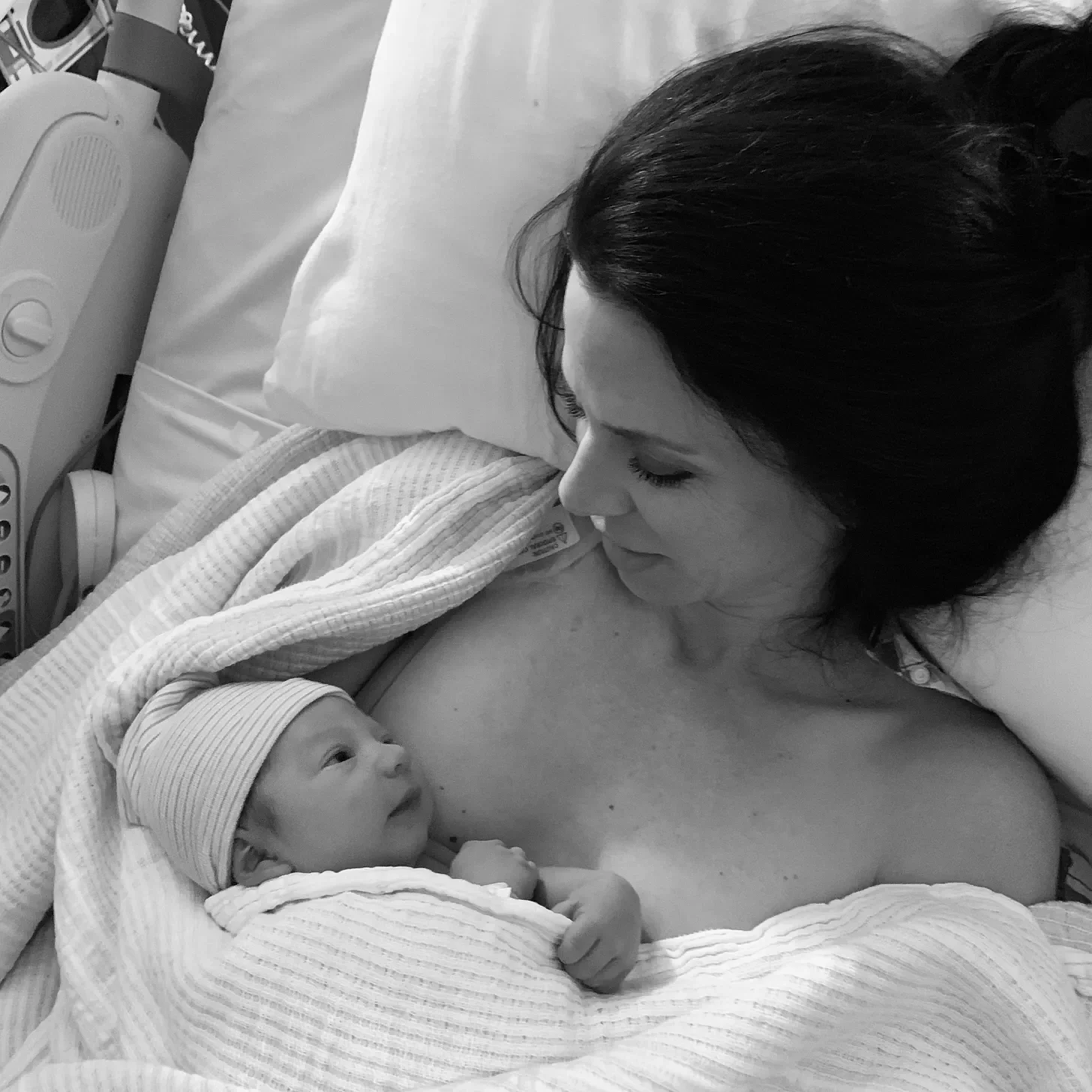
As I move through these precious (and uncomfortable) last days of pregnancy, I’m full of a host of emotions (read: hormones). I’m equal parts excited and terrified. Yet the baseline I keep coming back to is gratitude…that is, on good days when I’ve gotten more than three or four hours of sleep the night before. I know, I know, welcome to my new impending reality.

Launching on this motherhood journey at 40 is many things, namely, humbling. So, I want to take a few minutes and share with you what I’ve learned from that place of vulnerability.

Don’t worry, you don’t have to be a mom, a woman, or 40 years old to identify with what I’m about to share. Hopefully though, you’re a person who longs for expansion and growth…or simply…more.

1) Peace isn’t the point

Before I lose you from the start, let me explain. When I meet with clients for the first time in my office, we go over a stack of paperwork. It’s standard, boring, yet helps provide structure, history, and goals for the work we’re about to dig into. Guess what the most common statement I read in that “goals section” is?

“To find more peace.”

And believe me, I get it.

Here’s the deal though. Expansion and growth are by nature uncomfortable. There’s a constant cycle of contract—release, or two steps forward—one step back, involved. In a literal sense, pregnancy is perhaps the most beautiful and frustrating example of this. As I sit and write this, the left side of my body is screaming at me. Twenty extra pounds, an aching back, swollen ankles, and blazing Nashville heat are anything but “peaceful” at nine months pregnant.

So why does the human race continue to multiply if what we really want is peace, yet the human experience is full of discomfort? I think it’s because we want something more than “peace” in a traditional sense. We want meaning. We want purpose. We want joy. If we equate peace with an absence of pain and healthy tension in our lives, we will merely exist to numb the movements of life itself.

Wakefulness requires perseverance. Only through that perseverance can we touch pure joy. Despite my longing for more shut-eye right now, joy can’t be experienced when we’re numb and asleep.

2) Direction matters

A very wise friend of mine gave me some good advice once when I was grappling with a big decision. He asked me this question: “If you choose this path, are you running towards desire or running away from fear?”

Mic drop, much? I told you, he is very wise.

Comfortable in the controlled routines of my late 30’s life, I honestly could’ve been happy with or without kids. When I started down the fertility path a couple of years ago, I was always on the fence, unsure of how badly I wanted to disrupt the flow of a life that for the first time in many ways felt grounded—safe.

With a history of depression and body image issues, I had finally come to a place of self-acceptance and regulation. Did I really want to chance all that and bring another human being into my mess? Did I really want my whole life to be turned upside down, even if the cause was something so sweet and beautiful as a precious child?

I kept coming back to a resounding “yes.” That safety and control I thought I had was smoke and mirrors. It was really me just running away from fear.

I can’t wait to meet my son any day now. It still doesn’t seem real. Love is about to take on a whole new meaning and I can only imagine the ways it will continue to grow and humble me.

Desire is messy. Creation is also messy. Yet you and I were made to make stuff. Let’s be in this mess together and have something to write home about, yes?


Love & Gratitude,


Katie

 
Read More

Picture This...Why Visualization Works

Logic will get you from A to B. Imagination will take you everywhere.”

-Albert Einstein

picturethis-19.png

By the time we turn 35 years old, 95% of who we are is a set of memorized behaviors, attitudes, beliefs, perceptions, and preferences.  Yowza.  This means, you and I, as clever as we are, will walk through life unconsciously programmed to behave a certain way every single day. 

That is unless we decide to wake up and choose what it is we really want for our lives.  Something I’ve learned as a therapist and serial self-improvement advocate, is the biggest obstacle in this process isn’t the actual change in behavior, it’s knowing and crystalizing what we want and why. 

When asked, “what do you really want for your life?” do you have a precise, accessible answer?

I’m not talking generalized ideas here.  I’m talking the full play-by-play, detailed description of the day including what you’ll eat for breakfast kind of answer. 

Why bother?  Great question. 

Getting clear on our daily and long-term intentions matters.  Research shows that our brains don’t know the difference between imagination and reality.  Meaning, we can rehearse mental pictures of ourselves achieving a certain goal, receiving an award, having a loving relationship, etc., and the neurons in our brains will fire in the same way they would if these outcomes were taking place in reality.  

As a big-picture thinker, I’m becoming convinced details matter. 

So how do we gain clarity on our own intentions?  One of the best practices around is visualization.  It’s not a woo woo, baseless tactic, either.  It’s supported by substantial scientific evidence and practiced by successful people everywhere from professional athletes, musicians, actors, and thought leaders.  

Visualization is simply a technique for creating a mental image of a future event.  It primes our brain and overall biology to behave in the necessary ways that match our desired outcome.  In the same way practice makes us better, visualization, or mental practice, gets us closer to the goals and desires we hold for ourselves. 

The older I get, the more wakeful I want to be in my own experience.  I don’t want to live out of old programming.  I want to create the most beautiful, vibrant, inspired life possible.  I believe one of the most powerful ways to do this is through preparation and practice.  Visualization provides the perfect platform for which to do both. 

My favorite part about visualization is it’s a powerful tool in making the unconscious conscious.   Remember that 95% statistic earlier? In order to wake up and choose something different, we must get crystal clear on what it is we want to create.

Here are a few other reasons this stuff works:

1)    It jumpstarts your creative subconscious which alerts you to otherwise unforeseen creative ideas needed to achieve your desired outcome.

2)    It programs and provides infrastructure for your brain to identify what it needs in order to achieve this goal.

3)    It creates and sustains motivation over time in order to take consistent action in achieving your desired outcome.

4)    It activates intention and focus which attracts the resources needed in order to complete the goal. 

Rest assured.  Your desires are vitally important, especially as they pertain to finding purpose and creating the life you want.  The science behind visualization encourages me in that half the work involved in creating beautiful change in our lives is indeed, an inside job.  We don’t have to wait for the stars to align in order to start.  Today, it begins, on your watch and the canvas of your imagination. 

Love & Gratitude,

Katie     

 
Read More