
The Blog
Recently Featured


All Blogs






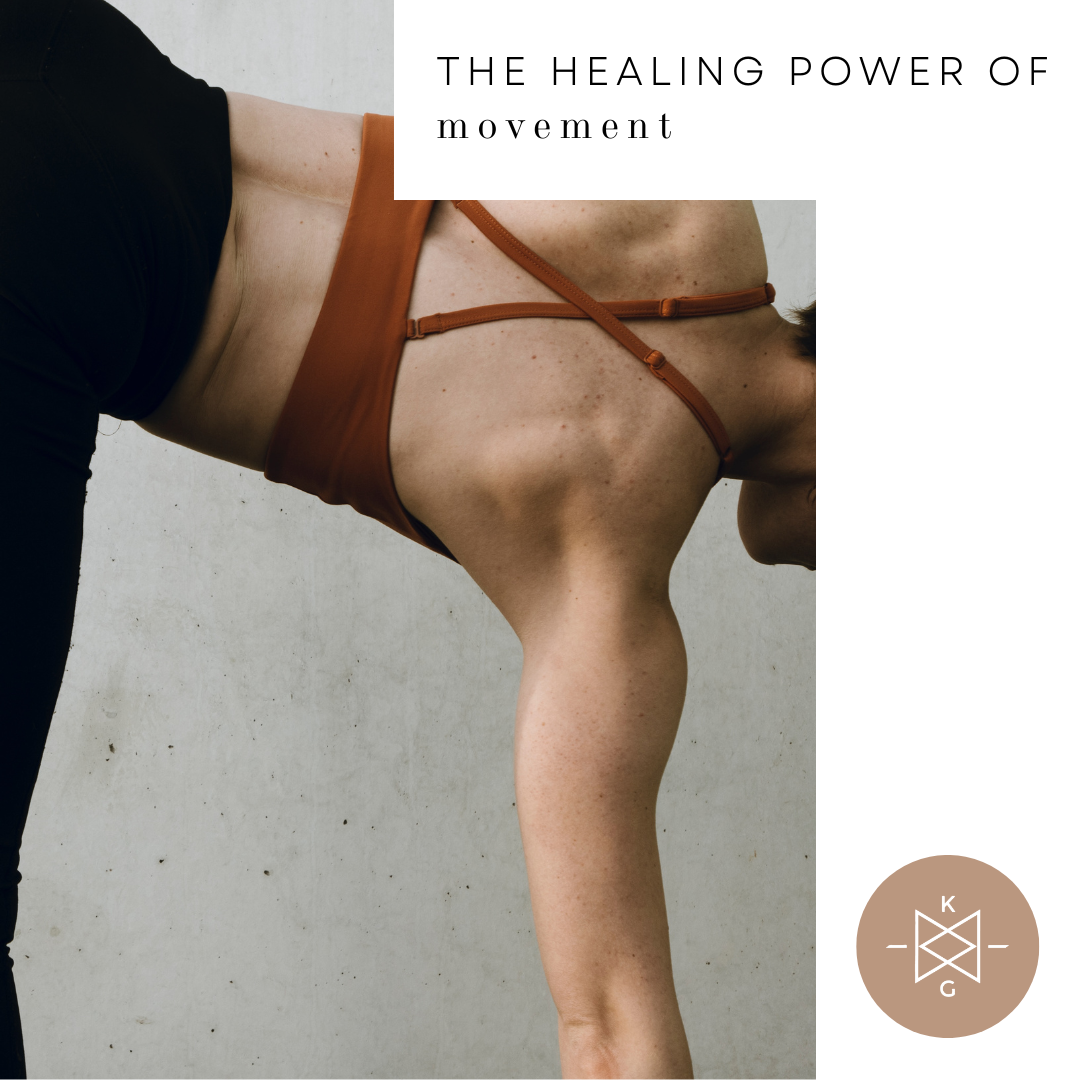
The Healing Power of Movement
“The single most important issue for traumatized people is to find a sense of safety in their own bodies.”
-Bessel van der Kolk
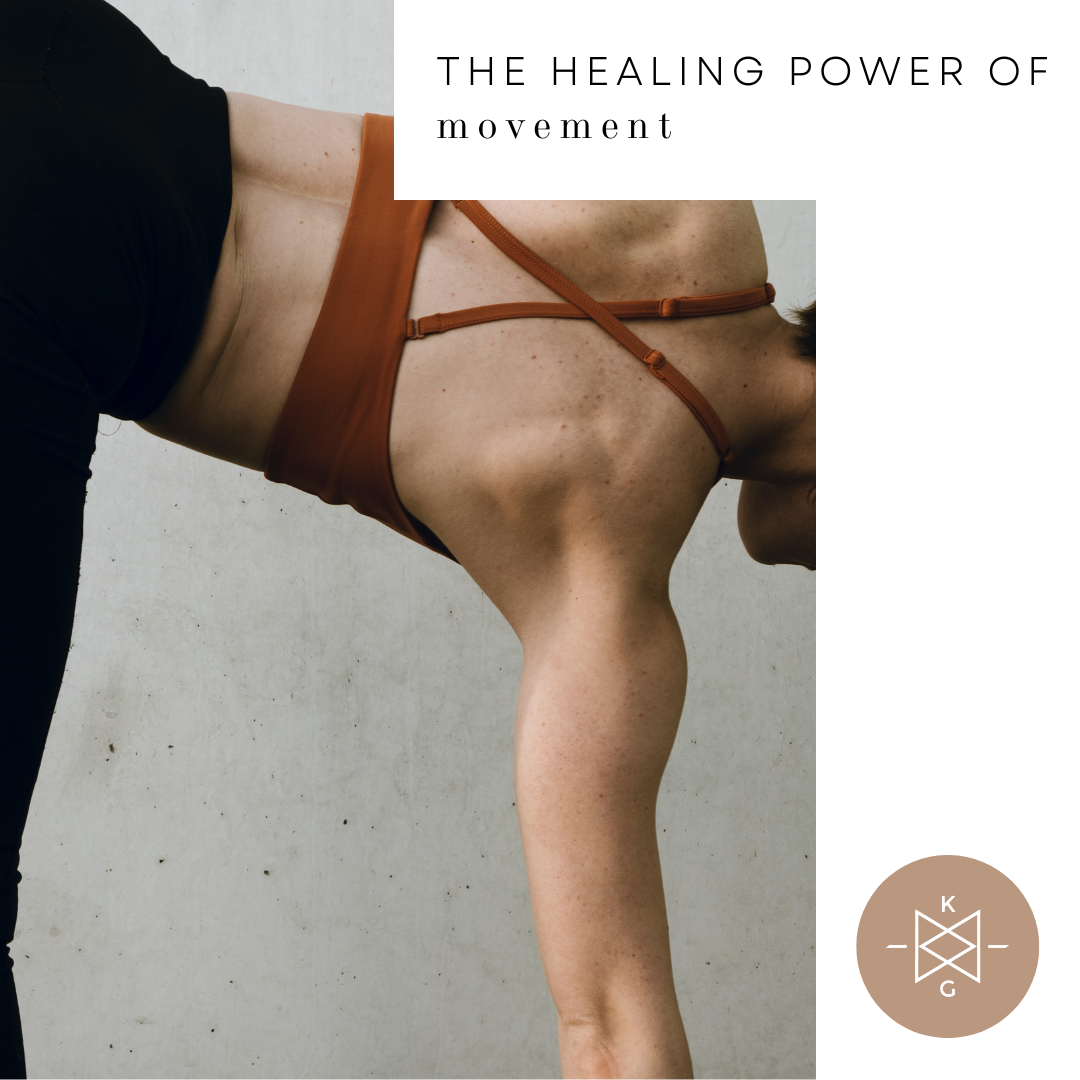
Today you’re in for a treat! I’m bringing my pal Koula Callahan, master yoga instructor and speaker for the Self-Care Workshop, on the blog to share why movement, namely yoga, is incredibly powerful and important for us to practice as we move through our days. If you’ve always wondered what all the fuss is about yoga —and why it is really effective, today is the day—you’re going to get some answers.
Let’s dive right into my chat with Koula!
1) KG: So how does movement help regulate/process emotions?
KC: Movement is a critical part of the healing journey. So many of us forget to incorporate and listen to our bodies as we try to process emotions and hardships and we wonder why we keep feeling stuck. There’s a reason though — our entire life’s story is stored in our cells and in our body tissues. And each part of the body shares with our brain the responsibility of memory. In fact, our bodies store more information than our brains do. So if we try to process our emotions only by accessing our brains, we miss out on an enormous amount of “data” stored in our bodies that actually helps us more than our brains do. Movement helps us tap into that reservoir of “data” and develop a more integrated approach to processing emotions.
2) Why yoga? What’s all the fuss?
KC: Gosh. Yoga is so freaking helpful for so many reasons. Aside from being a killer workout (long lean muscle development!!), it’s the only movement practice that focuses on presence and awareness first. A lot of people think that they “aren’t good at yoga” because they aren’t flexible. That is so not true. It’s not about flexibility, it’s not about strength, it’s not about whether or not you can touch your toes. The physical practice of yoga is all about connecting with yourself and bringing the mind, body and spirit into union with one another. Focusing on presence and awareness from moment to moment makes the practice a moving mediation. I think that’s what’s hardest about it. You have to face the truth of what’s really going on with yourself. And you also get killer abs and triceps :)
3) KG: Why should we be practicing yoga?
KC: Yoga reduces anxiety and stress, helps us sleep better, regulates our hormones, flushes out our organs, boosts our immune systems, etc, etc, etc. The benefits are tremendous. Honestly though, I suggest practicing yoga with consistency because it keeps you grounded in a time when everything seems chaotic. This simple, practical tool is available to everyone to help us stay calm and balanced regardless of what might be going on in our lives or families.
4) KG: Why is yoga so important to you as a teacher and participant? How did you come to find it?
KC: My yoga practice has been the through line of my life as an adult. It’s the tool I rely on most to “self-regulate” my emotions regardless of what’s going on around me. When I come to my mat, it forces me to get present and simplify things that I have made way too complex in my life. When sh*t hits the fan in my life, my yoga mat becomes my little sanctuary where I can pay attention to how I feel and nourish myself. I really do notice when I go a few days without it — my sleep is off, I’m more irritable and less kind to myself. I love teaching for many reasons, one of which is what I learn from my students and their willingness to show up fully. It’s beautiful to experience the sense of connection that a yoga class creates and it really does fill me up when I get a chance to teach. To be a good teacher I believe I have to be a student first, and I’m grateful for what each one of my students teaches me.
Thank you, Koula! You have enriched my life and so many others by your passion and ability.
To start moving with me and receive all these benefits of yoga, join the Practice for an entire library of classes no matter your level of experience.

The Summer Reset
“Almost anything will work if you unplug it for a few minutes, including you.”
-Anne Lamott

In just a few weeks, we will start our first ever Health Reset week as part of the Practice, my Enneagram-based self-care membership program. Let me give you some backstory.
I’ve always considered myself healthy-ish. My relationship with food and exercise started early. Around 9-years-old, I began running and writing as a way to process big, unruly emotions that felt overwhelming at the time.
Guess what? It helped. Big time. I’ve always considered self-care to be about doing things that promote our truest, most alive expression. All those little things that create a life we don’t want to escape.
It’s no accident that still, to this day, my life and work are very focused on helping others access this for themselves as a therapist, Enneagram teacher, and creator of the Practice.
I firmly believe how we treat ourselves, both physically and emotionally, has massive impacts on the whole trajectory of our lives.
I also believe it is why I fared so well through my cancer journey. For all intents and purposes, those two years of surgeries, chemo, doctor visits, and side effects were far more palatable than most. In fact, I remember at one of my follow-up oncologist appointments, I asked my doctor how many people go through what I’ve just gone through and have a similar, positive experience. Her response?
1%
I was floored.
She commented that my attitude, faith, physical strength, and good health played a massive role in those odds.
Now that I’m on the other side of the bulk of that trial, I’m more passionate than ever to really nourish and care for myself, body, mind, and spirit. In fact, I’d love for you to continue to join me on this path.
On June 19-25, I’m leading a Summer Health Reset because just like Anne Lamott said, sometimes we all need a little time to unplug and refresh. This is meant to be a restorative, life-giving week, not a restrictive one. I’ll provide the guard rails, you can choose your speed.
Those guardrails will be gentle, so as to add in plenty of rest, movement, and vibrant, whole foods. Sure, I’ll be taking out some of the fun stuff like dairy, gluten, sugar, and alcohol, but there will be plenty of delicious options to take their place. And again, you choose your pace.
Half-way through the week, we’ll hop on a 30-minute call and see how everyone’s doing ;) It’s so much easier to do this stuff in community, right?
If you’re not a member of the Practice, I’d love for you to join and be a part of this exciting new offering!
Love & Gratitude,
Katie

Why Change Doesn't Have to Hurt
“Yesterday I was clever, so I wanted to change the world. Today I am wise, so I am changing myself.”
-Rumi

About eight years ago, I took a dear friend’s advice and made an appointment with this magical English woman named Linda Penny when I was visiting LA. I still don’t know her official title, but Linda is most certainly a healer. She uses all types of modalities such as kinesiology, EFT (Emotional Freedom Technique), and Reiki. I’ve never seen so many oils, bells, and curious gadgets to sort someone out. Without a doubt, Linda is off the charts intuitive.
I’d been feeling incredibly stuck at the time and much of it was manifesting in my body. Can you relate? Every night I’d wake up at around three a.m. with sharp back and neck pain that kept me up until around six when I’d doze back off only to jolt awake in 30 minutes thanks to my alarm.
The body pain and lack of sleep created a depression cycle I simply couldn’t shake. I knew the issue was emotional and at the same time felt like I had all the tools to work with. So I called in the big guns, aka Linda Penny (whom I affectionately now call Money Penny), being one.
That 90-minute session left an indelible mark on my life. She said so many wise things to me, yet the one that really stuck was this: “You know, Katie, change doesn’t have to be painful and dramatic. It’s really quite simple.”
I don’t know if it was her charming British accent or the sweet relief I felt after all the heavy lifting to grow and heal the wounded places, but her words still stick to this day.
Oftentimes when we find ourselves in stuck seasons, we resort to what seems logical—we work harder. We armor up, think harder, clinch our fist, and full of determination—walk straight into a bigger pile of problems oftentimes affecting our physical health.
Money Penny is spot on. Change doesn’t have to be an exhausting uphill battle. Rather, it’s more about getting back to the basics. It’s making teeny, tiny changes, day in and day out. It’s about practice. It’s also about asking for help.
This is precisely why I created the Practice, my online enneagram-based therapeutic toolkit. We are about to head in to the second half of 2023 (gasp!). If you could use an affordable, practical, and gentle option to support you in your goals for this year, I hope you’ll join me in the Practice.
Change doesn’t have to be difficult. However, it does require a plan.
I’ve got a roadmap. ;)
Let’s go.
Love & Gratitude,
Katie
Self-Care for Heart Types (2s, 3s, and 4s)
“Crying does not indicate you are weak. Since birth, it has always been a sign you are alive.”
-Charlotte Brontë
Are you or someone you love a heart type on the Enneagram?
Let me tee this one up.
The Enneagram is made up of nine core personality types. These nine types are housed in three different triads that coincide with the dominant center of intelligence that drives their experience in life. Eights, Nines, and Ones are body types. Twos, Threes, and Fours are heart types. Fives, Sixes, and Sevens are head types.
Of course, we all have each center of intelligence, however, depending on our dominant Enneagram type, we lead with one. This month in the Practice, my Enneagram-based self-care membership program, we deep dive into what it means to practice self-care as a heart type, so I thought it would be fun to invite you into that conversation.
I believe self-care is a process of self-befriending—self-compassion. That said, part of the process is bringing gentle balance into our experience where imbalance exists. When we use the Enneagram for personal transformation, this is one of the first places we start—balancing the centers.
Heart types perceive or filter the world through the lens of emotional intelligence. They are highly attuned to the feelings and moods of others in order to get their own needs for connection and approval met. Due to this, they often conform to be whoever you need them to be. It’s a way of overdoing this particular center. As a dominant type 4, I can tell you this gets exhausting.
When I realized not everyone cared so much about how people experienced them, I was shocked if not relieved. As William Shakespeare wrote, “No prison is more secure than the one you don’t know you’re in.” Waking up to the prison cell of conformity was a doozy, yet eventually, freeing.
The invitation here is not to turn down the emotional intelligence heart types use so seamlessly. Self-care on a basic level for these sensitive souls looks more like dialing up the other two centers of intelligence, the head and body. Connecting to a more analytical, data-driven approach as well as a more grounded, steady energy. The goal here is to experience life and relationships with openness and fluidity. We need our whole being to do this.
One of the most powerful truths that has tethered my self-care as a heart type is this:
Just because you feel something doesn’t make it true.
Oftentimes, directing your focus of attention away from feelings and simply moving your body, breathing deeply, and writing down the facts of the situation at hand can feel really life-giving.
Don’t worry, you can always come back to those cozy feels. For today, explore what it means for you to embody the whole of you, body, mind, and heart.
If you’re curious to dive deeper into more therapeutic self-care for your Enneagram type—mind, heart and body—check out the Practice.
Love & Gratitude,
Katie
P.S. Speaking of Heart Types, I’m thrilled to go live with Enneagram 2, Anna Watson Carl, to talk about all things career for these lovely, relational people. Tune in this Wednesday, May 24th at 12 pm CST on Instagram Live.

Do More of What You Love
“You can only become truly accomplished at something you love. Don't make money your goal. Instead pursue the things you love doing and then do them so well that people can't take their eyes off of you.”
-Maya Angelou
How do you define success? Most people do with two usual suspects on the scene: wealth and status.
If that’s your definition, guess what? Great! That is…if it’s how you’ve chosen to write your success story…
I’m struck by how few people call into question their personal version of success. We do it all the time with our health, our relationships, and our political preferences. For example, if something in your diet is causing a strange reaction or doesn’t taste good, chances are you steer clear of that something in the future. Or if a relationship feels toxic or disrespectful, you’d likely address the issue at hand, or, even part ways after a while if it gets bad enough.
Hopefully, at some point along the way we call into question what no longer aligns with our values and ceases to work for us. This is what showing up and advocating for ourselves looks like.
After all, as humans, we have the distinct freedom and responsibility to write and revise our stories over time. It’s what sets us apart from animals.
So why do we hold so tightly to this narrow definition of success? Besides, some of the most successful people I’ve ever known don’t necessarily measure theirs by a bank balance or a Kardashian-sized social media following. Instead, they make waves in far more lasting, impactful ways.
I believe the litmus test for success is based on character rather than clout. I also believe we get to define our own version of success based on the person we’re becoming.
When was the last time you took inventory of your definition? If it’s been awhile, perhaps it’s time to revisit. After all, with age comes wisdom (we hope) and often shifting values.
If in your 20’s and 30’s success looked like that big job on Wall Street or a record deal with a major label, it might have shifted to meaningful relationships or creative expression in your 40’s and 50’s. Who knows?
Well, you do…
Here are a few pillars to build your new success story around. Push them around. Color them in a bit.
Health: Our health is the foundation of all other functions in life. Life is a much better place when we feel good. I’m not only talking about physical health, but emotional as well as spiritual.
Contentment: The ability to cultivate contentment despite our circumstances is true badassery in my book. The secret sauce in this recipe—gratitude and presence.
Self-Awareness: This is one of the biggest indicators of success and tools like the Enneagram create a positive ripple effect.
Generosity: Giving back through time and resources is intrinsically a selfish act if you think about it. The practice of generosity gives an instant hit of purpose and joy if done from a place of honesty.
Do more of what you love! This might sound frivolous, but it’s what helps to create positive momentum and energy in your life. It’s what helps us stay inspired. It’s what fans the flame to stay committed. The more we commit to doing what we love, the more we attract joy and like-minded others to share the journey with.
As we create space in our lives to do more of what we love, we are better able to release the need for something outside of ourselves to make us feel successful.