
The Blog
Recently Featured


All Blogs






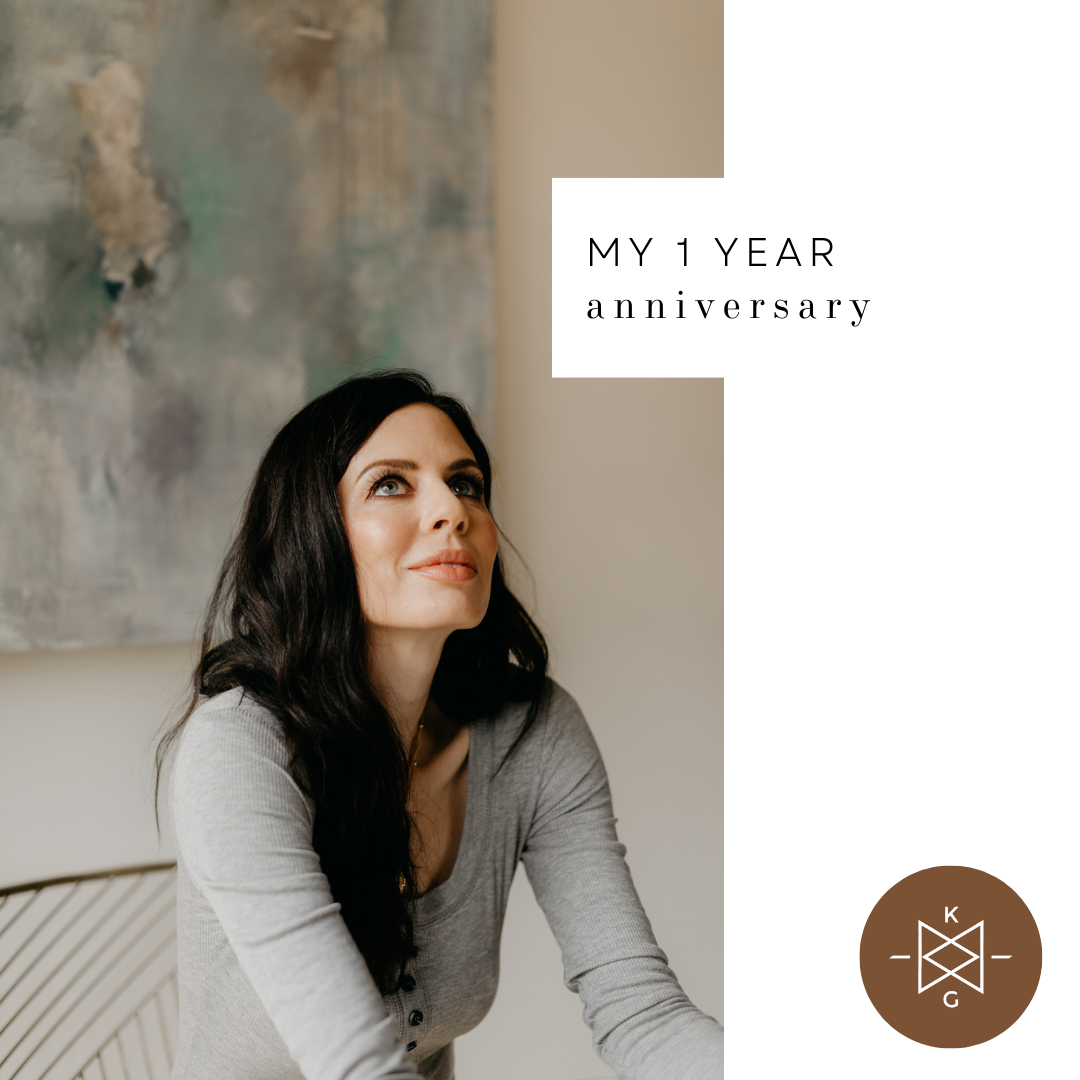
My one year anniversary
“The more you praise and celebrate your life, the more there is to celebrate in life.”
―Oprah Winfrey

May 26, 2022 was my bilateral mastectomy one-year anniversary. So naturally, I threw a party. It felt necessary, not frivolous. Ever since coming through my battle with breast cancer and getting way too close to life’s fragile edges, I’m reflecting on the importance of celebration.
And not just from a fun, put on your party dress and dance mindset. I’m all for fun, yet I believe deep down that celebration is good for the soul and the mind.
Life is hard. We’ve all learned this in living color throughout the last two years. What doesn’t really help the matter is that human beings tend to be “velcro for the negative and teflon for the positive” as I once heard it described. We come by this dynamic honestly. We as humans are wired for survival. Primal man was set on high alert, scanning for danger and foraging food to score the daily meal. Therefore we have a negative bias.
The fight-flight-or-freeze fear mechanism allowed our species to not only survive, but evolve throughout generations.
Today, our realities are much different. Hopefully we know where our next meal is coming from and aren’t running from a drooling beast rocking a big appetite and sharp teeth.
And yet we haven’t necessarily outgrown this negative bias that’s carried us through into the modern world. We tend to hope for the best and count on the worst in order to protect us from the vulnerability of joy made manifest in possible disappointment. Again, humans are wired for safety, not a risky celebration. I call this the Other Shoe Syndrome. What if you get your hopes up and then the other shoe drops? Brené Brown calls it foreboding joy. Instead of basking in joyful moments, we self-protect and beat vulnerability to the punch. This scarcity is part of our human biology and design.
Now, that’s NOT to say that we can’t work to soften this prickly edge. Neuroplasticity, or the brain’s ability to rewire, form and reorganize synaptic connections—basically to create new realities despite conditioning and genetics—proves we can change.
Do you know how we do this?
You guessed it…we celebrate. When we make it a point to consciously celebrate little victories, progress, togetherness, and people in our lives, we retrain our brains to override our brain’s natural negative bias. When we celebrate, we fire and wire new neuropathways that eventually help us create a more joyful, abundant life.
I don’t know about you, but I am here for abundance. I am here for deep and meaningful relationships. I am here for the joy that longs to be chosen as we bow down to gratitude over resentment. I’m here for the party.
This week, intently look for one or two small things to celebrate. And do it like you mean it. You never know, you might just start finding more where that came from.

What's all the fuss with Enneagram subtypes?
“The opposite of home is not distance, but forgetfulness.”
―Elie Wiesel

Are you familiar with Enneagram subtypes?
In my opinion, they are kind of a big deal.
This month in The Practice, my self-care & Enneagram subscription program, we did a deep dive into the subtypes. Every month, I interview an expert in their field. So, it was fitting that we got to hear from expert Enneagram teacher and the “Grande Damme of Subtypes,” Beatrice Chestnut.
Beatrice is an author of two books, The Complete Enneagram: 27 paths to greater self-knowledge and The 9 Types of Leadership: Mastering the Art of People in the 21st Century Workplace.
Both are must reads. The Complete Enneagram is my absolute favorite comprehensive book on the Enneagram, hands down. Not only is it a deep dive into subtypes, it’s an academic overview of the Enneagram and it’s history.
Beatrice is also a psychotherapist and coach, training practitioners and leaders to take their Enneagram knowledge to a deeper understanding and application both in work and life.
This is my passion as well: helping people harness the transformational power of the Enneagram in their own healing, relationships, and work.
To sign up for the Practice and get a front row seat to this interview, click here. In the meantime, I want to parse out the major takeaways of our conversation. Subtypes are, after all, a bit complex in nature, and can be easily misunderstood or glossed over.
Let me tee this up by giving a quick overview of this system:
The Enneagram can be broken down into three centers of intelligence: the head, the heart, and the body. Within each center, or triad, there are nine interconnected personality types. This we know. If we peel back the next layer, we discover each of the nine types is actually a triad in itself containing three more definitive subtypes within the type. So, we know there are actually 27 types as opposed to nine. The three subtypes within each of the nine types is connected to these three driving animal instincts: self-preservation, social, or sexual (or one-to-one).
Here are the three biggest takeaways from our discussion:
Subtypes help clarify type. Discovering type is often a difficult process. This is partly because there are only nine types and billions of us so it can feel downright limiting and often reductive to identify our dominant type as there is such variance within type. If you struggle to identify your dominant type, try on the subtypes within the types you feel closest describe you. You may discover a perfect match.
Subtypes are more helpful as a growth tool than wings. Wings are talked about much more than subtypes. I learned this is because there hasn’t been clear, compelling content written about subtypes readily available. Also, there is great confusion as The Wisdom of the Enneagram, the Riso/Hudson classic, calls them instinctual variants. Also, wings tend to be easier to identify. They are physically on either side of your dominant type. However, Beatrice explained that wings are more of a flavoring of type that can shift throughout life. Subtypes can be used in a deeper way to grow beyond limiting, unconscious behavior.
Instinct + Passion = Subtype. It’s so important to note the nuance of subtypes within each type. Like I said earlier, no two subtypes are alike even though there are the same three choices for each type. Instead, they can be explained by a person's predominant driving instinct (self-preservation, social, or sexual) fused with the specific passion, or emotional motivator, of a person’s type. This creates a distinct character type within each of the nine to really sink your teeth into. For me, this looks like the self-preservation instinct, as it is my dominant, mixed with envy, the passion of a type four.
To wrap it up and put a bow on it, I love working with subtypes because quite simply, they help us develop more balance where there is imbalance within our personality. I hope you will join me moving forward in the Practice as we go deeper in our Enneagram wisdom and application!

The Stories We Tell Ourselves
“And the day came when the risk to remain tight in a bud was more painful than the risk to bloom.”
―Anaīs Nin

The stories we tell ourselves keep us safe because they help us make sense of the world. Here’s the catch though, these stories don’t have to be necessarily true—they just have to be complete in order to do so.
I love love love this brilliant explanation by neurologist and novelist, Robert Burton:
“Because we are compelled to make up stories, we are often compelled to take incomplete stories and run with them. Even if it’s a half story in our minds, we earn a dopamine ‘reward’ every time it helps us understand something in our world—even if that explanation is incomplete or wrong.”
Mic drop.
For decades, I told myself a story that I was somehow wildly deficient. Everyone else made it out of labor and delivery just fine. Not me. I was flawed and had to work overtime to measure up—to show up.
What facts supported this story? What was the payoff for believing it? These are two questions I didn’t start asking myself until my late 20’s. And man were they gnarly narratives to reconcile.
I won’t get into the gory details here, but basically I’d adopted this self-defeating narrative early on in childhood in order to make sense of a wound and my childish belief about that wound. The binary conclusion I came to about that wound paid off in dividends because it helped me overcompensate and defy it’s possible effects moving forward. How? By armoring up with perfectionism and the insatiable desire to prove the world wrong: I am indeed enough and will work realllllly hard to show you!
This worked well until it nearly killed me.
You and I are very much alike in that we both live out of stories—some of them life-giving, some of them need serious editing.
I’ll never forget the first time I sat in my therapists office and said these words out loud, albeit wobbly and with a tentative tone, “I’m… okay?”
Now that’s a narrative that changed everything. If I was in fact, “okay,” I could drop the act and quit hustling for worthiness. As a recovering perfectionist, this would be a long, humbling process—and a risk.
Oh but the risk far outweighed the expired reward of that old, broken story. It’s proved much more fun as well.
I’m leaving you with a writing prompt to push around this week. It may help you identify a few broken records you’ve been unconsciously wearing out for too long.
If I could write the next chapter of my story and play the hero instead of the victim, it would go something like_________________________________.
Spend 10 minutes to an hour with that one. Tell me how it goes…
Drumroll please...introducing walking meditations
“Life is movement. The more life there is, the more flexibility there is. The more fluid you are, the more you are alive.”
―Arnaud Desjardins

I hear it often, “meditation isn’t really for me. I can’t seem to sit still that long.”
I get it. It’s hard to pin me down in the same place for more than ten minutes (especially with a toddler.)
And while I do feel there is such value in truly taking time to sit in stillness with ourselves and our experience, I believe there are many ways to get the benefits from meditation.
That’s why I’m so thrilled to share the newest member of the Practice with you today: walking meditations—the beautiful marriage of movement and mindfulness.
Here’s the backstory:
I created The Practice, an enneagram-based self-care toolkit, for monthly members to take advantage of and learn how to put the Enneagram to work in their lives and practice specialized self-care in the process. After all, the Enneagram is a holistic tool, mind-body-spirit.
It’s been an absolute blast creating content from week to week and the community that’s developed over the course of over a year has been truly invaluable. However, I felt there was something missing.
I’m convinced physical movement is clutch in our personal growth and healing. If there was one form of self-care I simply couldn’t live without it is daily mindful movement…or is it meditation? Oof!
So I began to ask myself, “how can I provide a way for members to be more efficient in their self-care, killing two birds with one stone: meditation and movement?”
You guessed it, walking meditations, my guided meditations over vibe-y, inspirational music written and produced by some of my favorite musicians and writers in Nashville. We started building out these tracks last year and finally, after great anticipation and collaboration, are ready to share them with you.
We will be releasing new walking meditations each month on the Practice for you to take with you to your favorite hiking and walking trails in order to move with greater intention and presence, creating more space to process emotions and connect to nature. I think you’re going to love them. I sure do.
Join the Practice today and get first dibs on my new walking meditations coming in hot mid-June.

How to Live Beyond Your Type
“So perhaps the best thing to do is sop writing instructions and get on with the book."
―Winnie the Pooh

I believe the big reason people sour so quickly from the Enneagram is that it’s so misused by the rest of us. We become Bible-thumping zealots—throwing numbers and jargon around—insensitive to the fact that those around us are not interested or open to being objectified…and reduced. I mean, I get it. I was “that girl” who was an Enneagram evangelist there in the first couple of years: typing people left and right, preaching about growth and disintegration, and passing the plate of approval so everyone would “buy in.”
And I meant well—truly. It’s been life-changing for me in my process, lending a clean lens to the distorted picture of my life I’d been living out of for so long. Yet it took me years to metabolize the fact that lasting Enneagram transformation speaks for itself. I didn’t have to. The proof is, as they say, in the pudding.
What I didn’t understand then that I do now is this: the Enneagram is not about becoming more like your type. The Enneagram is about living beyond type and into the true you. It’s about identifying your dominant type in order to fully understand it: strengths, weaknesses, motivations, values, and behaviors. But it’s not some Venus fly-trap, swallowing you up, lickety split, right when you get up close. It’s about identifying the limiting parts of your personality in order to release and re-write the parts that don’t fit any more.
I’ll never forget my month-long Narrative Enneagram teacher training back in Menlo Park, CA. I was expecting the room to be filled with ego and a lot of it. Instead, I remember walking in the first day and much to my surprise, feeling pretty stumped. I couldn’t really figure out anyone’s type (I couldn’t resist trying!). This group had done some deep inner work, and lot’s of it. They were living beyond their type, beyond the rough and ready edges of personality, into their authentic selves.
When we work with the Enneagram and live in that space, the edges do soften. Relationships run smoother, life’s inevitable stressors become more manageable, and the present moment—more vibrant.
Being reduced to a number is pretty lame. Understanding the truth about how you operate in the world and the story you’ve been living out of is life-changing. Why? Because that means you get to decide if it still serves you. If it doesn’t, guess what?
Yep…you can change it.
When you’re stuck in your type, you’re also stuck in the familiar past—so predictable.
You are so much more than a number, my friend. You are the writer, creator, director, and leading lady of your story, all in one!