
The Blog
Recently Featured

All Blogs






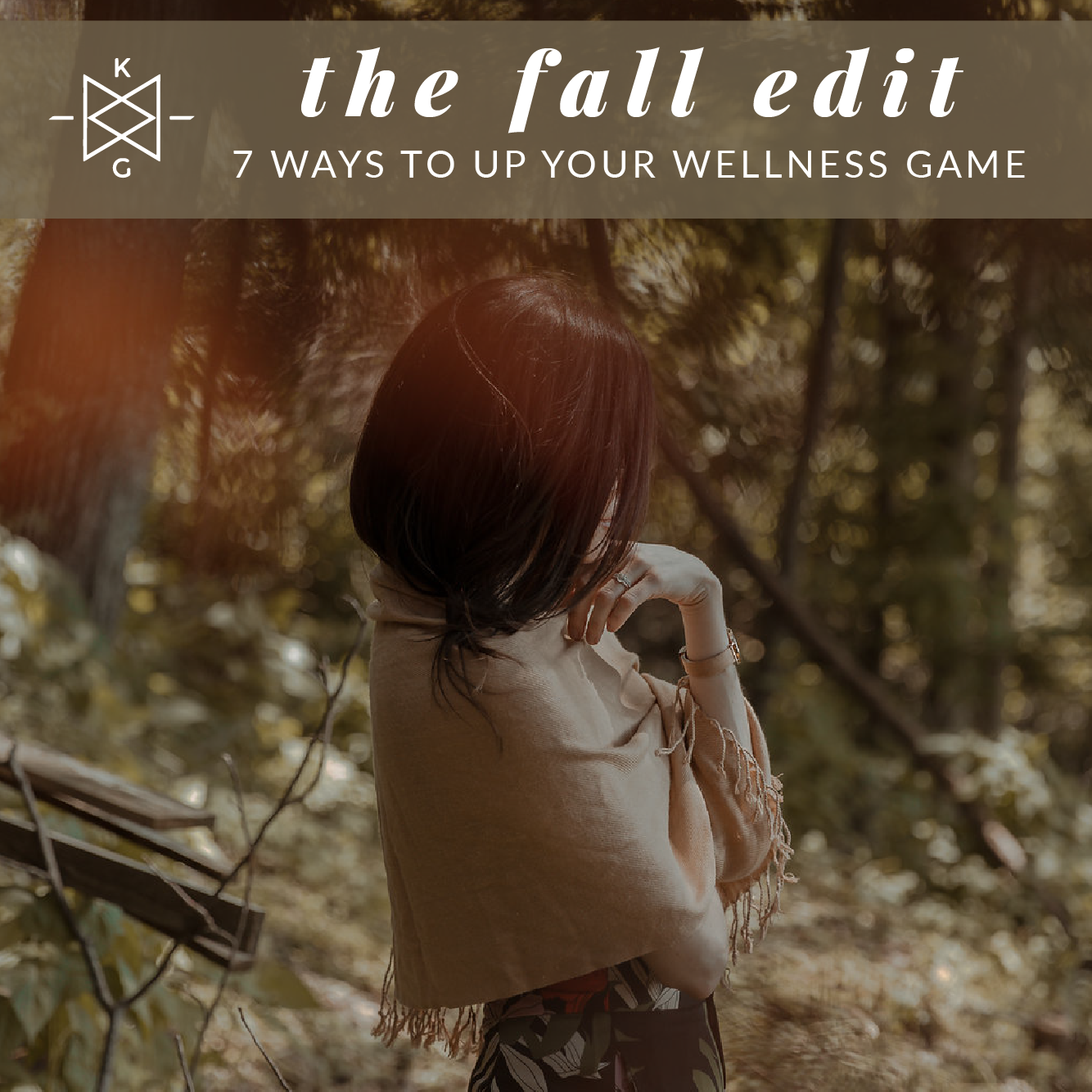
The Fall Edit...7 Ways To Up Your Wellness Game
“Life starts all over again when it gets crisp in the fall.”
-F. Scott Fitzgerald
Fall is undoubtedly my favorite season. I feel a bit like Mr. Fitzgerald in that life seems to offer a second, and equally romantic, Spring, or new beginning when early October rolls around. Yet I’m also well acquainted with the struggles and temptations that come along with the changing seasons. The days get shorter, schedules mount up, self-care tends to wane, and I often feel a dank, subtle chill of loneliness sneak in.
Have you struggled much with seasonal depression?
I have…big time. That said, I’ve learned the hard way how vital it is to intentionally manage expectations and routines in order to stay connected to daily hope and healing. In light of this, I like to send out a Fall Edition of sorts—full of new ideas and opportunities to stay on top of our self-care game as we head into the coming months. If you follow fashion, it’s a bit like that thick, fresh, September Vogue edition boasting fall’s most delicious offerings. Pure magic.
This year, I’m more excited than ever to explore some new ways of connecting to yourself and your community in life-giving ways.
Too often we’re tempted into autopilot—that sleepy trance of contained chaos—and end up just going through the motions. I don’t know about you, but I want to feel alive and awake in my experience this fall, savoring each moment like a gift—or that inaugural pumpkin spice latte.
Here are a few ideas to support you in this pursuit. I think you’ll find something you can enjoy despite the hectic demands of the season.
Are you looking for ways to deepen your knowledge of the Enneagram, build new relationships, and do powerful therapeutic work in a safe environment? If so, the Bloom Group is for you. This monthly group is a blend of experiential group therapy and an Enneagram deep dive. Not only is it completely confidential and intimate (10 people per group), we use the construct of the Enneagram to understand our unique stories and write a hopeful, compelling next chapter. Loneliness is an epidemic in our culture and seems to show up at every corner, especially in fall and winter months. Bloom Group is a grounding opportunity to get ahead of that ache. For more info or to sign up, click here.
Neuroscience and brain-based therapies have become a huge passion of mine throughout the past several years. I’ve learned that oftentimes when we feel stuck in the past or a painful emotional experience, we can’t merely talk our way out of it in therapy. We need something deeper—more effective and transformative—to compliment the process.
This fall, I’m beyond thrilled to partner with NeurofeedbackNashville and offer you an opportunity to heal in a deeper way without working so hard in therapy. Neurofeedback is a totally passive, restful experience that provides the following results (to name a few):
Increased self-awareness as your brain witnesses itself and its patterns in real-time
When the brain gains that self-awareness it can mindfully choose its preferred optimal responses to life rather than defaulting to the same old feedback loops
As you continue training, this resilience—rather than reactivity—becomes a new unconscious skill
You feel calmer (or more focused, joyful, or whatever it is that your unique brain knows you need) without having to work so hard in talk therapy
I’ve been using Neurofeedback now for the last several months during my pregnancy and continue to be amazed by the results. More and more, I see my best self emerge and feel increased clarity and calmness. Curious? Check out this animated video and use code (HALFOFFTRAIN) when scheduling to enjoy 50% off your first session.
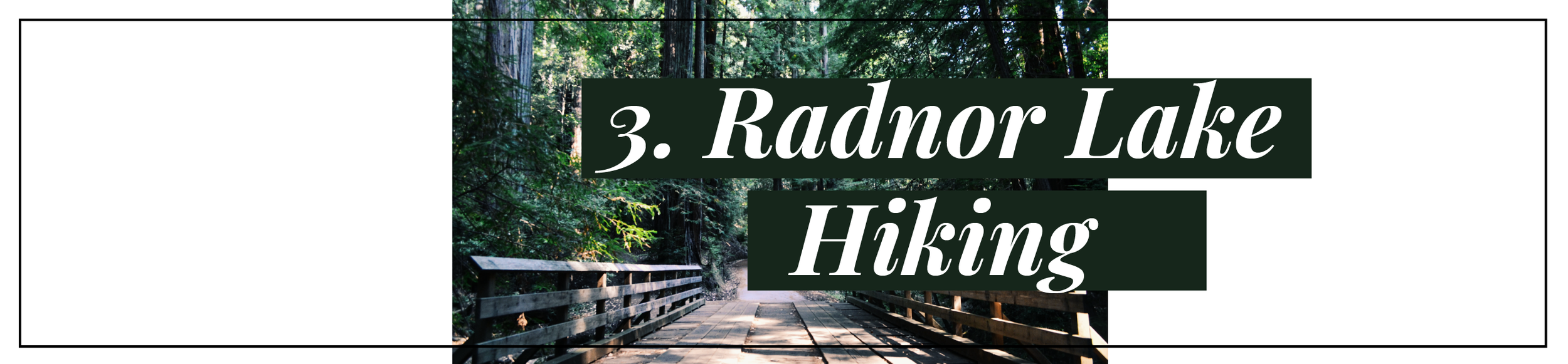
Much like Nashville’s very own Central Park, Radnor Lake is a picturesque pocket of nature with several serene trails to choose from if you’re looking for an excuse to get outside and behold the stunning leaves and light. It’s been something of a sanctuary for me throughout the 24 years I’ve lived in Nashville. The wildlife is rocking as well! Don’t be surprised to encounter plenty of deer and turkeys on the trail. Exercise and nature are two highly grounding components in life. Radnor allows you to fully experience the benefits of both.
This Holiday season starting in November, I’m inviting you into an eight-week meditation challenge. You’ll receive a (free!) meditation each week with a specific grounding focus. For example, gratitude, self-compassion, presence, creativity, expectations, rest, etc. Meditation is an incredible way to deepen self-awareness, foster a sense of calm, as well as build out resilience in the midst of chaos. Plus, there will be a fun surprise give-a-way at the end of the year you WON’T want to miss!! Stay tuned for more on this.
We don’t often realize it, but we wear our emotions on our face. As skin is our biggest organ and we lead with our lovely faces, it’s been fun to explore ways of taking care of mine, especially the older I get. With acne-prone, sensitive skin, I’ve struggled to find a good fit that won’t break the bank. Recently I learned of a holistic esthetician, Kari Zwickel, aka The Nourishing Skin Coach. She uses a completely different holistic approach to the skin, working with what’s already happening as opposed to forcing harsh, targeted treatments as a bandaid. She’s a wizard and a true teacher. Each time I’ve gone to see her, I feel like I’ve had a transformational mind-body-spirit experience. I also see my hormonal skin settling down and radiance start to emerge. For an intro into her method, don’t miss her fall skincare workshop. Coming up on Sept. 17th!
Do you struggle to know (for sure) what your Enneagram type is? If so, you’re not alone. Oftentimes, it can take months if not years to land on your true type. Let’s face it, there’s no such thing as a pure type. We’ve got a bit of every type tucked away inside. Some feel larger than others and yes, there is one that actually leads. One of my favorite ways of helping clients move deeper into the transformational work of the Enneagram is to support them in identifying their type using a unique typing inquiry process. We experience suffering when we make up limiting stories about our pain. I believe knowing and living from the true story about who we are is absolutely vital. Understanding our Enneagram type gets us one step closer to that truth. Interested? I’d love to chat.
I heard Richard Rohr once say, “If I’m not practicing constant gratitude, I become totally resentful.” Can I get an “Amen?” Unrealistic expectations, comparison with others, and lack of boundaries can leave us hardened, closed off to the joy of each moment. Keeping a gratitude journal is the perfect antidote to said temptations. You can use a journal from Target or buy a more structured one on Amazon. My favorite? The 5-minute journal. I believe gratitude is the ultimate pivotal powerplay. It can shift our focus from lack to abundance in a split second. It provides an opening—or way out—from the stuck, thin spaces we find ourselves in.
That’s a wrap! I can’t wait to hear how you’re taking care of you this fall…and maybe I’ll even see you soon at Radnor (with a stroller in tow)! :)
Love & Gratitude,
Katie
You're Invited to an Intimate Enneagram Gathering
“The privilege of a lifetime is being who you are.”
-Joseph Campbell
A year ago this month, I took some time off work and headed out to the charming community of Menlo Park, California just outside San Francisco to train as an Enneagram teacher and coach in the Narrative Tradition. It was one of the best decisions I’ve made south of marrying my husband and becoming a (very soon-to-be) mother.
If this sounds dramatic, let me explain.
I discovered the Enneagram before I was a psychotherapist. In many ways, it gave me language and insight as to how to relate to myself and others out of compassion as opposed to insecurity and fear. Let me just say, there was plenty of insecurity and fear.
Since stumbling upon it thirteen years ago, I can easily say the Enneagram is the most dynamic, life-giving tool I’ve come across and use in every aspect of my life.
As a therapist and coach, the Enneagram is integral in my work with individuals and groups and, to my utter delight, has been life-changing for countless men and women I get to serve.
My desire is to help others take their existing Enneagram insight to a deeper, more transformational level—one that has immediate application in their everyday lives.
Why? Because if all this personality and type business stays a mere talking point at coffee shops and cocktail parties, we’ve really missed an incredible opportunity to thrive!
The Enneagram has caught on like wildfire, especially in our burgeoning town of Nashville, which is beyond exciting to me. Much of what I learned at the Narrative training is just how powerful this tool is when we experience it not only cognitively, but somatically and spiritually as well.
Throughout the past year, I’ve felt a deep calling to support others in implementing this tool. Several of you have asked about group possibilities as well. So today, I’m thrilled to roll out the first of many Enneagram opportunities in the coming months.
You’re invited to a brand-new therapy group expressly crafted for those of you who want to dive deeper into your story and rediscover your truest self, using this gift, the Enneagram. It will be experiential, meaning we will literally experience the group process through creative techniques and exercises like meditation, role play, art, storytelling, and mindfulness practices. Sure, there will be some teaching and sharing, but I truly believe we transform and grow together through doing, not just talking.
Another thing, these groups are closed (meaning the same people attend each time) and completely confidential in order to create the safety necessary to delve into our stories and practice vulnerability within the group. Space is limited to ten people per group and we will meet monthly starting in November and ending in May.
If this sounds remotely intriguing to you or perhaps might be to someone you know, click here for more information.
Perhaps you’ve done therapy but are looking for something different and interactive?
Or you’re terrified of therapy and this seems like a painless entry?
Or maybe you just flat out love the Enneagram and are ready to take it to the next level.
Wherever you find yourself on the spectrum, I’d love to share this special experience with you!
I have a feeling space will fill up fast, so don’t delay!
Love & Gratitude,
Katie

Picture This...Why Visualization Works
“Logic will get you from A to B. Imagination will take you everywhere.”
-Albert Einstein

By the time we turn 35 years old, 95% of who we are is a set of memorized behaviors, attitudes, beliefs, perceptions, and preferences. Yowza. This means, you and I, as clever as we are, will walk through life unconsciously programmed to behave a certain way every single day.
That is unless we decide to wake up and choose what it is we really want for our lives. Something I’ve learned as a therapist and serial self-improvement advocate, is the biggest obstacle in this process isn’t the actual change in behavior, it’s knowing and crystalizing what we want and why.
When asked, “what do you really want for your life?” do you have a precise, accessible answer?
I’m not talking generalized ideas here. I’m talking the full play-by-play, detailed description of the day including what you’ll eat for breakfast kind of answer.
Why bother? Great question.
Getting clear on our daily and long-term intentions matters. Research shows that our brains don’t know the difference between imagination and reality. Meaning, we can rehearse mental pictures of ourselves achieving a certain goal, receiving an award, having a loving relationship, etc., and the neurons in our brains will fire in the same way they would if these outcomes were taking place in reality.
As a big-picture thinker, I’m becoming convinced details matter.
So how do we gain clarity on our own intentions? One of the best practices around is visualization. It’s not a woo woo, baseless tactic, either. It’s supported by substantial scientific evidence and practiced by successful people everywhere from professional athletes, musicians, actors, and thought leaders.
Visualization is simply a technique for creating a mental image of a future event. It primes our brain and overall biology to behave in the necessary ways that match our desired outcome. In the same way practice makes us better, visualization, or mental practice, gets us closer to the goals and desires we hold for ourselves.
The older I get, the more wakeful I want to be in my own experience. I don’t want to live out of old programming. I want to create the most beautiful, vibrant, inspired life possible. I believe one of the most powerful ways to do this is through preparation and practice. Visualization provides the perfect platform for which to do both.
My favorite part about visualization is it’s a powerful tool in making the unconscious conscious. Remember that 95% statistic earlier? In order to wake up and choose something different, we must get crystal clear on what it is we want to create.
Here are a few other reasons this stuff works:
1) It jumpstarts your creative subconscious which alerts you to otherwise unforeseen creative ideas needed to achieve your desired outcome.
2) It programs and provides infrastructure for your brain to identify what it needs in order to achieve this goal.
3) It creates and sustains motivation over time in order to take consistent action in achieving your desired outcome.
4) It activates intention and focus which attracts the resources needed in order to complete the goal.
Rest assured. Your desires are vitally important, especially as they pertain to finding purpose and creating the life you want. The science behind visualization encourages me in that half the work involved in creating beautiful change in our lives is indeed, an inside job. We don’t have to wait for the stars to align in order to start. Today, it begins, on your watch and the canvas of your imagination.
Love & Gratitude,
Katie
3 Tips for Loving Detachment
“But let there be spaces in your togetherness, And let the winds of the heavens dance between you. Love one another, but make not a bond of love: Let it rather be a moving sea between the shores of your souls.”
-Kahlil Gibran
At the heart of co-dependency, or any addictive behavior, is the need to control. In fact, co-dependency and control go together like peanut butter and jelly, turkey and dressing, or cake and ice cream. (Pregnant? Who me??)
Last week we touched on this idea of detachment, or letting go of our need to control people, in order to enhance our relationships.
At first glance, detachment sounds negative—uncaring. After all, we talk in circles here on the blog about how vital connection and community are. Isn’t detachment a slap in the face to such wholehearted pursuits?
Well, no. Quite the contrary. Detachment is actually incredibly loving, especially if you’re a recovering co-dependent like me. I think of loving detachment in relationships as an integral way to set healthy boundaries and remain open to something greater than myself and my control. To keep things simple, I’ve got three tips for you that may help you deepen your meaningful relationships and let go of the ones that feel chaotic—toxic even.
1) Fools Rush In
We’re all guilty of making hasty decisions, especially in relationships. However, one of the biggest lessons I’ve learned as of late is to let my yes be a hell yes. In other words, we don’t have to have an immediate answer to another’s question or need right away. Novel idea, right? Have you ever found yourself habitually agreeing to take on responsibilities for another out of the goodness of your heart, yet became resentful towards them because you actually didn’t want to do it deep down inside? Even though we want to blame them for the extra load, that’s on us!
A good reminder here: give yourself plenty of time to respond to someone’s ask. There’s no rule requiring us to respond right away. “Let me think about it,” or “I’ll get back to you on that," are perfectly good options.
2) Bring me a Higher Love
I love flying, and not just because I love travel. I actually love the luxurious perspective we gain by getting 30,000 feet up. Above the traffic, speed limits, and sleepy stretches of driving, we gain generous insight only distance can lend. You know where you came from and where you’re going. There’s a skilled pilot in the cockpit doing all the heavy lifting, navigating, and planning. He’s even going to land that plane. You’re the traveler. He’s the guide.
One of the flimsy narratives we buy into when operating in co-dependent behavior in relationships is, “If I don’t intervene, or fix the situation, it will crash and burn. I might be abandoned, rejected, or both.” In doing so, we play God. Detaching in love not only allows our Higher Power to be in control, it creates an opportunity for you and I to practice receptivity as opposed to manipulation. Essentially, we are only able to truly receive with open hands—not clinched fists.
3) Fix You
Compassion doesn’t mean fixing. In fact, fixing others is fear-based and flimsy. It doesn’t stick. Instead, loving detachment allows us to see the truth of the situation and live in reality knowing each of us is responsible to and for ourselves. Sure, we can ask for help with that which becomes too heavy yet trying to fix another person or their problems is essentially taking away their opportunity for personal empowerment and growth. Some say people don’t change. I heartily disagree. I believe people do change, however, not without burning desire. If I’m trying to fix you, how does your desire ever take flight? It’s weighted down by my agenda. Detachment, letting go of the controlling death grip on others, gives our relationships a chance to bleed desire and grow in the petri dish of honesty and reality.
What do you need in order to practice more loving detachment in relationships? Pray tell…
Love & Gratitude,
Katie
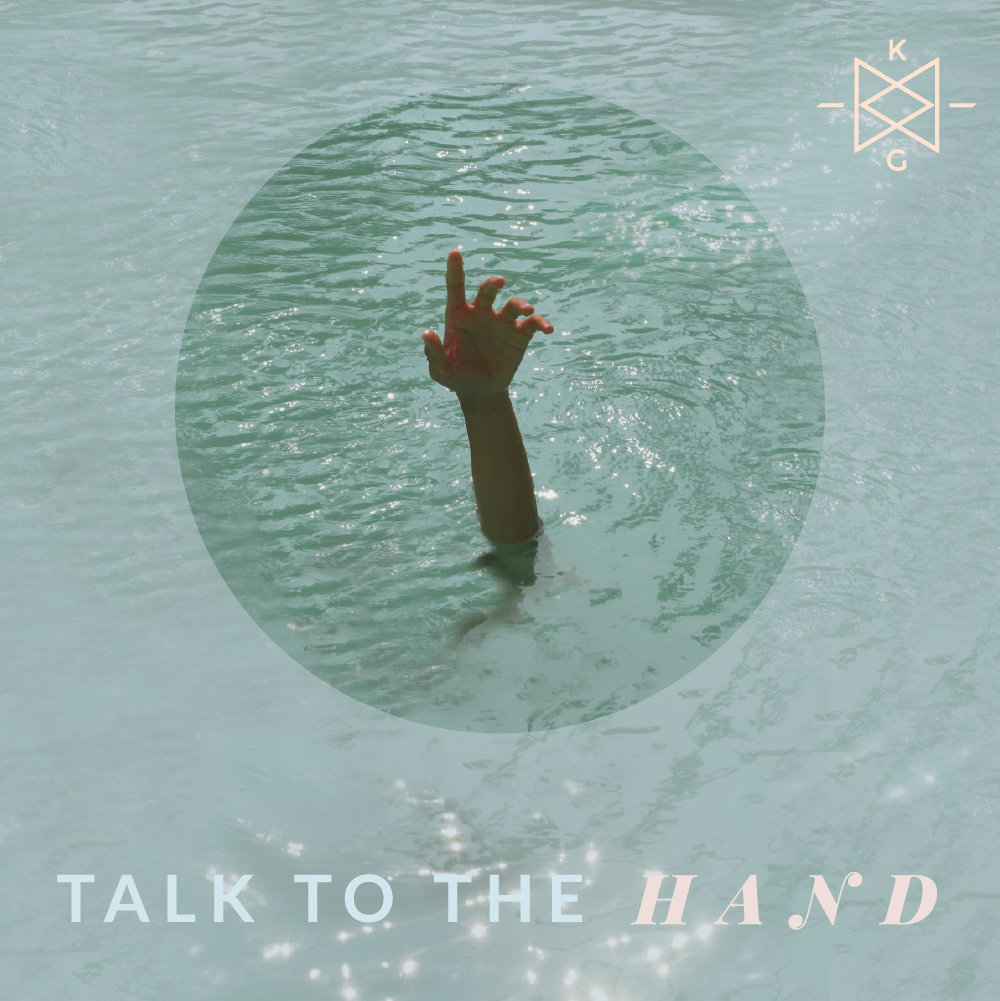
Talk to the Hand: Detaching in Love
“Detachment is based on the premises that each person is responsible for himself, that we can’t solve problems that aren’t ours to solve, and that worrying doesn’t help.”
-Melody Beattie

Co-dependency. We’ve all slung that word around a time or two. Lord knows it gets a really bad rap, too. Truth be told, I struggle with the word and overall label. Why? Because I believe humans, by nature, are needy creatures. Straight out of the womb, we wouldn’t make it very long without the nourishment and care of parents, guardians, and loving community. I don’t think this is an accident. I think it’s a beautiful model for the primal humility baked into our human expression. It’s the purest version of vulnerability in my mind. Survival requires connectedness in relationship.
And yet growth, maturity, and adulthood require a measure of responsibility and individuation in order to balance this developmental process, continue parenting ourselves and truly thrive. This process is based on loving trust built with ourselves and others.
Sounds so easy, right?
In my experience, not so much. It's a bit more complicated than earning a college degree, reading a flow chart, or getting a driver’s license. This new-found responsibility of adulting—in essence, freedom—comes with all sorts of complicated emotions. At the center of them is a deep, loud longing for acceptance—for love.
Many of us learned early on exactly how to get this need for acceptance met by shape-shifting in order to please others. If I do or say what makes you feel good, this in turn will give me entrance into that grand room of belonging. Call it people-pleasing, call it co-dependency, call it whatever you want. At its core, it’s really just dishonesty and manipulation.
I suppose here’s where I draw the line: we all have the God-given birthright to have needs and wants and get them met by asking for help. When I feel lonely, I need to reach out and connect with safe people. Again, being needy is a human thing not a weak thing. However, when our internal well-being and sense of belonging is propped up by external circumstances, especially the agenda or approval of others, that line gets blurred real fast.
When I’m feeling insecure, I tend to slip into this brand of co-dependency. For example, I’ll do unnecessary damage control after having a difficult conversation or interaction with a friend. Or there’s the classic over-explaining after I’ve set a healthy boundary for myself in order to soften the blow to someone else or bypass any possible friction.
We tend to mistake this controlling behavior for care and kindness. No dice. Why? Because it’s based in fear and scarcity. Worrying, manipulating, and controlling behavior only hijacks another’s process, and in doing so, steals their opportunity for emotional exploration and growth. Not only that, we basically assume a "God" role. We buy into thinking, "It's all up to me to move the needle forward." Last time I checked, God doesn’t need my expertise, no matter how well-intentioned.
As we grow in self-awareness and compassion, letting go and detaching in love is crucial. Though it seems counterintuitive and heartless, detachment is a deeply loving practice.
How do we practice this? What does that look like? Yes, it’s coming.
Stay tuned for next week’s installment. We’re going to practically explore healthy detachment step by step.
(See what I did there? 😉)
Love & Gratitude,
Katie
Thoughts on motherhood, breast cancer, and what attachment theory and the Enneagram taught me about being loved