
The Blog
Recently Featured


All Blogs







The Enneagram and Self-Compassion
“When you understand, you cannot help but love.”
-Thich Nhat Hanh
It’s storytime.
I’ll never forget going to my little brother, Gates’, junior high basketball game. He must have been in sixth grade or so. He was a damn good player. Gates and I have an extra special bond as he is 15 years younger than me and was born on my birthday. I’ve always felt a deep connection to him and this parent-like pride in everything he does.
It was a heated game. As point guard, Gates dribbled the ball in from center court. The clock was running down to the bone. The teams were tied. This was a make or break moment and everyone knew it. I could feel the weight of all those parents’ hopes and dreams hanging on the chiseled little shoulders of my brother.
He had to take the shot. With two seconds left, he launched a three-pointer into the air with perfect form and a prayer. The buzzer scowled back. He missed the shot.
His whole body sunk low to the court as all the oxygen on our side of the gym was snuffed out. My heart ripped open and I wanted to rush down there and give him the most embarrassing big sister hug of his life. In that moment, I was more proud of him than ever. I wanted him to know that. I wanted to take away all of his pain.
I didn’t know it then, but looking back, this was compassion operating in its purest form.
I know you have stories to illustrate a similar brand of compassion you’ve felt for loved ones in your life. Yet tell me this: when was the last time you actively participated in it towards yourself?
I honestly can’t think of one time in my experience that I’ve had an organic, visceral example of self-compassion like I did that day for Gates. I am slowly learning to grow that though.
Guess what? If you’re like me and lack this seamless sense of loving kindness towards yourself, it’s okay. Chances are, you, like me, missed that day in Self-Compassion 101.
Compassion takes empathy one step further and is something we get to cultivate in relationship. Compassion is the feeling that comes up when we join in with another’s suffering and feel compelled to help relieve that suffering. Self compassion points this act of courage inwards, to our “me.”
I believe what makes it so difficult for most people to treat themselves with the same compassion they do others is wrapped up in the fact that we simply do not fully understand ourselves. Sure, we put a mask on and present a pretty picture to the world in efforts to gain approval and acceptance. Yet over time, we lose touch with the truth of who we are and the basic understanding of what motivates our thoughts, feelings, and behaviors.
This is why the Enneagram is such a powerful tool. It uncovers and drills down the story we’ve been living out of—essentially our personality.
Living fully alive—thriving—requires us to wake up and take the steering wheel of our life. The comfortable route involves lots of trance—or falling asleep at the wheel. So, if you’re looking for the easy way out, the Enneagram (or self-compassion for that matter) is probably not for you. Staying comfy and cozy where you’ve always been is.
If you’re looking to get out of your own way and play on your own team, welcome to a new way. Yes, it requires that you and I show up, but also saves us from a lifetime of regret. I can’t think of a more defeating end game than to wake up one distant day from now wishing I’d have valued myself along the way.
What a dynamic duo! Self-compassion and the Enneagram. They go well together in so many ways. The Enneagram helps us know and understand our story—why we think, act, and feel the way we have for years and how we hide behind a mask called personality to conceal the parts of ourselves we aren’t too proud of. This deep well of understanding is the most profound act of love.
Combine it with the tangible practice of self-compassion and all of the sudden we put skin on that understanding. How? By showing up for ourselves and our stories in a new way. Instead of trying to hide behind a mask, we now are able to lean into our real, raw experience and befriend her. No more striving, no more shaming, and no more fixing.
Self-compassion allows the pain, hurt, or fear to just be. It also creates space to show loving kindness as we would to a dear friend so as to move through the pain of life as opposed to dancing around it.
Are you ready for lasting transformation in your relationship with you? Are you tired of playing small in your own life? If so, I’ve got a roadmap and would love your company in my lunchtime Enneagram Mastermind. We meet once a month to explore various Enneagram-related topics while learning to foster self-compassion in a community of like-minded women. To register or learn more, click here.

The Problem with Goals
“Goals are good for setting a direction, but systems are best for making progress.”
-James Clear
I’ve been thinking a lot about goals lately. Maybe it’s my over-active three wing (the achiever) or maybe it’s the subtle cues of fall’s imminent arrival right around the corner. Or Both?
I’m curious.
How do you approach goals? Do they feel supportive? Restrictive? Unrealistic? All or nothing?
I’m a bit all over the map.
Typically, I’ll hunker down with my laptop and an oat milk latte and energetically list out what I want to accomplish in the week, months, and year ahead. I love the energy involved in this process—sky’s the limit and I like to fly high. And then, I peruse the final holy grail, and I….leave it there?
Yep. I save it in a folder and let it collect virtual dust on the shelf, taking with me only a few of the highlights rolling around in my head and no clear plan of action.
I know what you’re thinking. “But they have planners for this!” Wah, wah.
I know I HAVE ALL OF THEM.
Here’s the deal. I believe goals aren’t the answer for a few different reasons.
They create a destination where you will find satisfaction only when said destination is reached. I like to call this contingency living. I’ll be happy when I…(lose 10 pounds or get the book deal or run the marathon).
They often set us up for failure because they’re too big and lack a plan.
They take us out of the present moment, eyes fixed on the prize ahead. We end up missing out on our lives always living for the payoff.
They don’t address the identity shift that must happen to affect long term change.
So, what if we learn to fall in love with the process instead of the goal. What if we create a doable, enjoyable, and realistic plan that focuses on tiny changes—shifts—along the way? In doing so, we not only create momentum, we start to see ourselves in a different, more empowered light. We step into a new identity, a new story, that aligns with the type of person who achieves their desired outcome.
Are you ready to be the hero of your own story? Join me in the Practice, an online community committed to self-care and development by creating everyday rhythms and practices that help you thrive.
I’d love to support you.

Here is your seat at the table
“The best of community does give one a deep sense of belonging and well-being; and in that sense community takes away loneliness.”
-Catherine of Siena

I have a few bold off-the-bat questions for you:
Do you long for a greater sense of community? New friendships? Do you want to better understand yourselves and your relationships? Do you want to take your Enneagram understanding to the next level? Do you desire a safe place to share some of your story? Do you want to unlock personal and professional opportunities? Do you like the idea of group therapy, but over a delicious lunch?
I know, that was a LOT…however…
If you answered yes to any of the above, you would LOVE my new Enneagram Mastermind group that starts up September 27, 2023. It’s the perfect blend of deep connections, learning, fun, beautiful hospitality, and sharing sacred space as we move through an 8-month curriculum I’ve built specifically for this experience.
Don’t worry, you don’t have to know a lot about the Enneagram to join. You don’t even have to be an extrovert either (big ole’ introvert over here:). Honestly, you just need to have a desire to connect in a deeper way to yourself and feel more seen and known in the context of community.
Part of growth and healing requires relationship both with self and other safe people who have earned the right to hear your story. Over the course of this group, we will build out that safety and trust so you can share parts of your story and how they have shaped your personality and core value system in a remarkable way.
And if you know me, you know I’m all about editing and re-writing the parts of our stories that no longer serve us. Yes, we will do lot’s of this too.
Get excited!
Space is super limited, so please grab your seat at the table today.
Do You Overcommit?
“Be who God meant you to be and you will set the world on fire.”
-Catherine of Siena
I used to be a lot nicer. I used to say yes most of the time. I used to jam-pack my days into nights with everything from coffee/lunch meetings to work (obvi) to school to long phone conversations with friends in need to shows and dinners and…you get it—contained chaos.
I worked so hard and simultaneously complained about feeling overwhelmed with little to show for it. “What gives?” I’d wonder to myself more days than not.
In my mid-thirties, I woke up to a cold, hard realization—it wasn’t pretty. I realized I was overcommitting to others out of fear and obligation and in the process, abandoning myself. I was playing small in my life due to one of two possible self-diagnoses (or probably both):
1) FOMO (fear of missing out)
2) FOBA (fear of being alone).
Basically, fear and scarcity were running the show, which is really about self-worth, not time management.
I would drop everything to help others actualize their dreams, but when it came to pushing mine forward, I was the one missing in action. I’d rather procrastinate the deep work of creating my vision in order to pick up the pieces for others around me. It was an immediate, (if not false) hit of belonging straight to the old ego.
I now know this isn’t true belonging. It’s trying to fit in.
I also found I wasn’t as nice as I’d been letting on. Behind the saccharine-laced veil, I was cynical and resentful, constantly comparing myself to others and critical of my inauthenticity.
I started making some changes. I got more honest…maybe less sweet. I started taking inventory as to what I wanted and shifted my priorities around to facilitate those things. You know what that was?
I have a hunch it may resonate…
I wanted to be seen, heard, and to affect positive change in the world. Baby step after baby step, I started waking up to these desires—and honoring them. After all, no one else could ever do this for me. Sure, I could put support in place, but I had to do the work. And this “work" actually smelled like joy—purpose.
Bumpy at best, I’m still on the journey, yet I’ve found greater congruence and confidence in this new way. I’ve also found tons more time to appropriate to the meaningful relationships that matter most to me.
Oh, but there’s something else you should know. A reckoning of sorts took place. That hit I mentioned earlier? At the core of all my “overwhelm” that kept me spinning out of control was a gaping hole I was desperately trying to fill: my needs for love, acceptance, and belonging.
I woke up to the unflattering reality that I was spread so thin in an effort to get these core needs met, and in the process, abandoned myself and my desires altogether leaving a bad aftertaste of resentment and utter discouragement.
If you find yourself constantly overcommitting and overwhelmed, I’ve got good news for you:
You can step off the treadmill at any time. You can choose something different—something resonant and true for you. Yet, In order to see your dreams become reality, you must be willing to let go of some extra baggage:
The belief that other people need you more than you need you
Saying yes to too many social obligations to be nice and fit in
Staying busy to avoid your needs and desires
Toxic relationships that breed self-doubt
Any reason that convinces you you don’t have what it takes (aka fear)
Comparison with others (Is all that screen time really necessary?)
Playing the victim when setbacks arise (and they will)
My hunch is, you also want to be seen. I sure hope so—it’s your birthright! You weren’t created to hide behind the agendas of other people. You weren’t created to be nice. You weren’t even created to be liked. Let’s face it, you’re not for everyone. You were created to be the most beautiful, bold, and true YOU imaginable.
Oh, she’s in there, alright. And she’s a force of nature. Yes, we need to see her.…

So you think you should talk to someone?

I believe one of the greatest tools for working through your past, avoiding burnout and embracing true transformation is psychotherapy. It is incredibly powerful for anyone seeking a deeper sense of understanding and wholeness.
Good therapists most definitely hold space to unpack the often-brutal stories of our past. Yes, to write a compelling story with you playing the hero instead of the victim, it’s necessary to unearth expired lies and lay them to rest. However, good therapists won’t leave you there.
I’ve been a student of Dr. Joe Dispenza’s work for a while now. He explores this topic neurologically and absolutely nails it. Check this out:
“The stronger the emotion that we feel from some external event in our life, the more altered we feel inside of us as a result of that condition outside of us and the more we pay attention to the cause. The challenge is, every time we think about that trauma, we’re producing the same chemistry in the brain and body as if it was happening again. What that does is it activates a survival gene. And when you’re in survival, what you want to do is make sure that that doesn’t happen again.”
When we lock into this type of survival mode, we often forecast worst-case scenarios. Guess what? Our brain doesn’t know the difference between the imagined state we create and reality. Therefore, we stay trapped in that old victim mentality and it tends to play out over and over again moving forward.
Here’s my point: therapy often doesn’t work because we spend so much time talking about our past to the point we are literally reliving it. Where focus goes, energy flows, therefore creating a habit of attention so strong and involuntary, it becomes nearly impossible to create new life-giving possibilities and successes in our lives. How could we? All our energy is being funneled into past emotions of survival long after the immediate threat is gone.
My approach is different. I’m convinced if we’re interested in creating lasting change, we need an experience to support us as a whole person, not just a cognitive one, from the neck up.
Yes, we need a safe space to tell our stories—100%. Yet we also need an experience of transformation as opposed to a conversation. I believe this happens through a customized experiential therapeutic approach, nourished by daily practices and the support of community.
If you’re ready to dive right in, I’d love to be your guide. Drop me a line. I always love hearing from you.
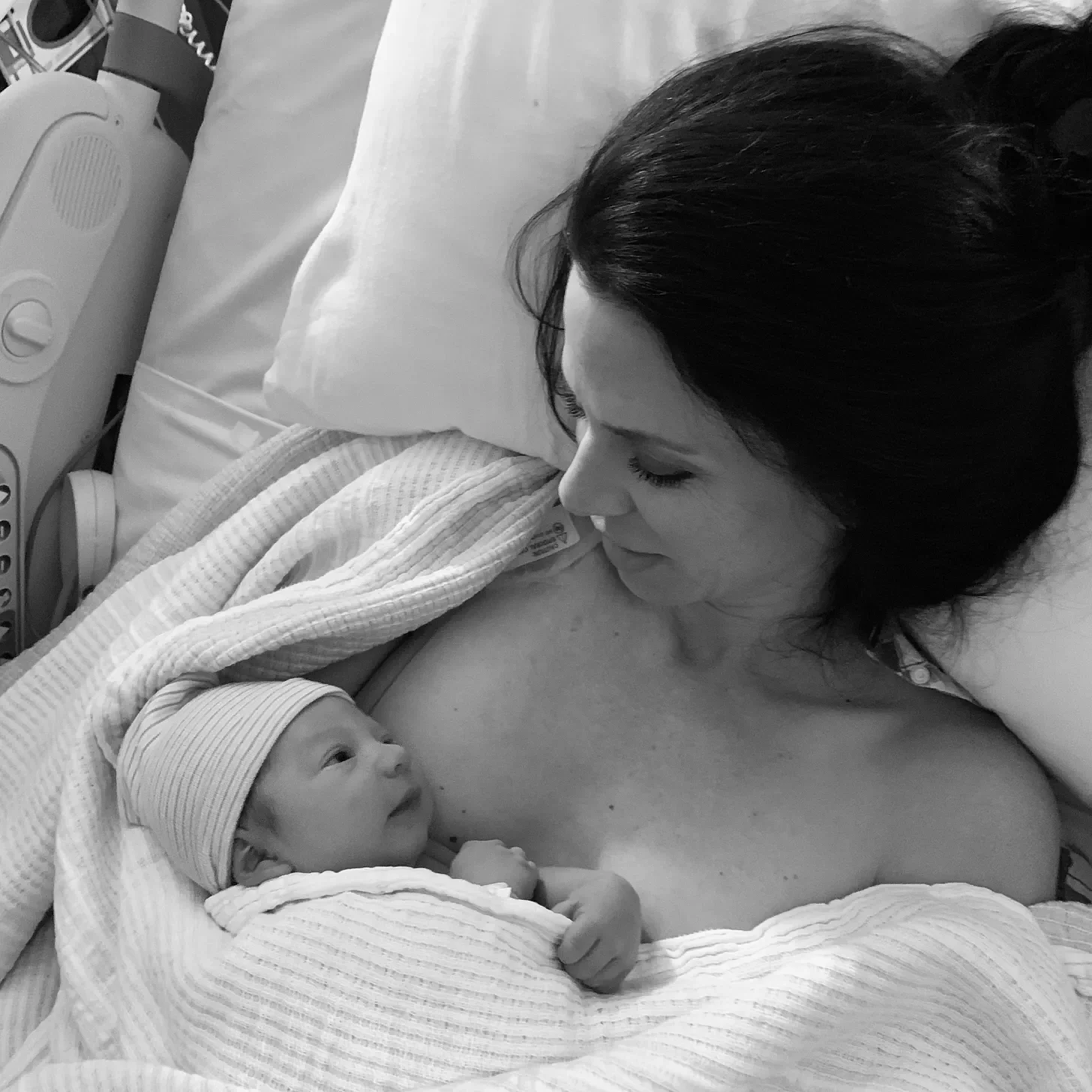
Thoughts on motherhood, breast cancer, and what attachment theory and the Enneagram taught me about being loved