
The Blog
Recently Featured

All Blogs






When Your Body Talks...Listen
“Neuroscience research shows that the only way we can change the way we feel is by becoming aware of our inner experience and learning to befriend what is going on inside ourselves.”
- Bissel Van der Kolk, The Body Keeps the Score”
What if there was an untapped intelligence source you had an all-access pass to and it could give you accurate answers to questions you’ve been seeking for quite some time?
What if you could give that overworked, overdeveloped prefrontal cortex a rest. You know, that part of your brain that is responsible, highly analytical, and very adult? She makes to-do lists, gets you to appointments on time, edits what you say and write, and generally keeps you zipped up nicely in order to make a good impression.
And my oh my, is she exhausted!?!
I believe wholeheartedly, you most certainly can give her a well-deserved break.
So stop whatever highly important thing you’re doing right now and start by giving yourself a hug. Let your body know you’re listening and curious about what she has to say. I’m dead serious.
In 2016, I began experiencing all kinds of physical pain and tension, manifesting in my upper back, throat, and jaw area. It got so bad, I experienced difficulty singing and even carrying out conversation due to a feeling of extreme tightness.
This wasn’t going to fly as I was ramping up to start writing for a new music project. Discouraged and in pain, I put it on hold in order to find some answers I later learned were trapped inside my body.
It was a catch 22 in that I thought I’d found my voice, yet at the time, wasn’t able to use it.
I set out on a mission to crack this cryptic code within my body. After all, emotionally I felt stronger than I ever had, yet the pain I was experiencing set me back day after day into a downward spiral of discouragement. This mission would forever change the way I lived and worked.
I started knocking on every door. Over the course of a year, I did brainspotting, vocal training, yoga, body work, acupuncture, kinesiology, and tons of meditation, all of which were extremely helpful.
Curiously, though I knew this pain affected my voice, I knew this was not a “talking matter.” Hell, I had talked in circles trying to process this thing out, and apparently, my body would not let up.
From all of the incredibly patient and wise practitioners I worked with, I learned that the body is one of three intelligence centers we have. The mind, heart, and body are all crucial in processing life around us, yet again, western psychology focuses mainly on the brain.
Has your body ever tried to warn you of potential sickness? Energy levels flag, soreness peaks, and all you want to do is crawl into bed with some hot tea and binge on Netflix? It’s trying to tell you to slow down, ramp up the vitamin C, because if you don’t, you might end up with the flu. Your body talks.
We receive and interpret through our minds, but the body actually reflects the mind right away. If we listen, it can help bring us back into balance and discern what our body and mind actually need versus want.
Though there are several alternative practices that can help you pay attention to what your body is communicating, brainspotting is one of my favorites.
Brainspotting is a brain-based therapy that jumpstarts the healing process by moving trapped trauma out of your brain and body. It was so powerful in my healing that I became trained in order to offer it in my practice. This was the first step for me. (For more info on brainspotting, check out an earlier post I wrote.)
Not that I remotely have a green thumb, but I’m well aware that the first thing to come up when you plant flowers is dirt. Metaphorically, this was spot on in my experience. As I began listening to, and planting seeds of physical connection and nurturance through brainspotting, body work, yoga, and meditation, you better believe years of emotional dirt—or pain started to come up.
Yet, instead of resisting or fixing the physical symptoms of pain as I’d done for months now, I leaned into its message with the help and support of this healing community.
What I learned from a wise chiropractor trained in eastern medicine is that my body had so many answers to help me along the way. Yet, by relying primarily on cognitive therapy and medication at points along the way, I had shut out this body intelligence.
Hear me out friend, I am a huge believer in talk therapy as well as psychotropic medication such as antidepressants. Yet, we must not ignore the invaluable intelligence source we have in our bodies. It all works together. Working with the pain instead of against it allows all that dirt to finally come up and out, so we can fully process it.
We must befriend this brilliant body of ours and learn how to feel safe inside its skin.
Brainspotting has forever changed the way I approach my work as a therapist, so as to offer more experiential, brain-based therapies. I’m passionate about supporting you on the journey of total connection, mind-body-spirit.
If you have any questions regarding this conversation, I hope you will reach out. It can feel overwhelming, believe me…I fully understand this.
But it’s worth every wobbly step.
How Mindful Movement Improves Your Health
“Breathe in deeply to bring your mind home to your body.”
- Thich Nhat Hanh
What is mindfulness? Oftentimes people equate a mindfulness practice to meditation. And while meditation is an important component that teaches awareness in the moment, mindfulness is so much more than just a mental practice. Mindfulness integrates greater self-awareness of both the mind and the body, and helps us process emotions.
Science tells us over and over how powerful mindfulness is for improving health, sleep, mood, creativity, and brain function. Mindful movement alleviates stress and anxiety and helps us stay calm and balanced no matter what life throws at us.
I encourage you to make mindful movement a part of your daily routine. Here are a few ways you can start today.
Take a daily walk. The next time you go for a walk, set an intention of being aware of your movement. Pay attention to your posture, your stride, your pace, and your breath. What do you notice? How does your body feel?
Nighttime Routine: Meditation and relaxation through breathing and stretching before bed helps you wind down and let go of the day and is proven to improve the quality of your sleep. To get started, check out Headspace. It offers many different meditations to help you unwind.
Establish a regular Yoga practice: The gentle movement of Yoga breeds mindfulness. It is one of my favorite activities to connect the mind to the body because it focuses on presence and awareness first and brings the mind, body, and spirit into alignment. One of my favorite free Yoga routines is Adriene’s Mindful Morning Yoga for Mental Health.
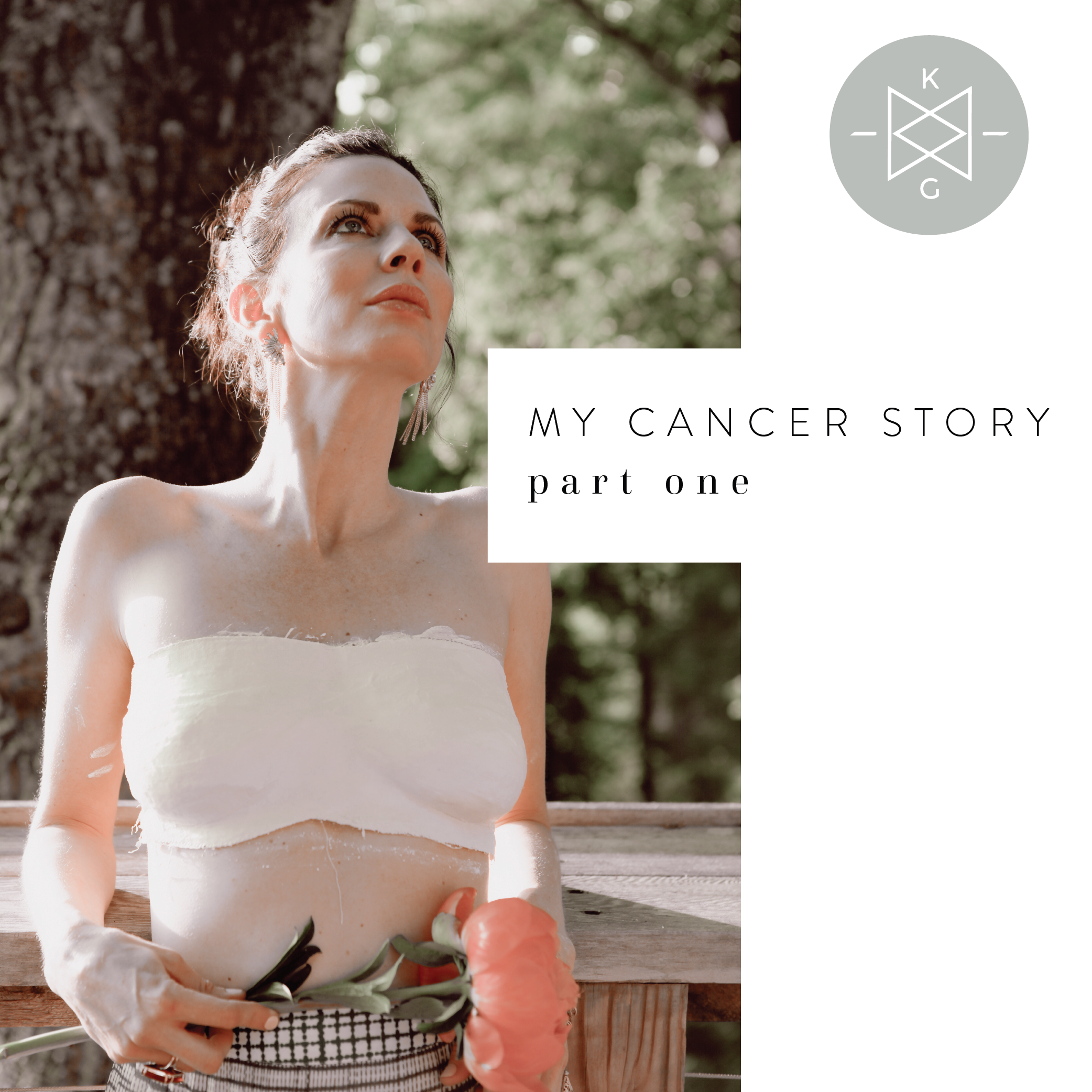
My Cancer Story: Part One
“Consider each day a miracle, which indeed it is when you consider the number of unexpected things that could happen in each second of our fragile existences.”
- Paulo Coelho
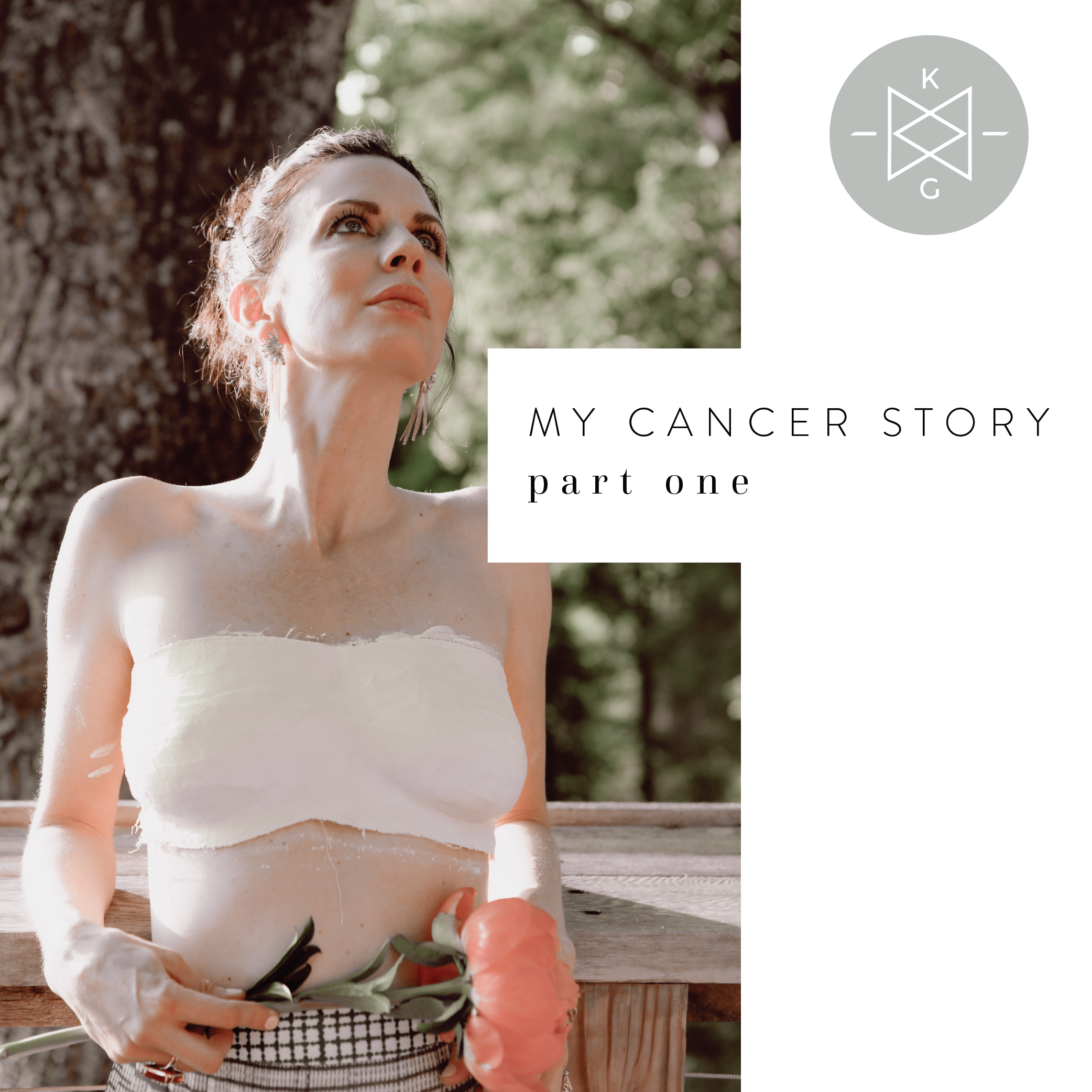
On April 13, I went for a breast biopsy to test a lump I’d found back in January. Thinking I’d get out of there unscathed with news of nothing more than a benign mass, I felt confident, like I was going through the motions to prove my overall excellent health triumphant.
“It’s probably just a scare,” I thought.
As I sat in the biopsy room with Dr. Lisa Bellin, the breast specialist, I picked up on a much different—sober—energy, I sat stunned and fuzzy, as she told me she was nearly certain it was cancer. In that moment, I cried the only tears I’d cry for several weeks to come.
Two days after that emotional biopsy, I received a call from a kind and direct Dr. Bellin conveying her proven hunch. Her voice was low and matter of fact, “it’s cancer.”
Damn.
In the coming weeks, I’d stay comfortably numb in an extra busy-bee-hopped-up-on coffee kind of way. Hell, I was fighting, fleeing, and freezing all at once. The shock of such news kicked it all up in a swirl of defenses.
You know those moments in life that usher in new realities? They catalyze an overhaul you may or may not have wanted or expected? It’s that threshold where the life you’ve known will undoubtedly never be the same.
This was that.
Thankfully, God orchestrated the most incredible medical and support team around me in a matter of days. I knew they wanted to move fast, but I didn’t know just how fast that would be. On Wednesday, May 26th, I underwent a double mastectomy with reconstruction at St. Thomas Hospital West in Nashville, TN.
Due to family history of breast cancer on both sides and the recent news of a genetic mutation I’d tested positive for, all parties involved suggested I go this route to decrease my already high chances of future breast cancer.
Hot tears streamed down my face as I left my sister, mom, and husband in the family waiting room the morning of surgery. I was finally thawing out as I made my way back to pre-op.
Thankfully, it was only about 2 hours from then until the anesthesiologist led me down the path to a gloriously unconscious place. I stayed there until 10am the next morning when I awoke to a jarring line of questioning I’d memorize over the next two days: What is your name? Date of birth? Pain level on a scale of 1-10?
Both surgeries lasted about 5 hours. For the most part, they were successful, praise God.
Fast forward to today: I’ve spent the last two weeks slowly recovering at home. It’s been one of the hardest things I’ve ever experienced in my life. Even with drugs. However, the love, prayers, meals, texts, email, stories, flowers, and overall healing energy felt from friends and family have been overwhelming in the best sense of the word.
It’s been a picture of just how palpably healing our human connection is.
For this I am grateful beyond words and you will never know how sustaining this has been for my weary and fearful heart, mind, and body—every step of the way.
I’ve grappled with whether or not to share this news on the blog and social media. My ego does’t want to come off contrived or attention-seeking, you know? And yet, as an Enneagram 4, it’s quite painful to sit in the space of my story’s silence. Like Maya Angelou said, “There is no greater agony than bearing an untold story inside you.” I’ve felt a ping of that for sure.
Also, I wish I’d known more about the delicate complexities of breast cancer going into it. Hopefully, I can be illuminating on some level for those who may be up against a similar beast. This is just the onset of this journey as I’m committed to continued research and sharing.
And so I start by sharing this new chapter of my story with you because it is how I stay in integrity and alignment with the woman I’m becoming. It’s a chrysalis for sure—and one that I’m finding unexpected joy and purpose in.
I hope and pray that as I continue to share bits of this health journey with you, it will unlock a safe space for you to be honest, ask questions, and hopefully learn alongside me as I continue to advocate for my health, and that of other women choosing to do the same.
My heart is full knowing that I’m not alone on this journey. Not only that, but I’m not in control. There is something bigger, greater, and supremely Loving steering the ship.
Pivoting from Vice to Virtue
“Personal growth is not a matter of learning new information, but of unlearning old limits.“
- Alan Cohen

How does self-awareness lead to personal transformation? This is a question I hear often. The answer is simple yet complicated. Each of us internalize messages in childhood that shape our beliefs and impact what methods we use to get our needs met. We adopt these automatic patterns of thinking, acting and feeling and rarely question whether they still work for us as adults.
What does this have to do with transformation? Well, first, self-awareness gives us the capacity to take an honest look at our lives and learn where we need to focus in order to grow. The Enneagram helps us unearth the why behind the beliefs that drive us and what our habitual patterns of behavior are. This, in turn, helps us zero in on where we need change.
And, as I am all about practice—and application—of the Enneagram, one of the best ways to use this tool for everyday transformation is called the Vice-to-Virtue pivot.
The Vice, or passion, is the emotional habit we get stuck in when operating in personality, or ego. It’s the emotional expression of our type. This habit is often unconscious—we barely even know we do it.
Each type also has a virtue, or invitation to higher essential goodness. The idea here is to become aware when we are operating in our lower personality passion in order to pivot and choose to open up to your types virtue.
Our vice and virtue work together. Essentially, understanding both our vice and our virtue allows us to evolve beyond the entrapments of our personality type. Remember, the Enneagram is not meant to box you into a type. It wants to show you your type so you can grow beyond the limiting parts of it.
So, how do you pivot from vice to virtue? This requires self-observation, self-awareness and a commitment to personal growth. When you commit to self-observation and focus on identifying your triggers and the compulsive patterns of your behavior, your virtue shows up on its own. You become more receptive and the space for growth emerges.
This week, take a moment to reflect on your Enneagram type’s passion and virtue. What are they? Where do you see both of them show up? When you notice your compulsive patterns of behavior being triggered, how can self-observation allow you to pivot and lean into your virtue instead?

Why Self-Compassion is Critical
“When we give ourselves self-compassion, we are opening our hearts in a way that can transform our lives.”
- Kristin Neff
As you know, I believe self-care is crucial to not only our emotional well-being but our physical health as well. Developing a daily self-care practice is meant to help you grow and evolve over time. It’s about learning to relate to yourself with kindness and understanding, no matter what life throws at you. From that place of love and alignment, we make choices that reflect self-respect and care—choices that are life-giving and nourishing.
When I talk about self-compassion, it’s important to understand what it is as well as what it isn’t. There are so many myths about self-compassion that keep us from buying in, so I want to take a moment to bust those up.
Myth #1: Self-compassion makes us lazy or ineffective.
Wrong. Neuroscience proves that self-compassion has a motivating effect on our brain, creating the perfect petrie dish for change, learning, and resilience. Shame, rather than self-compassion, shuts down parts of the brain responsible for motivation, change, and learning.
Myth #2: Self-compassion is selfish
Wrong again. If you’ve ever flown on a plane, you’ll recall the flight attendant’s schpeel about putting on your oxygen mask before that of others. Similarly, self-compassion is one of the most loving things we can do for others because it allows us to fill our cup in order to pour out to the ones we love the most. Studies have shown that marriages where the partners practice self-compassion are much more satisfying and successful than marriages where there is self-criticism and shaming.
Myth #3: Self-compassion is irresponsible
Aaaaand….wrong. Self-compassion allows us to be with ourselves in a kind and loving way and assess any mistakes or wrongdoing we have made. From this place of compassion, we are more likely to apologize and not make the same mistake. Again, when we self-flagellate, we tend to sit in guilt and shame longer, creating more stress on the situation than when we accept what’s been done and move on to choose something more loving the next time.
So, today, I invite you to think about an area of your life where you need more self-compassion. Is there a situation that you need to extend some compassion or forgiveness to yourself?
Take a few minutes to think about this deeply and honestly. And, since so much healing can happen through writing down our thoughts, I even encourage you to write about this in your journal.
Thoughts on motherhood, breast cancer, and what attachment theory and the Enneagram taught me about being loved