The Blog

Recently Featured

All Blogs

Triumph Over Misery: The Beautiful Story of Ruthie Lindsey

Author Jamais Cascio once said, “Resilience is all about being able to overcome the unexpected. Sustainability is about survival.  The goal of resilience is to thrive.  I never thought I would need to know this lesson until my life was turned upside down.

-Ruthie Lindsey

Meet Ruthie Lindsey

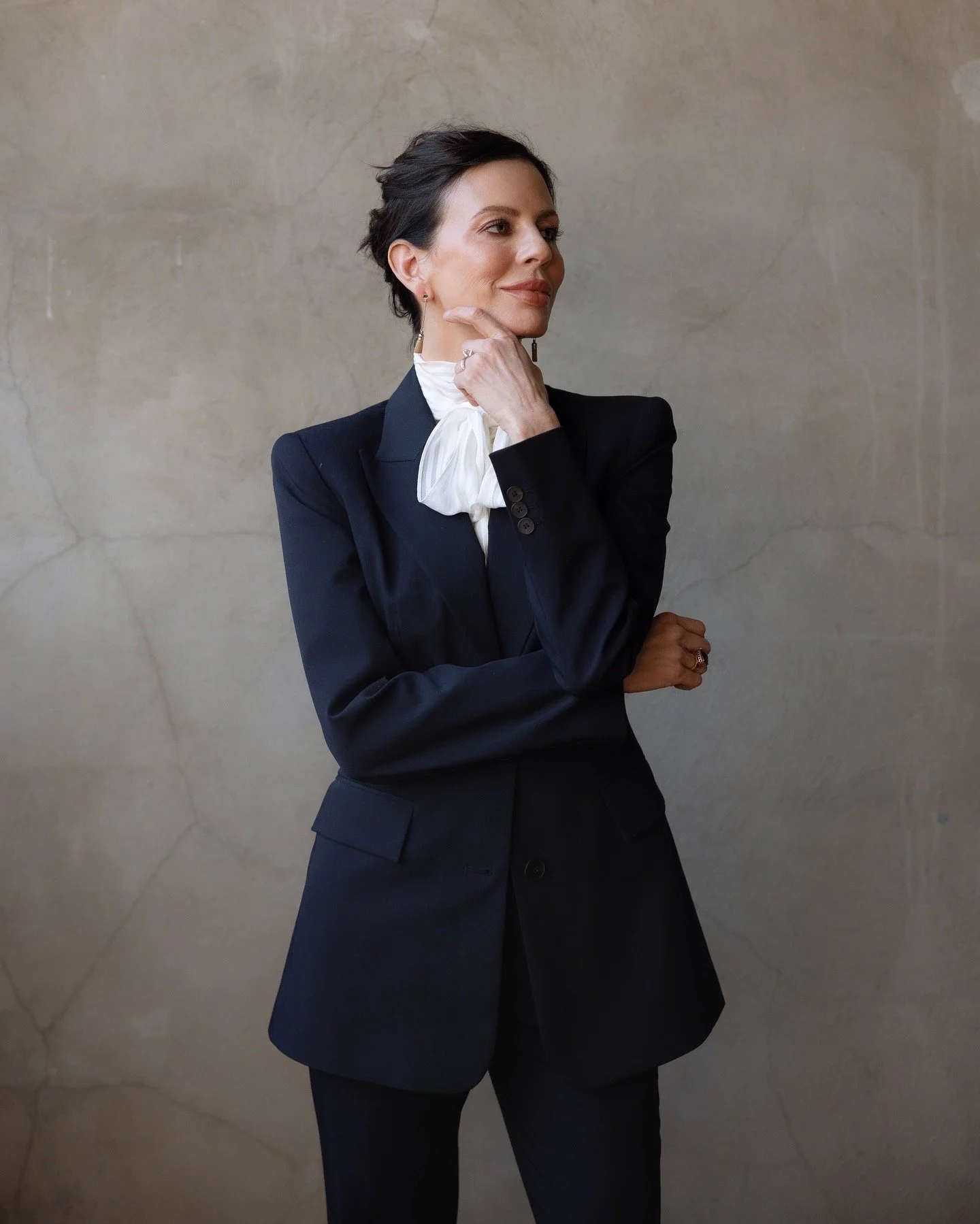
Today’s post is very near and dear to my heart for several reasons.  Our guest blogger is Ruthie Lindsey (visit her website), a designer, speaker, stylist, and overall inspirer.  She travels all over sharing her incredible story that invites us to a high and spacious place of living beautifully in the midst of painful realities.

Author Jamais Cascio once said, “Resilience is all about being able to overcome the unexpected. Sustainability is about survival.  The goal of resilience is to thrive.  I never thought I would need to know this lesson until my life was turned upside down.
-Ruthie Lindsey

Meet Ruthie Lindsey

Today’s post is very near and dear to my heart for several reasons.  Our guest blogger is Ruthie Lindsey (visit her website), a designer, speaker, stylist, and overall inspirer.  She travels all over sharing her incredible story that invites us to a high and spacious place of living beautifully in the midst of painful realities.

  I have known Ruthie now for about fifteen years and have observed from a distance her journey in and out of joy-filled vibrancy and physical/emotional pain, concurrently.  Whereas we will go months without seeing each other, every time we do, I’m reminded of something so lovely and moving.  I am reminded that there is always hope, even in our darkest nights.  She simply exudes life, style, and fun.  If you have met Ruthie Lindsey or follow her on social media, you know exactly what I am talking about.  She takes her pain and brokenness and fear; she holds it up to the light, vulnerably-courageously,  and gives it a name outside of hers.  Unmistakably, she touches the hurting hearts of countless others.    It’s beauty from ashes and that kind of beauty is simply incomparable; without need of filters.

Close to Home

My older sister and best friend, Kristen has dealt with chronic pain due to endometriosis and resulting surgical nerve damage for nearly two decades.  It breaks my heart to watch her in pain; to know she is suffering and no one can take it away from her, definitely not me.  This type of pain is systemic: when she hurts, her community and family suffer as well because we love her and desperately long to see healing.  This overcoming story not only gives me hope in facing my own nasty demons, but also for my remarkably courageous sister who has yet to see the light at the end of her tunnel.

Ruthie Lindsey’s story is not just about chronic pain, it’s about the suffering we all face in our human frailty.  It is about standing smack dab in the middle of our story, pain, loneliness, heartache and all, and writing a new ending that offers life and hope to others.  In return, our cups get filled no matter what circumstances dictate.  Hope is a hurricane of a force.  When we give it away from a place of desperate need, we cultivate sunshine in the center of our storm.  I sincerely hope you read every word of her story.  Your life will be richer for it.

The Accident

When I was a senior in high school, I pulled out in front of an ambulance that hit me after crushing my car door going 65.  I broke three ribs, punctured my lungs, my spleen ruptured and I broke the top two vertebrae in my neck.  I was told I had a 5 percent chance to live and a 1 percent chance to ever walk again.  After I was stable and off life support, they took bone from my hip and fused it into my neck by wrapping it with metal wire.  I was so fortunate to have youth and good health on my side.  After a month, I walked out of the hospital with only a neck brace.  I was able to graduate on time and I honestly went back to my “happy go lucky” life as normal.  I would occasionally get sore if I danced too much (which is often), but otherwise I was able to forget it even happened.  I felt very removed from my story.  When I spoke about it, it was almost as if I was talking about it in third person, like it happened to someone else.

A Rude Awakening

A year after graduating college, I met my very first boyfriend and we were married within 10 months!  A year into our marriage, I was walking out of a Starbucks one day, when a searing pain shot through my neck and into my head.  I fell to my knees and nearly blacked out.  The pain continued with more and more frequency, and would leave me with horrific migraines.  It was so debilitating that I couldn’t function.  I saw tons of doctors, and each time they would order a scan and an elusive black spot appeared on the film.  They simply informed me it was the magnet in the machine interacting with the wired from my spinal cord fusion.  I tried countless (unsuccessful) therapies, then was prescribed heavy narcotics for my pain.  As a result of the pain, and the medication, I began spending more and more time in my bed.  I isolated myself and withdrew from my community and my marriage.  I though of myself as a burden.  This continued for over four years, exhausting money we barely had.

After these four years of mental and emotional exhaustion, I saw a new doctor who insisted on seeing what was under that little black spot on all my films.  A $50 X-ray showed that one of the wires had broken and pierced my brain stem.  What I learned is that I am apparently the only person in the world who has ever had this.  Specialists explained the risk of paralysis involved in attempting to remove the wire, but explained that if we didn’t try, I would eventually become paralyzed anyway.  I was one wrong turn of the head away from never walking again.  Insurance wasn’t going to cover my surgery, claiming my accident as a pre-existing condition.  Two weeks later my dad informed my mother that he was going to sell our farm to afford the procedure.

Loving Well

The night before he came to see me and tell me what he was planning to do with the farm, my dad had a freak accident.  After falling down a flight of stairs he passed away shortly thereafter from brain damage.  My dad’s sudden passing was a massive loss to my family, our community and me.  I remember lying in my bed night after night pinching myself until I bled because nothing felt real.  I felt I must be in a nightmare.  We were all absolutely devastated and heartbroken, but out of that loss something really beautiful happened.  My godfather set up a medical fun for me in my dad’s honor and money and letters started pouring in.  We would get letters that said, “Your dad sent me on my senior trip” or “your dad bought my prom dress” and your dad paid my tuition” or “your dad fixed my roof,” and on and on.  When my brothers and I were kids, whenever we left my dad’s presence, he would always say, “I love you so much, remember your manners, and always look out for the little guy.”  He wanted us to see and love the people who everyone else missed, and that’s what he did.  because he had loved people so well, this crazy amount of money was raised so that I could have this surgery.

Spiral

The doctors were able to remove the wire from my brain stem by taking bone from my other hip and fusing my neck back together with titanium screws.  Although able to walk afterward, I ended up getting major nerve damage in the surgery, and now my right side feels like it’s on fire at all times.  While recovering, I ended up contracting a bacterial infection called C. diff while in the hospital for another minor surgery.  I was so sick.  I stopped sleeping.  I had constant panic attacks and ultimately I had a full-blown nervous breakdown.  My husband was away on tour in Australia, and I had the feeling my marriage was coming to an end, which sent my downward spiral into a tailspin.  I became incapable of taking care of myself, so I moved home to live with my family in Louisiana.

Wakeup Call

My breakdown made me want to change everything.  I realized that I had identified myself with my pain for so long, so that is exactly how everyone else saw me.  Every conversation and interaction revolved around my condition.  When I would see people, they would ask, “How’s your back?” or “Are you hanging in there?” In some subconscious, gross way I found comfort in that, because it helped to justify having resigned myself to never-ending bed rest.

We teach people how to see us.  I don’t know what it was, but something changed, and I decided I was tired of people always feeling sorry for me.  If we lead from a place of brokenness, insecurity or bitterness, that is exactly who they will think we are.  But, if we lead from a place of love and wholeness, with compassion and strength, they are able to see us for who we really are.  I started to speak out loud the beautiful things I saw in people, places and experiences I was having.  I was looking for it an I was speaking it, and what’s so amazing is that as I was looking for beauty all around me I was reconnecting with my community.  The more I made myself get out of my bed and connect and love people, the less I was noticing how much I was hurting.  The very nature of pain is selfish and pulls our focus inward.  When I focused my energy outward, when I was doing things that were life-giving, things that I loved, I wasn’t thinking about my pain.

Energy Shift

The best decision I made was to wean myself off of all the pain meds I had been on for so long.  It took four months to wean myself off of the meds completely.  My marriage couldn’t survive under the circumstances, and I found myself single for the first time in a decade, and as a result of my time in self-exile, the bills were piling up.  I decided to focus my energy on doing little projects around the house to help me reclaim the space as my own.  I didn’t think much of it at first, but friends began assuring me that I had a knack for design.

The Rest of the Story

In short time, friends asked me to collaborate on projects.  I started an Instagram account and began posting the things that I was doing.  People started asking me to help them throw dinner parties, arrange flowers, set tables and decorate spaces.  I learned to say yes.  Around this time I had also started having people who didn’t know me following me on Instagram.  I started getting comments like, “You live my dream life!” And “I want your life!”  And to be honest, it made me feel nauseous.  I remembered lying in my bed for years, looking on Facebook and feeling so depressed, wishing that was me playing with my children and having all of these adventures, instead of lying in my bed hurting all the time.  I needed to give people a context for my joy.  I ended up writing out my entire story and sharing it online.  I remember feeling so vulnerable and exposed when I hit publish, but I knew I needed to give everyone the full scope of what was going on.  The truth was, my circumstances had not changed.  I was still in pain every minute, I was handling a divorce and I missed my dad every day, but I had learned to live differently.

We so often think, “I will be happy once I get, fill in the blank (that boyfriend, a certain job, a husband, baby, that house, etc.).”  But those things won’t fulfill us, until we ourselves are fulfilled.  I learned to find contentment despite my hardship.  And unexpectedly, I discovered that exposing myself made me feel less vulnerable.

Living to Thrive

Suffering is one of the things that unifies humanity.  At some point or another we all experience loss.  Sometimes, feeling hopelessness can give us a new lens through which to see the world because we learn to be more empathetic to those around us.  Now when I interact with someone suffering from heartache, loss or unendurable physical pain, I immediately have common ground to stand on with him or her.  I would never wish what Iv’e experienced on anyone, and I know that there are plenty of people with even more harrowing personal stories, but if telling my story of overcoming anguish helps just one person feel like she or he is not alone in despair, then at least what I went through had a purpose.  It took a long time, but I finally found myself.  It’s not the version of a life that I fantasized about as a child, but it’s better, because it’s a life that I earned in triumphing over my misery.  I’m proud to say I learned resilience from the unexpected, and now my mission in life is to thrive.

 
Read More

Strong Series Part I: Victim Pie

I am not what has happened to me.  I am what I choose to become.

-Carl Jung

I am excited to introduce a three-part series this week called the Strong Series.  I snaked the title from my web designer, developer, and good friend Josh Rogers, I wish I had thought of it but I didn’t.  Last week before launching my post Thursday, we were texting and he asked if the Strong Series was going to kick off that week?  Hmmm…I hesitantly answered no, fearing I had forgotten about a brilliant blog series I couldn’t recall.  Well, no was right because I didn’t have a brilliant series, however, the name was just too good so I thought I’d go with it and give Josh credit on the back end.  Josh, this one’s for you.

strong-series-victim.jpg
I am not what has happened to me.  I am what I choose to become.
-Carl Jung

I am excited to introduce a three-part series this week called the Strong Series.  I snaked the title from my web designer, developer, and good friend Josh Rogers, I wish I had thought of it but I didn’t.  Last week before launching my post Thursday, we were texting and he asked if the Strong Series was going to kick off that week?  Hmmm…I hesitantly answered no, fearing I had forgotten about a brilliant blog series I couldn’t recall.  Well, no was right because I didn’t have a brilliant series, however, the name was just too good so I thought I’d go with it and give Josh credit on the back end.  Josh, this one’s for you.

For the next several weeks,  let’s explore three dangerous roles we fall into in relationships: victim, rescuer, and persecutor.  They are familiar roles for us all, so hang in and don’t blow me off quite yet!  Chances are, you have played all three of them, even when relating to yourself.

If it’s not one thing it’s your mother

Everything in life is relational; that’s why we must explore the trappings and toxicity we fall prey to when we inhabit these three roles.  They are insidiously subtle, making it nearly impossible to detect when we move into and through them.  Why?  Well, chances are we observed others modeling this behavior around us growing up; building them somewhat into our structural, relational DNA.  Look, I’m not blaming it on your mother, I’m merely saying she may not have had the best teacher either and was doing the best she could at the time.   When we understand the cold hard facts behind victim, rescuer, and persecutor, we can easily recognize the payoff involved and bust their chops, making it easy to access a way out of those childlike corners and into our true, brave selves.

Tasty Goodness

So what’s with the “pie” situation?  I thought you’d never ask.  Honestly, victim is perhaps the most easily delicious of them all.  Like pie, playing the victim has a wholesome veneer.  I mean, it’s not straight up Death by Chocolate cake porn or anything.  No way; pie is soft and fruit-filled and we comatose on it at Thanksgiving making it… virtuous.  V is for Victim Pie Virtue…until you simply can’t look at food anymore and feel like you might just vomit.  Wow.  Okay, No more v’s.

The Payoff

It’s tricky and downright painful to sit in the victim seat.  After all, legitimate hurt and/or harm have landed us squarely into this role and it feels horrible, powerless.  Yet oftentimes we stay in victim far longer than necessary.  When I sit in the victim chair, it feels throne-like initially but only leads to isolation, loneliness, and fear.  There is always a payoff to this destructive spiraling behavior, otherwise our wise adult-governed self would remain in the driver’s seat, NOT our reactive monkey brain.  Here are a few payoffs of the victim role:

  • Avoiding responsibility (“it’s not my fault” or “look what they did to me”)
  • Getting attention
  • Collecting sympathy (Poor, pitiful me…)
  • Getting to be “right” (in order to justify a resentment)
  • Proving myself to be “wrong” (in order to justify low self worth)

The Way Out

The minute that comfy victim Lazy Boy starts to feel dusty and dirty, smelling like one or more of those old payoffs, I invite you to ask yourself one simple question: What is my part in this?  At the core of that victim mentality is a need attached to a wound, a need that I must tend to.  If I’ve had a misunderstanding with someone and feel betrayal or judgement, my need is self-compassion and perhaps an honest conversation for clarification and resolve.  I must own my part in making that happen instead of having a pity party in the fetal position on my bedroom floor like a petulant child.  When we own our part, we create a new, powerful way forward.  We now assume the role of creator in our experience, cashing in the small but familiar payoff we grew accustomed to receiving.  This shift of responsibility is incredibly simple, yet super attractive and life-giving in relationships. That is, unless you forward them this post instructing them to read it because it might be “helpful”.  Oh boy, then you may need to stay tuned for Part III: The Persecutor… 

Love,

katie

xoxo

p.s. In honor of today’s tasty topic, I leave you with Ms. Patty Griffin’s Making Pies.  Enjoy!

 
Read More

The Stories We Tell

When we deny our stories, they define us. When we own our stories, we get to write the ending.

-Brené Brown, Rising Strong

I’m about to tell you something you may not have considered about yourself; perhaps something you are completely unaware of.  Despite being introverted, extroverted, highly entertaining, or completely terrified of public speaking, this truth remains. You ready for this?

When we deny our stories, they define us. When we own our stories, we get to write the ending.

-Brené Brown, Rising Strong

I’m about to tell you something you may not have considered about yourself; perhaps something you are completely unaware of.  Despite being introverted, extroverted, highly entertaining, or completely terrified of public speaking, this truth remains. You ready for this?

You are an excellent storyteller.

That’s right. You are an excellent storyteller!  Now, this may look a little different from the quintessential, Garrison Keillor archetype you envision; but it’s true. You make up stories all day long every day and tell those stories to yourself, albeit subconsciously and involuntarily.  These stories directly affect the decisions you make, the relationships you build, the behavioral patterns you lock into, and the emotions you experience.

Lessons from a four-way stop

Consider this: when was the last time someone rubbed you the wrong way? This can be someone you know well or merely a frustrating experience with a total stranger. For example, Monday I was headed to the office and pulled up to a four way stop in my neighborhood. Mind you, I was off to a great start: Coffee in hand, morning workout behind me, NPR rocking, I even had time to blow dry my hair which is rare. It tends to be shove down some breakfast or blow dry my hair, you know? Breakfast always wins. I love breakfast. Anyway, life was good and the morning gods smiled upon me…

I did not have the right of way. The SUV that did was stopped at the stop sign, about to proceed normally through the intersection as I waited to go next. All good.  Well, an older gentleman in a fancy silver sedan pulled up to the stop sign on my right, in line to go after me. While the SUV made its way through the intersection, I noticed the guy to my right  violently flailing his hands about and passionately yelling with an angry edge and plenty of volume, all while looking directly at me across the way as if I had just insulted his mother in really bad taste.

What the ?? Who is this guy and why on earth is he pissed at me? I immediately began telling myself a story that went something like this: Here I am minding my own business and obeying traffic laws while this angry person wakes up on the wrong side of the bed,  apparently feeling the need to go postal on me and ruin my morning. What’s the deal? What have I done? Is he CRAZY?!? Am I CRAZY?!?

Despite total bewilderment due to this unfounded attack, I sped off in a huff and had a bad attitude for the next hour. Whoa.  Not only am I a storyteller, I am apparently a pretty competent one!

Power Play

Okay, so what’s the point? How is this newfound identity as storyteller a crucial piece of awareness in our daily experience?  There is incredible power and creative license that accompanies the role of storyteller.  While we have minimal control over other people, world events, changing paradigms; what happens to us, we have total control over the meaning we appropriate and apply to them.

The story I tell myself about what is happening around me is the color I choose to paint life’s canvas with.
My road-raging friend from Monday may have been on speaker phone with his wife (God, I hope not) or perhaps just received some devastating news and saw me as a worthy, temporary, and safe emotional punching bag.  I will never know.

What I do know is we create narratives in the absence of information in order to complete a circle of certainty. As humans, we are hard wired this way. Our brains need to connect the dots in order to file away some semblance of meaning.  Its pure biology…survival.
In Brene Brown’s Rising Strong, we learn about a neurologist and writer called Robert Burton who explains that “our brains reward us with dopamine when we recognize and complete patterns.  Stories are patters.  The brain recognizes the familiar beginning-middle-end structure of a story and rewards us for clearing up the ambiguity.  Unfortunately, we don’t need to be accurate, just certain.”

Narrative Therapy

I believe this innate hardwiring we have as storytellers explains our ongoing cultural fascination with narrative; the most epic of enactments: good vs. evil. (Insert your favorite trilogy here; or Star Wars, duh.) Stories are sustenance promoting physiological, ideological, artistic, and civic viability.
As a writer and therapist I truly love facilitating this process in my work through narrative therapy.
In narrative therapy, we create stories about ourselves that redeem, empower, and promote healing. Despite our broken and disjointed past, the narrative approach enables a new co-authored story to set the stage for a hopeful reality. When we live out of a worthy self-concept, the story of our life takes on significance and abundance.

The Edit

What stories are you telling yourself today?  Chances are, there are some really compelling ones that you like to listen to a lot.  What kind of experience do these stories promote? This week, I challenge you to observe, write down, and edit them if they do not serve your process well. This is where the fun begins, my friends. This is where we get to drive that storytelling ship into hauntingly beautiful and uncharted waters. Pick up your pencil; your time is now.

 
Read More

Brainspotting 101

Where we look affects how we feel

What is Brainspotting?

The world of psychology is quickly progressing in the direction of brain based science these days, which is beyond cool to me. Brainspotting (BSP) is a “brain-body based” relational therapy developed by Dr. David Grand used to heal emotional pain and blocks, and is especially effective when treating trauma. Here’s how it works:

Where we look affects how we feel

What is Brainspotting?

The world of psychology is quickly progressing in the direction of brain based science these days, which is beyond cool to me. Brainspotting (BSP) is a “brain-body based” relational therapy developed by Dr. David Grand used to heal emotional pain and blocks, and is especially effective when treating trauma. Here’s how it works:

Basically, when you hold a particular eye position while concurrently having biolateral sound in your ears, it is possible to access trauma stored way down deep in the subcortical part of the brain, a place that traditional talk therapy alone cannot touch. Because trauma is housed, or filed away in capsule like bundles in this mid part of the brain, techniques such as BSP have been proven to unlock these painful experiences, allowing for the brain to process them as past tense events instead of crippling now and future experiences.With the lightened physical and emotional load, we are no longer weighed down by trauma and associated pain trapped in the body and can function at much higher levels. Many people, including myself, experience relief in body tension and alignment, as well as a greater ability to be in the present moment, free from that constant tendency to live “out there” either in a past or future mind set.

Intrigued? There’s more…

Each and every brain is literally a genius, containing one quadrillion (1,000,000,000,000,000) neuron connections (Daniel Amen). That’s 15 zero’s people!! That being said, those connections link and associate to and around traumatic experiences and build over time, forming capsule like containers in the mid brain, which controls our bodily function, instinct, thought, creativity, and spirituality. This is why trauma often stunts functioning and points us to therapy in the first place. Perhaps the best news I’ve gathered in my personal research and training is that the brain is so powerful, so resilient, it is capable of healing itself. BSP advances this healing dramatically. I have been fascinated by the mind-body connection for some time now, and learning this new technique is only whetting my appetite for greater healing through that connection.

Who benefits from Brainspotting?

BSP is helpful and applicable for anyone facing challenges and feeling stuck. It is used often for anxiety, depression, relational problems, functioning problems, and chronic pain. Trauma victims benefit hugely as stated earlier. In thinking about trauma, keep in mind that this means anything unwanted or unnatural that we experience. There are the “Big T” traumas and “Little t” traumas. Our unique stories of personal pain and hardship are all relative; I can’t discount my trauma just because it might not look as vivid and awful as yours. Your story, your pain is what you know and that makes it enough to reach out for resources of healing and support. BSP and therapy in general must always hold our unique personal journeys very gently and without judgement.

The Creative and Brainspotting

One of my favorite things about BSP is its proven effectiveness with creatives, performers, and athletes. As mentioned earlier, trauma can severely stunt functioning. By getting into those deep, bundled associations around past trauma, we let go of them in the present moment and see them as past tense.

This enhances our creative and athletic performance and frees up space for mindfulness, expression, and mind-body connection.

Does BSP replace Talk Therapy?

Not at all. I’m a big believer in an integrated approach to therapy, tailoring treatment to fit the specific and unique needs of the client. BSP is part of this holistic approach and by no means substitutes the need for talk therapy. However, sometimes I do believe we talk around challenges and issues in therapy too much, rebranding it in our beings. If I am doing my job to the best of my ability, clients will spend less time in therapy and more time out in the world connecting to their best selves. I am beyond excited to incorporate brainspotting into my therapeutic model in order to help clients achieve greater peace and fulfillment than ever before.

 
Read More
ACHIEVING SUCCESS, CREATIVE LIFE, SELF-CARE Katie Gustafson ACHIEVING SUCCESS, CREATIVE LIFE, SELF-CARE Katie Gustafson

Celebrating Summer: Rest & Ritual

Summer is officially here. I know…crazy. I remember as a little kid and hearing “old people” talk back and forth about how time flies and they can hardly believe it’s already July or December or what have you. Well, here I am now, talking that same kind of talk (with a gentler perception of “old.”  ).

summer.png

Summer is officially here. I know…crazy. I remember as a little kid and hearing “old people” talk back and forth about how time flies and they can hardly believe it’s already July or December or what have you. Well, here I am now, talking that same kind of talk (with a gentler perception of “old.”  ).

Summer looks a lot different than it once did. Save for a glorious week away somewhere sunny with sand if I’m lucky; now it’s the same as any other time of the year, just with blistering Tennessee temperatures and less motivation to do the stuff I deep down want to do. The tendency is to get lazy while waiting for the hustle and bustle of a more scheduled fall routine to kick in and a pumpkin spice latte to prove it. At least that’s the way it goes for me. The problem is, I really love productivity and I tend to fall behind on projects I want to see take flight right around this time. Depending on how you look at it, I suppose most “problems” actually signal great opportunity.

July 4th is right around the corner, and many of you are enjoying some well deserved R&R with friends and family. Rest is such an integral part of life and productivity, allowing us to slow down, listen to our bodies, and get perspective of what is most important in our journey. Incidentally, it also provides fresh vision for the season ahead, and in our case, the second half of 2016.

*****

Creativity is a habit and the best creativity is the result of good work habits. -Twyla Tharp

With this in mind, I want to share one of my favorite creative living resources with you as practical support for the coming days and months. I have been a huge fan of Todd Henry’s work for many years now. I specifically enjoy his podcast, The Accidental Creative. It has inspired me to dream big and not shy away from the work and follow-through necessary to make my creative dreams a reality.

One of his many applications I’ve taken advantage of is The Dailies. Quite simply, The Dailies are a set of daily , holistic practices that move us closer to a professional, creative, and/or personal goal we desire to meet. (I use the word “goal” hesitantly as it has a cumbersome and obligatory feel to it. Think of something that gives you great excitement and energy as opposed to something you are supposed to accomplish).

You can download The Dailies here. What Todd has done for us is: a) take out the foggy guesswork of exactly what needs to get done each day, and b) create that lovely routine that sometimes gets lost in the shiny shuffle of our action-challenged, scattered brain mass. It’s like reverse engineering and a brilliant approach to creative work; hell, any work! This may seem incredibly logical—and it is. Those larger than life aspirations are really quite simple to achieve when broken down in an intentional, systematic way.

In my experience, big picture thinking/dreaming is far easier (and more fun) than knowing and executing the loads of decisions that must be be made in order to achieve our desired outcome. By using Henry’s template for The Dailies, we are able to suss out those baby steps that build over time to create a daily ritual, eventually closing the “aspiration gap.” You know that gap, right? Another one of Henry’s terms defining the daunting distance between where we are now and where we intend on going. Good stuff!!

That’s it. I’m capping this thing. Go refuel and recharge, remembering the beautiful blessing of freedom we share as a nation and as individuals. May this season usher in greater creative, physical, spiritual, and emotional freedom than anything you have ever tasted.

 
Read More