

The Blog
Recently Featured


All Blogs








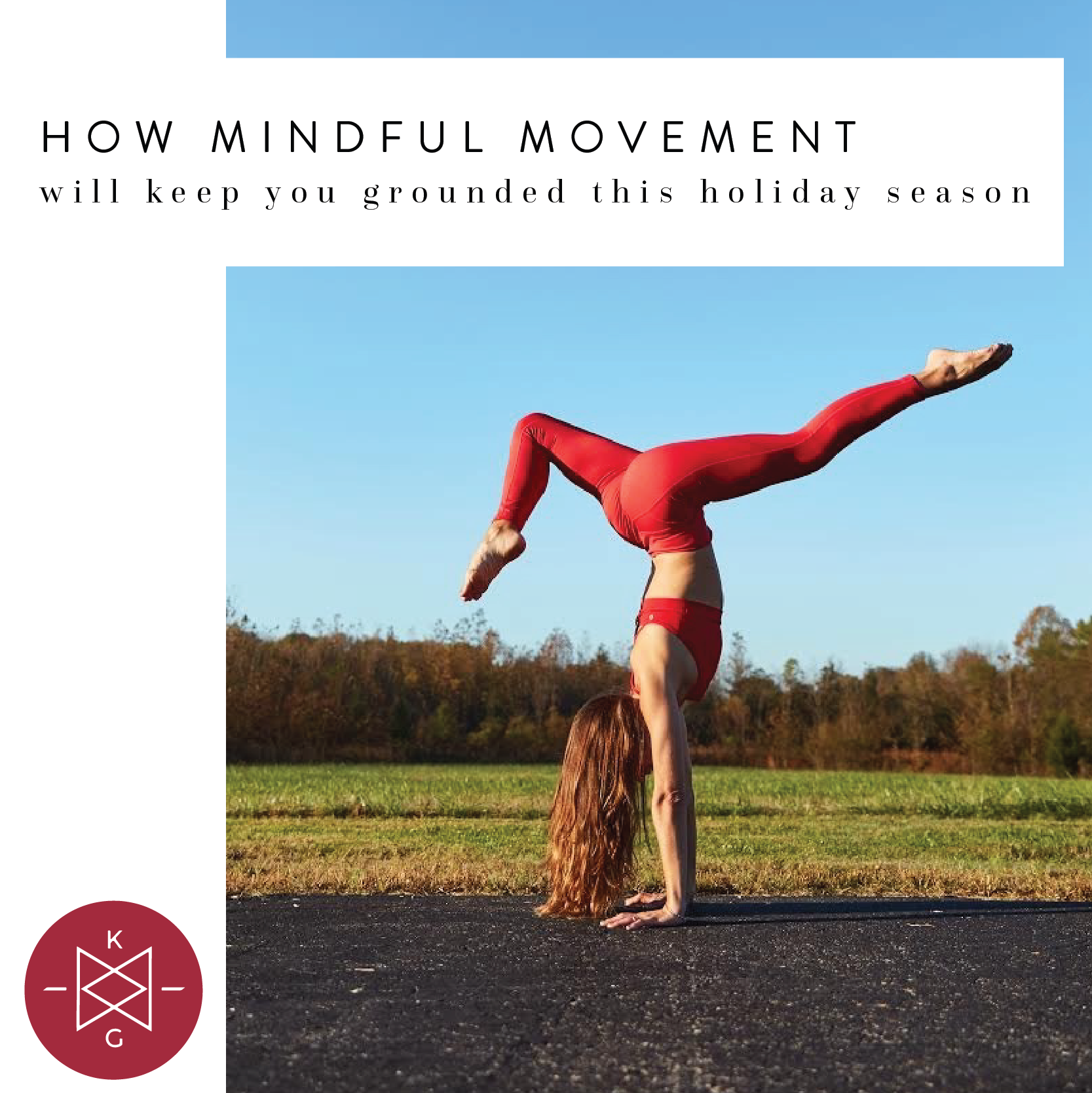
How Mindful Movement Will Keep You Grounded This Holiday Season
“The single most important issue for traumatized people is to find a sense of safety in their own bodies.”
-Bessel van der Kolk
Today you’re in for a treat! I’m bringing my pal Koula Callahan, master yoga instructor and speaker, on the blog to share why movement, namely yoga, is incredibly powerful and important for us to practice as we move through the holiday season and beyond. If you’ve always wondered what all the fuss is about—and why yoga is so effective—today is the day you’ll get some answers.
Let’s dive right into my chat with Koula!
(1) Katie: So how does movement help regulate/process emotions?
Koula: Movement is a critical part of the healing journey. So many of us forget to incorporate and listen to our bodies as we try to process emotions and hardships and we wonder why we keep feeling stuck. There’s a reason though—our entire life’s story is stored in our cells and in our body tissues. And each part of the body shares with our brain the responsibility of memory. In fact, our bodies store more information than our brains do. So if we try to process our emotions only by accessing our brains, we miss out on an enormous amount of “data” stored in our bodies that actually helps us more than our brains do. Movement helps us tap into that reservoir of “data” and develop a more integrated approach to processing emotions.
(2) Katie: Why yoga? What’s all the fuss?
Koula: Gosh. Yoga is so freaking helpful for so many reasons. Aside from being a killer workout (long lean muscle development!!), it’s the only movement practice that focuses on presence and awareness first. A lot of people think that they “aren’t good at yoga” because they aren’t flexible. That is so not true. It’s not about flexibility, it’s not about strength, it’s not about whether or not you can touch your toes. The physical practice of yoga is all about connecting with yourself and bringing the mind, body, and spirit into union with one another. Focusing on presence and awareness from moment to moment makes the practice a moving meditation. I think that’s what’s hardest about it. You have to face the truth of what’s really going on with yourself. And you also get killer abs and triceps :)
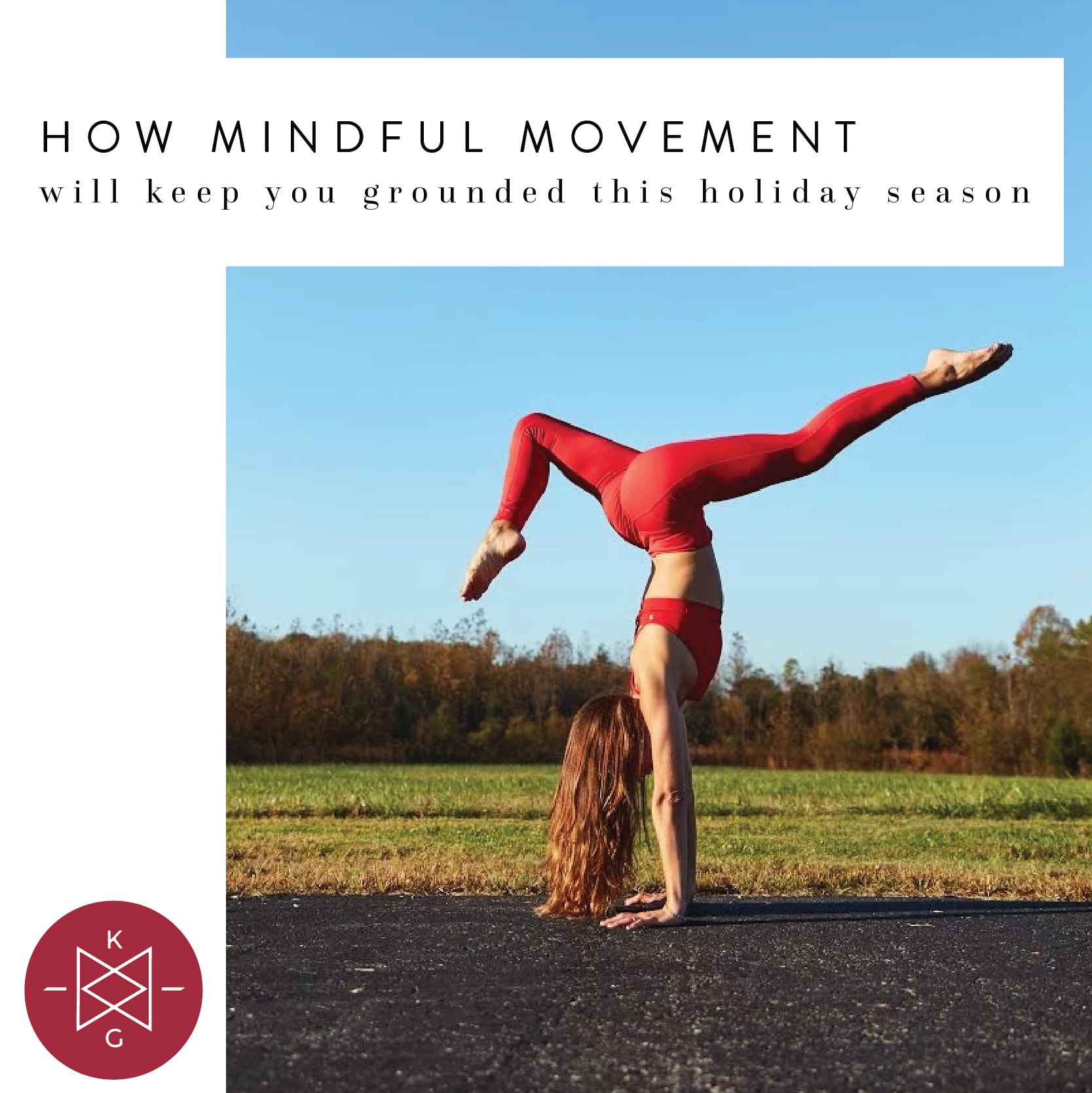
Katie: Well you are quite the inspiration there (pictured above!!)
(3) Katie: Why should we be practicing yoga this holiday season?
Koula: Yoga reduces anxiety and stress, helps us sleep better, regulates our hormones, flushes out our organs, boosts our immune systems, etc, etc, etc. The benefits are tremendous. Honestly, though, I suggest practicing yoga with consistency over the holiday season because it keeps you grounded in a time when everything seems chaotic. This simple, practical tool is available to everyone to help us stay calm and balanced regardless of what might be going on in our lives or families.
(4) Katie: Speaking of COVID, what if we’re a bit gun shy to go to an actual yoga studio with cases spiking right now?
Koula: Most studios have a virtual option for their in-studio classes. If there’s a studio you love, check their website for virtual options. There are also digital class series that major brands offer — I like Alo Yoga and Peloton’s virtual yoga classes.
(5) Katie: Why is yoga so important to you as a teacher and participant? How did you come to find it?
Koula: My yoga practice has been the through-line of my life as an adult. It’s the tool I rely on most to “self-regulate” my emotions regardless of what’s going on around me. When I come to my mat, it forces me to get present and simplify things that I have made way too complex in my life. When sh*t hits the fan in my life, my yoga mat becomes my little sanctuary where I can pay attention to how I feel and nourish myself. I really do notice when I go a few days without it — my sleep is off, I’m more irritable and less kind to myself. I love teaching for many reasons, one of which is what I learn from my students and their willingness to show up fully. It’s beautiful to experience the sense of connection that a yoga class creates and it really does fill me up when I get a chance to teach. To be a good teacher I believe I have to be a student first, and I’m grateful for what each one of my students teaches me.
Thank you, Koula! You have enriched my life and so many others with your passion and ability.
For more about Koula, follow her on Instagram @koulacal.
Well-Spoken: Your Secret to Self-Care During the Holidays
“Where we think we need more self-discipline, we usually need more self-love”
-Tara Mohr
Self-care during the holidays, especially in 2020, may seem a bit out of reach. With kids home, wonky work schedules, and the limitations we all face, your only option may be to let it slide and just call it a day...or year.
As tempting as that may seem, I want to suggest we all have a responsibility to practice true self-care during the holidays. It will likely be what allows us all to finish strong and have grace and compassion for ourselves and others.
This might sound a bit dramatic due to confusion around what true self-care really is. With that said, I’d like to share my thoughts on self-care and how we can create space for it amidst the chaos of the season.
Unfortunately, society has taught us a version of self-care that falls drastically short in terms of actually promoting deep care and restoration. It makes sense to me that many of us have lost hope in it or see it as indulgent and even selfish. Spa treatments, retail therapy, and wine nights to take the edge off might appear to work temporarily, however they fail to support our process in any lasting change. They can also get really expensive! Don’t get me wrong, I’m a huge proponent for pampering and celebrating, yet we need to be clear about the fact that these are not the same as self-care.
So if these self-care imposters temporarily boost our spirits (or appearances) yet leave us feeling just as empty as before, don’t you think it’s time we take a deeper look at what real self-care looks like?
Life continues to present us with challenges, especially throughout the holidays as expectations run high and certainty—low. We need a brand of self-care that will help us stay present as opposed to escaping our lives—one that will connect us to more compassion, energy, perspective, balance, and grace in order to move through the tough times and even thrive amidst the chaos.
I believe self-care is a process of befriending yourself. Much like self-compassion, it’s showing yourself the heartfelt care and support you’d show a loved one in need. It’s learning to speak to yourself with a softer tone. It’s developing practices that promote connection rather than isolation.
If self-care starts with befriending yourself—speaking kindly to yourself—and grows from there to a practice of bringing balance and restoration to the mind, body, and spirit.
The initial work of self-care then becomes what I like to call “kind conversations.” It’s speaking to yourself with a gentle tone instead of a harsh one. It’s telling yourself those things you need to hear and becoming more and more aware of the automatic dialog happening in your head. It’s starving out the inner critic that keeps us stuck in scarcity.
I’ve got great news: the Enneagram is a valuable tool to help you quiet that inner critic and flip the dialogue.
If you aren’t quite sure what you need to hear, I’ve got some ideas...nine specifically.
Type 1: You are good! You’re doing such a great job.
Type 2: You are loved and chosen just for who you are. Your needs matter.
Type 3: You are loved and valued for being you. There’s nothing you could do to change that.
Type 4: You are seen and known for who you are. You are special.
Type 5: Your needs are important. It’s okay for you to be comfortable.
Type 6: You are safe and secure. You can trust yourself.
Type 7: You are taken care of. The present moment is a safe place for you to be.
Type 8: Other people can be trusted. You will not be betrayed.
Type 9: Your presence matters in this world. Your voice needs to be heard!
Take these type-specific messages and build out some kind conversations from there.
So, my Dear, next time you make up a story in your head that there’s simply no time for self-care, remember that self-care isn’t about taking time out, it’s taking time back. Kind conversations will only build a strong self-care foundation and make your time this holiday more special...and sweet.
5 Conversation Starters for Your Thanksgiving Table
“Words have magical power. They can either bring the greatest happiness or the deepest despair.”
-Sigmund Freud
Happy Thanksgiving!
We’ve made it this far, 2020. You’ve presented us with plenty to consider. You’ve also invited us into a deeper level of consciousness and insight—insight about what’s really important to us. The thing is, you’ve also put a high-powered magnifying glass up to our differences. So much so that the bonds of friendship, family, and beliefs are being challenged.
I’ve heard it in my own life and in the lives of clients alike: there has been great heartache and hurt around dinner table discussions everywhere due to our differences.
And yet this Thursday extends the invitation for togetherness, gratitude, and feasting. I believe we need to be intentional about our conversations, honoring each other’s differences and sacrificing the need to be right for the privilege of being in relationship.
So I thought it might be helpful to share with you a few conversation ideas to keep this most unusual holiday season a gracious and enjoyable time. We may not share ideological beliefs, but what we do share is the human condition—flawed as it may be—and the need for connection and compassion.
Here are a few conversation starters to keep us on track as you gather around the turkey:
What’s the most surprising thing you’ve learned about yourself in 2020? Go around the table and answer this question, keeping it in first person—make it about you and your experience—not about the actions or beliefs of others.
How will you finish strong in 2020? What are you taking with you? What are you leaving behind?
What have you noticed about yourself as it pertains to your Enneagram type? This is a great way to share with others a bit more about how you tick, especially in the stressful year we’ve had. It’s a fun way to tell some of your story from an Enneagram or personality perspective.
How has love operated in and through you this year? What are ways you’ve given back or championed those in need?
And finally, the piece de resistance, what are you most grateful for so far this year?
Intention creates meaning. I believe when we have meaningful gatherings, we invite more connection, more joy, and ultimately more purpose in our lives and spaces. Though our table settings may seat a smaller cast of characters, let’s make this Thanksgiving and holiday season one to remember (in a good way ;).
How to Enjoy Food this Holiday Season
“I would maintain that thanks are the highest form of thought, and that gratitude is happiness doubled by wonder.”
-GK Chesterton
I’m pretty sure I say this every year, and here it goes again: I can’t believe the holidays are upon us. Though they may look a bit different this year with the extra precautions we’re all having to take, one thing remains...food will still be at the forefront.
Especially next week at Thanksgiving—the heightened emphasis on that decadent meal with butter dripping from every possible opportunity leaves so many people feeling anxious due to complicated relationships with food and body image. I know this struggle all too well as someone who suffered a deadly eating disorder in high school. I’ve worked hard to maintain a healthy relationship with food bolstered by a more gentle and balanced approach. Though I feel a million times better today and don’t struggle in the way I used to, I have a very special place in my heart for those who suffer from this ongoing battle with themselves and food.
In fact, most women struggle at some point in their lives with a disordered relationship with food. An estimated 30 million people, men and women alike, suffer from actual eating disorders through the course of their lifetime. Ya’ll, that’s wild. And incredibly sad.
Whereas I highly encourage you to seek professional treatment both with a therapist and physician if you are struggling, I wanted to share with you a few ideas on how to approach the next month and a half with more grace and enjoyment.
Mindful eating
I’m a big believer that it’s not the actual food that creates the problems, it’s our relationship with food. So many of us, myself included, use food as a medicator, to numb and relieve temporary emotional pain. That, or we use it to celebrate good news or important events. So often, this is an unconscious process—one we don’t even realize is happening. It’s automatic, habitual, and ingrained.
Simply becoming more aware of what you are eating, when you are eating, and why you are eating is incredibly supportive in a more mindful relationship with food. I like to call this mindful eating. It doesn’t mean deprivation either! It simply means slowing down enough to eat with intention and awareness. It’s proven that as we slow down our actual eating time, we can connect to our bodies more, identifying when we are initially full.
Exercise
As many of us will be more homebound this holiday season, we can perhaps focus on maintaining a solid exercise program whether it’s a brisk morning walk or streaming a yoga class. Even 10 minutes a day can make a difference. Let’s face it, we will be indulging a bit more in the coming weeks. This is the perfect opportunity to balance it out with mindful movement. As emotions also run high, physical exercise is an incredible natural anti-depressant and anti-anxiety. Give yourself the gift of intentional exercise these upcoming weeks—it's always a good idea!
Health-ish
You’ve heard about the 80/20 rule, eating healthy 80% of the time and indulging 20% of the time. I try to follow this as closely as possible. However, as I mentioned earlier, the holidays are a time for celebration and merry-making. So you may need to extend a bit of leeway in the direction of a 70/30 rule. Eating healthy 70% and indulging more like 30%. The goal is to eradicate shame when we eat a bit more than we’d like or even gain a few pounds. No one ever improved their relationship with food from a baseline of shame. And that’s what we’re going for: practicing a better relationship with food rather than putting unnecessary pressure on a strict diet.
My favorite thing about Thanksgiving is that it’s not just about food—it’s about gratitude. Enjoying food from a place of gratitude and abundance rather than fear and scarcity is the goal.
I’m so grateful for you, and that we are on this beautiful journey together.

Confused About Your Enneagram Type? Let's Talk.
“Your Enneagram type is both your opening to love and your obstacle to love. It’s so much more than a typology system, it’s a tool for spiritual conversion.”
-Leslie Hershberger

Do you go back and forth between Enneagram types? Perhaps you’ve taken a few online tests and they’ve given you different results. The first one pegged you as a seven. But it was neck and neck with type two. You waited a couple of months and took another one only to learn you’re now a nine? Wha? You’re confused and a little pissed off because you had to pay for that last version.
HELP!?
First off, don’t be discouraged! This is totally normal and you’re not alone!
The human personality is not static. It’s constantly vacillating between healthy, average, and unhealthy levels (hopefully not too unhealthy the more self-aware we are!) throughout our days, weeks, and months.
Online assessments can’t measure how tired, stressed, or emotionally aware you are. They also can’t determine your mood or how many cups of coffee (or glasses of wine) you’ve downed before taking them.
Sure, they’re a helpful jumping-off point. (Some more than others!) Yet fully knowing and understanding your Enneagram type requires a bit more digging. In fact, I believe it’s part of its effectiveness.
There are dozens of personality tests out there: MBTI, StrengthsFinder, DISC, to name a few. I love them all, too! However, the Enneagram is unique in that it goes deeper than surface, personality-driven behavior. Sure, that’s part of it, but the Enneagram also helps us understand the “why,” or story, behind our thoughts, feelings, and resulting behaviors.
Online tests simply can’t explain the sacred nuance of your story.
However, doing the deeper self-study required to fully know your Enneagram type can.
After all, we make choices, big and small, based on the story we’re living out of. If we’re suffering, we must change more than surface tactics or behaviors. In order to heal and transform, we’ve got to get to the root of the problem—we’ve got to understand our story.
Self-discovery is a winding journey, not a mere moment in time. It’s about deepening knowledge and understanding. In fact, it’s really about self-befriending.
If you’re on the fence about your type, good! I believe it’s an invitation (and excuse) to deepen this beautiful self-friendship you’ve already started.
So how?
You’re already further along than you think!
I’ve got a helpful next step for you. Scheduling a typing interview is incredibly helpful in fully unpacking your story and discovering your type. It’s some of my favorite work to do with clients. Basically, it’s a detailed inquiry process steeped in the Narrative Enneagram tradition that provides your top 2-3 probable types. This allows some direction and margin for clients to then read up on those possibilities and live with them a bit before making a hard decision.
We do this in a creative, collaborative way with clear next steps mapped out. Best part? It’s really fun!
Spoiler alert: you are not a pure type. No one is! You lead with a primary type, yet you have a bit of all nine in you. We are complex and glorious creatures, remember? The Enneagram has the dynamic infrastructure to meet and guide this complexity into greater understanding and opportunity.
I’m convinced your story is far too stunning to be put in a box. Perhaps it’s time to take it out?
Curious about an Enneagram typing interview? Sweet! Let’s talk.