

The Blog
Recently Featured

All Blogs






Reaction Formation
“Between the stimulus and the response there is a space. In that space, there lies your freedom and power.”
-Victor Frankl
Back in May, I attended an Enneagram retreat led by Ian Cron, author, Enneagram Jedi, songwriter, priest, and therapist. (Yeah, he’s a real bump on a log.) It’s taken me nearly a month to fully unpack it… SO good. I consider myself an Enneagram enthusiast. I’m no expert, yet I’m eager to grow that base of knowledge because I still feel, after a decade of self-study and implementation, it is the most powerful tool for self-understanding and transformation we have. Ian took around forty of us deeper into the tool over the course of two and a half days, and I’m beyond grateful for the new and powerful insight gleaned.
One of the many golden nuggets I walked away with was the above Victor Frankl quote. It kills me. I sincerely believe that most of our perceived problems would dissolve if we cultivated, or grew, that space between what life throws at us and how we respond. Let’s stop right there. Even just the word “respond” is generous. I tend to default to cruise-control living more days than not, reacting out of emotion instead of responding out of presence. Why? Because the space between the stimulus and response is so stinking small! What is not so small, however, is the old ego blaring at full-volume when I live like this.
For example, let’s look at a scenario we can all relate to—traffic. If you live in a large-ish city like Nashville (especially in the last 2-3 years), chances are, you have been tweaked by traffic. One of my absolute biggest pet peeves is when I’m stopped at a four-way stop and instead of obeying traffic laws, people try to be sweet and “let you go” when it’s not your turn. I’m all for southern charm and hospitality, but somebody’s going to get hurt if we all play nice instead of following the basic order.
This happened the other day. A well-meaning lady in a heavy black sedan with red lipstick and statement earrings sat across from me at a four-way stop. It was her turn to go. She flashed a toothy grin my way and waved her hand for me to go. I mean come ON. I played along but rolled my eyes and may have even shrugged my shoulders very dramatically. Small space alert! I reacted out of frustration instead of responding from curiosity and openness. Ew.
I was also asleep in trans, living out of a really crappy story that read something like this, “Why are people so lame? She should see traffic laws (and life for that matter) the way I do.”
Zero compassion. Zero patience. Bags of judgement.
Sure, anger was at the surface. But guess what was really going on underneath that jagged reaction? The real underlying story was fear. It went something like this, “Things won’t work out unless I try to control them.”
Do you have a particular narrative that gets you into trouble?
Here’s some good news: the thing that separates us as humans from animals is the ability to make up stories. We’ve also been given the glorious gift of imagination in order to write them well. Guess what we need in order to write good and truthful stories? We need space. Why? Because we write best out of stillness, not chaos. Also, because reactionary, fear-based living will drive us mad (and others away).
If you and I are courageous enough to sit in that space, feel our feelings, and simply observe the moment at hand, we have stepped out of ego— the need for control—and into the freedom of essence. By essence, I’m referring to the loving, open, and authentic “true self.”
From that space, you create meaning, thought, feeling, and action that is powerful beyond belief. This is the space where you get to use your God-given gift to write really compelling stories.
This all sounds so lovely and airy-fairy, but how do we grow that space and find our freedom— our power?
Meditation is the most effective tool I’ve found to cultivate the inner observer, or witness, we all have, yet tend to neglect. Any mindful awareness exercise or guided breathing and meditation allow us to relate to our thoughts and experiences in a softer, more open way. Most importantly, it broadens the space and cushions the fall when life throws us the inevitable curveballs.
Yes, it feels boring, uncomfortable, and frustrating at first, but after a while, you will start to crave it. If you’d like to deepen your own practice or learn more, I’d recommend a guided meditation app such as Headspace or Calm.
We are spirit beings living in a physical world. It’s time we tend to that pure, loving part of us in order to create some distance between how we experience the world and how we respond. Your imagination is your MVP here. Break it open. Look around. Make a home.
Stay awhile.
“The opposite of home is not distance, but forgetfulness.”
- Elie Wiesel
Love & Gratitude,
Katie
Failure School: All the Things You Never Learned
99.99999% of your fears
live only in your imagination,
in anticipation, and in memory.
Even if the ‘worst’ happens,
you’ll find yourself dealing with it in the moment,
responding from a place of presence.
You don’t have to deal with it now.
You’ll handle it then.
And who knows:
The ‘worst’ thing may turn out
to be your greatest teacher,
your most profound call to awakening,
an invitation to the kind of courage
of which you’d never thought yourself capable.
Fear isn’t your enemy,
but a signpost.
Breathe into the moment.
– Jeff Foster
I just googled the definition of “failure.” Here’s the most comprehensive and concise meaning I found: “The omission of expected or required action.” Sounds pretty benign, right? So matter of fact?
The brand of fear I’ve experienced along the way as it pertains to failure has been a far cry from this bland “omission” situation. Quite the contrary, it’s been a crippling and immobilizing force that has stunted growth, joy, and relationships. In fact, I imagine you’ve bought into a similar lie at some point along: “My worth and value are a direct result of my level of success.” I’ve heard the record spin round and round in my office. I’ve seen its death grip on friends and family alike. As a culture, we are terrified of failure.
I’m fascinated by this unruly expectation we place on ourselves to avoid failure. After all, WD-40, bubble wrap, and pacemakers are all inventions conceived through “failure.” I’m fairly certain those guys are not still sulking over why their original ideas didn’t pan out the way they’d hoped. No, they all own islands, strange looking outfits, and private jets.
In light of this, I want to pepper your thoughts with some key insights that have made a lynchpin shift I in my understanding and approach to failure.
1) Expectation is a set-up
The operative word in the above definition is “expect” not “omission” as it pertains to our study here. Why? Well, simply put, because it’s the subjective that we tend to personalize, not theobjective facts. If we could see failure through the lens of objective curiosity as opposed to an extension of who we are, we would be able to live out of a much softer narrative. For example, “I either deliver or I don’t, and my life’s worth and value aren’t tied up in that slice of history.” Now that’s freedom from the fall!
We’re so tightly wound and attached to the narrow expectation of who we should be and how we should perform that we lose sight of the incredibly vast and curious horizons that result in a deviation.
2) Resilience matters more than outcome
I’ve bombed so many performances it might lead you to wonder if I had a screw loose as I continued pursuing music early on. For some ungodly reason, I kept going even though it felt like cruel and unusual self-harm. Strangely, no one ever told me I sucked or bombed it or that I should definitely not quit my day job. I only received encouragement and kindness. I realize, we are in the South, yet I’m a pretty good read, and they seemed genuine. Building those resilience muscles eventually led to lots of bigger opportunities.
Have you ever watched a toddler on the cusp of walking? First of all, it’s high and hilarious art. Also, the ONLY way their tiny muscles are made stronger is by falling and getting up—over and over and over again. And we “ooh” and “ahh” and gawk like grown chimpanzees about to be fed at the circus in response. Go figure. Instead of asking the paralyzing question, “How can I avoid failure?”, we need to ask, “How can I better practice resilience?”
3) The real fear is the feeling
So why is it so terrifying to fail? I believe it’s because we are afraid of the way we will treat ourselves on the other side. We’re really afraid to feel our feelings of disappointment, embarrassment, and shame. However, these are all valid emotions we will absolutely rub up against along the way! Wouldn’t it be better to learn to relate to them a bit differently?
Like the poem says, nearly every shred of our fears live in the stories we make up about them, our imagination. Our fears are rarely tethered to reality, yet we drive the shame ship around as a result. We’re typically our own worst enemy, not the failures we experience.
Sure, the outcome is humbling at first, but by elevating our belief about failure, we construct a new brain pathway or go-to storyline that facilitates self-compassion instead of self-flagellation.
We don’t evolve by playing it safe in a mole hole, but by staying present at the crossroads of failure and opportunity.
4) There are two kinds of failure
Before you go poking holes in my sunshine, I’ll clarify an exception to the rule. There are two types of failure, and I'm referring to failure as something necessary for growth and success.
There is all-in failure and half-ass failure. All-in failure is when we’ve shown up, given our all, and fully engaged in the pursuit at hand, yet for whatever reason didn’t quite make the cut. The passion and effort are there, but the outcome is not—not yet anyway.
Half-ass failure, as you might imagine, is missing the mark without giving it a fighting, bleeding-heart chance. We’ve all been there, yet it’s not a helpful pattern as it ultimately becomes a self-fulling prophecy. Oftentimes, this is simply a good indicator that we may not really want what we’re limping for and a redirect is necessary.
I’ll be coming in hot this Thursday with a very interesting practical tool for you. Be looking for that as you won’t want to miss it. For now, I leave you with the words of the man who’s been quoted as many times as Oprah. He’s a mixed bag of courage, success, excess, bull-headed stubbornness, and legend all in one. He’s also a man very acquainted with failure. His stories and words have a vibrant life of their own, well after his last breath.
“Success is not final. Failure is not fatal. It is the courage to continue that counts.
- Winston Churchill
Love & Gratitude,
Katie
xoxo
#failforward, #designyourlife, #winstonchurchill, #resilience, #couragetofall
Food, Fashion, & the Pursuit of Happiness
“No emotion is final.”
If there are three things I am deeply passionate in this life, they are surely food, fashion, and mental health (among other things, of course). Along my squirrelly (at best) career path, I flirted hardcore with romantic ideas of moving to NYC and working in fashion or becoming a chef more times than I can count. I finally chickened out because A) I love to cook, but on my own watch and for people who are nice, and B) God spoke to me through a slew of convincing nightmares after watching “The Devil Wears Prada.” I’ve never been so terrified of Meryl Streep in my life.
Eventually, I landed where I am today, in the armchair of psychology/mental health. Yet I must say, the beauty and inspiration I find in cooking/hosting, as well as fashion, is something of therapy for me.
You may guess where I’m headed here.
Last week the human race suffered a massive loss. I was gutted upon hearing of Kate Spade’s suicide. Then, Anthony Bourdain’s only two days later? I never had the opportunity to meet them, but somehow, somewhere deep down, I felt connected to them, like we might have been friends. I loved their gumption and their wildly unique approach to business and art, and most of all perhaps, I love that they inspired us to get a little bit outside of our comfort zones and do something remarkable.
After wrestling with sadness, anger, and confusion for a solid week, I think I know why the mack truck of this news hit me so hard: I too, know the desolate, lonely corridors of self-destruction. In the throes of my own crippling depression, self-loathing and a seriously jacked up belief-system pushed me to the edge of this life, photoshopping out any inkling of hope. I didn’t have the rational mind to reach out for help in those times. Thankfully, I had enough people around who did and could carry my frail heart into truth and light.
Left to my own devices though, I’m not entirely sure I’d be here today without them.
I’m certain you or someone you know has had a similar story.
Now, in my rational, healthy mind, I’ve learned to practice (and love) asking for help. Hell, you’d know it all the way in Seattle in less than a minute if I stumped my big toe.
However, the fact is depression can very much be a fatal disease. This logical ability to reach out and “ask for help” simply isn’t baked in.
Last week reminded me why I do what I do. It is why I keep showing up every week to write these silly posts that may never even be read. I don’t care; the conversation must go on. It is why, in the end, you and I must not only hold space for the hurting around us but proactively reach out to those who can’t due to the silencing, eternal trans of suicidal depression.
In tennis, there are these things called unforced errors. They are missed points due to avoidable mistakes. I grew up binging on televised tennis tournaments with my big sister Kristen, who was a tennis champ herself. We bickered over clothes and things a lot, but you better believe, when Wimbledon came around every year, we were strangely harmonious.
Andre Agassi (the crush of our lives as we knew it then) would miss a shot, double fault a serve, or get flustered by Pete Sampras’ clever drop-shot—fair enough. However, an unforced error was simply a waste. Those were avoidable.
I think of suicide as the ultimate unforced error, the ultimate loss. Unlike the game of tennis, you can’t come back and redeem yourself in the next tournament of this life after the loss of suicide. There’s no do-over.
Suicide is a permanent solution to a temporary feeling. No feeling is final. You and I get the math here, yet for Kate Spade and Anthony Bourdain, math didn’t matter. I suppose they felt there was no other choice. We shouldn’t judge them or assume to know what it felt like to walk around in their very visible shoes.
I want to leave you with this thought, or conviction really.
Success, fame, wealth, even the pursuit of what we are passionate about and think will make us happy and add value to the world is smoke and mirrors if we are building it from a place of ego. By ego, I mean our false self—who we are when we’re manipulating circumstances around us to make us worthy or significant. This self is motivated by fear and scarcity. When we live out of ego as opposed to a loving presence, we will never be satisfied, even after we think we’ve “arrived.”
I’m an evangelist for doing what you’re passionate about and creating a life you love. I write about this a lot and coach people who are on this journey in my work. You know what though? It’s all a lie if we are not first and foremost convinced of the truth of who we are as opposed towho the world tells us we’re supposed to be. This truth comes from a bigger story, a more profound love.
We must stay tethered to connection: connection to Love, Truth, Healthy relationships, and Community, and to the Authentic essence of who we are if we want to truly be successful—known.
Last week, we lost two iconic industry leaders. They made a final, fatal decision based on only a small, painful part of a much bigger story. For all we know, they “had it all.” That narrative came to a screeching halt.
Depression can feel powerless, like there aren’t any other options. What a terrible, if not convincing lie.
Lovely, you are powerful. You are worthy. You are beautiful. You have the incredible ability to cultivate happiness in the now, without contingencies and red tape. Perhaps best of all, you get to write the next hopeful chapter.
Remember this; you are the ocean. You have complex waves of emotion. They build and break. They crash and wash. They wane. They shine. They move.
They will never overcome the power of your depths though. You are Love.
Love & Gratitude,
Katie
P.S. If you or someone you know is battling depression, reach out. Despite it being the opposite of what feels normal or comfortable. It is our responsibility to be the voice and hands of those that aren’t able to use them due to their disease.
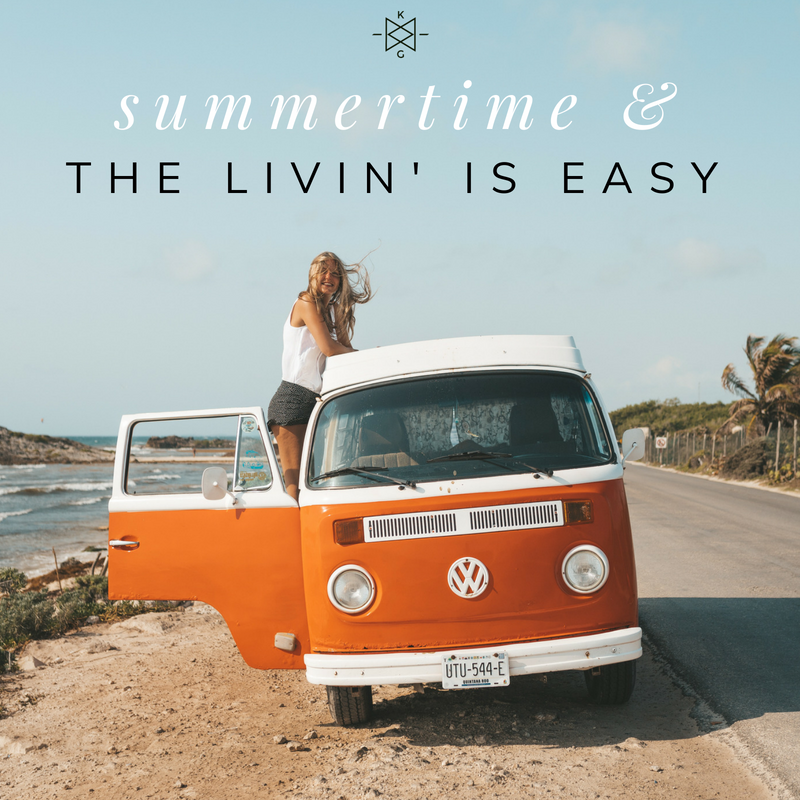
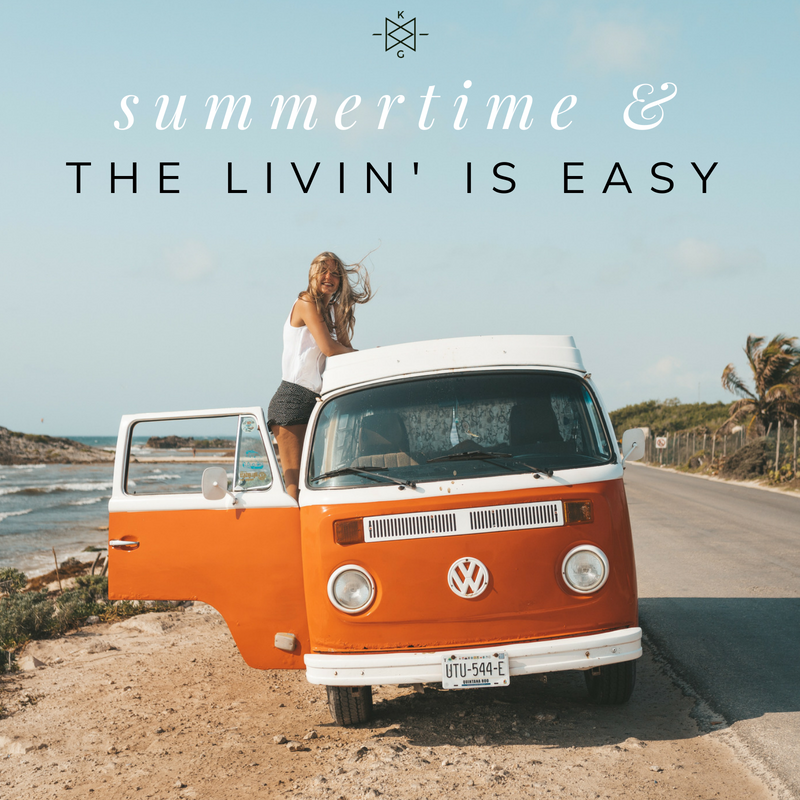
Summertime & the Livin' is Easy
“Stay thirsty, my friend.”
-The Most Interesting Man in the World
I did a little experiment over the past two weeks. You may have noticed you didn’t hear from me. (At least I hope you noticed!)
I tagged along with my husband to Maui as he had some meetings down there. This didn’t suck. The meetings fell right before our two-year wedding anniversary, so we made a little vacation out of it. I had never been to Maui, nor Hawaii for that matter, and it was simply stunning—paradise for sure. All the rumors are true.
That wasn't the experiment, though.
Here’s the experiment: I decided I would give myself permission to live way outside the lines during the nearly two weeks I was away. This meant if I wanted to sleep in, I’d sleep in. If I wanted to lay by the pool and drink fruity drinks with umbrellas in them, I did. If I wanted to go for a long walk, I’d go. If I wanted to eat french fries and banana bread for lunch, bon appétit. I didn’t work…at all. I let the meditation slide as well as writing and daily exercise and all the things that keep me feeling grounded.
Side note: I have a tendency to want to be overly productive, and this idea of rest feels more like a dirty four-letter word than a blessing. Also, I don’t like to sit still very much. I can’t remember the last time I went on vacation for more than one week and there wasn’t some type of work involved. For example, last summer we went to the beach for a week and instead of frolicking in the ocean, I spent nearly three-to-four hours a day writing copy for my website or editing a podcast. Then I’d go for a run. Then I’d go sit on the beach with a book for around thirty minutes until I got bored again.
I realize this is not a way to live and there’s not even the faintest whiff of balance baked in. I’m very much working on this, hence the experiment.
Needless to say, this experiment was a failure. I managed to finish, but barely. I didn’t feel like myself. I felt completely disconnected and discombobulated…all the “dis” words. Don’t judge me.
Also, please believe me, I am over-the-top grateful for the time away in such a magical place! We had the most fun. Yet, I learned a crucial lesson from my “research" (besides the fact that I’m a work in progress): rest looks different for everyone and doesn’t mean we disconnect from ourselves.
This is important for you and I as we roll into the summer months. Why? Because I strongly believe we can develop the summer blues just as easily as we can the winter ones. The cause isn’t necessarily a lack of vitamin D though; it’s a sneaking and oh-so-subtle disconnection from purpose. I say this a lot, and it’s worth repeating: the opposite of depression isn’t happiness, it’s purpose.
It can be so easy to disconnect from purpose and the structures that promote a sense of grounding when June rolls around, especially if you work for yourself or have a non-traditional work schedule. School’s out, travel ramps up, and porch hangs abound. It’s a glorious time to connect with friends and family, yet it’s also a ripe time to let self-care slide among other things.
With this shift at hand, I have three simple reminders to put in your back pocket as you embrace the lazy days of summer:
Know thy rest
Do your own experiment in order to better understand what you need in terms of rest. This doesn’t mean follow my extreme lead and swing hard in the other direction. For example, I feel most rested when I’m tuned into desire and filling up my creativity tank doing things like exploring new places, cooking for friends, or reading a good book. I get anxious when I watch Netflix in the middle of the day.
Your version may look much different and include periods of totally unplugging and taking catnaps in the afternoon. Neither way is right or wrong. The important thing is to find what you need in order to facilitate renewal in the season you’re in.
Dogs need fences
After about two days of roaming about in the wild and wooly unknown parts of the neighborhood, chances are your dog will miss the safety and consistency of your fenced-in backyard. We, for the most part, are the same. Structure is a good thing and truly helps us stay connected to what we deep down desire, which I believe to be connection and purpose. Sure, we all need to get off the grid at times, yet consistency over time builds emotional resilience, and I have a strong suspicion you are here because you want to experience more of that. I know I do.
Give yourself some grace
In the end, the most important thing you can give yourself (and others) is grace and compassion. More than structure, more than purpose, more than self-care—you name it. Self-compassion and radical acceptance beget desired outcome much faster than a fear-based need to control. I love this quote:
“Where we think we need more self-discipline, we usually need more self-love.”
- Tara Mohr
I sincerely hope you’re easing into this summer season with equal parts desire and grace…and a heavy dash of amusement.
Love & Gratitude,
Katie

Listen Closely - Your Life is Trying to Talk
“There’s an old Quaker saying, “Don’t speak unless you can improve upon the silence.”
-Parker Palmer

I'm a big advocate for the sacred process of finding your voice—and courageously learning to use it.
In my experience, slowly crossing the threshold of confidence into the land of self-compassion and acceptance gave me this newfound freedom and excitement to be heard and seen.
It’s kind of like waking up on Christmas morning as a kid, getting that one cherished toy you’d been asking for but thought your folks probably forgot…but then they came through. All you want to do is keep it close and show it off. You love everyone, even your younger brother. The world is a beautiful place. You’re so proud and you can’t stop talking about it.
It may annoy people for a minute, and that’s okay, they’ll get over it…they love you too.
What I quickly learned along the way is this: in order to truly find your voice and speak from that sacred heart space, you must first learn to listen really closely and often.
I love what Parker Palmer says in one of my all-time favorite books on finding your calling, Let Your Life Speak (a must read if you haven’t already…super short too.)
He says, “Before I can tell my life what I want to do with it, I must listen to my life telling me who I am.”
Sounds esoteric, right? I actually think it’s us who overcomplicate things.
To create, we must get still and present. We must lean into the unknown. We must…listen.
Just as a flower grows and blooms from a tiny seed, you and I have everything we need to thrive locked safely inside us. Sure, we may need to nurture that part of us with inspiration and encouragement, but I assure you, it’s all in there.
As a species, humans are created to thrive and succeed, not to merely survive. Our creative imaginations are what sets us apart from other species. Inside of you, there is a creative mechanism that is fully capable of getting you from merely existing to succeeding.
That’s right, you get to create the life you love.
What happens so often though, is that we get lazy, want to be told what to do, and as a result, autopilot through life. No wonder we wake up mid-thirties or forties with a serious purpose deficiency and a bad back in search of a pill or a promise that will make us feel alive again.
We’ve not been listening. We’ve been busy, hustling, fitting in.
So we’ve got a spectrum here. You may have recently unlocked this stunning, shiny voice of yours and you really like using it. The test drive is intoxicating. Or, you may be completely shut down, confusing everyone else’s demands and desires with your own. You’re exhausted and maybe even a bit resentful.
Either way, the next best step is to slow down, take several very deep breaths, and simply listen. Feel your feet on the floor and your spine growing up from your seat. Notice the sensations inside your body; they’re talking alright. Give the tension a little time-out; you can pick her up in just a minute.
This is your true self. This is the space free of ego. This is where, with some practice, your life will speak to you in profound and sweet ways. This is the power of presence inside of you. It’s the magnificent Motherload. Let’s give it a listen.
Love & Gratitude,
Katie
xoxo