
The Blog
Recently Featured

All Blogs






Let's Work It Out: How To Up Your Fitness Game (Without Breaking a Sweat)
“Until you make the unconscious conscious, it will direct your life and you will call it fate.”
-C.G. Jung
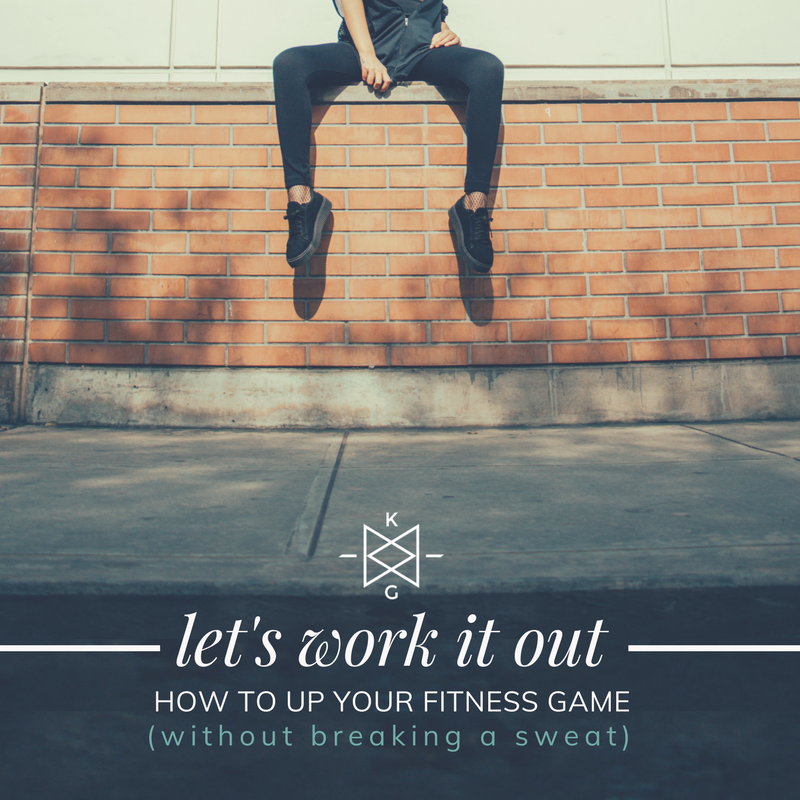
This is not a post about working out, I assure you. I would not pretend to know what the optimal picture of physical fitness/health looks like for you or what your body needs to feel alive and balanced. Everyone’s needs vary.
What I do know, however, from decades of trial and error, passionate research, and education is one very simple concept: messaging and intention are everything.
What does that even mean?
It means that you and I readily respond to messages that speak to our core values and desires. Based on those messages, we respond in action through intention. We identify what we want, and we intentionally set out to achieve that thing.
I’ll put some skin on this one.
The diet and exercise industry is a multi-billion dollar industry. Yes, the “B” word.
It caters to the desire in you and me to look and feel our best, albeit sometimes through the vehicle of shame. You know the drill, “Once you lose those last ten pounds, you will be happy—you will be okay.”
They tell us all about the latest fitness trends, green juice, protein shakes, cool down stretches, and recovery meals so we can stay on top of our game.
Guess what?
The messaging works. Their savvy adverts successfully appeal to the desires of consumers everywhere, hence the “B” word. My recent personal favorite messaging trend is: “Sitting is the new smoking.” So good, right?
There is a massive gap though.
We live in the most overfed, undernourished, obese, and sedentary culture in American history.
The intention may very well be present, but the action is missing.
I believe this speaks to a heart problem, not a willpower problem.
You see, I believe we’re going about it in reverse. I believe we need to take this brilliant fitness messaging model and apply it to our emotions before we put all our eggs in the fifteen-minute magic routine you saw in the latest Shape magazine.
Don’t get me wrong, I am an exercise evangelist. I started running at age twelve and have made daily physical movement a part of my life ever since. For me, it transcended vanity a long time ago, providing me the much-needed sanity space and release to balance out the crazy in my head.
I bet you know a thing or two about physical fitness, even if you hate working out. This is due to the constant messaging; It’s everywhere.
What we often fail to realize is our emotional health doesn’t run on autopilot, and the messaging here is a bit more subtle if not lacking.
We must develop an emotional fitness regime just as we do a physical fitness one. We must learn where the pitfalls are and when we typically hit the proverbial wall and have a meltdown. We must learn what makes us anxious and how to preemptively practice mindfulness and deep breathing along the way so as to keep it in check. We must learn to rest and practice self-compassion.
Awhile back, I interviewed Miles Adcox, CEO of Onsite Workshops (among a zillion other impressive things), for my podcast. He explained how this concept of emotional fitness must start small, with tiny two-degree shifts in mindset and behavior as opposed to extreme overhauls that typically don’t stick (think: New Year’s Resolutions). To hear that interview,click here.
Later on this week, I’ll be giving you a few practical tools for tweaking your emotional fitness regime, so stay tuned for that.
If this all sounds airy-fairy and frustrating, take heart; it is very much a process. Just as it takes months and often years to get in tune with your body and what it needs, so is the case with our emotional journey. It’s not perfect by any means—humans are messy.
However, I can promise you this process will help take some of the guesswork out of what it looks like to consistently feel better from day to day
You see? This was painless, treadmill-free, and I bet you didn’t even break a sweat!
Love & Gratitude,
Katie

The Enneagram & Your Favorite Mistake
I grew up worshiping Sheryl Crow. She embodied brilliant writer, instrumentalist, singer, and entertainer all in one while looking really strong and sure of herself along the way…

I grew up worshiping Sheryl Crow. She embodied brilliant writer, instrumentalist, singer, and entertainer all in one while looking really strong and sure of herself along the way.
While major labels were throwing hundreds of thousands of dollars at production budgets for artists back in the early 90’s, she managed to make pure magic with 40k on her debut recordTuesday Night Music Club.
I see her from time to time around town, typically in a Starbucks, and have a full-on girl crush attack, geek out moment. Thankfully, I’ve never been a total train wreck and embarrassed myself those handful of times, though I’ve come scarily close. (I have a much different story about standing behind Micheal Stipe in a local coffee shop. I’ll save that for a blog post about overcoming humiliation.)
I recently listened to an interview with her on NPR and learned of a much different, fragile side of Ms. Crow. She admitted a lifelong battle with self-doubt and depression. She even went so far as to say this larger than life persona she’d created over the years felt paper thin, and contrary to the reality of her own broken self-image.
Guess what? You and I are no different (well, besides the arsenal of Grammy’s perhaps). We learned early on which masks looked really good on us that would also double as a protective shield. They would help us show up and be seen on this daunting stage called life.
After all, the word personality is derived from the Greek word, “persona”, which means “mask”.
We all wear certain masks of personality to protect ourselves from rejection and failure—to be liked.
Your personality is NOT a bad thing either! It’s one of the loveliest things about you.
Things gets pitchy though when we over-identify with that mask and eventually lose touch with the reality of who we are—the authentic essential self.
I believe the Enneagram is one of the best, most accessible tools for self-understanding. It serves as a roadmap, guiding us on the journey of self-discovery and relational growth. If you’re new to this tool and want an introductory peek into its wisdom, this online indicator is a great place to start.
We make one whopping mistake with the Enneagram, though. Just as we over-identify with certain personality traits or masks we wear, we can also hugely over-identify with the classic and obtuse characteristics of our specific number or “type.”
We attach to the safe construct of this number as opposed to allowing it to help us “unlearn” certain behaviors that got us into trouble in the first place.
For example, when I first discovered I was a four on the Enneagram (the Romantic), it was like someone had given me a handbook, or a language, for all the reasons I do what I do. The melancholic tendencies, the shame, the need to be special, the obsession with aesthetic, all of it! I thought I was just crazy all those years!?! (Ballot's still out there).
Finally, I had insight into the complex story I’d been living out of
Initially though, instead of allowing this insight to help me shed the unhelpful parts of my personality, I took the information and completely indulged in it. Instead of “I’m Katie, and I identify with type four on the Enneagram,” it was, “I’m a four. Oh, and my name is Katie.”
Are you tracking?
In essence, if you are letting your type define you as opposed to allowing it to unlock the beauty and nuance of your purest, truest self, you’re still hiding in a box.
Don’t worry, it’s my favorite mistake too. I camped out in Four Land for a good five years before I understood how much bigger and more powerful the Enneagram really is.
It doesn’t want to type you just to leave you there. It wants to guide you home to wholehearted living without the entrapments of all those fearful masks.
Here's the thing: You are in a league of your own. You're more than a number or a type on any personality indicator. Thankfully though, this gift of the Enneagram can support you in discovering all the intricacy, uniqueness, and power that lies outside the box and inside of you. I'm pretty thrilled I get to support you as well.
Love & Gratitude,
Katie
xoxo

A Direct Flight: Your Best Route to More Connection & Influence
“People don’t want to be impressed, they want to be seen.”

I have a massive confession to make.
Quite honestly, I’m embarrassed to go there, but in line with my desire for transparency and vulnerability, it’s hopeless and there’s no turning back.
In my own struggle with low self-worth and insecurity throughout the years, I’ve damn near died trying to be impressive—to be liked. I’ve pitted myself against “everyone” (which in reality, is a collective of probably six people in the world) in a hard effort to show up and be seen. I desperately want you to accept me and deem me worthy to enter those sparkly rooms you hold the key for.
This has taken many different shapes throughout the last three-plus decades: an eating disorder, good grades, perfectionism, unhealthy relationships, a music career, a graduate degree, a blog, shiny social media boxes, and the list goes on.
Don’t get me wrong, most of these pursuits started off clean—based in desire. However, if I’m totally honest, some got a little muddied by an unrelenting need to be seen. Not only that but to be seen as clever.
Guess what? It’s an exhausting, isolating way to live. Also, it doesn’t work. Period.
It’s kind of like landing thirty minutes late at the Atlanta airport, hustling and schlepping to make the connecting flight only to show up at the gate to be met by a very perky flight attendant with red lipstick and coiffed hair who politely informs you “I’m sorry, you’re just too late. The plane left ten minutes ago.”
Damn. Now you’ve got a couple of options; you can either bury your face in a pint of Ben & Jerry’s or a pint of Stella Artois... Pick your poison.
Guess what? We all have a deep need and desire to be seen. We were created to succeed and thrive in our own unique ways. However, what I’ve found the hard way is that there is a better, more effortless way to arrive. Take a deep breath and a load off; you don’t have to be so impressive.
Your ticket on this direct, first-class flight is called radical empathy.
Radical empathy is the choice to practice empathy relentlessly and continuously in our everyday interactions with people.
Brené Brown asserts that “Empathy and shame are on opposite ends of a continuum. Shame results in fear, blame (of self or others), and disconnection. Empathy is cultivated by courage, compassion, and connection, and is the most powerful antidote to shame."
We don’t get there by being interesting; we get there by being interested. We don’t get there by performing; we get there by listening. We don’t get there by striving; we get there by softening.
Last night I hosted ten incredibly courageous and beautiful women at a monthly gathering I’ve just started called The Bloom Groups. For the most part, these women were strangers.
They came from different cities, different cultures, different stories, yet all were there because they wanted the same thing: connection.
We did an exercise where we sat on the floor with a massive piece of paper and a bunch of magic markers to share. The instructions were to each draw a painful experience had before the age of 18 and enclose it in some type of container (box, circle, heart).
We went to town like ants in a dirt pile.
Ten minutes later, everyone’s picture was completed, almost. We went around the circle and told a brief synopsis of the story behind the picture. Tears streamed. Some F-bombs dropped.
The last piece of the exercise was for each one to draw a line from their container to any of the other containers or stories they related to.
Guess what? Every single one of us connected to parts of each other’s stories. We were all connected by the collective pain of our stories. The picture was now complete, and it was powerful beyond words.
After just two hours, ten strangers had experienced what it truly means to see one another, and in doing so, had practiced radical empathy by also seeing themselves in each other’s stories.
Every day I’m learning just how desperately people long to be seen rather than impressed. Sure, it’s important to use our gifts and talents to bring value to the world and lives around us, but this should never be fueled by the fear of insecurity, but instead by the desire for connection.
You are indeed wired for success and influence. I need to see you soar because it inspires the greatness in me. I’ve got some really good news for you as well; you can drop the act. You don’t have to work so hard. There is no missing hardware. You’ve got everything you need.
Believe me, there’s no room for scarcity where we’re going. Once you get there, you’ve officially arrived.
It’s time to start seeing the one in front of you; the one you may feel the need to win over. Look for the beauty and mystery in her eyes. There’s a fascinating story in there. Chances are, you may even know that story by heart.
Love & Gratitude,
Katie
How to Find Freedom from the Past
"The weak can never forgive. Forgiveness is an attribute of the strong."
-Mahatma Gandhi

If we are shaped by anything in life, it is surely by the pang of painful past experiences. You know this pain all too well. The ones in life who were supposed to protect, provide, and nurture instead inflicted deep and sorrowful hurt, abandonment, and abuse. Expectations were dashed, self-expression wasn’t allowed, eggshells were everywhere.
In therapy, I hear the broken, brutal stories of courageous people who have somehow made it through. They look for greater freedom and joy. They refuse to let their past define there present and future. I often find myself angry as I hold space for these stories to live and breathe, sometimes for the very first time. It’s never fair.
And this is the truth. Injustice isn’t fair. Yet I am learning it’s part of life. How we deal with that injustice is truly our making. The trauma of our past breaks us in a way that often feels irreparable-futile. Last week, I was driving to a meeting in Germantown and passed a street where I’d had an extremely difficult experience almost ten years prior. I felt my body cringe as it remembered how sad and dark that felt. My mind didn’t need to remind my body and heart; it was the other way around, and totally out of the blue.
Have you ever experienced this?
That voluntary and visceral reaction to a past experience that was so significant it was branded in your body? Trauma is stored in our bodies and is the reason so many literally block it out, having no memory of it until physically exposed to stimuli. We’ve learned to detach, shut down, and numb. Bessel van der Kolk, brilliant psychiatrist and author of The Body Keeps the Score, explains:
“Traumatized people chronically feel unsafe inside their bodies; The past is alive in the form of gnawing interior discomfort. Their bodies are constantly bombarded by visceral warning signs, and, in an attempt to control these processes, they often become expert at ignoring their gut feelings and in numbing awareness of what is played out inside. They learn to hide from their selves.”
This insight fascinates me as it’s helped me understand that we can’t talk our way out of healing from this “gnawing interior discomfort.” We must learn two things: how to feel safe in our bodies and how to forgive. I love using Brainspotting with clients to begin unlocking the process of re-attachment and develop a sense of safety in our bodies. It has been a game changer for me and many.
I’ve noticed the more difficult of the two is often the forgiveness piece, which isn’t a surprise to me. We think of forgiveness much like we do vulnerability: as weakness. Thus we choose to carry the perpetrators of our pain around, heaping tons of power on them. Oftentimes the one we need to forgive is ourselves, which can be the hardest of them all.
When we choose unforgiveness, we not only stay connected to the pain and its source, we allow our past to define us. Isn’t it time we put down that heavy burden? Isn’t it time we take back our power and re-focus that wasted energy on giving and receiving new, hopeful opportunities and love?
This week, I encourage you to do some inventory and see if there might be any lingering unforgiveness that weighs you down and holds you back from your highest self. Support throughout this process is key, so know that I am here if you need a safe place to process and land along the way.
Remember, you are not the crumbs of your past. You’re invited to a grand, exquisite table of the present moment to feast on freedom and be satisfied by love. It’s a wide open space to explore and move around in. You are always welcome here.
Love & Gratitude,
Katie
xoxo
Spring Cleaning and The Truth About Depression
“The space in which we live should be for the person we are becoming now, not for the person we were in the past.”
-Marie Kondo, The Life-Changing Magic of Tidying Up: The Japanese Art of Decluttering and Organizing
I married a collector. Mostly of musical instruments/gear, tools (because you can never be too prepared), and memorabilia from meaningful past events in life. He is the most thoughtful man I've ever met, and very sentimental.
I, on the other hand, am more of a minimalist. (Except of course, when it comes to shoes.) I can’t stand clutter, and I throw or give away the things that no longer serve a purpose in the present moment. That or I’ve simply gotten tired of looking at them.
We never argue about this either… Ha!
Neither way is right or wrong; it’s just what we learned growing up. My family moved house a lot, and my mother is notorious for giving everything away. It’s lovely and drives me mad all at once. The fact that she “lost track” of my Grandmother’s custom designed (by Christian Dior himself!) frocks from the 40’s makes me cry and rage all at once. Don’t worry though; I’m working through that in therapy.
I believe there is a massive link between the space we create to live in, both figurative and literal, and the way we feel. I believe this to be true for the spaces we call home and work as well as in the temple of our physical beings. We must be intentional about creating space for an inspired, purpose-driven life.
That said, I also believe the opposite of depression isn’t happiness, it’s purpose.
In light of this, I’d like to explore this idea of Spring Cleaning to create space for even morepurpose in your life.
Here we are in April. The days are a wee bit longer, and the vibrancy of nature’s colorful fashion show is in full effect. Mother Nature gets full-on cocky this time of year.
The tendency is to dust off the winter’s cold and musty residue to make room for what’s to come. We edit our closets, our bookshelves, our fitness routines, as well as our businesses (hello Mr. Tax Man) in order to wipe clean the slate. I freaking love it.
Isn’t it curious too that studies show a massive lift in depression levels when Springtime rolls around? The seasonal affective curse wanes a bit as vitamin D levels rise. We’ve re-engaged with the hope of something new, something better. We’re getting outside more.
No matter the season, I sink into a deep and desolate valley of depression when I lack connection to purpose and passion. Circumstantial happiness might thrust me out of it momentarily, but it never sustains.
This week, I’d love to invite you into a Passion Challenge, if you will. It’s a seven day invitation to connect to something you’re passionate about that fuels your purpose. You don’t need to quit your day job to participate, you just need to do a couple of small chores.
I’ll be giving you more in-depth instructions for the challenge later this week. For now, I’ve got a bit of prep work to give you.
Identify the clutter. You know the stuff. It’s the fear and confusion you have a death grip on in that lovely head of yours. It’s the old programming of your thoughts that only know a painful past experience, and yet seems to dictate your current reality.
Take fifteen or so minutes and do a thought detox by writing down all of the narratives and negativity that hold you back. Don’t edit or filter, just write them down in your journal. The “I never have enough time” and “I’m too old to pursue my dreams” and “I don’t know’s.” (That phrase seems so benign yet is a HUGE purpose blocker).
It’s vital to locate what’s not working in order to clean it up and replace it with something new— better.
Let this question light the way, “Who is the person I want to become?”
Anything that clutters that picture should likely be in your thought detox.
There is limitless power in purpose. It’s time to create lots of space to move yours forward.
You ready?
Love & Gratitude,
Katie