

The Blog
Recently Featured
All Blogs







I wish I would have known this at 25
“Where we think we need more self-discipline, we usually need more self-love.”
-Tara Mohr

What piece of advice would you give your 25-year-old self? Sure, she may not have listened, but like any loving parent, you do what you can to steer your children in the right direction. That head-strong seeker was only doing her best. And yet today, you have matured into the expansive space of perspective and balance. You have a lot to offer your younger, stubborn self.
Me? I would have a spirited come-to-Jesus about how to relax into the unknown one brave and wobbly step at a time. I’d tell her that having all the answers isn’t half as important as asking honest questions.
Specifically, I’d love for her to understand what it means to have a growth mindset as opposed to a fixed one. Less either-or and more both-and.
As a recovering perfectionist, I’ve been all too familiar with what it means to have a fixed mindset. A fixed mindset is a way of thinking that is rigid and narrow. It’s all about pass or fail, win or lose, good or bad, black and white. It’s rooted in judgment rather than curiosity. It’s refusing to take myself on a brisk 20-minute walk because I didn’t have enough time to do my hour-long high intensity workout.
Here’s another example. You have your 6-month review at work. Your boss gives you high marks in several areas but points out one specific necessary improvement in your performance on a big project. A fixed mindset self-criticizes, labeling your performance as a failure. A fixed mindset disregards the praise and zeros in on the area of improvement. A growth mindset celebrates the positive feedback and understands the value of constructive criticism for future success. A growth mindset sees life as a slew of peaks and valleys all leading to personal freedom and expansion.
A growth mindset is the petri dish that breeds resilience. A fixed approach creates rigidity, closing us off from abundance and opportunity.
This isn’t about glossing over reality. It’s about softening your approach to the inevitable ebbs and flow of life.
Spend some time this week pondering this: What area of your life could you stand to soften into?
Is it your relationship with food, your body, parenting, or work? Is it your self-care? Whatever it may be, I believe a great way to find out is to pay attention to our self-talk, that often nagging inner critic that rages on, involuntarily.
Write it all down.
I love what Tara Mohr says, “Where we think we need more self-discipline, we usually need more self-love.”

What do you really want?
“Desire is the starting point of all achievement, not a hope, not a wish, but a keen pulsating desire which transcends everything.”
-Napoleon Hill

What’s stopping you from doing what you truly desire? In my experience, it is much harder to do what I truly desire when I’m acting as my own worst enemy.
However, when I get out of my own way and start playing for instead of against my team, big things happen. It’s up to me to get out of my own way and embrace the responsibility of loving and taking care of myself.
Perhaps the greatest tool alongside therapy that has equipped me to do this is the Enneagram. It has been a steady companion, giving me the language to express lonely truths I thought were mine alone, as well as reasons for doing the clumsy things I so often do. The Enneagram has gently shown me all the ways I wear false--if not fashionable--masks of personality to protect myself from being truly seen and perhaps rejected. It has shown me the great potential that awaits (when I do step out of my own way).
You may know about the Enneagram, and if so, I’m grateful. It’s not just a hyped-up trend or personality box. In fact, it traces so far back, experts can’t quite nail down its conception. Even the modern Enneagram of personality has stood the test of time, and I’m thrilled more and more people are bringing it into their homes, relationships, and dinner conversations.
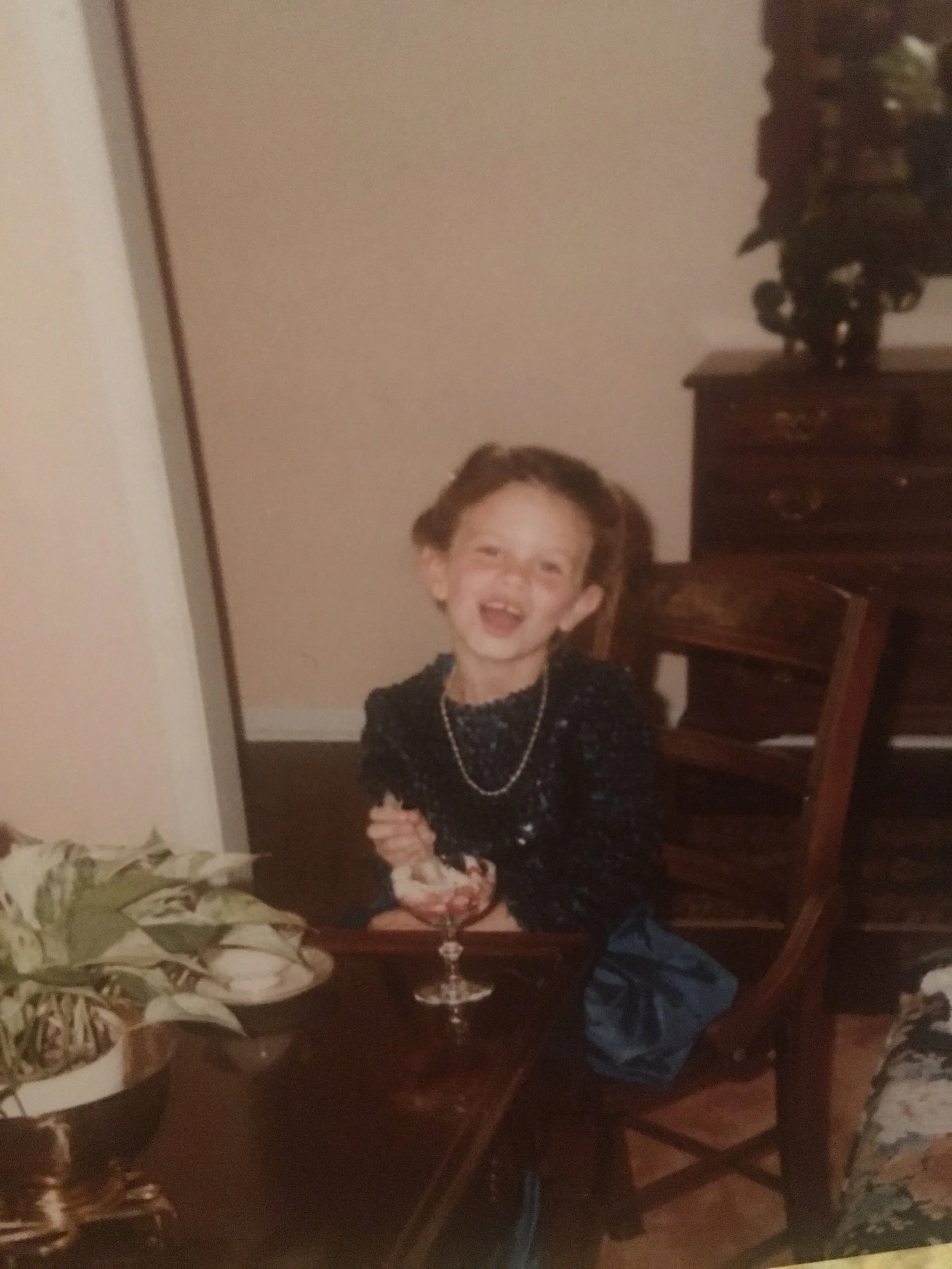
As we gear up this Spring, let’s take the time to become our own best friend…to connect back to the little girl who only knows love and has no clue how to lie or be afraid or confuse success with love.
If this feels wildly out of reach and too esoteric, don’t worry, you’re not alone, I’d love to support you in your desire to truly thrive. I’ve got a trusted roadmap to get us there.
You ready? Join me in the Practice.
Navigating Grief Amidst Tragic Loss
“Let everything happen to you, beauty and terror. Just keep going, no feeling is final.”
-Rilke
This past week, an unspeakable tragedy hit my very own backyard of Nashville, TN. Literally, you can see Covenant Presbyterian School and Church from our back deck. The recent school shooting in our quiet little neighborhood of Green Hills has had a ripple effect all across our country.
It was 10:30 am on Monday morning. I was on my way downtown to Centennial Hospital for a pre-op appointment. As I sat blankly, waiting for the light to turn green at the corner of Franklin road and Harding, I noticed a blur of police cars flying past me. Traffic was stopped.
“Lord, have mercy.” I prayed, unknowingly. I got on the interstate and started to receive an influx of texts. My friend Beth called me. Our sons are in pre-school together. Feeling a little uneasy, I let it go to voicemail to stay focused on my drive downtown. I had a sick feeling in my stomach.
As I came to a light on Church street, just a few blocks from the hospital, I looked at my phone long enough to read a few of the texts. My whole body froze and I got lightheaded. My heart pounded in my chest. No stranger to panic attacks, I started to buckle. I just needed to get to the parking garage. “You can do this, Katie.” I muttered under my breath.
As I parked I called my husband, Daniel. Hysterical, I stammered out, “Is it true?” He turned on the news and started to get more information on the school shooting right around the corner from my son’s school. Without all the details and the steady man that he is, he helped me breath and calm down so I could get through the appointment and get home. Thankfully, we had kept Tucker home from school that day due to a nasty cough. They were both safe at home.
But this wasn’t the case for so many others who suffered unimaginable loss that day.
After the hysteria and panic subsided, I got angry. Angrier than I can remember getting in a very long time. Throughout the days and week, I learned stories connected to the people, the place, and the unfolding of the day.
You probably have some similar story that connects you to this or other tragic events. I pray God is near to you during these fragile minutes and hours of every passing day.
Navigating grief amidst tragic loss is downright awful—punishing. It’s not linear. It’s messy as hell. I could give you the soup to nuts on the grief process and hope it might be helpful but this is not that post.
Today, I want to give you one simple word: CLING.
Cling to prayer if you’re the praying type.
Cling to people who love you.
Cling to breath when everything else feels too hard.
Cling to truth and monitor what you’re letting in.
Cling to self-care so you can metabolize your felt emotions and pain.
Cling to the hope that God didn’t bring us here to leave us here.
And just like Mr. Rogers’ mother told him when responding to scary news, “Look for the helpers.”
If you are struggling to navigate this thick and complex grief in response to the Covenant School shooting, please reach out for help. I’d love to be a resource for you right now.
5 Things to Avoid when Using the Enneagram
“Our survival stories are often the passwords to our healing.”
-Hannah Paasch
Do you have a funny taste left in your mouth with regards to the Enneagram? I’m not going to lie, with its rise in popularity and the obsession with it in Instagram culture, I fear it’s become something of a caricature of itself. If I see one more meme about type, I may just boycott it altogether.
Ah, but that’s not the response of a self-aware, evolved, and gracious person living in wholeness is it? No, it’s not…
The Enneagram teaches us to grow beyond reaction and choose from a place of responsiveness—and power.
I do, however, want to point out 5 mistakes to avoid when using this tool for life and relationships. So here goes:
Don’t type other people. This is a biggie. The Enneagram isn’t just about the optics of our personality. It’s about the story, or motivations and beliefs that fuel our patterns of thought, emotion, and behavior. So unless you are familiar with the deeper aspects of someone’s core belief system and narrative, avoid typing them.
Don’t indulge your type. In other words, don’t use your type as an excuse for bad behavior (i.e. “I’m going to let her have it when I see her. She’ll never want to cross me again. I’m an 8 after all!”) We identify our type in order to better understand ourselves and grow beyond our personality tactics.
Don’t stereotype others based on type. Again, this is such a rookie move. To judge someone and make assumptions based on their type is a big no-no. Just as there are about 100 unique shades of white, not all persons in a type show up the same. Especially when you factor in subtypes, you can actually have two people who are the same type look nothing alike.
Don’t force it on others. Even though the Enneagram is a powerful, transformational tool, not everyone is willing to or interested in subscribing to it. The worst thing we can do as Enneagram advocates is to force it on others, no matter how much it has helped us. We must learn to trust others’ process.
Don’t stay on the surface. Even though it’s incredible fodder for coffee shop or cocktail party conversation, the Enneagram is meant to be applied to our daily lives, not just talked about. Knowledge without application is, well, just knowledge.
P.S. If you’re in the market for a way to learn about and apply the Enneagram, you’re in the right place. Check out my Enneagram-based Self-Care membership program called the Practice!
5 Things I Learned During Chemo
“…You’ll figure it out—all the little things seem so big now. Don’t worry about all the little things—they only get bigger…wish you could see me now.”
-Katie Gustafson’s “See Me Now”
My cancer diagnosis back in April of 2021 was an unexpected gift in many ways. Perhaps most glaring was that it forced me to take a forensic inventory of my life—and how I’d been living it up until that point. It crystalised the things that were and are truly important. It invited me into more personal integrity—alignment with my deeply held values. It convinced me there was no reason to sweat the small stuff—adulting means we have more responsibility, more to live for, more to lose, and more to let go of when it ceases to serve us.
I’ll never forget the day after I was diagnosed with breast cancer. We attended a friend’s over-the-top gorgeous wedding outside of Nashville. I had no idea what the course of treatment would be at that time. All I held to that day was the certainty that my story had taken a dramatic shift to the tune of that terrifying “c” word.
I savored every single minute that day. I got to dress up (which is my spiritual gift), hugged and kissed my then 2-year old when we dropped him off at my folks house on the way, sipped champagne, and held my husband’s hand tighter than I can ever remember. I even got to slow dance with him. As my cheek pressed up against his crisp suit jacket, I cried hot tears of joy, gratitude, and fear all at once. I’d been given another day and the days of taking this beautiful life for granted passed right then and there. That was another gift I was granted: perspective.
From where I sit today, nearly two years later, the lens I look through isn’t fear, it’s possibility. I’ve undergone a bilateral mastectomy, a brutal recovery, countless doctor visits, three smaller surgeries, and chemotherapy. I lost my hair completely. (Thankfully it’s back…and corkscrew curly! Who knew?) I lost the illusion of invincibility. But I’ve gained so much more. I’m pretty sure my heart grew a new chamber. I know my faith did.
Along the way, especially during chemo, I learned five things that I believe we can apply in the face of any challenge. I want to share those things with you today.
Guard an open mind: Keeping an open mind in the face of adversity is necessary. We will never be able to predict the future and going to the worst-case scenario is futile as a result. Though oftentimes we slide right into a fight-flight-or-freeze fear response, practicing curiosity is everything as we start to thaw out.
Life is hard—it’s our attitude that makes it a bit easier: At my last oncologist appointment, my doctor told me something that I’ll always be grateful for. She told me that in all her years as an oncologist treating cancer patients of every kind, I was in the top one percent whose chemotherapy experience seemed easy and even inspiring. She attributed that to my positive attitude every step of the way. I’ll tuck that away in my pocket the rest of my days and forever swear by the power of a positive attitude.
Protect your time and energy: It is totally okay and even necessary to pull back from our normal responsibilities during difficult seasons. One way we do this is by setting boundaries around our time and energy. For me, my immunocompromised state required this. However, it was a lesson either way. I learned to let my “no” be as good as my “yes” without guilt.
Self-care pays off: It’s no accident I started the Practice, my Enneagram-based self-care business, the same year I got cancer. It was a lesson in synchronicity. I have been practicing self-care (esp. meditation, exercise, therapy, etc. ) religiously for decades. I witnessed first hand how every single time I showed up for myself over the years paid it forward to undergird me in the most physically and emotionally daunting season of my life. Practicing self-care will always serve you when you need it the most.
Let people support you but not always advise you: People are well-meaning. I do believe this. However, each of us has a unique story and process. There’s no one size fits all. Take the advice of others with a grain of salt and as a gesture of support. My chemo experience, (that 1% situation my oncologist observed) was not informed by the stories of other’s experience with cancer. And boy am I glad!
Thank you for accompanying me through this incredibly wild ride. I’m on the other side for sure. I hope and pray your journey unfolds in beautifully unexpected ways…and where there is suffering…I pray God’s grace surrounds you.
Thoughts on motherhood, breast cancer, and what attachment theory and the Enneagram taught me about being loved