
The Blog
Recently Featured
All Blogs







The Scarcity Spiral
Your vision will become clear only when you can look into your own heart. Who looks outside, dreams; who looks inside, awakens.
-Carl Jung
It’s been a big week. Understatement of the century. It’s been a historically and politically raucous year that just climaxed with the most wildly controversial election of our time. How are you doing?

Your vision will become clear only when you can look into your own heart. Who looks outside, dreams; who looks inside, awakens.
-Carl Jung
It’s been a big week. Understatement of the century. It’s been a historically and politically raucous year that just climaxed with the most wildly controversial election of our time. How are you doing?
Cocktails
I’m relieved. No, not because these two candidates got an A+++ in their favorite class, Scandal and Mud-slinging 101, their gold stars deserve gold stars, and the American people can get back to “normal” life as we know it. (What is normal anyway?) I’ve purposefully shied away from personal political rants on social media and even ignored those of others if at all possible; it’s a stiff time suck shaken and stirred with a twist of boring and a heavy dash of depressing. My relief is rooted in the hopeful shift that perhaps we might start to step out of this vicious spin cycle of scarcity.
Wield
Don’t worry, this is not a political post, so stay with me. This is a post inspired by the phenomenal power we as humans have to wield moments, conversations, attitudes, days, lives, relationships, finances, careers, health, performances, paradigms, politics, culture, and most of all, hearts. I sincerely believe we can all learn something vital from both Mr. Trump and Mrs. Clinton. Despite the media’s stellar job at eliciting constant knee-jerk reactions from our two, at times, less than inspiring candidates, I’ve observed the thing that will undoubtedly keep us down is a scarcity mindset: that ever ready spiral of never enough. Winners, quite simply, focus on winning. These two candidates have done just that in the scowling face of great odds; whatever your politics, I think it’s is pretty remarkable.
The West Wing
My all-time favorite tv series to date is The West Wing, a political drama created and largely written by the masterfully clever Aaron Sorkin. I think I’ve seen all seven seasons about four times. It’s brilliant. Martin Sheen plays the fair, compassionate, and good-humored President Jed Bartlett; he and Hollywood NAILED it.
Thorns
He’s not without flaw, mind you. Sorkin made this abundantly clear as his character battles multiple sclerosis and a nagging flair for the dramatic. These are those proverbial thorns in his side that keep him humble, nimble I suppose. Thankfully, his whip-smart, feisty aids consistently keep him tethered by their steady accountability and merciless hole-poking.
Other People Win
In one episode, Pres. Bartlett complains to Press Secretary C.J. Cregg, (played by Allison Janney), about his former rival winning a school board election back in their home state of New Hampshire. Like a victimized and petulant child, Bartlett goes on and on, recounting all of the terrible things his opponent had said and done along the way to climb the ethically wobbly ladder to his new found seat of victory. CJ looks at him, and with her razor sharp no-nonsense wit replies, “Then, that’s the way it is. In a democracy, often times other people win.” She exits the room.
Death and Taxes
Yes, other people win and disappointments in this life are as certain as death and taxes. We all experience pain and discomfort, however the broad spectrum of circumstance tends to be gracious over time allowing for joy and excitement to balance this process out. Suffering is the story we make up about our pain and it ensues as we cultivate ongoing, frenetic relationships with those stories. At the heart and hub of this suffering wheel we inevitably find scarcity: not enough.
Grey
Carl Jung talks about a certain unnecessary plight occurring in this world because we reject “legitimate suffering” that goes along with the territory of simply being human. This is in step with what I’ve learned about the etymology of the word “human”. As opposed to a god-like, perfect and divine nature, the word human originates in an earth-dwelling, mistake-prone form. This legitimate suffering, as Jung describes, should not be a shock or surprise. In fact, neurotic behavior results when we reject it and treat it as such!
Here’s the deal: there is a thin grey line between the often bruised skin of our human condition and a pessimistic anticipation that bad things will happen and we should all go live in a cave.
Excuses
I believe our attachment to unnecessary suffering stays intact and well-fed via the steady drip of scarcity mindset. I have become so aware of my own scarcity narrative as of late. It’s insidious and feels almost responsible at times. I suppose that’s why I put up with it. It sounds something like this: “Oh, I don’t have time for that” and “I didn’t get enough sleep last night” or “What I have to say has already been said a thousand times; who really cares?” Sound familiar?
Pollyanna
On the flip side, there is also this fear of living in denial; of the detached, “Pollyanna” glazed-over stare that lacks reality and substance. After all, isn’t the opposite of scarcity total abundance? I would heartily disagree. Brené Brown says, “For me, the opposite of scarcity is not abundance. It’s enough. I’m enough.” She disagrees as well; I’m in good company. Discomfort signals opportunity which makes the pinch of failure wholeheartedly acceptable in my book. As we embrace the possibility of enough, we reject a scarcity mindset.
Playground
Like anything, scarcity is learned. Want proof? Go hang out with a bunch of 5 year-olds on a playground. I would bet you a coffee or lunch or a very small fortune they aren’t all standing around with their arms crossed reciting reasons the old swing set may collapse mid-air, or envisioning the party of germs camped out on the slide, or even ponderinghow pointless and unsanitary the sandbox is. Doubtful at best. Chances are, they are just happy to explore some new scenery and burn off the sugar buzz they got at snack time.
Payoff
What is your scarcity narrative convincing you of? What’s the payoff involved in giving it a voice? Perhaps it’s safe because it’s what you know. You’ve worn it in and out like an old pair of sweatpants your significant other hides behind the washer and dryer in hopes that you’ll just forget about them and move on (not a chance). Perhaps the payoff is to keep you in a safe and steady state of numb. After all, success is often far more terrifying than failure.
Paul Simon
Something hard and heavy struck me the other day. I went for a hike around Radnor Lake this past week and was absolutely transfixed by the beauty of fall. I’m pretty sure everyone else felt the same as they walked around in yoga pants with their iPhone cameras as heads. It was perfect: the crisp leaves, the burn-your-eyes-out blue sky, the pristine dry air, and the speckles of warm light that looked like a vintage Instagram filterjust had her way with nature. I was expecting a scarf and fedora clad Paul Simon to jump out of the woods and start strumming The Boxer while simultaneously handing me a pumpkin spice latte at any moment. No dice there.
Death and all his friends
Hold on a minute?! These leaves are really just dying. Likewise, the air, light, and blue skies are in on it as well playing respective roles in this seasonal shedding quickly ushering in the cold, bleak, and short days of winter. It happens every year, without mistake. Why then, are we so transfixed by this lovely, yet predictable procession of nature’s hibernation?
Building a Mystery
What I came to understand is we’re all actually experts at reframing scarcity.
As humans, we’re wired not only for connection, but for beauty and mystery. We are also resilient creatures who long to witness something magical in this given moment. That is the inner child in each of us; oh, they’re in there alright. This is the practice of presence, enough, possibility, or whatever you choose over scarcity.
Six
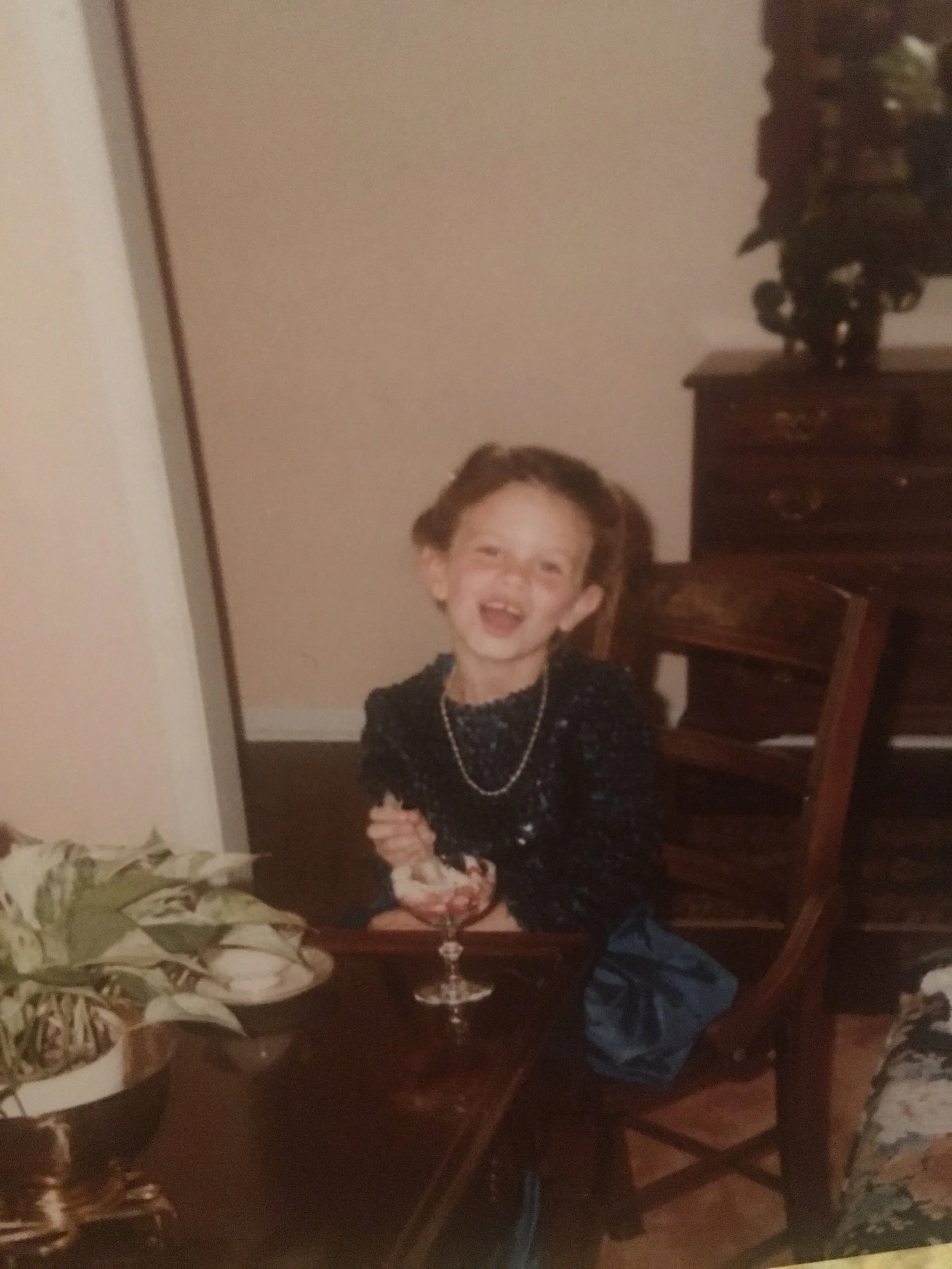
The choice is ours in every breath of every day. It’s easy to fall into the scarcity trap surrounded by these loud, abrasive voices violently dueling it out for the office of Presidency in all kinds of below the belt ways. I get it; it’s a crucial time. However, we must not abandon the soul of our six year-old that desperately needs some fresh air and a proper playground tumble. Let’s powerfully, intentionally wield our own hearts away from scarcity and towards that beautiful mystery.
Love,
katie
A Date with Procrastination
The more important the activity is to our soul’s evolution, the more resistance you will feel.
-Steven Pressfield
I’d like to introduce you to my new friend, Procrastination. Well, he’s not really new, quite old come to think of it. We go way back. I suppose we’ve rekindled something as of late, something good, different.
The more important the activity is to our soul’s evolution, the more resistance you will feel.
-Steven Pressfield
I’d like to introduce you to my new friend, Procrastination. Well, he’s not really new, quite old come to think of it. We go way back. I suppose we’ve rekindled something as of late, something good, different.
Stuck places, friendly faces
Our rendezvous happened this past Tuesday morning as I was about to sit down and write this week’s blog post. I typically have some foggy idea as to what I’ll write about from week to week which is always nice. Like many bloggers, my ideas come from a storehouse of life experience, connections made in random and serendipitous ways, books I am reading, and most of all, the resilience stories of heroes I observe around me; friends and peers alike. Lovely, right? Well, this past Tuesday it wasn’t working out so well for me.
Wildlife
Earlier that morning, I decided to take a walk in order to clear my head, breathe some crisp fall air, and behold the magical leaves shamelessly showing off in the sun drenched blue sky. It seems we have been cheering on the fulfillment of fall in Nashville the past several weeks and my, she certainly knows how to make a grand, fashionably late entrance. Despite my morning jaunt out into her glorious embrace, I still had nothing. Nada. Zip. Zilch. I saw a few wild turkeys though.
Clean
When I have a deadline, be it taxes, writing, learning a new song, homework of any kind, (did I say taxes?), I don’t just procrastinate, I clean. This is hilarious because I hate to clean. I am not a cleaner. Don’t get me wrong; I’m not a slob, I just tend to wait until I literally can’t see the bottom of my closet, throw my hands up in the air, and have a full on closet detox, as my brilliant friend Lindsley calls them. Intentional, “unnecessary” cleaning always happens as a familiar step beforeI actually procrastinate.
Just one more cup
I sat down at my (clean) kitchen table only to decide I needed to make another pot of coffee. That’s it! Perhaps have another slice of gluten-free pumpkin bread, too. (Trader Joe’s makes the best mix. I’m not even gluten sensitive, I suppose I just feel better about eating half the loaf.) There we were, me, my coffee, my second breakfast, and my devilishly charming friend Procrastination. “Dear God, I feel like a hobbit,” I thought to myself. What now? Pinterest, then a few quick emails, yoga anyone? I had forgotten how entertaining my old friend was.
Steven Pressfield
My absolute favorite book on the topic of the creative pursuit and process is Steven Pressfield’s The War of Art. I’m a dreadfully slow reader and finished this little number in one afternoon on a park bench somewhere in the West Village while visiting NYC several years ago. No doubt, this was the most inspiring city to read those words in what with the beautifully diverse collection of roughly 1.5 million people tirelessly pushing their dreams forward to the rhythm of steely tenacity, very little sleep, and a whole lot of espresso . From that day forward, I’ve been an evangelist of this book, giving away countless copies to friends and clients, alike. He pretty much rocked my world with his jolting if not merciless approach to procrastination.
Here’s what he says:
“The most pernicious aspect of procrastination is that it can become a habit. We don’t just put off our lives today; we put them off till our deathbed. Never forget: This very moment, we can change our lives. There never was a moment, and never will be, when we are without the power to alter our destiny. This second we can turn the tables on Resistance. This second, we can sit down and do our work.”
Can I get a witness?
Amen, yes?! If you read this post and all you take away is that one quote and a kick in the pants to hop on Amazon immediately and order The War of Art, I have succeeded. Pressfield introduced me to this curious idea of Resistance, as was mentioned in the quote. We all know what resistance is: that tight feeling we have in our chest and muscles, the thoughts of unworthiness that pop up like clockwork saying, “I don’t deserve to carve out the next hour and write, I’ve got so much to do!”, the anxiety that seeps in perpetrating those once calm and contented cells in our body. Pressfield explains, “The more important the activity is to our soul’s evolution, the more resistance you will feel to it-the more fear you will feel.”
The Gift
If resistance resulting in procrastination is actually a sign of our soul’s deepest expression and evolution as Pressfield waxes so poetically, then I am convinced we are in dire need of a sit down “come to Jesus” reckoning with it! My avoidant and dreaded coffee date with Procrastination was in fact, profoundly necessary. It was my heart’s battle cry against that nasty gremlin, perfectionism. It was an invitation to show up and reclaim the very act that keeps my soul alive and grounded. Someone out there may hopefully read the words I write through email or a Facebook feed or something and that is truly an honor. There is a much higher purpose though. The invaluable gift of resistance is the power that flows from our choice to lean in, show up, and give sacred space to our voice when the easy way out is to organize our sock drawer three times instead. We align with our destiny when we lean into resistance. This feels really good.
In Repair
As a lifelong perfectionist in a constant, sobering state of recovery, I am learning to become my own sponsor. This is the credo that keeps me showing up and sitting down with pen and paper in hand: Anything worth doing is worth doing poorly.
Anne Lamott spins it this way in her brilliant Bird by Bird (another must read): “Almost all good writing begins with terrible first efforts. You need to start somewhere. Start by getting something—anything—down on paper. What I’ve learned to do when I sit down to work on a shitty first draft is to quiet the voices in my head.”
I would extend that to say almost all creative endeavors begin with terrible first efforts!
Say Yes
Procrastination has gotten a bad wrap over time. I want to help clean up the confusion. After all, procrastination is merely saying no to something and yes to another, more attractive option, yes? I say we wise up, stay very present to that knowing, if not uncomfortable nudge called resistance, and have our way with those illusive little pixies, perfectionism and projection. They have stolen us away from our dreams, one bad, distracting idea at a time, for long enough. Today, let’s begin again.
Love,
katie
xoxo

Finding Family: The Broken Road Home
You can kiss your family and friends good-bye and put miles between you, but at the same time you carry them with you in your heart, your mind, your stomach, because you do not just live in a world but a world lives in you.
-Frederick Buechner
I’m not sure if it’s the fall weather encroaching or the fact that I’m becoming more nostalgic with age, but something has been at the forefront of my heart and mind as of late and I can’t seem to shake it. I don’t want to shake it. It’s beautiful, complex, frustrating, exhilarating, heartbreaking, fun, weird, grounding, dangerous, and safe all at once.

You can kiss your family and friends good-bye and put miles between you, but at the same time you carry them with you in your heart, your mind, your stomach, because you do not just live in a world but a world lives in you.
-Frederick Buechner
I’m not sure if it’s the fall weather encroaching or the fact that I’m becoming more nostalgic with age, but something has been at the forefront of my heart and mind as of late and I can’t seem to shake it. I don’t want to shake it. It’s beautiful, complex, frustrating, exhilarating, heartbreaking, fun, weird, grounding, dangerous, and safe all at once.
Everyone has it on some level and have been seriously impacted by it, undoubtedly. I believe we must somehow, either literally or figuratively, leave it at some point in order to honestly choose to love and enjoy it in the end. This thing is called family.
Longing for Camelot
What comes up for you with the mention of family? Is it sadness? Regret? Longing? Love? For me, this slow and heavy wave of gratitude washes over. It wasn’t always like this as my journey of self-exploration and wholeness have taken me through some dark stretches of distance from my family. Of course there were disappointments due to impossible expectations, yet what I am learning is that many of those expectations are really for myself, not my family. Camelot was always an illusive grasp away. This post is a personal one; one I hope you don’t mind me sharing. It is one of stark honesty and yearning. This post is for anyone who longs for family- for home; anyone who may sit in a place of loss and loneliness.
This past weekend my husband and I had a marriage celebration for close family and friends in our hometown of Nashville. We both come from large families and were unable to invite everyone to our teeny tiny wedding ceremony in California. For this reason, we decided to have a small reception back home for those who couldn’t make the trip. I saw relatives I hadn’t seen in years and met several new ones I had just gained. It was truly special.
Late Bloomer
I waited until age 36 to get married. Though this wasn’tnecessarily on purpose, it was absolutely perfect timing. God knew that all along. I say this because I have never quite experienced anything like a wedding or shower where I felt the love of lifetime relationships joined together and funneled in my direction until the past several months. It is humbling, beautiful, and a bit awkward as I always just feel I make things a little bit awkward with my pointed strangeness in the center of an outpouring of goodwill. Receiving just for the sake of receiving doesn’t come naturally, I like to earn it.
The power of choice
I realize I am blessed. I realize something deep and glaring and worth its weight in gold: Relationships are the most important thing and should be intentionally nurtured over time. Sometimes this comes in the form of a family of origin; often times this comes in a family of choice, one we build.
I love how Elizabeth Gilbert puts it: “We must take care of our families wherever we find them.” The truth is, for many of us, the word family brings up immeasurable pain and anxiety as safety and protection were needs that went missing in our family of origin. In therapy, we spend a great deal of time unpacking that pain and trauma in order to rewire a narrative of value, love, acceptance, and possibility. Needs such as provision, encouragement, affection, play, and structure were denied and as a result, had to be met elsewhere. Survival became twisted resulting in unhealthy relationships, denial of our needs altogether, parenting aloof parents, acting out behavior, and on and on.
Bloodlines
I have been watching, no bingeing on the Netflix series, Bloodlines, recently. Wow… Talk about some serious family dysfunction. They (the Rayburn’s) make The Sopranos look like a squeaky non-animated version of the Flintstones. It seems there is a dominant thread touching every piece of brokenness: dishonesty. As a result, everyone is operating out of their own best version of who they are and what might be happening.
More of my story
In Falling Upward, Richard Rohr aptly concludes, “When you get your, ‘Who am I?’, question right, all of your,’What should I do?’ questions tend to take care of themselves”. The first half of life is often spent grappling with identity, or at least mine was. Hell, some days I feel the ballot is still out. Our first mirror of identity dwells in the home and is largely held up by our families. This is the natural flow of life and development, however not always accurate and/or affirming for many. I have wonderfully loving, encouraging parents who instilled their values and beliefs into us five kids. This infrastructure is necessary for ultimately receiving, learning, doubting, questioning, and forming a collective of tested individual convictions from which we grow and live.
The Rub
This was somewhat of a brutal process for me as I had to lay down that inherited set of values from my parents in order to refine and embody a set that brought peace and congruence into my daily experience. Anxiety, depression, and bouts of seemingly unending insomnia peppered that process. As of late, I am seeing more parallels with that of my family, however, in the underbelly of that journey of self-discovery, perspective is dim. This really sucks sometimes. Mostly because it is a scary thing to leave familiar tight places in order to risk finding something more spacious and free…something that fits and sounds like the truth of our voice and calling. After all, love looks an awful lot like letting go, so I am learning. Control in relationships is always fear-based.
The Human Condition
I can remember like it was yesterday sitting in my spiritual director, Gail’s office. She had this big old winged-back chair with robin’s egg blue patterned fabric and a worn-in seat. Her office felt like a dreamy English cottage or something; full of love, tears, books, a host of mismatched story-ridden antiques, and the occasional whip of tired laughter. During stretches in my twenties I would sit with her and shed stories of disappointment and loneliness as if she had an “all better” pill to give me in the end. Well, she didn’tand I miraculously was still okay. I remember her gentle response to my wounded, longing soul, “You know Katie, loneliness is really the human condition and stillness is not the worst teacher.” I know, I know, I would reply with a deflated sigh.
Surrender
Coming to embrace this as truth has been a peaceful rendering for me. Because we are relational beings who long for and are made for connection, we all ebb and flow on that spectrum of connection, energetically. It is impossible to stay in a static place of fullness at all times. We are not machines. I know this when I ask my friends how they are doing that appear bulletproof and fabulous on Instagram only to find out in conversation that they are really struggling with a deep sense of disconnection and sadness. The rat race of keeping social media appearances may be a glossy and temporarily successful campaign, however it does not satiate the desires that well up beneath the surface after all those hearts and likes cease to flow.
Embracing Longing
There is simply no substitute for family: the one we’ve been given or the ones we have chosen. “Feelings of worth can flourish only in an atmosphere where individual differences are appreciated, mistakes are tolerated, communication is open, and rules are flexible — the kind of atmosphere that is found in a nurturing family.” Virginia Satir, family therapy innovator and guru, had it right. I take that a step further and add this: the flourishing of self-worth and acceptance can also be re-created in families we cultivate along the way; those safe people who have earned the right to hear and bear witness to our stories.
This, like so many things in life, starts with intention and openness. On your unique journey of cultivating family, community, and home, I hope and pray that you will not abandon ship when the space feels too big and the silence, too loud. Listen to that constant longing and echo it to the world, though your voice may crack and your heart falls flat. And then do it again, and again, and again. You’re on your way to a place called home and that journey starts within. You are worthy of connection.
Love,
katie
Strong Series Part III: The Persecutor Plummet
That old saying, how you always hurt the one you love, well it works both ways.
-The Narrator ‘Fight Club’
Here we are, back with our third and final role this week: the persecutor. Quickly, I want to recap our entire journey through the Victim Triangle with a little visualization exercise. It’s easy and will put some skin around this big dysfunctional yet powerful dynamic we have examined for the past three weeks. Driving not recommended while doing this exercise.
That old saying, how you always hurt the one you love, well it works both ways.
-The Narrator ‘Fight Club’
Here we are, back with our third and final role this week: the persecutor. Quickly, I want to recap our entire journey through the Victim Triangle with a little visualization exercise. It’s easy and will put some skin around this big dysfunctional yet powerful dynamic we have examined for the past three weeks. Driving not recommended while doing this exercise.
Visualize
Picture if you will an upside down triangle. The pointy part is at the bottom bolstering the base at the top. It’s a big V with a lid on it. At each corner you see a letter. The top right corner is P, the top left is R, and the bottom corner is V. You guessed it: the V stands for victim, the R stands for rescuer, and the P stands for persecutor. In any relationship, two people are likely to jockey between these three roles. Whatever the variation, there is always a “one up” and “one down” position in the triangle. Remember, these are roles we play, not the people we are.
Rhett & Scarlett
We talked last week about the classic Victim-Rescuer dynamic. Often times relationships start out in this way. There is a weaker needy partner who feels overwhelmed and incapable and a stronger “good guy” who swoops in for the rescue as this is typically familiar territory for him. He learned damage control early on by being helpful, heroic. Think Rhett Butler and Scarlett O’hara in Gone with the Wind. I mean, that iconic picture of him carrying her through the fiery Civil War-torn Atlanta wreckage dials it right in for us.
The Shift
Fast forward two years for this couple: the good guy is tired of being good and a feeling of grumbling resentment grows inside towards his helpless partner as she has gotten very comfortable in her childlike, messy ways. After all, the victim has it made, never having to take responsibility for her actions and always having her capable rescuer clean up the aftermath of unruly spending, depressive dips and self harm, or overall numb and helpless behavior.
Now the roles shift and the rescuer scoots into persecutor corner, top right; victim hunkering down to prepare for the hurricane of rage about to ensue. The persecutor learned early on to control situations by getting tough. If fearful situations presented, the persecutor pushed back with strength as vulnerability and need were not allowed.
All the Rage
The persecutor gets angry and reacts out of resentment towards the victim, bursting at the seams over something typically really stupid: a perceived tone of voice, clothes left on the bathroom floor, missing previews at the movies due to traffic (I totally get that one), etc… The persecutor flies off the handle. In line with our volatile love story, Gone with the Wind, this would be the infamous scene where Scarlett tumbles down the grand staircase of their antebellum mansion and nearly dies during a fight with Rhett based on longstanding resentment in their marriage. For any of you millennials out there who missed this piece of iconic film history, do yourself a favor!
The Cycle
You ready for this? When the angry partner is tweaked and acts out (insert behavior of choice: affair, bender, abuse, new Range Rover) with a brick ton of resulting shame, the victim moves into full on rescuer role to console the guilty partner. BAM! Persecutor now sits in a puddle of victimhood, with his dynamic partner ready to do the victim-rescuer dance.
Am I the only one with light bulbs flashing and a steady stream of ah-ha’s going off inside? This cyclical game is epidemic in relationship. There are subtle variances as well. Whereas you may not be in a full on abusive lockdown of victim-persecutor, you might drift into the “bad guy” one-up role or the comfortable if not messy chaos of victim by default. When I first learned about this dynamic and the unnecessary drama contained in this hot mess of a triangle, it put research and language to so many painful experiences in relationships I had been in. What was once a futile and defeated prophecy now felt like a science experiment! Well, sort of.
The Payoff
Quite simply, the payoffs for the persecutor are:
- A sense of righteousness as they deem the victim “bad”
- A feeling of “good” or “right”
- Avoid taking responsibility for anger and other actions
- Justify irritability, discontentedness, and resentment
Adulting
Let’s give the triangle a rest and imagine two capital “A’s” side by side with a line drawn between them. The A stands for adult. This is the visual to keep in mind as we imagine the way out of all this drama. We have talked a lot about early childhood experiences and relationships that taught us, play by play, exactly how to embody victim, rescuer, and persecutor roles. They were survival mechanisms for some, soft nuances for others; and, according to the payoff’s, they really worked! Well, until they didn’t anymore.
Level Ground
When we challenge these manipulative roles and step into our adult selves, we become proactive instead of reactive as well as responsible instead of blaming. There is no “one up” and “one down” anymore; the A’s are side by side. Whereas the persecutor uses strength to communicate control over the victim, he/she can now simply challenge in a loving and open way. Adults are responsible for what they say and feel. If I’m adulting, I will communicate to you if something bothers me; I’ll hopefully own it! If there is something you can do to help, I’ll ask instead of holding a ridiculous expectation that you can read my mind. It’s not sexy, but it makes relationships run a hell of a lot smoother.
Oh, Hollywood
Rhett Butler stepped outside the triangle in that last scene. His adult looked like this: “Frankly, my Dear, I don’t give a damn”. I’m not saying we take relationship advice from Hollywood, (case and point, Brangelina). I am also not encouraging anyone to up and leave with a toothy grin and a packed suitcase in hand. That would be a premature train wreck. I am saying, we must learn to step into our adult selves, take responsibility for our thoughts and feelings, and ask for help often along the way. There is no virtue in the grin and bear it method, unless you like dramatics I suppose. Relationships are lifelines; they color days in a gorgeous, vibrant green when the winter of isolation and insecurity becomes too cold. They strengthen us to live our best days and inspire us to our highest self.
What is your story?
Hopefully, this Strong Series can be a reminder for us to fight for those relationships we hold dear as well as a nudge to let go of the toxic ones that no longer serve us. I’d love to hear your stories of resilience in relationship: how you are showing up or even struggling in current circumstances. Email me that feedback if you’d like! In the meantime, Gone with the Wind is a worthy first step.
Love,
katie
Strong Series Part II: The Righteous Rescuer
I, I will be king
And you, you will be queen
Though nothing will drive them away
We can be heroes, just for one day
-“Heroes” by David Bowie
Just as victim hurts so good like three too many helpings of apple a la mode, rescuer soars on wings of eagles complete with the cape and mask of a superhero. Ahh, the Righteous Rescuer, a role I have often worn proudly, like a pair of killer Louboutins or something. This role is a double threat in that it temporarily feels loving on both sides of the table; from where the rescued sits as well as the rescuer. However, Strong Series part II zeros in on the rest of the story: how this role temporarily flies high, yet falls short…really fast.
I, I will be king
And you, you will be queen
Though nothing will drive them away
We can be heroes, just for one day
-“Heroes” by David Bowie
Just as victim hurts so good like three too many helpings of apple a la mode, rescuer soars on wings of eagles complete with the cape and mask of a superhero. Ahh, the Righteous Rescuer, a role I have often worn proudly, like a pair of killer Louboutins or something. This role is a double threat in that it temporarily feels loving on both sides of the table; from where the rescued sits as well as the rescuer. However, Strong Series part II zeros in on the rest of the story: how this role temporarily flies high, yet falls short…really fast.
The Enneagram Two
If you know me in this life you are most likely familiar with the Enneagram because I’ve been a huge fan, no, evangelist of it for a while. Clients, friends, family, husband, stranger in the starbucks line alike: I most likely pointed you to the online indicator at my first opportunity in order share its wisdom and selfishly know if I was correct in my personal hunch as to what your number (or type) was. Yeah, sorry if it was over the top. I’m working on that.
Why Righteous?
I mention this because I firmly believe the rescuer looks very much like the quintessential Enneagram type Two in its point of stress or disintegration, finding inherent motivation in life rooted in the need to be needed, especially in relationships. “Help me!” is the mating call of the two and rescuer alike. A savior is a worthy thing to be after all, yes? Hmm, look again. The business of saving people is fragile if not futile work. Rescuers and victims are like two peas in a pod and in a blissfully ignorant world they make dynamic partners. That is, until one or both wakes up to the truth of their essential selves, using Enneagram rhetoric, and can no longer do that dysfunctional, enabling dance. What was once a slow and sexy samba now feels like four left feet.
The Look
Rescuers are the folks in your neighborhood with a constant overflow of foster pets oozing out the front yard. They are the people you call when you need to feel the sugary saccharine of sweet consolation that says, “Honey, it’s not your fault. I can’t believe she would say that to you” or, “You were the best possible candidate for that job, it will all come back around and bite them in the ass. Come over; we’ll get toasty and talk smack about the whole situation” when you don’t get the promotion you were hoping for. Perhaps, instead of rescuing, the gift to give is a listening ear and a tall glass of empathy.
Interestingly, the rescuer needs that heroic role more than the object of her rescuing. It is the dysfunctional umbilical cord sustaining his/her existence.
Early on, the rescuer encountered great helplessness around them, maybe from parents or siblings, hearing a steady drip of “I can’t” that ushered forth those initial glimpses into their powerful and purposeful “I can” destiny. This is the learned way of connection with others; a cycle that repeats over and over again throughout life even subconsciously.
The Payoff
There are blatant payoffs for the rescuer as you can imagine. They are perhaps the most glaring of all, seeming helpful at first glance. Here we go:
- As our title suggests, rescuers get to be “self-righteous” forcing the persecutor into the doghouse.
- Temporary boost in self-esteem, distracting from deep existing pain
- Receive attention for being “right”
- Feel useful
- Get to be the “good guy”
The Way Out
The rescuer has absolutely no awareness of personal needs as identity was gradually built on meeting the needs of others. Most likely, therapy or recovery starts when he/she finally acknowledges that anger and resentment that’s been stuffed for so long now wreaks havoc on overall health, functioning, and relationships. Or, a loved one gives the old ultimatum. Real healing starts when the rescuer a) sets some boundaries and b) becomes aware and accepting of their needs. The way out for the rescuer is simple yet initially very wobbly: self-rescue. All of those heroic, well-meaning attempts to save another must now point back to them. Discovering true identity and voice unlocks a whole new world for the rescuer; one of vibrancy and presence.
We are two-thirds through our Strong Series and I know this stuff can be heavy. Thanks for hanging in with me. My hope is that you will use this in your awareness this week as an experiment, observing the possible ruts you may fall into that look like rescuer. Ask yourself this: What boundaries do I need to have in place to love honestly and fully in this moment? Man, I can think of several in my life right now. Perhaps I’m not alone. We will be back next week with a sneak peak into the persecutor. I know the suspense must be killing you….
Love,
katie
xoxo
Thoughts on motherhood, breast cancer, and what attachment theory and the Enneagram taught me about being loved