
The Blog
Recently Featured

All Blogs







In Case You're Wondering What to do Next...
“Yesterday I was clever, so I wanted to change the world. Today I am wise, so I am changing myself.”
-Rumi

When everything around me seems swirling and chaotic, I always return to the basics: what I know to be true.
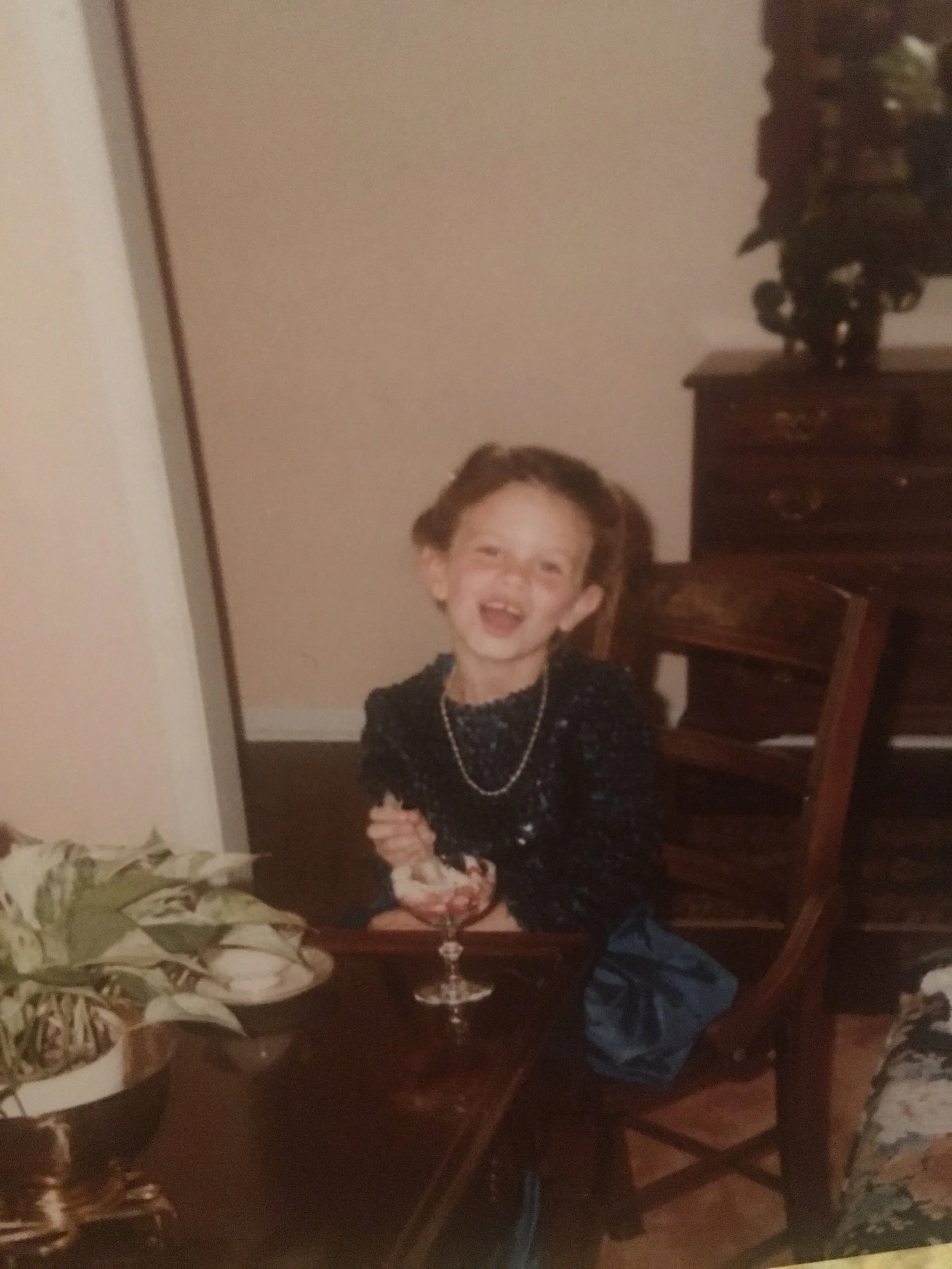
I remember as a kid, when I’d get super discouraged, dramatic, or disappointed, my sweet Dad would take me on a date (which normally revolved around food, ice cream, what have you), and remind me of who I was. Not in a pep talky kind of way—more of a recalibrating kind of way. My highly-sensitive self would get lost in the clouds of her great expectations and harsh inner critic and what I needed more than anything was to feel my feet on the ground.
My Dad knew that. Perhaps someone had done that for him somewhere along the way.
While I have been clueless how to respond to the world around me and the mash-up of emotions sheltering inside me for most of 2020, I keep coming back to this: when in doubt, do the next best thing. Okay, okay, so I got a little inspiration from Anna in Frozen 2. I guess it’s proof that the kid inside of you and me is indeed, a truth-teller.
While I may not be able to change the world around me in a day (or a lifetime), I can take responsibility for my own evolution and growth and in doing so, directly impact my sphere of influence big or, in my case, small. By becoming better humans, we build a better world. By taking care of you, you create a greater opportunity for impact as you engage your family, friends, co-workers, and tribe.
What does this mean exactly? Becoming a better human sounds pretty broad. I believe it starts with self-knowledge. Last week I interviewed Ian Cron, bestselling author of The Road Back to You and host of the popular Enneagram podcast, Typology. It was such a treat. I asked him what his most valuable takeaway was from the Enneagram. He said “self-knowledge,” without a doubt.
He said the difference between self-awareness and self-knowledge is self-awareness is being conscious of how you feel, think, and act. Self-knowledge takes it a step further and unpacks the “why” behind that awareness. The Enneagram gives us nine (or 27 if you factor in subtypes) lanes that map out how we get lost in our ego, or false self. It carves out the self-knowledge as well, providing us with the “why” behind our often painful pursuits.
Today we stand at an unprecedented crossroads. It’s an invitation to quit pressing the snooze button on the alarm clock of living fully alive. It’s an opportunity to change the world around us by doing the next best thing—whether that is reaching out to a friend in need, speaking kindly to yourself, donating to a worthy cause, responding instead of reacting out of fiery emotion, or hugging your child a little longer at bedtime.
It’s about revisiting the classics we may have skimmed through in human school.
Let’s get back to the truth of what we know, my friend. By taking care of you, you’re taking control of what you can control. When we build on a firm foundation, we can create a beautiful, soulful tomorrow. I think we can all agree that hope for tomorrow starts with today.
Deepest Love & Gratitude,
Katie

Why Empathy is Everything Right Now
“Opinion is really the lowest form of human knowledge. It requires no accountability, no understanding. The highest form of knowledge is empathy, for it requires us to suspend our egos and live in another's world. It requires profound purpose larger than the self kind of understanding..”
-Bill Bullard
Perhaps like you, I’ve been spending more time on social media lately. I have had nothing original to contribute and that’s the glorious point. Last Tuesday’s #BlackoutTuesday marked the first day of one week (and inevitably beyond) to consciously focus on joining our voices, efforts, and resources to become better educated about what’s going on in our country and how we can advocate for healing a very old wound: racism.
Throughout the week, as I talked to friends, family, and clients, I was amazed by how many times I heard a similar thread: “I am listening." Listening for truth, knowing, conviction, and ultimately for hope.
What a powerful place of unity to stand amidst a shattered landscape. Listening.
As I poured over trusted friends and influencers feeds and stories, I came across this quote by a man I’d never heard of, Bill Bullard. It shook me to the core. It reads:
“Opinion is really the lowest form of human knowledge. It requires no accountability, no understanding. The highest form of knowledge is empathy, for it requires us to suspend our egos and live in another’s world. It requires profound purpose larger than the self kind of
understanding.”
Everything in my body leaped. YES! This is it!
I googled Mr. Bullard and found very little. The most I could muster was his past profession as the Dean of a San Fransisco High School. Fitting. Clearly, he didn’t need much of a footprint to make an impact.
I bet he was a really good listener, I thought to myself as I was searching to find out more about him.
And whereas I deeply value my opinions and those of others, I’m struck by this idea that we are being called to work through the ego’s slippery need to be heard and be right. No matter what you believe or subscribe to, the undeniable truth is that we must rise up and stand as our highest selves were created to in the face of glaring pain: in love, in listening, in empathy.
Opinions come easy.
Empathy requires understanding and humility.
Opinions divide.
Empathy builds bridges.
Opinions are judgments.
Empathy leans heavy on curiosity.
Opinions want to win.
Empathy wants to give.
When I read that quote, I realized just how important the work of understanding is for our own healing and the healing of a hurting world. I also realized this is why I love the Enneagram so much—it leads us through the tight spaces of ego entrapment and into the wide-open fields of compassion, shedding the hard outer shell of fear one layer at a time.
It helps us understand that our way of seeing the world isn’t the right way, it’s just one way.
Let’s commit to the work of listening to understand. Not listening to formulate a clever response based on opinion. Listening to understand so that we may love.
Love & Gratitude,
Katie
HUGE P.S. Join me THIS FRIDAY at 10 am CST as I chat with Ian Cron, author of The Road Back to You and host of Typology podcast about using the Enneagram as a tool for developing Empathy.

Your Brain on the Enneagram: A Chat with Dr. Jerome Lubbe (Copy)
“If you are neutral in situations of injustice, you have chosen the side of the oppressor.”
-Desmond Tutu

Today I stand in solidarity with our music community.
To listen.
To reflect.
To pray.
Lord, have mercy on us.
To educate myself on the ways I can do my part.
To seek justice in the face of systemic racism that has poisoned our nation for long enough now.
I ask you to do the same.
Katie

Your Brain on the Enneagram: A Chat with Dr. Jerome Lubbe
“Neuroplasticity tells us that we are capable of change. If we understand the function of the brain, we can improve our way of life.”
-Dr. Jerome Lubbe

Last week, I had the pleasure of interviewing Dr. Jerome Lubbe, an innovative thinker, functional neurologist, and author of The Brain-Based Enneagram: you are not A number, to talk Enneagram and the brain. It was truly fascinating.
The Enneagram stole my heart 14 years ago, but neuroscience and specifically, neuroplasticity came in hot on my radar in 2015. It was around then that I started studying trauma and its effect on our brains and bodies.
You may be wondering what the heck the brain has to do with the Enneagram. And that would be fair. That’s why I’m excited to unpack it a bit here today.
According to Dr. Jerome:
“Neuroscience tells us that our brains are plastic. They can and do change. Brain anatomy reveals that our operating system is composed of three primary components which mirror the structure of the Enneagram:
Brain-stem (instinct triad),
Right hemisphere (intuition triad), and
Left hemisphere (intellect triad).
Functional Neurology shows us how to target areas of the brain in order to physically improve the efficiency of the distinct natures of our identity.
The Enneagram integrates seamlessly. It provides language and definition for the process of development. It opens channels for growth by connecting values and expressions to brain function. It offers a guide for increasing physical, mental, and emotional efficiencies by practically implementing effective methods at effective times in effective ways. The Brain-Based EnneagramTM empowers every human being on the planet to engage with the brain, heal and rebuild after trauma, encourage and strengthen efficiencies, and nourish the relational, integrated nature of our whole identity.”
Simply stated, understanding how our brains work and develop habits of attention, thought, and emotion over time directly affects our behaviors and the arc of our wellbeing and experienced reality. When you integrate this knowledge of the brain with the effective self-understanding tool of the Enneagram, you are able to understand how you got where you are and can begin putting into practice a new, empowered way forward.
Sure, knowledge is power. However, once we are able to implement tools (the Enneagram) with this knowledge, power translates to growth and transformation.
Something I appreciate about Dr. Jerome’s approach to the Enneagram is his advocacy in our capacity for all nine types. He provides in his extensive research and testing that we can’t be reduced to one number. Instead, we have fluid elements of all nine that ebb and flow with life’s unfolding. This allows for the complexity of the human identity and is a sigh of relief to the boxy, stereotypical reign of type.
As I like to say, we have a dominant type (in my case, a four), yet also have strains of each of the other eight in my Whole Identity Profile, as he has pioneered.
The best part of all of this is that Dr. Jerome’s book The Brain-Based Enneagram: you are not A number, releases today! His personal journey, breadth of work, and available resources for us is simply stunning. I hope you’ll check out his book, especially if you’ve experienced frustration around knowing your type!
Love & Gratitude,
Katie
P.S. Tune in for my upcoming Instagram Live chat with singer/songwriter/podcaster, Seth Abram this Thursday at 11 am CT!

Shifting Shadows: Doing the Work of the Enneagram
“What you resist, persists.”
-Carl Jung

I grew up in the crown jewel of the deep south, Mobile, AL. We did many strange things like take ballroom dancing in fifth grade. It was hands down the most awkward thing I’d experienced until then, and I’ve always felt at home on a dance floor.
This was different though. Kids from a couple of neighboring schools would gather on a Thursday night at 5 o’clock in a big gymnasium at St. Ignatius Catholic church and learn all the old-school couples dances like the fox trot, waltz, and others I’ve purposely erased from my memory. The most unbearable part of it wasn’t learning the dances, it was learning the dances with the boys. They were hyper, smelly, and had no rhythm. They also thought they were beyond cool.
My favorite part of the night was when I spotted my mom’s minivan headlights in the carpool line. She’d swoop in and pick me up and we’d proceed to Checkers for the long-awaited chocolate milkshake(s). I had to take the edge off somehow.
Learning to dance with our shadow, or shameful parts can feel just as unpleasant. They are those parts of us that we’d rather not talk about. Early on, we learned to hide them from the world around us for acceptance—for survival. They are the parts of you that if someone saw, they might ultimately reject. You may be found out…and deemed unloveable.
What are the shadow parts you’d rather forget about? Is it depression, body shame, singleness, financial troubles, or even sexual trauma as a child? Whatever they are, much like the smelly boys at ballroom, we’ve got to learn to lean in, let go, and learn to dance with them.
The Enneagram is all about integration. The less compartmentalized, or fragmented we are, the more integrated and whole we will become. Just as we are made up of hundreds of different body parts, muscles, and organs, we also have so many different parts of our emotional, relational, and creative beings.
Often times in therapy sessions with clients, these parts come up. Take anxiety for example. Anxiety is an emotion or part of us that can be immobilizing. We often deal with it by numbing, fixing, or running from it. Anxiety is really just a shadow part of us that needs compassion and understanding just like, say, the creative part of us. When we stuff our anxiety and try to avoid it, we really just give it more power and as a result, create imbalance.
What might dancing with this anxious shadow look like? Well, first of all, we must listen to and get to know it. This allows us to cultivate empathy for that anxious part of us. After all, she has been working overtime for a while now to keep us performing, staying safe, and “on the ball.”
Shadow work is really a reckoning with parts of ourselves we’ve misjudged for a long time. The payoff is wholeness—flow. It’s realizing those parts we’ve been hiding for so long aren’t so terrible after all. In fact, they end up being the best parts because they are the most thorough teachers.
That anxious part of you desperately wants you to see her for who she really is: someone who deeply cares about your future, yet may go about it clumsily. She wants you to sit with her, commune with her, and realize the worst thing that can happen isn’t so bad in the end because you have other resilient parts of you that can step in and take over when she needs to sit the next song out.
Take a minute and visualize the part of you that you dislike, a lot. Perhaps you feel guilty about this part or constantly judge it. What does she look like? What is she doing? In the same minute, take one step towards her… then another, and another. You left her alone a long time ago and she feels abandoned, even scared. She knows you dislike her but she desperately longs to know you and play on the same team. She needs you big time.
If this feels completely terrifying, it should. Your brain is freaking out because it has no idea what it’s doing. Hang in there though, this is perhaps the most life-giving work you’ve ever done. Dancing with shadows or smelly boys is probably not on your bucket list. Oh but I bet I know what is…
Freedom.
Love & Gratitude,
Katie