

The Blog
Recently Featured



All Blogs







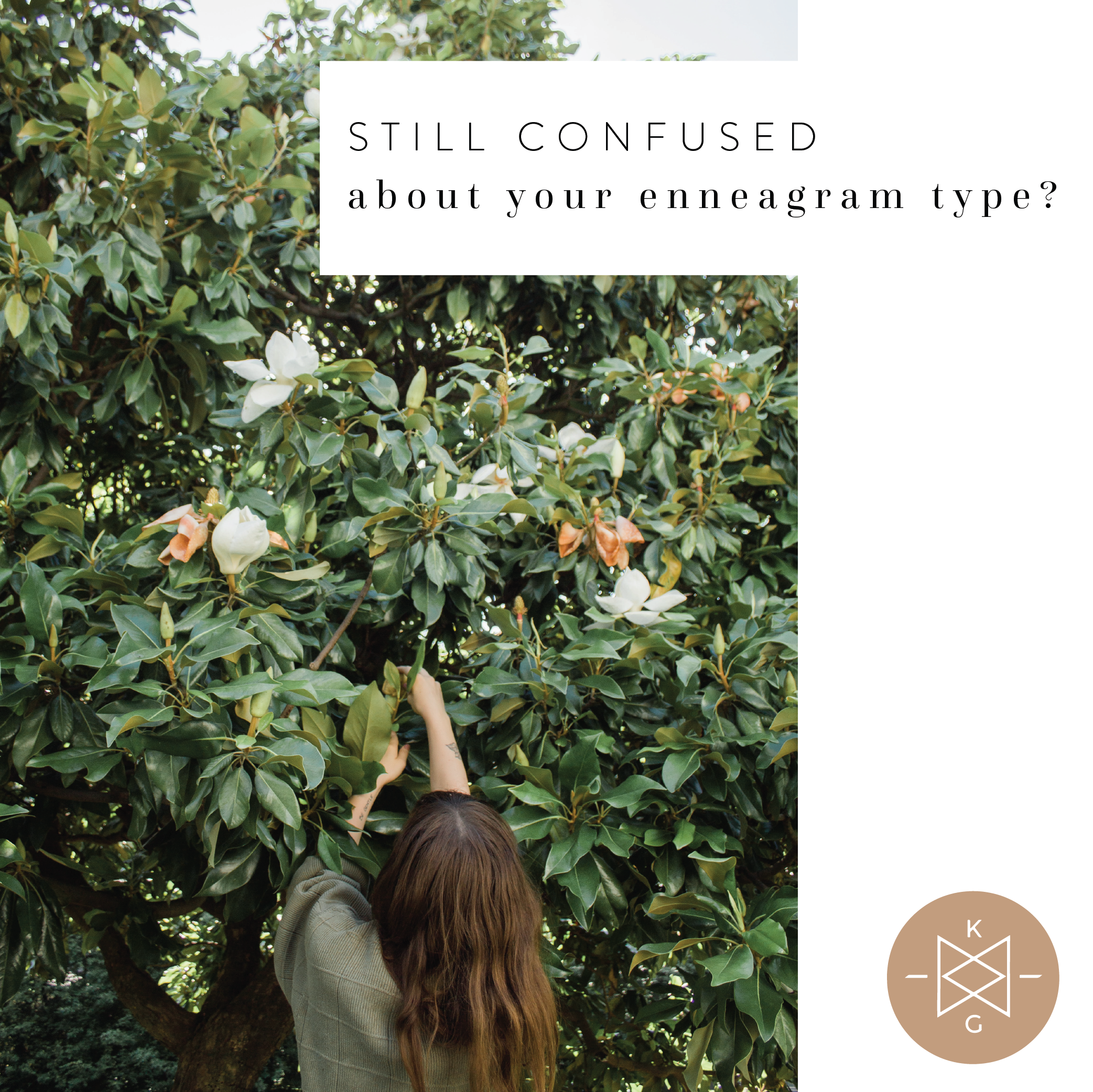
Still Confused About Your Enneagram Type?
“Your Enneagram type is both your opening to love and your obstacle to love. It’s so much more than a typology system, it’s a tool for spiritual conversion.”
- Leslie Hershberger
Do you go back and forth between Enneagram types? Perhaps you’ve taken a few online tests and they’ve given you different results. The first one pegged you a seven. But it was neck and neck with type two. You waited a couple months and took another one only to learn you’re now a nine? Wha? You’re confused and little pissed off because you had to pay for that last version.
HELP!?
First off, don’t be discouraged! This is totally normal and you’re not alone!
The human personality is not static. It’s constantly vacillating between healthy, average, and unhealthy levels (hopefully not too unhealthy the more self-aware we are!) throughout our days, weeks, and months.
Online assessments can’t measure how tired, stressed, or emotionally aware you are. They also can’t determine mood or how many cups of coffee (or glasses of wine) you’ve downed before taking them.
Sure, they’re a helpful jumping off point. (Some more than others!) Yet fully knowing and understanding your Enneagram type requires a bit more digging. In fact, I believe it’s part of its effectiveness.
There are dozens of personality tests out there: MBTI, StrengthsFinder, DISC, to name a few. I love them all, too! However, the Enneagram is unique in that it goes deeper than surface, personality-driven behavior. Sure, that’s part of it, but the Enneagram also helps us understand the “why,” or story, behind our thoughts, feelings, and resulting behaviors. Online tests simply can’t explain the sacred nuance of your story.
However, doing the deeper self-study required to fully know your Enneagram type can.
After all, we make choices, big and small, based on the story we’re living out of. If we’re suffering, we must change more than surface tactics or behaviors. In order to heal and transform, we’ve got to get to the root of the problem—we’ve got to understand our story.
Self-discovery is a winding journey, not a mere moment in time. It’s about deepening knowledge and understanding. In fact, it’s really about self-befriending.
If you’re on the fence about your type, good! I believe it’s an invitation (and excuse) to deepen this beautiful self-friendship you’ve already started.
So how?
You’re already further along than you think!
I’ve got a helpful next step for you. Scheduling a typing interview is incredibly helpful in fully unpacking your story and discovering your type. It’s some of my favorite work to do with clients. Basically, it’s a detailed inquiry process steeped in the Narrative Enneagram tradition that provides your top 2-3 probable types. This allows some direction and margin for clients to then read up on those possibilities and live with them a bit before making a hard decision.
We do this in a creative, collaborative way with clear next steps mapped out. Best part? It’s really fun!
Spoiler alert: you are not a pure type. No one is! You lead with a primary type, yet you have a bit of all nine in you. We are complex and glorious creatures, remember? The Enneagram has the dynamic infrastructure to meet and guide this complexity into greater understanding and opportunity.
I’m convinced your story is far too stunning to be put in a box. Perhaps it’s time to take it out?
Curious about an Enneagram typing interview? Sweet! Let’s talk.
5 Mistakes to Avoid with the Enneagram
“Our survival stories are often the passwords to our healing.”
- Hannah Paasch
Do you have a funny taste left in your mouth with regards to the Enneagram? I’m not going to lie, with its rise in popularity and the obsession with it in Instagram culture, I fear it has become something of a caricature of itself. If I see one more meme about type, I may just boycott it altogether.
Ah, but that’s not the response of a self-aware, evolved, and gracious person living in wholeness is it? No, it’s not…
The Enneagram teaches us to grow beyond reaction and choose from a place of responsiveness—and power.
I do, however, want to point out 5 mistakes to avoid when using this tool for life and relationships. So here goes:
Don’t type other people. This is a biggie. The Enneagram isn’t just about the optics of our personality. It’s about the story, or motivations and beliefs that fuel our patterns of thought, emotion, and behavior. So unless you are familiar with the deeper aspects of someone’s core belief system and narrative, avoid typing them.
Don’t indulge your type. In other words, don’t use your type for an excuse for bad behavior. i.e.” I’m going to let her have it when I see her. She’ll never want to cross me again. I’m an 8 after all!” We identify type in order to better understand ourselves and grow beyond our personality tactics.
Don’t stereotype others based on type. Again, this is such a rookie move. To judge someone and make assumptions based on their type is a big no-no. Just as there are about 100 unique shades of white, not all persons in a type show up the same. Especially when you factor in subtypes, you can actually have two people who are the same type look nothing alike.
Don’t force it on others. Even though the Enneagram is a powerful, transformational tool, not everyone is willing or interested to subscribe to it. The worst thing we can do as Enneagram advocates is to force it on others, no matter how much it has helped us. We must learn to trust others’ process.
Don’t stay on the surface. Even though it’s incredible fodder for coffee shop or cocktail party conversation, the Enneagram is meant to be applied to our daily lives, not just talked about. Knowledge without application is, well, just knowledge.
P.S. If you’re in the market for a way to learn and apply the Enneagram, you’re in the right place. Check out my brand new Self-Care & Enneagram subscription program called The Practice!
The Enneagram and Your Ticket to Self-Understanding
“The Enneagram doesn’t put you in a box. It shows you the box you’re already in and how to get out of it.”
- Ian Morgan Cron
Turning 30 and then eventually, 40 (gasp) really didn’t phase me. I like to joke around with people who ask how it feels by saying, “It’s glorious. I feel like my age is finally catching up with my soul.” As an old soul since the womb, this really does feel accurate. I’ve always felt a kinship with those older than me. As a kid, I used to hang out for strangely long stretches at the dinner table to listen to conversations my parents would have with their dinner guests. They seemed far more interesting than the make-believe dialog happening in the playroom. When given the choice to linger at the adult table or play with barbies amongst the other youngsters, 11 times out of 10 I’d choose the first.
This balances out nicely when you’re a bit older and have the freedom to hang with whomever you choose, but in grade school and adolescence, it’s brutal. I perpetually felt misunderstood, alone, and longing for something deeper.
Enter Enneagram.
When I first discovered the Enneagram 14 years ago, I felt a massive wave of relief wash over me, explaining answers to angry questions I’d been asking God for a long time. Why did I do the things I did? How could I learn to make peace with the complex and often terrorizing crew of emotions always up loud? Could anyone explain the inadequacy and longing raging deep inside?
When I read about the character structure for the Enneagram Type Four, or Individualist, I quickly discovered the foreign language I’d been speaking all along was not what was wrong with me, but what was right with me. In fact, there were others who spoke this language and an entire road map dedicated to us who felt all the same feelings and needed all the same help. I wasn’t, in fact, underdressed and a day late to the ball. (God forbid ever showing up underdressed to a party. My Mama taught me better.)
Do you long for a deeper sense of self-understanding? Perhaps you’ve been asking yourself “why?” for quite a while now and are ready for some answers.
If so, I want to invite you to join me this month in the Practice, my monthly self-care & Enneagram subscription program, where we deep dive into new Enneagram depths. You’ll get a front-row seat to my interview with Beatrice Chestnut, best-selling author of The Complete Enneagram: 27 Paths to Greater Self-Knowledge and subtype guru. You’ll also receive meditations specific to your type and a brand new online Enneagram assessment created by Beatrice. Sign up here today.
I believe the Enneagram is much more than a personality test. It’s an open-ended invitation to embodying the truest version of you. Now that’s a party we don’t want to miss.
It’s also a gentle and wise companion for your everyday experience.
Trust is built over time and baked in safety. We’ve come a long way together. I can’t wait to write this next chapter of the story together.
Self-Care for Your Enneagram Type
“The Enneagram can help you understand who you were before the world told you who you should be.”
- Ian Morgan Cron
In order to truly care for ourselves, we must understand what we’re about, and what we need. The Enneagram can help us do just that. It can help you unpack the story you’ve been living out of for a long time and begin to discern if it’s even true.
As I mentioned earlier, most of us are at the mercy of an old narrative that’s played over and over unconsciously for a long time. The first step in any self-care plan is simple: to wake up to what’s not working. Because many of us spend more time and energy taking care of other people and what they need, this wake-up call is often forced. Our health starts to suffer, our relationships fail, we experience depression and anxiety—or great loss. Oftentimes, a crisis happens to wake us up to the reality that we are failing the most important relationship we have: the one with our self.
So, today, I want to give you a little self-care nudge and tailor it to your dominant type.
Type 1: We all know you are master improvers. Yet this superpower can often get in the way when it’s your total sum of attention. Soften this tendency as you practice acceptance as opposed to fixing or resisting. Practice noticing what is right in the moment.
Type 2: Spending time alone to develop independent interests and greater autonomy is incredibly life-giving for Type 2’s. This allows time for deepening your understanding of what you are passionate about, desire, and ultimately need apart from being needed and helpful to others.
Type 3: At the hub of the self-care wheel for Type 3’s is simply this: SLOW DOWN. Type 3’s move at light speed and get so fixated on the path to success, they miss out on tons of life happening around them that can add to their overall quality of life and the creativity they are made to bring forth.
Type 4: One of the most important postures of self-care we can practice as fours is to separate our self-worth from the propensity to show up as special or extraordinary. When we fixate and strive in this direction, we miss out on the rest of what life wants to offer us. The most special and extraordinary gift we can give to the world is our authentic, essential self who is at rest with themself.
Type 5: A helpful awareness is to recognize how you detach from emotions and resort to the thinking mind. Staying present with feelings when they arise just two minutes longer each time brings balance for Type 5’s.
Type 6: When you go to worst-case-scenario, balance that out in your thoughts by also giving the best-case-scenario equal air time. This challenges the habit of constantly expecting the other shoe to drop by flirting with the idea that it might actually go really well.
Type 7: Becoming grounded in the present is everything for Type 7’s. Because your attention is constantly going up and out, noticing when you are doing this is major. As type 7’s have an uncanny curiosity, wielding this superpower to explore the present moment is very powerful.
Type 8: Journal around your perceived difference between weakness and vulnerability, unpacking your own timeline of having to be strong and in control for protection.
Type 9:: As Type 9’s natural tendency is to fall asleep to their own desires, needs, and the actions involved to get these met, it becomes necessary for you to find a way to cultivate structure and practices that support the achievement of your goals.
P.S. Want to take the guesswork out of self-care? I’ve got a program just for you. Check out the Practice.
The Enneagram: A Self-Care Prescription
“Wisdom tends to grow in proportion to one’s awareness of one’s ignorance.”
- Anthony de Mello
This month we are doing a deep dive into the world of self-care. This week, we look at how self-care is connected to the Enneagram—how knowing your type can catalyze your self-care regimen for greater effectiveness and integration. Self-care is all about creating balance where there is an imbalance, and the ancient wisdom of the Enneagram really knows this.
So, there’s the coolest dynamic within the Enneagram that actually mirrors what I believe to be true self-care. It’s the breakdown of the nine types into three triads that correlate with our three intelligence centers: mind-body-heart. Types 8,9,1 are housed in the body, or instinctual center, types 2,3,4 are housed in the heart, or feelings center, and types 5,6,7 are housed in the head, or thinking center.
This means that each type experiences the world in a specific way connected to their triad, or intelligence center. For example, as a dominant type 4, I experience the world most readily through the lens of my emotions. I’m a feeler and have no trouble identifying emotions as well as connecting with the world and others through them. This is good in many ways, but in some, it creates imbalance as I tend to under-do my other two intelligence capacities--the thinking center of intelligence which allows for analytical/planning skills as well as the body center of intelligence that allows me to be in the present moment, breath deeply into my belly, and feel grounded in the world as body types do.
Why does this matter to us as we explore self-care? It matters because to create more balance and wholeness, we must integrate all three centers in order to live fully alive. It’s really the first step in doing the work of the Enneagram as it pertains to self-care. To use myself as an example again, my constant assignment if I accept it consciously, is to connect to my body through mindful movement, breathwork, and meditation as well as connect to my mind through journaling about thoughts and circumstances as well as harness analytical and fact-checking skills that will balance out my over-worked emotional life.
If this all sounds confusing, simply remember this: you are complex and three-brained. Modern science has proven we have neural cells in the lining of our stomachs, our hearts, and our brains. Depending on your Enneagram type, you rely more heavily on one. So, our work is to become conscious of where there is an imbalance—and practice balancing our relationship to all three.
In my monthly subscription, I’ve built out meditations and practices specifically for your type and triad. If you are looking for a way to experience life more fully, join me as we go deeper with the Enneagram and Self-Care. I’ve taken out all the guesswork. You simply show up.
Join today and experience the roadmap for self-care that the Enneagram provides.
Thoughts on motherhood, breast cancer, and what attachment theory and the Enneagram taught me about being loved