
The Blog
Recently Featured


All Blogs







How to Beat the Winter Blues
“These useless days will add up to something. They are your becoming.
- Cheryl Strayed

It’s a broken record at the moment. I can almost expect it both in conversations with friends and clients every single day. Chances are, if you’re living in Nashville, you’ve thought it or said it out loud yourself. I’m guilty as well.
Drumroll, please?
“This weather is KILLING me!”
Sure, it’s January. What else should I expect but cold grey stretches that make me want to hole up, listen to Bon Iver circa 2008, drink excessive amounts of coffee, and write for hours in my journal?
There’s good reason for this. The weather directly affects how we feel physically and emotionally and can wreak havoc on our overall experience in fall and winter months.
I used to experience heightened levels of anxiety and depression every year when clocks fell back and the sun quit her day job at 4:30pm. My motivation went on strike, healthy habits skipped town, and the feeling of loneliness was pervasive.
Finally, I got desperate enough and took matters into my own hands. I began advocating for my mental health because I knew no one else would. Through personal research, therapy, and challenging my normal behavior each year, I landed on some powerful tools that supported a more hopeful experience when the winter blues started creeping in.
For starters, Seasonal depression is slang for Seasonal Affective Disorder (SAD…aptly). It’s not simply “depression light.” It’s a subtype or specific kind of major depression that is symptomatic with the changing seasons, especially in fall and winter.
There are obvious and not so obvious reasons for SAD. The ones we all agree on are simple though: with less exposure to sunlight during the fall and winter months, our biological clock can often get pummeled, leaving depleted levels of serotonin, a brain chemical that helps govern and boost our mood, and melatonin, that gorgeous stuff of sleep.
If you experience a noticeable shift in mood, physical activity, patience for people, energy level, sleep, and desire to participate, keep reading. Likewise, if you are a human being with a heartbeat, keep reading. I have a hunch someone in your life needs your grace and support because they suffer from SAD.
Here are 4 helpful tips I swear by:
1) Routine
Structure is the sensitive soul’s best friend. For me, this means intentionally planning out my days from week to week. In fall and winter months, it’s starting a bit earlier so I can enjoy more sunlight, even just 30 minutes.
When emotions whip us around, assuming their throne in the driver's seat of life, it can be so easy to slip into victim mentality, feeling powerless. Having a set structure, or routine, for our day helps us reclaim the steering wheel.
My morning ritual is everything to me. It allows me time and space to practice the things that ground me like meditation, writing, and reading. In the coming days and months, experiment by putting some new structures into place to facilitate a more ordered interior landscape.
2) Move
Daily Exercise has officially become my antidepressant of choice. Hear me out, antidepressants can be a very helpful piece of the emotional puzzle when necessary. They definitely have for me along the way. However, exercise is one of the most effective and proven ways to improve overall mood and stress levels. Getting a good sweat also helps us sleep more soundly.
It’s tempting to let workouts trail off, but I say we fight for them. Make it a daily routine if possible, like brushing your teeth. This isn’t about rigidity, it’s about shifting our norms to facilitate more energy and vitality. Plus, there are tons of streaming workouts online when we simply don’t want to leave the house. My personal favorite is Tracy Anderson’s Online Studio, a subscription-based method, and Yoga With Adrien, which is a free YouTube channel.
3) Avoid Numbing
I get it. When depression sneaks in, we often lose our desire for the things we typically love to do. We want to isolate, sleep, eat, drink, numb. It’s so much easier, right?
Numbing out may offer temporary relief for our pain, however, we forget that along with the negative feeling emotions, your numbing strategy of choice dulls the positive ones as well. Happiness, excitement, and gratitude are harder to come by and we get thrown right back into the tangled thicket of depression once again.
4) Support
Replace the numbing with support. Identify “safe people” who know and accept you where you are. Make a list of two or three and reach out to them to let them know you’re struggling.
If you don’t have said 2-3 people, a good place to start is therapy. While I’m a big believer in individual therapy, finding a group therapy opportunity may be even more effective. I offer several options and would love to support you in this season. There is absolutely no shame in seeking professional help. It is a courageous act of self-compassion.
Hang in there, friend. Each day we inch toward one more minute of sunlight. After all, spring is simply the payoff for all the deep soul work done during winter. As Cheryl Strayed says, “The useless days will add up to something. These things are your becoming.”
Love & Gratitude,
Katie

Joy Division
"Joy—that sharp, wonderful Stab of Longing—has a lithe, muscular lightness to it. It’s deft. It produces longing that weighs heavy on the heart, but it does so with precision and coordination…It dashes in with the agility of a hummingbird claiming its nectar from the flower, and then zips away. It pricks, then vanishes, leaving a wake of mystery and longing behind it.”
-C.S. Lewis

After a decade working as a therapist and holding space for the brave, beautiful stories I encounter along the way, I’ve had a curious finding. Not one of these stories is identical, yet there is a familiar melody that builds if you back up and listen from a distance. It’s like sitting on the back porch after a long day in the sweaty palm of summer as the crickets and katydids show off their grand cacophony against the stillness at dusk. No song is in perfect harmony, yet the dissonance makes perfect sense.
I’ve found this common theme checks out despite age, race, gender, or religion. You ready for this? Here it is:
Humans are terrified of Joy.
Beyond anger, sadness, grief, shame—you name it—we are far more resistant to feel joy than other emotions.
Why is this?
I call it “the other shoe syndrome.” If we bask in moments of joy, small though they may be, eventually, the other shoe will drop, leaving us disappointed, or perhaps irresponsible, or even worse...empty. We’re so afraid of the let down so we settle for scarcity and self-protect.
Brene Brown says it best,
“When we lose our tolerance for vulnerability, joy becomes foreboding. As a result, we dress-rehearse tragedy and beat it (vulnerability) to the punch.”
In other words, joy is too risky. Something terrible might happen on the other side so we opt out altogether and dumb down desire. After all, if we run tactics on worst-case scenario, we have nothing to lose.
Not so fast, Cowboy. You simply can’t opt out of vulnerability. You’re not like the rest. You want more. Hell, you’re taking precious minutes of your day you’ll never get back to read a blog post about self-awareness and development. Chances are, you’re also a little weird. I sure hope so.
To walk around on the planet with a heartbeat and a dream we must practice vulnerability. Expansion requires it.
Human beings have a negative bias. I’ve heard it said, “we’re like teflon for the positive and velcro for the negative.” After all, fear has kept us alive through the ages as a species. However we don’t need it for survival in the same way we once did. We can soften into joy if we practice it. This takes some rewiring, though, hence the word “practice.”
How do we practice? I’m convinced it’s a three-fold process.
When Joy flashes her tooth-y grin in your direction, don't quickly look the other way—get curious. Flirt with her, even if she’s there for just a minute.
Then what?
Pivot to gratitude. Research shows the most joyful people in the world are also the most grateful. This blows far beyond circumstance. It’s a result of practice. When we pivot to gratitude instead of scarcity, we build up new accessory muscles we didn’t know existed. This, in turn, becomes habit over time.
I like F. Scott Fitzgerald’s words, “Don’t cry because it’s over, smile because it happened.”
In that practice of gratitude for this joyful moment—breathe it in—stay with it. Brain science tells us it takes three deep breaths or eleven seconds to form a new neuropathway in your brain. By basking in these joyful moments, you are literally rewiring your brain to make you a more wholehearted, receptive person.
By the way, this post is really for me. They all are. We write what we know because we’ve had to learn it. I’m guilty of constantly chasing the extraordinary. In this chase, I miss out on the tiny, ordinary moments bursting with joy: the quiet flurry of snow, the faint song being played on the piano in the other room, a perfectly poured latte, my niece’s delicious laugh, a text from a friend “just saying hi.” These simple sightings of joy are oxygen for the soul.
This joy, this “sharp and wonderful stab of longing” as Lewis describes, is bittersweet. It’s the good and the bad, the black and the white. It’s toggling the both-and. This season, I’m committed to that creative tension. I’m committed to practicing those tiny, two-degree shifts that bolster desire. I don’t want to go it alone though. Will you join me?
Love & Gratitude,
Kati

The Enneagram & Your Favorite Mistake
I grew up worshiping Sheryl Crow. She embodied brilliant writer, instrumentalist, singer, and entertainer all in one while looking really strong and sure of herself along the way…

I grew up worshiping Sheryl Crow. She embodied brilliant writer, instrumentalist, singer, and entertainer all in one while looking really strong and sure of herself along the way.
While major labels were throwing hundreds of thousands of dollars at production budgets for artists back in the early 90’s, she managed to make pure magic with 40k on her debut recordTuesday Night Music Club.
I see her from time to time around town, typically in a Starbucks, and have a full-on girl crush attack, geek out moment. Thankfully, I’ve never been a total train wreck and embarrassed myself those handful of times, though I’ve come scarily close. (I have a much different story about standing behind Micheal Stipe in a local coffee shop. I’ll save that for a blog post about overcoming humiliation.)
I recently listened to an interview with her on NPR and learned of a much different, fragile side of Ms. Crow. She admitted a lifelong battle with self-doubt and depression. She even went so far as to say this larger than life persona she’d created over the years felt paper thin, and contrary to the reality of her own broken self-image.
Guess what? You and I are no different (well, besides the arsenal of Grammy’s perhaps). We learned early on which masks looked really good on us that would also double as a protective shield. They would help us show up and be seen on this daunting stage called life.
After all, the word personality is derived from the Greek word, “persona”, which means “mask”.
We all wear certain masks of personality to protect ourselves from rejection and failure—to be liked.
Your personality is NOT a bad thing either! It’s one of the loveliest things about you.
Things gets pitchy though when we over-identify with that mask and eventually lose touch with the reality of who we are—the authentic essential self.
I believe the Enneagram is one of the best, most accessible tools for self-understanding. It serves as a roadmap, guiding us on the journey of self-discovery and relational growth. If you’re new to this tool and want an introductory peek into its wisdom, this online indicator is a great place to start.
We make one whopping mistake with the Enneagram, though. Just as we over-identify with certain personality traits or masks we wear, we can also hugely over-identify with the classic and obtuse characteristics of our specific number or “type.”
We attach to the safe construct of this number as opposed to allowing it to help us “unlearn” certain behaviors that got us into trouble in the first place.
For example, when I first discovered I was a four on the Enneagram (the Romantic), it was like someone had given me a handbook, or a language, for all the reasons I do what I do. The melancholic tendencies, the shame, the need to be special, the obsession with aesthetic, all of it! I thought I was just crazy all those years!?! (Ballot's still out there).
Finally, I had insight into the complex story I’d been living out of
Initially though, instead of allowing this insight to help me shed the unhelpful parts of my personality, I took the information and completely indulged in it. Instead of “I’m Katie, and I identify with type four on the Enneagram,” it was, “I’m a four. Oh, and my name is Katie.”
Are you tracking?
In essence, if you are letting your type define you as opposed to allowing it to unlock the beauty and nuance of your purest, truest self, you’re still hiding in a box.
Don’t worry, it’s my favorite mistake too. I camped out in Four Land for a good five years before I understood how much bigger and more powerful the Enneagram really is.
It doesn’t want to type you just to leave you there. It wants to guide you home to wholehearted living without the entrapments of all those fearful masks.
Here's the thing: You are in a league of your own. You're more than a number or a type on any personality indicator. Thankfully though, this gift of the Enneagram can support you in discovering all the intricacy, uniqueness, and power that lies outside the box and inside of you. I'm pretty thrilled I get to support you as well.
Love & Gratitude,
Katie
xoxo
A Confession, Some Exciting News & A Favor to Ask
"Without vision, action is only haphazard at best."

Spring has officially sprung and we made it through to the end of daylight savings time, which in my book, is something glorious to celebrate. Can I get an amen from any of you seasonally affected friends out there?
Spring is typically a time symbolizing new beginnings. We dial into more regular fitness routines, we edit our wardrobes, and we clean the dusty baseboards of our lives in order to create a bit of fresh forward momentum. It’s exciting, right?
In my experience, it can also be a time to bite off too much. A rush of energy kicks in and I feel like I can take on the world, so I over-commit and find myself sitting cross-legged and frustrated on the floor of my office wondering how I got there.
Do you ever feel this way?
I did this last spring as I kicked off my podcast. I freaking LOVE podcasts and find myself looking for any opportunity to be alone in the car or in between clients at work so I can listen to one of the hundreds I subscribe to. If I didn’t text you back, it’s not because I didn’t want to.
I probably was just in a podcast haze starting at the ceiling. Sorry about that.
Well, I lined up some incredible first guests (Ian Cron, Matthew Perryman Jones, and Miles Adcox to name a few), got into the work, and after airing three episodes, quickly discovered I was in over my head. My "Operation: Podcast" had failed.
Or had it?
I always try to see failures as opportunities. Where was the opportunity here? The opportunity was to get crystal clear on my vision. I learned something highly important: without vision, action is only haphazard at best.
I’ve spent the last several months crystalizing a vision for the community I want us to build, and the exciting news is, along with the podcast, I’m bringing you some opportunities to connect to this lovely healing arts community by hosting some cool upcoming events starting in April! Whoop!
You will be hearing more on that in the near future. However, I wanted to plant the seed as well as ask a favor.
You hear from me a LOT. Yet you are the heartbeat of why I do what I do. That said, I really need to hear from you to continue to build out this vision. Would you pretty please take five minutes and fill out this survey? There are seven questions that will seriously help me direct the next steps of the blog, events, the podcast, and more!
Thank you, seriously. Time is precious, and I value yours (as well as your feedback!). I can’t wait to hear what you have to say.
Love & Gratitude,
Katie
xoxo

Step into the Spotlight: How to Land the Role of a Lifetime
“The reason so many of us are obsessed with being stars is because we are not yet starring in our own lives. The cosmic spotlight isn’t pointed at you, it radiates from within you.”
-Marianne Williamson

If there is one thing I’m well acquainted with, it’s this search for significance—a spotlight of sorts. How can I show up authentically, adding value and beauty to the world around me? How do I get there? Well, as it were, I’m dreadfully stubborn, traipsing around for years down camouflaged detours of tangled roads leading to what I thought were final destinations.
Interestingly, I’ve learned far more from my detours than my successes.
Can you relate?
As a result, I’m still building out that journey, and plan to for the long haul. Here’s the thing though, oftentimes we exhaust this search and desperately cling to false forms of stardom, significance, what have you. We try to shine in someone else’s spotlight, fit into their box, and therefore abandon the unique capacities and creativity dormant within.
Remember the movie The Holiday? I realize it’s a bit late for Christmas amusement; however, there is a scene in this movie that is worth noting all year long.
Here’s the set up: Iris, played by Kate Winslet, is having dinner with Arthur Abbott, an older gentleman who’s a successful, retired Hollywood film director. They meet by chance while she’s in LA on holiday over Christmas in hopes of escaping the pain of a recent heartache back home in England. After Arthur expresses total perplexity as to why the gorgeous Brit is spending her holiday alone in a different country, he digs deeper. She eventually breaks down in tears as Arthur gently sizes up the situation with his spot-on insight.
Arthur observes:
“This is not a hard one to figure out. Iris, in the movies we have leading ladies, and we have the best friend. You, I can tell, are a leading lady, but for some reason, you are behaving like the best friend.”
It was one of those “aha” moments for Iris, and for me the first time I watched it. After a sip of beer and a sigh of relief, she jokes about her incompetent therapist of three years withholding this core insight from her.
In order to recuse myself from any such accusation (and because I wish my therapist would’ve asked me the same thing ten plus years ago), I’ll ask you a similar question today:
Are you starring as the lead in your own life? Or are you the best friend, constantly apologizing for your actions and taking cues from everyone else around you?
When we attempt to re-invent our wheel and jump on someone else’s bandwagon, we detach from ourselves, ignoring what’s burning beneath the surface. Slowing down to grapple with this stuff isn't necessarily easy either.
In fact, for years I battled hard-core anxiety and self-doubt, feeling obligated to pursue music as a career. With a natural bend towards it, loads of encouragement from outside sources, and unique opportunities in front of me, I traveled down that path for several years. Sure, I loved the idea, and it felt really satisfying to walk down that brightly lit and hopeful path, but it fell short–something was missing.
Music is a passion, but it was never enough for me to pursue solely. When I woke up to the fact that I’m more than enough without a spotlight on a music stage, it strangely permitted me to enjoy it even more. Funny how that works.
It also allowed me to see boundless opportunity in those things that felt truly meaningful, exciting, and a more authentic fit for me career-wise.
Just because you’re good at something doesn’t mean you must pursue it. You get to choose.
In light of all this, I’ve got a little assignment for you. At the very least it’s food for thought or good dinner conversation... or both.
• Become laser aware of the things you effortlessly enjoy doing. What are the problems you get lost in solving? This can look like drafting an email, planning a party, listening to a friend share a difficult experience, telling a story, picking out paint colors, practicing piano, writing a thank-you note, and so on. Nothing is too small or insignificant. What do you love about doing it? How does it make you feel?
• What compliments do you receive often? Don’t be shy. (e.g., You’re great with people, you make a memorable first impression, you’re a gifted flower arranger, you’re hilarious.)
• Finally, ask a trusted friend this question:
When do you observe me at my most engaged, alive, and contented self? What am I doing and what do you notice about me?
• Write it all down.
We simply don’t realize how we lead in certain areas. We assume “everyone does this as well!”
It takes loving mirrors such as trusted friends, colleagues, coaches, and family members to reflect back on what they see. I’ll never forget my 8th-grade cheerleading coach (laugh it up) giving me invaluable insight into what she saw in me back then. One day she took me aside in her thoughtful and present way and told me I was a natural encourager and observer. As an insecure, awkward 12-year-old in need of validation, I tucked her words away like a tiny family heirloom in my coat pocket. I’ve treasured and trusted them ever since. So many years later, much of my work is built around those two attributes. This stuff works.
Let’s cast you in the lead role of your life. It’s not selfish, or petty, or a waste of time. Quite the contrary! The minute you step into your unique calling or “spotlight,” a sense of relief wells up. An internal security and calm pervades, and you can stop hustling to compete, compare, and look for outward solutions to internal capacities that have been there all along. We love and live more fully from this place of knowing.
So, you’ve landed the lead role… It gets really fun when we start writing the script.
Love & Gratitude,
Katie
xoxo
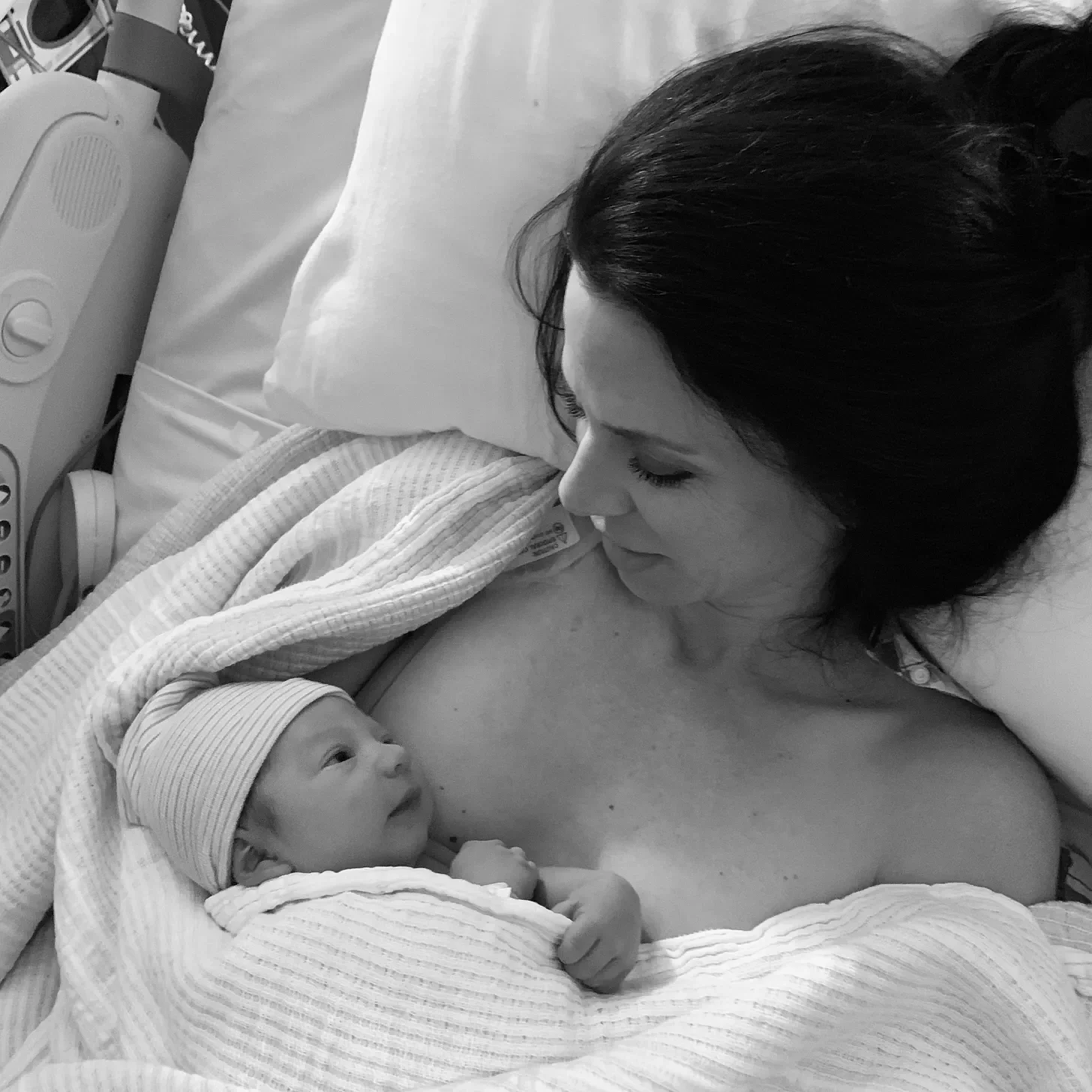
Thoughts on motherhood, breast cancer, and what attachment theory and the Enneagram taught me about being loved