
The Blog
Recently Featured


All Blogs






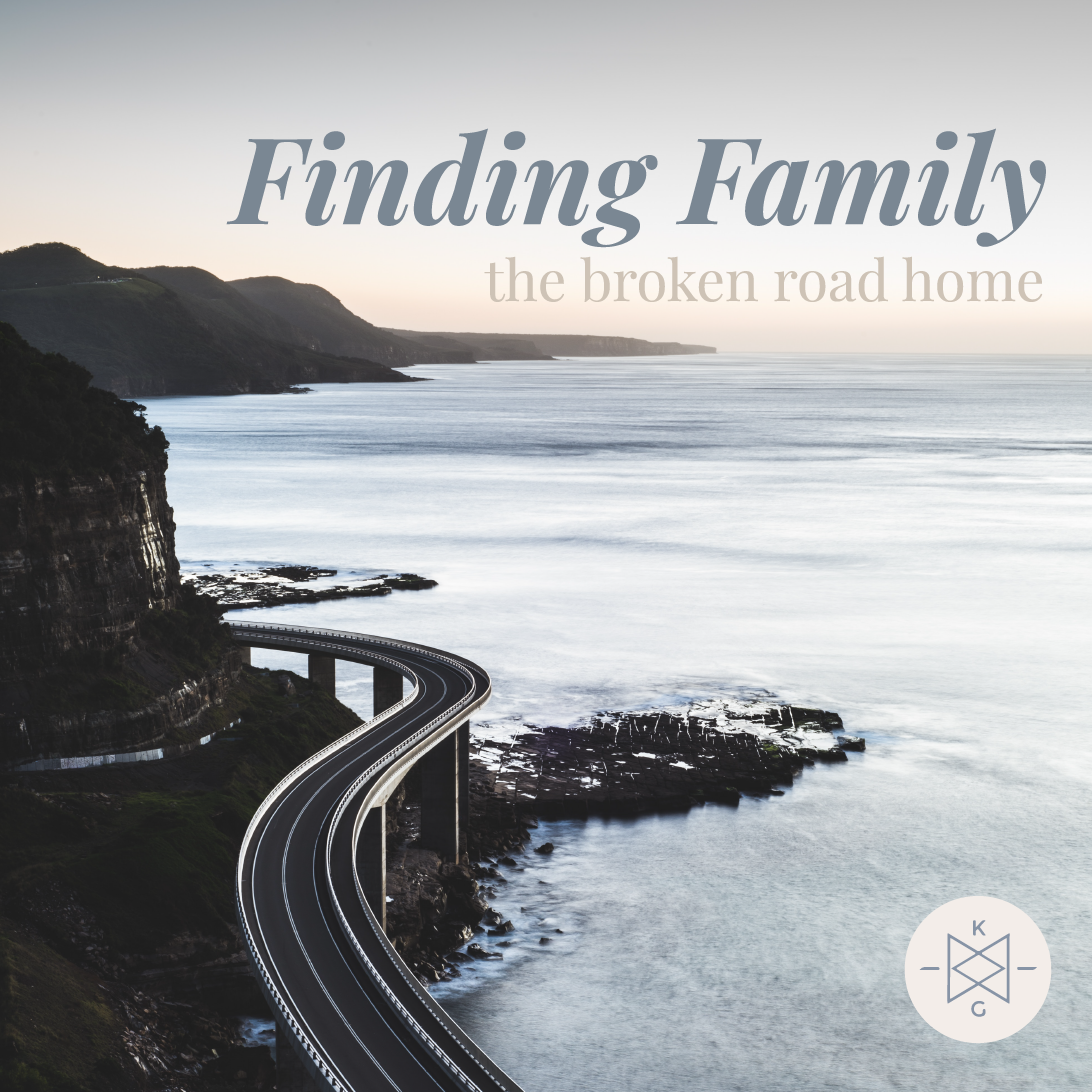
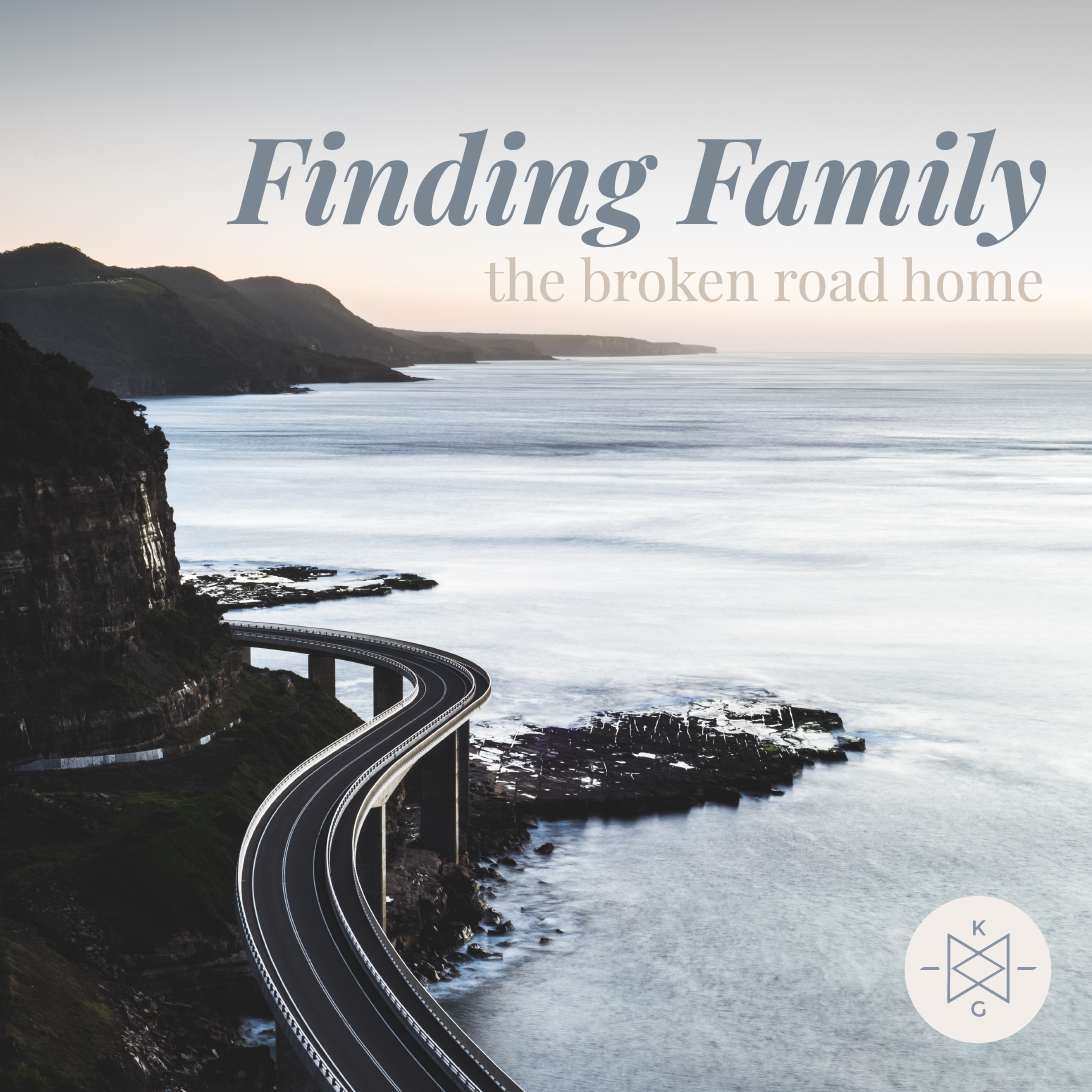
Finding Family - The Broken Road Home
“Loneliness is proof that your innate search for connection is intact.”
- Martha Beck
I’m not sure if it’s the Holiday season or the fact that I’m becoming more nostalgic with age, but something has been at the forefront of my heart and mind as of late.
I can’t seem to shake it. I don’t want to shake it.
It’s beautiful, complex, frustrating, exhilarating, heartbreaking, fun, weird, grounding, dangerous, and safe all at once.
Everyone has it on some level and has been seriously impacted by it, undoubtedly. I believe we must somehow, either literally or figuratively, leave it at some point in order to honestly choose to love and enjoy it in the end.
“What the….?” you ask.
Ah yes, the “F” word. Not that one, the other “F” word: Family.
What comes up for you with the mention of family? Is it sadness? Regret? Longing? Love? For me, this slow and heavy wave of gratitude washes over. Don’t get me wrong. It wasn’t always like this. I’ve had some long dark stretches of distance from my family. Sure, there were disappointments due to impossible expectations, but what I’m realizing is many of those expectations were really for myself, not my family. They were just the closest, easiest targets.
Do you relate to this longing for family—for home? If you find yourself in a place of loss and loneliness this season, keep reading. This is for you.
Last Thursday, as I sat around the Thanksgiving dinner table surrounded by family and an arsenal of casseroles that would make Paula Deen squirm, I cried. Fear not. There was no drama to speak of and the sides were superb. I cried because of how far we’d come and how much we’d grown in awareness and compassion for one another despite the broken road that’d led us to that place and those casseroles.
A convincing bolt of insight hit me as we went around the table sharing what we were most thankful for and not one person talked about their careers, accomplishments, or stuff. Each colorful character gave high praise to the same gift: relationship. Relationships are the powerful connections that sustain human life on this earth. For the record, I wasn’t the only sap who cried either.
I realized something deep and glaring and worth its weight in gold: Relationships are the most important thing in life.. More important than money, power, ideas, and influence (especially influence), relationships are King and must be intentionally cultivated and nurtured over time. (Read: not only on Thanksgiving.)
Sometimes this comes in the form of a family of origin; often times this comes in a family of choice—the one(s) we build.
The truth is, for many of us, the word family brings up immeasurable pain and anxiety as safety and protection were needs that went missing in our family of origin.
In therapy, we spend a great deal of time unpacking that pain, which isoften traumatic, in order to rewrite a narrative of value, love, acceptance, and possibility. Needs such as provision, encouragement, affection, play, and structure were denied and as a result, had to be met elsewhere. Survival became a fight, resulting in unhealthy relationships, the denial of needs, parenting aloof parents, acting out behavior, and on and on.
In Falling Upward, Richard Rohr aptly concludes, “When you get your, ‘Who am I?’, question right, all of your,'What should I do?’ questions tend to take care of themselves.” The first half of life is often spent grappling with identity, or at least mine was. Hell, some days I feel the ballot is still out. Our first mirror of identity dwells in the home and is largely held up by our families. This natural flow of life and development, however, is not always accurate and/or affirming for many. I have wonderfully loving, encouraging parents who instilled their values and beliefs into us five kids. This infrastructure is necessary for ultimately receiving, learning, doubting, questioning, and forming a collective of tested individual convictions from which we grow and live out the second half of life.
Now this can be a brutal process as we must often lay down that set of values inherited from our parents in order to refine and embody a set that brings more congruence into our daily experience. For me, that process was peppered with anxiety, depression, and bouts of insomnia. With age and maturity (we hope), the invitation is to take responsibility of our today, and offer compassion and forgiveness to our family of origin. Our parents, after all, are just people. They were never meant to stay up on that pedestal you put them on. It was just too far to fall.
I can remember sitting in my spiritual director, Gail’s office like it was yesterday. She had this big old winged-back chair with robin’s egg blue toile fabric and a worn-in seat. Her office felt like a dreamy English cottage or something: a collection of kindness, tears, books, mismatched story-ridden antiques, and the occasional whip of tired laughter. During stretches in my twenties I would sit with her and shed my stories of disappointment and loneliness as if she had an “all better” pill to give me in the end. Well, she didn’t. Yet, I miraculously made it out of that decade alive. I remember her gentle response to my weary, longing soul, “You know Katie, loneliness is really the human condition. Stillness isn’t the worst teacher, either.” I know, I know, I would reply with a deflated sigh.
Coming to embrace this as truth has been a peaceful rendering for me. Because we are relational beings who long for and are made for connection, we constantly ebb and flow on that spectrum energetically. It is impossible to stay in a static place of fullness at all times. You may be an over-achiever, but you’re not a machine. I realize this when I ask my friends who appear bulletproof and fabulous on Instagram how they’re doing only to find out in conversation that they are really struggling with a deep sense of disconnection and sadness. The rat race of keeping social media appearances may be a glossy, temporarily successful campaign, however it does not satiate the desires that well up beneath the surface after all those hearts and likes cease to flow.
There is simply no substitute for family: the one we’ve been given or the ones we have chosen. “Feelings of worth can flourish only in an atmosphere where individual differences are appreciated, mistakes are tolerated, communication is open, and rules are flexible — the kind of atmosphere that is found in a nurturing family.” Virginia Satir had it right. I take that a step further and add this: the flourishing of self-worth and acceptance can also be re-created in families we cultivate along the way; those safe people who have earned the right to hear and bear witness to our stories.
This, like so many things in life, starts with intention and openness and requires patience and time. On your unique journey of cultivating family, community, and home, I hope and pray that you will not abandon ship when the space feels too big and the silence too loud. Listen to that constant longing and echo it to the world, though your voice may crack and your heart falls flat. And then do it again, and again, and again. You’re on your way to a place called home and that journey starts within. You are worthy of connection.
Love & Gratitude,
Katie

Victim Much? A Guidebook (Asking for a Friend Of Course)
“Above all, be the heroine of your life, not the victim.”
Nora Ephron

Let’s get right to it. When was the last time you had a pity-party? You know, somebody let you down (perhaps this person was you), you then wrote a compelling best-selling drama in that head of yours deeming it an unfair situation, then proceeded to peace out and sulk (slowly) in the coziness of your favorite chair—the victim seat. For me, this was probably last Wednesday.
In fact, why stop at victim? Victim, rescuer, and persecutor are all tempting roles we each play, albeit unconsciously. It’s even probable you’ve explored these three destructive relationship roles within a matter of days or hours. Here’s a great example.
You are having the vacation of your dreams. You’ve spent the last ten days exploring, eating, and indulging your way through Italy and now you’re set to return home. As you settle back into your daily routine, you notice an extra five pounds mysteriously came back with you. You feel gross and beat yourself up a little (enter persecutor, stage right).
You decide you’re going to remedy this situation so you cut out all carbs, eat mostly kale prepared in every which way, and work out like a maniac for the next week (now the rescuer joins you from stage left delivering her clever and very convincing monologue). However, two days in you’re starving and extremely irritable and just too tired to wake up at the crack for that grueling hour of Orange Theory. A pepperoni and mushroom pizza followed by some Ben & Jerry’s would take the edge off just fine.
Guilt-ridden and sensing some indigestion, you get under the covers and go to sleep. Life is too hard and you’re quite simply a failure. The world is a pistachio-flavored mess and you’re powerless in her grip. (Ah, the intoxicating voice of victim slowly lowers down from the rafters lulling you to tears with her gut-wrenching finale…literally).
Can I get a witness?
Whether you’re currently stuck in the trappings of a similar triangle, or are the victim of a much more serious predicament, I believe it’s necessary to understand what’s happening and learn to choose something different. We’ve all been called to something higher and, let’s face it, victim simply isn’t much fun if we’re really honest.
I’m convinced everything in life is relational; that’s why we must explore the toxicity and damage we fall prey to when we inhabit these three roles. They are insidiously subtle, making it almost impossible to detect when we move into and through them. Why? Chances are we observed others modeling that behavior around us growing up—subconsciously building them into our relational structural DNA. Quite simply, these roles may feel familiar yet undetectable. No, I’m not blaming it on your mother, I’m merely saying she may not have had the best teacher either and was doing the best she could at the time.
When we understand the cold hard facts behind victim, rescuer, and persecutor, we can easily recognize the payoff involved and bust their chops, making it easy to access a way out of those childlike corners and into our mature, adult selves.
Today, I want to focus in on victim as it can often feel the trickiest to detect and get out of.
There is always a payoff for this destructive spiraling behavior...always. Otherwise our wise adult-governed self would remain in the driver’s seat forcing that reactive monkey brain to ride shotgun (or better yet...hit the back seat). If there wasn’t a payoff, we simply wouldn’t bother.
It’s indulgent yet also painful to sit in victim. After all, legitimate hurt and/or harm have landed us squarely into this role and it feels horrible—powerless. Yet oftentimes we stay in victim far longer than necessary. Why? Those payoffs we talked about.
Here’s a few of them:
-Avoiding responsibility (“it’s not my fault” or “look what they did to me”)
-Getting attention
-Collecting sympathy (Poor, pitiful me…)
-Getting to be “right” (in order to justify a resentment)
-Proving myself to be “wrong” (in order to justify low self-worth)
So what now?
The minute that old victim Lazy Boy starts to feel a bit too cozy, catering to one or more of those old payoffs, I invite you to ask yourself one simple question: What is my part in this and how can I own it? At the core of that victim mentality is a need attached to a wound, a need that I must tend to. If I’ve had a misunderstanding with someone and feel betrayal or judged, my need is self-compassion and perhaps an honest conversation for clarification and resolve. I must own my part in making that happen instead of having a pity-party in the fetal position on my bedroom floor like a petulant child. Yes, it’s totally unsexy, but it’s also completely responsible.
When we own our part, we create a new, powerful way out of victimhood. We now assume the role of creator in our experience, cashing in the small but familiar payoff we grew accustomed to receiving. This shift in behavior is incredibly simple, yet so empowering and life-giving in relationships. Perhaps the most invigorating part of this shift is the creative freedom found in taking responsibility for your own happiness. You’ve stepped out of the confines of co-dependency. You’ve put your ego in its place. You are rocking those big girl pants.
Welcome to the next level—you’ve officially quit playing small.
Love and Gratitude,
Katie
A Generous Assumption
“What boundaries do I need to put in place so I can work from a place of integrity and extend the most generous interpretations of the intentions, words and actions of others?”
-Brené Brown
I’m a shameless fan of the meditation app, Headspace. I know, I know, I should be well beyond guided meditation and floating cross-legged amidst the wafting nirvana of Transcendental Meditation. Oh well, I suppose I’m quite fine in my elementary, yet devoted practice of guided meds.
Last week I started a new pack (there are all these helpful packs you can choose from that focus on things like sleep, anxiety, change, and the like). For some reason I was really drawn to the new meditation pack focusing on generosity. God must have know I’d need a little extra nudge in this direction because unbeknownst to me at the time, I desperately did by about Thursday.
Each day I’d sit to meditate, Andy--the adorable British guide--dropped these punchy insights about generosity. One that stood out was the importance of practicing generosity inward to ourselves regularly before we expect ourselves to extend it outwardtoward others.
Now, generosity is a quality and practice I highly value. It’s right up there with authenticity, gratitude, and consistency...in no specific order. In my research along the way, I’ve learned that the happiest, most whole-hearted people in the world practice six core things regularly: mindfulness, gratitude, vulnerability, belief in a higher power, self-care (exercise being a big part of this), and you guessed it, generosity.
Later on in the week, I started to feel myself slowly slipping into the abyss of a judgy, resentful sludge. You know the feeling: you’ve given someone something special, such as a meaningful compliment or thoughtful gift, and don’t get as much as a “thank you” in return. Nothing. Nada. Zilch. Ouch!
You start to realize this is happening quite often and that beautiful spirit of generosity you pride yourself in has come to a screeching halt. You now have a strange resemblance to Cinderella’s evil step sisters combined and on Adderall. Not a good look. What went wrong? Why do people suck so much? Why do I even care?
Does this sound familiar?
When this happens to me, I want to pull the reigns of generosity wayyyyy back and self-protect in the recess of isolation. I go into scarcity mode. I plop down heavy on the high and mighty throne of victimhood and swiftly wave my entitled wand of criticism.
Perhaps the most life-giving truth I’ve learned about generosity from Brené Brown’s work is that the most generous people are also those with the strongest boundaries, meaning they are crystal clear with others about what’s okay and what’s not okay. The only way we can practice intrinsic, unbridled generosity with others is to beef up our own boundaries. Why? Because the healthiest, most loving relationships are the ones with the clearest guidelines.
I can only assume the best about people if I’m honest with myself and others about my needs. If I don’t first extend generosity and compassion to myself, I will expect this need to be filled externally by someone who hasn’t the foggiest idea what I’m looking for.
This messy brand of generosity never ends well...much like a shot of apple cider vinegar without the honey. The good intentions don’t quite balance out the bitterness. Without boundaries, making generous assumptions about others is tricky, if not impossible.
Constantly overextending yourself emotionally, physically, or financially in the name of being nice, flexible, and fun isn’t really generosity after all. It’s an attempt to “fit in” and be liked as opposed to authentic and true.
The ones who don’t return your lovely, if not misguided, attempt at generosity are your most valuable teachers. Learn from them. They are your constant crash-course in Boundaries 101.
Show up to class, pay attention, take good notes, oh, and save me a seat next to you.
Love & Gratitude,
Katie
A Direct Flight: Your Best Route to More Connection & Influence
“People don’t want to be impressed, they want to be seen.”
I have a massive confession to make.
Quite honestly, I’m embarrassed to go there, but in line with my desire for transparency and vulnerability, it’s hopeless and there’s no turning back.
In my own struggle with low self-worth and insecurity throughout the years, I’ve damn near died trying to be impressive—to be liked. I’ve pitted myself against “everyone” (which in reality, is a collective of probably six people in the world) in a hard effort to show up and be seen. I desperately want you to accept me and deem me worthy to enter those sparkly rooms you hold the key for.
This has taken many different shapes throughout the last three-plus decades: an eating disorder, good grades, perfectionism, unhealthy relationships, a music career, a graduate degree, a blog, shiny social media boxes, and the list goes on.
Don’t get me wrong, most of these pursuits started off clean—based in desire. However, if I’m totally honest, some got a little muddied by an unrelenting need to be seen. Not only that but to be seen as clever.
Guess what? It’s an exhausting, isolating way to live. Also, it doesn’t work. Period.
It’s kind of like landing thirty minutes late at the Atlanta airport, hustling and schlepping to make the connecting flight only to show up at the gate to be met by a very perky flight attendant with red lipstick and coiffed hair who politely informs you “I’m sorry, you’re just too late. The plane left ten minutes ago.”
Damn. Now you’ve got a couple of options; you can either bury your face in a pint of Ben & Jerry’s or a pint of Stella Artois... Pick your poison.
Guess what? We all have a deep need and desire to be seen. We were created to succeed and thrive in our own unique ways. However, what I’ve found the hard way is that there is a better, more effortless way to arrive. Take a deep breath and a load off; you don’t have to be so impressive.
Your ticket on this direct, first-class flight is called radical empathy.
Radical empathy is the choice to practice empathy relentlessly and continuously in our everyday interactions with people.
Brené Brown asserts that “Empathy and shame are on opposite ends of a continuum. Shame results in fear, blame (of self or others), and disconnection. Empathy is cultivated by courage, compassion, and connection, and is the most powerful antidote to shame."
We don’t get there by being interesting; we get there by being interested. We don’t get there by performing; we get there by listening. We don’t get there by striving; we get there by softening.
Last night I hosted ten incredibly courageous and beautiful women at a monthly gathering I’ve just started called The Bloom Groups. For the most part, these women were strangers.
They came from different cities, different cultures, different stories, yet all were there because they wanted the same thing: connection.
We did an exercise where we sat on the floor with a massive piece of paper and a bunch of magic markers to share. The instructions were to each draw a painful experience had before the age of 18 and enclose it in some type of container (box, circle, heart).
We went to town like ants in a dirt pile.
Ten minutes later, everyone’s picture was completed, almost. We went around the circle and told a brief synopsis of the story behind the picture. Tears streamed. Some F-bombs dropped.
The last piece of the exercise was for each one to draw a line from their container to any of the other containers or stories they related to.
Guess what? Every single one of us connected to parts of each other’s stories. We were all connected by the collective pain of our stories. The picture was now complete, and it was powerful beyond words.
After just two hours, ten strangers had experienced what it truly means to see one another, and in doing so, had practiced radical empathy by also seeing themselves in each other’s stories.
Every day I’m learning just how desperately people long to be seen rather than impressed. Sure, it’s important to use our gifts and talents to bring value to the world and lives around us, but this should never be fueled by the fear of insecurity, but instead by the desire for connection.
You are indeed wired for success and influence. I need to see you soar because it inspires the greatness in me. I’ve got some really good news for you as well; you can drop the act. You don’t have to work so hard. There is no missing hardware. You’ve got everything you need.
Believe me, there’s no room for scarcity where we’re going. Once you get there, you’ve officially arrived.
It’s time to start seeing the one in front of you; the one you may feel the need to win over. Look for the beauty and mystery in her eyes. There’s a fascinating story in there. Chances are, you may even know that story by heart.
Love & Gratitude,
Katie

Own the Competition: A Different Approach
"Admire someone else's beauty without questioning your own."

Is your neck sore?
I know, weird question.
But I mean it. Is your neck sore from all that looking, turning, and straining from side to side? Oh, I know you do it too. I know you’re guilty of the occasional (or frequent) horizontal search for someone who’s doing it better, faster, and more creatively than you. It’s that futile attempt to judge your own adequacy against another’s in every area from looks, career, creative success, parenting skills, material wealth, physical fitness, social life, and committed relationships.
I’ve had a sore neck more times than I can count along the way. If we’re being really honest, I often struggle with competing with other’s success in a way that leaves me feeling completely inadequate, if not frantic. And the worst part of it is, often times they are women I know and love dearly! What the ?
This soul-sucking behavior NEVER helps me get ahead. In fact, it leaves me feeling frustrated face-down in a dust pile, questioning who I really am in the first place.
Can you relate?
My hunch is, you can.
I’ve spent the last ten years of my life listening. Listening to the stories of incredibly brave people who want more for their lives. What I’ve learned is part of their programming, just like mine, is to hold their worth and value up against the performances of those around them. It tends to create this stuck loop, or broken record, of “not enough.” This is old programming, folks.
Why? Because we go about it from a place of scarcity as opposed to abundance. (If the word abundance feels a bit indulgent, use “enough” instead.)
Competition with others is not all bad. I’ve always had people in my life I refer to as “pacers” whose work I admire and who motivate me to keep showing up no matter what. We need a little healthy competition to keep us motivated and hungry. However, when we compete with others from a place of lack instead of abundance, we forfeit the truth and power of who we are. We start wearing shoes that don’t fit. We start playing really small.
If there were ever a day to take back the power of your essential self and quit playing this small, scared game, it is now.
But how?
I believe there are two sacred steps to firmly ground us in the confidence of our own garden:
Know your “me.”
We so often confuse our personality, ability, and the culture around us with our true, authentic self. This is a huge reason we develop sore necks. We look to various extensions of preference and perception to define the pure essence of who we were created to be.
The self-discovery journey is the most valuable trip you will ever take because it directly affects each and every thought, feeling, and action that builds out the picture of your life.
This is one of many reasons I adore the Enneagram.
It’s a roadmap for self-discovery; for finding your “me.”
The minute we start to look inward for answers, we can stop looking side to side for them. What a relief!
Compete with your former self.
The reason competition with others can be debilitating is we will always be proven inadequate if that’s what we’re setting out to find. Any time competition’s motivator is scarcity, we’re looking for proof that we’re not enough.
A more abundant approach allows for healthy competition with our former selves. Don’t confuse this with unhealthy striving. Here’s a good litmus test, or indicative question to ask yourself, “How can I live into my best, most authentic self today?”
If I actively decide to embody all that I’m created to be, day after day, I don’t need to look around for proof that I’m enough. I get to bring to the world that which only I can bring and in doing so, celebrate the unique beauty in others without feeling threatened. Boom.
Perhaps it’s time to loosen the reigns of striving this week. Get softer, more curious, as you sit with you. Give that lovely neck of yours a rest and listen in to the conversation of your soul. What does she need to thrive? What does she desire and dream about?
There’s your ticket. It’s what sets you apart.
Love & Gratitude,
Katie
xoxo
P.S. (Stay tuned for Thursday’s TruthBite! I’ve got a power tool for your tool belt that will help you connect to your most authentic self every single day. Get excited!!)
Thoughts on motherhood, breast cancer, and what attachment theory and the Enneagram taught me about being loved