
The Blog
Recently Featured


All Blogs






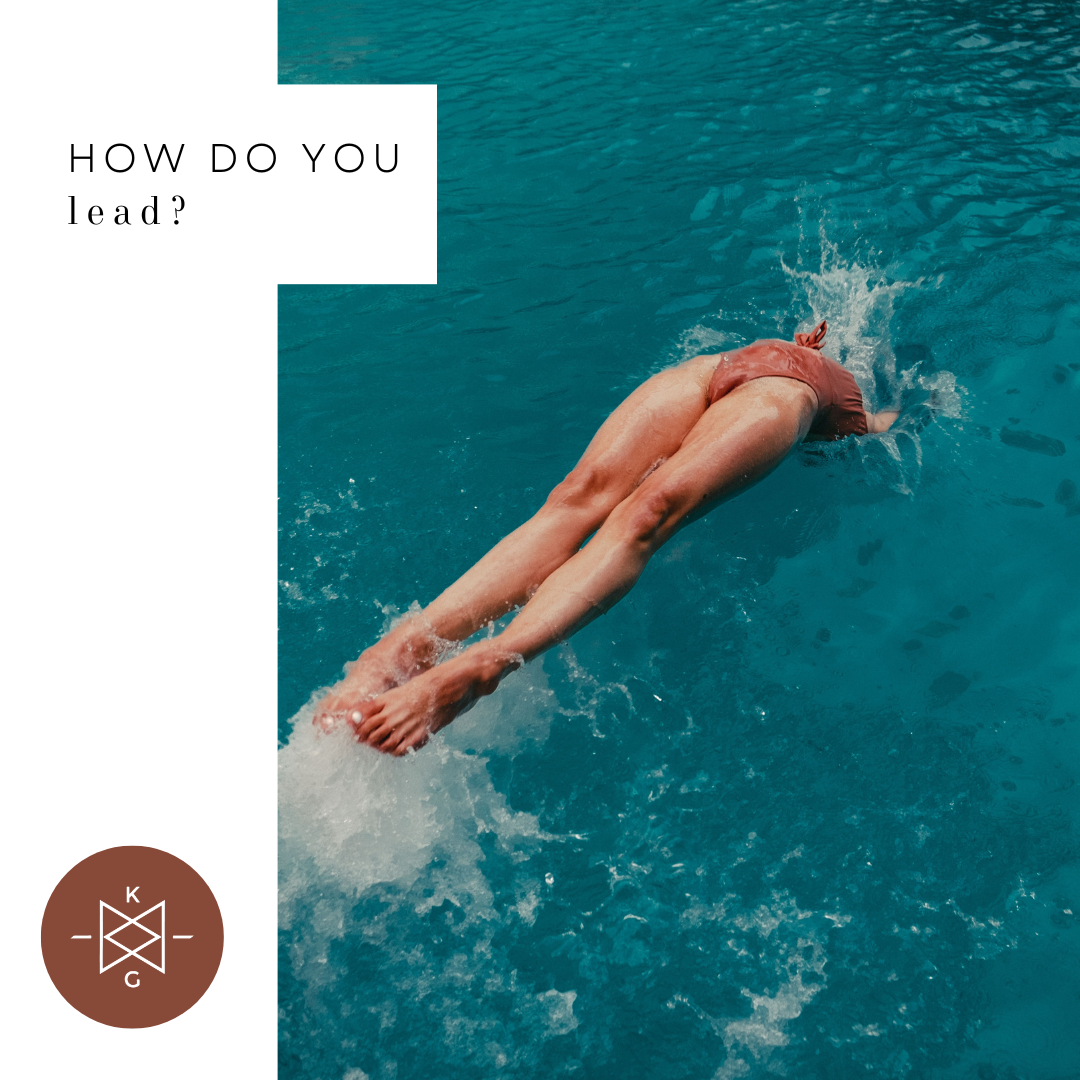
How do you lead?
One isn’t necessarily born with courage, but one is born with potential. Without courage, we cannot practice any other virtue with consistency.”
-Maya Angelou

If there is anything I've learned from my very jerky journey of emotional and spiritual integration, it is the importance of ritual—or practice. How do I take full responsibility for my experience, and in doing so, create the life I desire as opposed to a life I settle for? It’s the difference between leading your life and merely managing it. I believe we close this gap by developing self-awareness through simple practices.
Chances are, if you’re reading blogs about emotional health and wellness such as this one, or have sought therapy at some point, you’re a leader. Why? Because you are actively participating in cultivating the hidden potential in your life. You’re finding your edge and sharpening it.
I like Brené Brown's definition of a leader in her book, Dare to Lead: “Anyone who takes responsibility for finding the potential in people and processes, and who has the courage to develop that potential.”
Sounds doable, right? Within reach? Without a doubt, I believe it absolutely is.
Hold up though. If you and I are going to be leaders, developing and speaking into the lives of others, don’t we first need to lead our own lives fairly well? Otherwise, we prop up a flimsy facade of ego and lack the deep roots of character and credibility necessary to sustain leadership from a place of truth and integrity.
I tend to love the whipped up pace marked by the end of summer—a return to school, work deadlines, structure, and a bit of normalcy. It’s the perfect opportunity to connect to the potential bubbling up under the surface and lead from a place of intention instead of reaction? How do we do this? I’m convinced the unsexy truth is we get really good at practice.
Practice what??
I’ve got three uber simple rituals for you to practice this week.
First thought: When your eyeballs pop open first thing in the morning, guess what? A first thought also starts to percolate. That first thought has the power to steer your day either north to Mt. Abundance, or south, to Lake Scarcity. You have creative license to craft that thought, coloring the trajectory of your day. If that thought is, “I’m just so tired and didn’t get enough sleep.” Guess which direction you’re headed? Yep…south straight to scarcity. You’re in the driver seat though, so take a minute, first thing in the morning, to carefully choose the thought that will direct your day in the right direction. The scenery is much better on this route, I promise.
Gratitude: Throughout the day, take three one-minute breaks and identify at least one thing you are grateful for in the moment. Meal times are ideal to practice this as we (hopefully) slow down and hop off the treadmill of our day. The goal here: keep them simple (i.e. lungs that work, food to eat, a new day, a job or hobby, a dear friend).
Belly-breathing: It’s fascinating to me that as a culture, we largely suck at breathing. Our overall vitality and quality of life immediately improves when we practice deep, steady breathing. But guess what? We’re just. so. busy. I’m calling B.S. on busy. For at least one minute each day, practice slow, belly-breathing. Breathing into our belly, or body’s center of intelligence, brings a tangible feeling of groundedness. Place your hand on your belly and feel it rise and fall, like a cashed-out kid at naptime. We’re often so disconnected from our bodies, which stunts us from experiencing the fullness of each moment. Belly-breathing is the quickest way to connect us back to presence and the intelligent knowing of our bodies.
If these seem too pedestrian—or basic, for you as you step into CEO of YOU, guess what? Get over it. Tough love, my friend. The best musicians in the world got that way because they nailed the basics, and still practice them. We’re all guilty of getting in our own way by not practicing what we preach. I’m pretty sure I wrote the book on self-sabotage. However, now is the time to return to the basics and start leading a life that inspires hope and desire. My challenge to you is this: have the courage to do the small things that lead to big change. Inspire yourself so much that others start to lean into your light and see themselves in a new, empowered way. I’m pretty sure that’s called an icon. Greatness starts off small and grows in that light.

The Somatic Enneagram
“The human body is a river of intelligence, energy, and information that is constantly renewing itself in every second of our existence.
-Deepak Chopra

One of my favorite things about the Enneagram is its holistic capacity to bring balance and integration to our overall experience. I’ve heard it described as a psycho-spiritual tool, one that provides benefits on a psychological and spiritual plane. It definitely does this. However, if we dismiss the rich insight the Enneagram provides to us on a somatic level, we are missing out on the gifts it can bring to our total embodiment day after day.
You may have heard about the concept of three intelligence centers: body, heart, and mind, frequently taught in enneagram circles. Basically, this proves that we are actually three-brained beings (heart, body, mind) instead of one-brained beings (mind), as has been elevated in our modern western world. Emotional intelligence has made a big splash in the last 50 years or so, yet somatic intelligence has not been as accepted until now. Thankfully, recent scientific studies are finally catching up to this wisdom of the Enneagram by proving we have neural cells not just in our brains, but in the lining of our stomachs and hearts. Crazy, right?
I recently interviewed Terry Saracino, core faculty member of the Narrative Enneagram (and my teacher…pinch me!) for the Practice, my enneagram-based self-care membership program. Specifically, we talked about the somatic approach unique to the Narrative Tradition. If you are interested in taking your Enneagram understanding and overall well-being to the next level, I hope you will join and check out that conversation!
Terry is lovely and brilliant and is as passionate today about this system as when she first learned about it in 1989.
She describes this dynamic approach to understanding ourselves through the lens of the Enneagram, and really unpacks this often forgotten intelligence center of the body. Interestingly, our bodies are always in the present moment. Our hearts and minds can be all over the map, future-tripping and stuck in the past, but our bodies ground us in the present moment if we are willing to bring greater awareness to them. Our bodies are the experiencer of our Enneagram type patterns of thought and emotion, so we must lean on them for greater insight and support in our day to day experience.
Many of us are wildly disconnected from this somatic, or kinesthetic wisdom. And one of the trillion things I love about the Enneagram is it’s all about bringing balance and openness where there is imbalance and contraction.
When we do the work of the Enneagram, we discover our personality type and deeper character structure are held into place by our type’s emotional patterns, thought patterns, and somatic profile. I love getting to work with clients to bring awareness to this unique type-specific picture and begin to relax these often limiting patterns. As we relax those conditioned patterns, we are able to open up to the true, or unconditioned self that has been buried under years of habit and automatic behaviors.
Do you long to experience a more embodied, balanced life? If so, you’ve come to the right place.
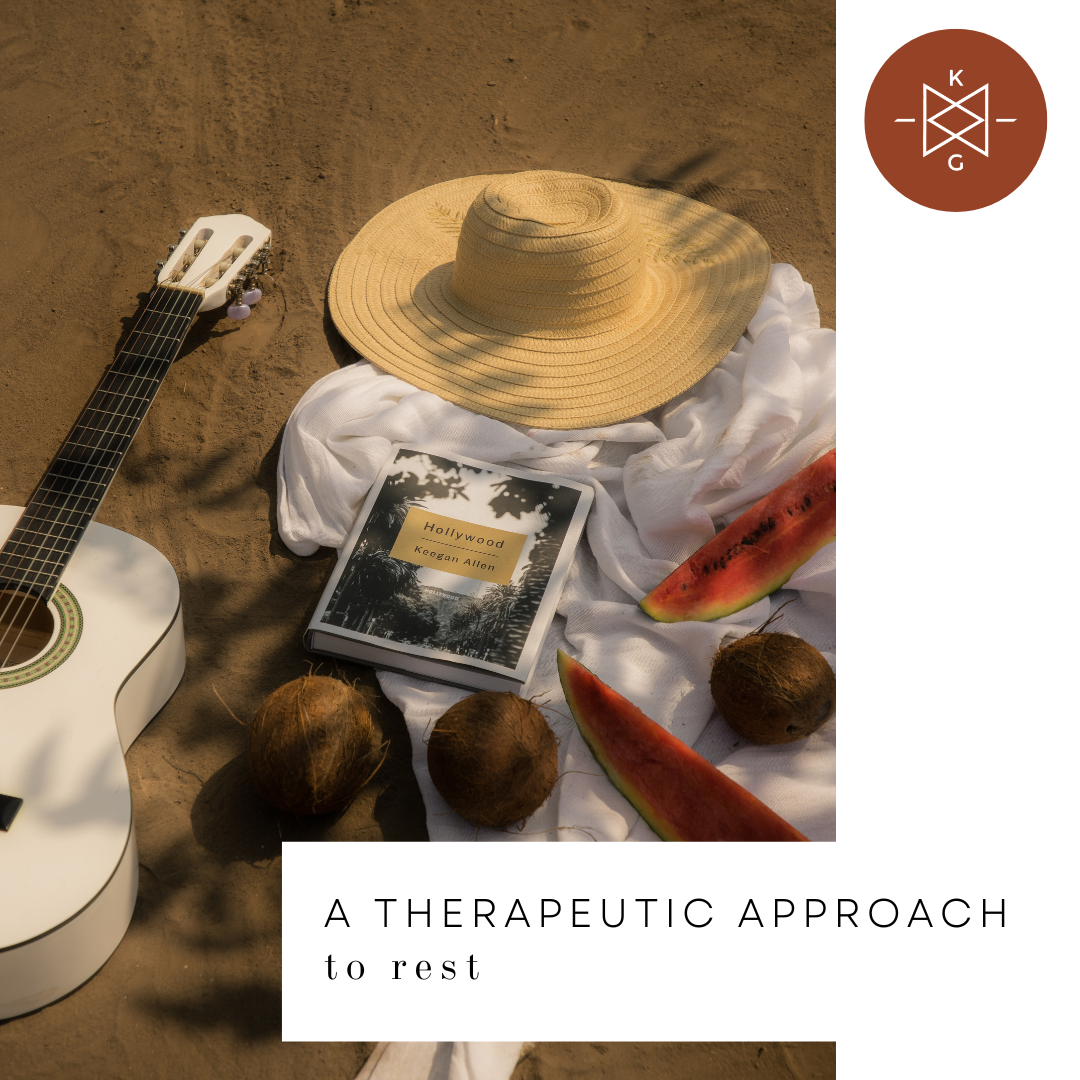
A therapeutic approach to rest
“Most of the things we need to be most fully alive never come in busyness. They grow in rest.”
-Mark Buchanan
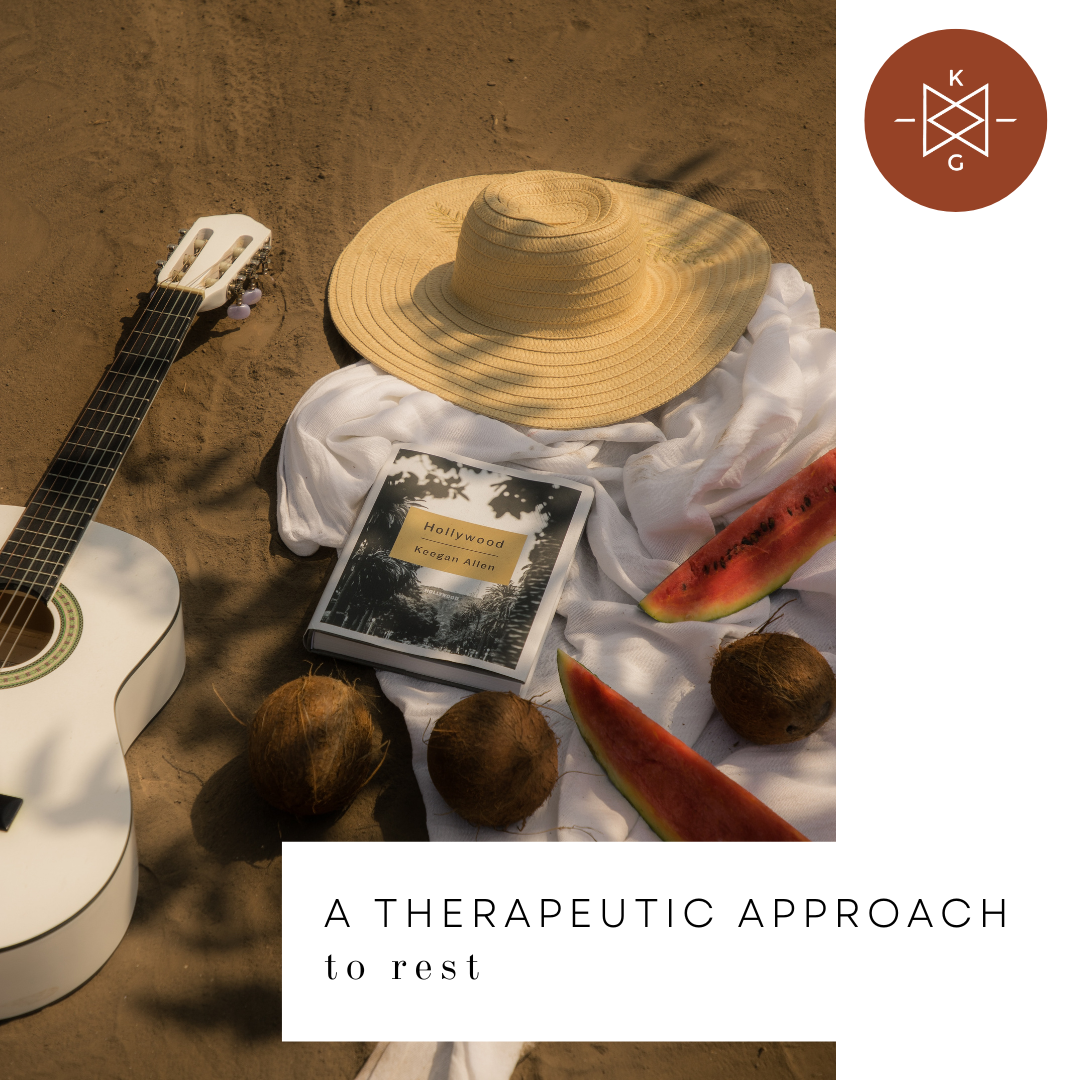
PSA: “Rest” is not a four-letter word.
Well, you know what I mean.
Rest is many things to many people, however, here are a few things it is not:
Lazy
Weak
A waste of time
Checking out
Just for “some people”
When you think of rest, what comes up? For many years, I considered it a squishy thing for people with low energy who required naps and a back scratch. Today, my tune has changed, and though that old idea sounds absolutely lovely to me now, I’ve never been much of a napper. So, how does one really rest?
I believe true rest is connecting to activities and relationships that are life-giving and restorative. For some this might look like sleep, for some it may look like going for a walk in nature, for some it might look like going for coffee with a friend who really sees you. For many, myself included, it looks a lot like soul care—the spiritual practice of opening up and being receptive to something greater than ourselves—something really good.
And I would be remiss to gloss over the fact that whereas we are all created equal, we are not the same. One size does not fit all. Here is where the Enneagram is so practically helpful. It helps us identify our unique personality type so as to understand the motivations behind how we think, feel and act. Rest for me as a dominant type four looks different than rest for a dominant eight. The through line for all types is simple: will this type of rest fill my cup or deplete it? Will it root me in a way that brings about more life and growth? Or will it disrupt and add more stress to the flow that is our life?
Don’t get me wrong, sometimes a good disruption is necessary in life to shake us out of slumber into a new direction. However, I believe that the more we practice true rest, the less we require those sudden jerks thrusting us forward.
What are the false narratives you have about rest? How has your relationship with rest been lately? What if practicing regular rest could reap more productivity, impact, and creativity on the other side?
Rest is an integral part of self-care. Perhaps by taking some time out, you will take more time back. The best part? It not only fills your cup, it splashes out for those around you to enjoy as you connect to greater patience, energy, and presence.
Don’t sleep on it. ;) Let’s run, not walk, towards a more rest-filled experience.

How to move from information to transformation
“If we observe ourselves truthfully and non-judgmentally, seeing the mechanisms of our personality in action, we can wake up, and our lives can be a miraculous unfolding of beauty and joy.”
-Richard Rohr
There’s an Enneagram trend that’s growing these days and I couldn’t be happier about it. It’s moving beyond a buzzy personality test and all those cute memes on Instagram, to a powerful tool for application and true transformation.
We’re beginning to understand the dynamism of the Enneagram as we put it into practice. Talk is cheap, but it’s a crucial first step in the process. We can sit around at coffee shops and dinner tables exploring the behavior patterns of our types for days. Sure, consuming clever, if not stereotypical content on social media is fun—and can even be helpful for a time. In some ways, they support us as we identify our dominant type. Yet we absolutely must not stay there.
So what does it mean to work with our type? How do we go from the surface of personality to the integration and wholeness this beautiful tool is capable of?
I believe it requires the desire to fully understand and explore our deeper character structure, dissecting the core elements of our type. Those core elements include the passion, or emotional pattern that keeps us stuck in type, the virtue, or our type’s unique invitation beyond the passion into our true self, our mental fixation, defense mechanism, somatic profile, as well as the lines, arrows, and wings of our type.
If that all sounds overwhelming, congratulations…it IS!!!
Yet the basic proposition of the Enneagram is to understand the motivation behind the ways in which we think, feel, and act in our unique type. It’s all about identifying and understanding the specific box of personality we’re in so that we can get out, finding freedom as we open up to greater openness and receptivity.
Don’t be bogged down by the intricate web of complexity of your specific type. The place to start is simple: self-observation.
Sounds pretty basic, right?
However, it might feel very foreign as we commit to a non-judgmental study of ourselves and our experiences.
My favorite way to learn self-observation? Together—in community! As we learn to hone the muscle of self-awareness and others-awareness, we become better observers and participants in relationships and enjoy a more balanced, integrated experience.
I’d love for you to join my upcoming Enneagram mastermind group, the last week of August. We’ll connect over a long and delicious lunch, exploring the inner workings of our type and sharing a bit of our stories in a safe space with likeminded people. Registration opens in just a few days, so email me to get on the waiting list—there are just a few spots left!
I can’t wait to go deeper with you…
Your Freedom Starts Here
“When you get your ‘Who am I?’ question right, all of your, ‘What should I do?’ Questions tend to take care of themselves.”
-Richard Rohr
Let’s be honest. I have no idea what personal freedom looks like for you right now nor do I pretend to think I have any answers you don’t already know. You are the expert at you.
However, I do know what personal freedom does NOT look like for you or me or anyone for that matter. It does not look like your best friend, your mom, your therapist, some celebrity, or Instagram’s suggestions. Sure, feedback and wise counsel are important—the catch is, if you don’t have total buy-in, it stays just that—someone else’s well-meaning advice.
Here’s a question that might help steer your ship in the direction of greater personal freedom.
One year from today, if you woke up feeling full of excitement and purpose, what would be different in your life? What would be the same?
And here’s the clincher…
Why?
Take a few minutes to paint that picture either in your mind or a journal.
Maybe it’s a career change, a new relationship, financial freedom, physical health and energy, or maybe some much needed personal healing.
Whatever it is, I believe acknowledging this desire is the first and most important step.
The second?
Saying “yes” to it. Every day.
When we align with our heart’s desires, powerful shifts start to happen on our behalf.
The follow-through seems to be tough though, right? That’s my experience. I believe this is because we lose sight of our ‘why.’ Or, perhaps our ‘why’ isn’t compelling enough.
I heard someone say recently that if your vision for your life only benefits you, it isn’t big enough.
Losing weight in order to have a healthier lifestyle and attract a new relationship is great…truly. However, we can go bigger. It will also allow you to feel more confident, contribute more value to the world, and attract more opportunities. It will help you show up in every area of life and be more present because you feel better. It will inspire others to follow your lead. We could go on…
In light of personal freedom, when your “why” is compelling enough, the follow through becomes tangible.
I love the fact that you and I are called to be the truest version of ourselves possible. I’m not doing anyone any good if I wake up each morning trying to fit into someone else’s story. I’ve been down that winding road. It’s exhausting.
So, what do you say we do a bit of decluttering this week and leave all the other noise behind? Maybe it’s time to get clear on your picture of personal freedom and make some lasting changes…
You ready?