
The Blog
Recently Featured


All Blogs










A New Approach to Clean Living
“The universe buries strange jewels deep within us all, and then stands back to see if we can find them.”
- Elizabeth Gilbert
Almost every Tuesday for the last seven years, I’ve been writing these posts. I’ve mentioned this before, but it bears repeating: I write them because I need them. I don’t presume you or anyone will read them, let alone actually enjoy them. If for some reason they resonate, I’m truly honored, but more than that, I’m aware that this is because you already know and value their message deep inside you. I’m not telling you anything new and profound—perhaps just reminding.
There’s this Bible verse, or phrase really, I grew up loving, “As deep calls to deep…” I’m not going to pretend to know or explain what that means in a Biblical context, yet I know what it means to you and I here.
When you feel resonance with a message, a quote, a song, or a walk in nature, it’s because the goodness of that truth and beauty already lives inside you. It’s a powerful energetic match being made. A sacred hallelujah! Or Aha! It’s the stuff we own. The stuff we honor. The stuff of value we savor and protect deep inside. It’s proof we’re all invited and interwoven into the rich tapestry of Grace.
Something I’ve been savoring lately is the beauty of simplicity and brevity. It’s an invitation into the now—that clean moment of consciousness—of fullness. Sure, it comes and goes in an instant, yet we are there. We are all there (if we want to be).
The abundance of that moment gently collapses over into the next like a domino. These moments are clean because they keep us tethered to reality, not somewhere cloudy in the past or future, both of which are tempting, yet tough to hold onto like a slick fish flailing for its freedom.
Creativity, though messy, happens in the fullness of the clean present. A massive part of my healing has been the creative process, namely writing. I’m convinced it’s part of your journey too.
And yes, I’m calling your bluff as you roll your eyes and silently retreat, “But I’m not creative!”
Back it up.
Part of your birthright as a human being is to make stuff, whether that’s a story, a way out, a pie, a speech, or a plan. You’re a born maker!
I believe a big part of waking up to the gorgeous truth of who we are is owning that creative birthright, and in doing so, moving from consumer to creator.
So what? Well, I want to co-create with you. I want to start conversations here that are short, meaningful, and most of all applicable for you in your now. I want to give you back some time to go get your hands dirty with intention.
I don’t want to walk through life in a sleepy haze. I don’t want to survive or dial it in. I want to crush it. Don’t you?
If you answered yes to that question (hopefully with feeling), you’re in the right place.
We’re going to be streamlining the weekly blog to give you more time, more tools, and hopefully more inspiration to start creating more of what you love.
You ready?
Love & Gratitude,
P.S. Want to dive deeper into self-care and the enneagram? Join the Practice today!
Busting 3 Myths About Boundaries
“Daring to set boundaries is about having the courage to love ourselves even when we risk disappointing others.”
- Brené Brown

If you’ve ever done therapy, you’ve probably learned a bit of the lingo. Words like self-care, codependent, empathy, projection, and boundaries to name a few, are all helpful as we excavate the depths of our inner worlds.
There’s also quite a bit of misunderstanding surrounding “therapy talk,” if you will—especially boundaries. So, I thought we should dig in a bit and gain clarity around the basics of boundaries and the three myths we get duped into believing about them.
If you’re a recovering people-pleaser like me, you’re well aware of how important boundary-setting is as well as integrating that scary little, “no” cringe-word into your regular vocabulary. If I made the hair on your neck stand up just now, I’m so glad you’re here. Read on.
As I’ve worked as a therapist in private practice for over a decade now, I’ve collaborated with countless courageous people longing to feel less resentful and more joyful in their lives. I’ve found that at the heart of this noble pursuit lies the invitation to set better boundaries.
Dr. Henry Cloud, author of the seminal book, Boundaries: When to Say Yes, How to Say No to Take Control of Your Life, describes boundaries:
“Boundaries define us. They define what is me and what is not me. A boundary shows me where I end and someone else begins, leading me to a sense of ownership. Knowing what I am to own and take responsibility for gives me freedom. Taking responsibility for my life opens up many different options. Boundaries help us keep the good in and the bad out. Setting boundaries inevitably involves taking responsibility for your choices.”
Brené Brown says it simply this way, “boundaries tell us what’s okay and what’s not okay.” They also help us teach people how to treat us.
If you’ve struggled with boundary-setting, you may be buying into a few myths surrounding them. Let’s unpack three of them:
Boundaries are selfish. I get it, if you grew up trying hard to please the important people in your life, boundaries may feel a bit self-centered. However, setting boundaries allows us to be truthful and generous at the same time. They actually allow us to give to others over time from a place of grounding and integrity. If you live and give without a margin of time, energy, and resources, you’ll eventually burn out and become resentful.
Boundaries will ruin my close relationships. Wrong again. Boundaries actually preserve the healthy relationships that matter most to you and weed out the ones that are toxic. How? As Dr. Cloud said, boundaries define us. They allow for us to show up more authentically in relationships by taking ownership of our choices and our identities. When we let our “no” be as good as our “yes,” we give others the opportunity to practice their own boundary-setting as well as deal with whatever comes up for them in their process around being told no. People-pleasing is really just dishonesty with lipstick on. Life-giving relationships must be built on truth and trust.
Boundaries are meant for the other person. This is a subtle misunderstanding. We often think we are setting boundaries for the other person in a relationship, however, it’s just the opposite. Boundaries aren’t a punishment for the other person. We set boundaries to protect ourselves and they should be set with our own needs at the helm. Boundaries are meant to protect our time, energy, emotions, joy, and overall health. They help create structure from which to live—a scaffolding of sorts. Think about a dog without a fence. They simply aren’t as happy as when they have the safety and structure of boundaries and the provisions that come along with them to enjoy. You and I have more in common with dogs than you might have known. ;)
So, the question to ponder this week is perhaps: what boundaries do I need to have in place to protect my joy and freedom?
P.S. Want to dive deeper into self-care and the enneagram? Join the Practice today!
Self-Care for Your Enneagram Type
“The Enneagram can help you understand who you were before the world told you who you should be.”
-Ian Cron
In order to truly care for ourselves, we must understand what we’re about, and what we need. The Enneagram can help us do just that. It can help you unpack the story you’ve been living out of for a long time and begin to discern whether or not it’s even true.
As I mentioned earlier, most of us are at the mercy of an old narrative that’s played over and over unconsciously for a long time. The first step in any self-care plan is simple: to wake up to what’s not working.
Because many of us spend more time and energy taking care of other people and what they need, this wake up call is often forced. Our health starts to suffer, our relationships fail, we experience depression and anxiety—or great loss.
Oftentimes, a crisis happens to wake us up to the reality that we are failing the most important relationship we have: the one with ourselves.
So, today, I want to give you a little self-care nudge, and tailor it to your dominant type.
Type 1’s: We all know you are master improvers. Yet this superpower can often get in the way when it’s your total sum of attention. Soften this tendency as you practice acceptance as opposed to fixing or resisting. Practice noticing what is right in the moment.
Type 2’s: Spending time alone to develop independent interests and greater autonomy is incredibly life-giving for type 2’s. This allows time for deepening your understanding of what you are passionate about, desire, and ultimately need apart from being needed and helpful to others.
Type 3’s: At the hub of the self-care wheel for type 3’s is simply this…SLOW DOWN. When you move at light speed and get so fixated on the path to success, you miss out on tons of life happening around you that can add to your overall quality of life and the creativity you are made to bring forth.
Type 4’s: One of the most important postures of self-care we can practice as fours is to separate our self-worth from the propensity to show up as special or extraordinary. When we fixate and strive in this direction, we miss out on the rest of what life wants to offer us. The most special and extraordinary gift we can give to the world is our authentic, essential self who is at rest with ourselves.
Type 5’s: A helpful awareness is to recognize how you detach from emotions and resort to the thinking mind. Staying present with feelings when they arise just two minutes longer each time brings balance for type 5’s.
Type 6’s: When you go to the worst-case-scenario, balance that out in your thoughts by also giving the best-case-scenario equal air time. This challenges the habit of constantly expecting the other shoe to drop by flirting with the idea that it might actually go really well.
Type 7’s: Becoming grounded in the present is everything for type 7’s. Because your attention is constantly going up and out, noticing when you do this is major. As type 7’s have an uncanny curiosity, wielding this superpower to explore the present moment is powerful.
Type 8’s: Journal around your perceived difference between weakness and vulnerability, unpacking your own timeline of having to be strong and in control for protection.
Type 9’s: As type 9’s natural tendency is to fall asleep to their desires, needs, and the action involved to get these met, it becomes necessary for you to then find a way to cultivate structure and practices that support the achievement of your goals.
P.S. Want to dive deeper into self-care and the enneagram? Join the Practice today!
Self-Care Gets a Rebrand
“The most common form of despair is not being who you are.”
-Soren Kierkegaard
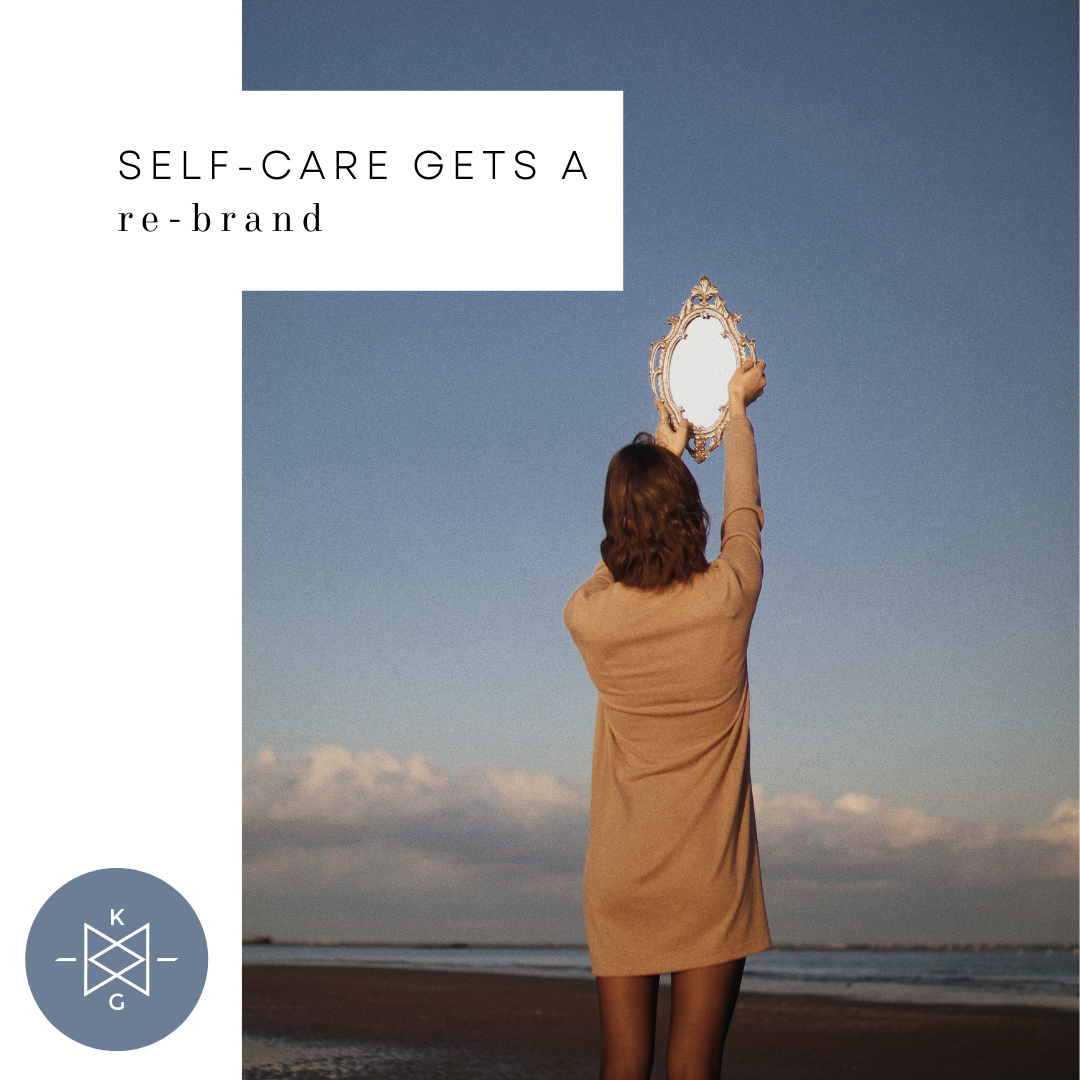
One of the first questions I like to ask clients I work with takes some by surprise. Yet, it helps me steer our entire therapeutic journey. It’s simple…and very complex.
Tell me about your relationship with you?
Typically, after a long stare back at me like I have eight heads, they respond:
“Um…good question. I don’t think about it much.”
Exactly. How we relate to ourselves doesn’t typically stay top of mind. Others, more likely.
Yet how I relate to myself—how I treat, take care of, and talk to myself directly impacts everything else in life. Everything.
Why? Because I can’t live and give out of an empty vessel.
Two years ago, I hosted a Self-Care Workshop alongside two dear friends. (It’s coming back next month!) It was powerful because we realized how desperate our souls, especially as women, are for deep, true self-care.
I’m not talking mani-pedis and facials and wine nights with the girls. Those are all fabulous and can be nurturing, but let’s call a spade a spade. Those are forms of pampering…and pampering is a good thing! Yet we’ve sold self-care short if we deem them expensive beauty treatments and indulgences, especially right now. We approach it as a luxury—the stuff that ensues out of an abundance of time, energy, and resources.
And yet I firmly believe the fewer of those three resources we have, the more important it is to fight for self-care.
Actually, I’d like to rebrand self-care as self-compassion because I feel self-compassion looks more like true, life-giving self-care than spa treatments do.
So what is self-compassion?
Self-compassion is the practice of befriending ourselves. It’s learning to think of, talk to, and treat ourselves with kindness and compassion like we would a friend we deeply care about.
Yet self-compassion also takes notice of some important things.
It recognizes our hurt and suffering.
It moves towards this pain with a kind and open heart instead of trying to fix it, shame it, or numb it.
It is built on the foundation that the human condition is fragile and this frailty is the connective tissue that binds us all together.
Guess what? Whereas “self-care” in a traditional, indulgent context has been tough for most of us this past year, self-compassion is available and necessary at every turn. (Oh, and free!)
History has presented us these last two years with the perfect space and time to practice true self-care or self-compassion.
We’ve got an incredible opportunity right now to prioritize mental health and in doing so, dig deep, love ourselves, and love our people well. I love supporting you in this process.

Welcome to the Drawing Board
“The visionary starts with a clean sheet of paper and re-imagines the world.
-Malcolm Gladwell

Happy New Year!
We did it. We crossed over the threshold of 2022, showing up for ourselves all along the way. The year of 2021 was challenging for me largely due to my battle with breast cancer, so launching into a brand new year feels especially poignant.
There’s such a temptation to bite off more than we can commit to when considering New Year’s resolutions. Like I’ve said before, I’m convinced humans choose extremes over balance more days than not. We go all in, sink or swim, only to wake up a week later in too deep and gasping for air.
So let’s ease into it. Let’s listen to the gentle rhythms of our desires, our longings, our needs. Let’s partner with ourselves from a place of self-compassion, like we would a loved one we believe in and want to support. Let’s speak to ourselves with kindness and curiosity, turning down that harsh inner critic that keeps us small and hustling for worthiness. Let’s breathe more—slower and deeper than usual. I’m convinced we could all use a return to breath and the body as a way of being present.
Let’s start there. And from that place of stillness and silence, we begin to etch out the tiny, two-degree shifts of growth and expansion that over time, create big breakthroughs. It’s often helpful to partner with a professional in order to gain greater support and accountability. If you’re looking to use the Enneagram as a part of your 2022 self-development, I’d love to help make that happen. You’re the expert at you and I’ve got a detailed roadmap to get you from where you feel stuck to where you long to be.
No matter what you want to create in your life this year, I hope you’ll continue to journey with me. I’ve got some exciting stuff coming your way that I can’t wait to share.
In the meantime, do a little dreaming…a little playing. It’s time to let your true self take the wheel. She’s ready!