
The Blog
Recently Featured

All Blogs






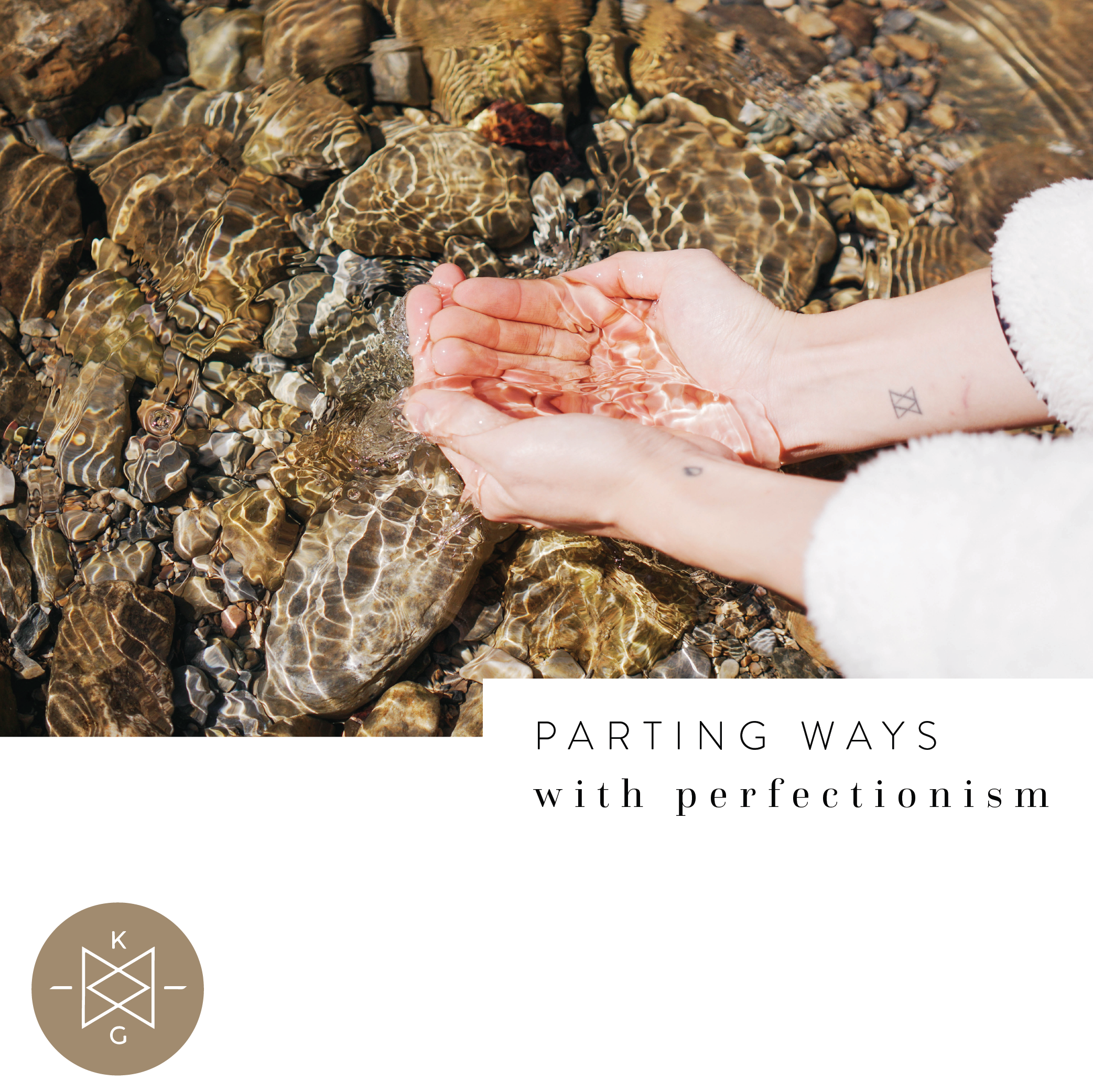
Parting Ways with Perfectionism
“Perfectionism is the voice of the oppressor, the enemy of the people. It will keep you cramped and insane your whole life.”
-Anne Lamott
Raise your hand if you’ve ever struggled with perfectionism. Though I can’t see you right now as you read this, I have a hunch most of you have your hands up, either literally or figuratively in your heart where no one else can see you and wonder if there are bigger problems than perfectionism at stake. Oh, I’ve got your number, I’m a recovering perfectionist.
Perfection is so elusive, yet so tempting, especially for all you creative, high-achievers out there. It’s a vain and futile attempt to attain the unattainable.
And guess what?
It’s impossible. Perfectionism is an overt, egoic striving to fill a covert, bleeding insecurity. If we’re really honest, perfection is just a scared man’s game.
I write these words with emboldened authority only because I’ve had a lifelong, enmeshed relationship with perfectionism. I don’t know the magic potion I sipped on so early in life to fuel the flame, but boy was it potent. I’ve been incredibly judgy and hard on myself from day one.
As a complex and sensitive kid (read: dramatic), being understood and well-received always took precedence. Acceptance, personal significance, and value were—and still are—my drug. I know, classic Enneagram four move.
The temptation is always: “I’m doing pretty good, but something’s missing.” This kind of thinking has kept me double bound in the fetal position of literal and figurative dark corners in life many times.
Anne Lamott is spot on:
“Perfectionism is the voice of the oppressor, the enemy of the people. It will keep you cramped and insane your whole life.”
For creatives especially, this phenomenon is mass genocide. I believe this is because ideas and concepts are birthed in our thinking mind, which can be an absolutely lovely place to be. We have a brilliant idea for a lyric, a new workflow, a painting, a proposal, and we run with it, executing it immediately and seamlessly, right? Bam…so easy.
Wrong. My experience as a writer and working with other creatives is this: that brilliant little idea gets locked up in the thinking mind, stewing and marinating in all kinds of saucy possibility and grandeur, so much so that it never even sees the light of day.
Our minds are meant to be the sacred birthplace of ideas. Our minds were not meant to indefinitely house them, ultimately squeezing the life and breath out with quenching fumes of perfectionism. Social media doesn’t make this pursuit any easier as we get caught up in comparison games with people we don’t even know posting highlight reels from their otherwise normal life.
This can lead to such worthlessness and defeat, we either want to numb out somehow (drugs, booze, sex, shopping, busyness, work, what have you) or we abandon our creative calling all together. This is around the time therapy sounds like a promising option.
David Foster Wallace said it this way, “Perfectionism is very dangerous. Because of course if your fidelity to perfectionism is too high, you never do anything.”
I suspect you want to do great things: to be seen, known, and truly loved. I do too. The only problem is, this requires tons of courage…and vulnerability. Perfectionism doesn’t leave much room for them.
What if we could aim for better instead of perfect? To slowly build on the baby steps of gradual improvement—choosing the next best thing? This type of growth mindset leaves room for the successes, the failures, and the stalls. Best of all, you hold the keys to your life, not some elusive, phony version of you.
This week, what would it look like to choose better over perfect?

How to Enjoy Food This Holiday Season
“I would maintain that thanks are the highest form of thought, and that gratitude is happiness doubled by wonder..”
-GK Chesterton

I’m pretty sure I say this every year, and here goes again: I can’t believe the holidays are upon us. Though they may look a bit different this year with the extra precautions we’re all having to take, one thing remains: food will still be at the forefront.
Especially at Thanksgiving—the heightened emphasis on that decadent meal with butter dripping from every possible opportunity leaves so many people feeling anxious due to complicated relationships with food and body image. I know this struggle all too well as someone who suffered a deadly eating disorder in high school. I’ve worked hard to maintain a healthy relationship with food bolstered by a more gentle and balanced approach. Though I feel a million times better today and don’t struggle in the way I used to, I have a very special place in my heart for those who suffer from this ongoing battle with themselves and food.
In fact, most women struggle at some point in their lives with a disordered relationship with food. An estimated 30 million people, men and women alike, suffer from actual eating disorders through the course of their lifetime. Ya’ll, that’s wild. And incredibly sad.
Whereas I highly encourage you to seek professional treatment both with a therapist and physician if you are struggling, I wanted to share with you a few ideas on how to approach the next month and a half with more grace and enjoyment.
Mindful Eating
I’m a big believer that it’s not the actual food that creates problems, it’s our relationship with food. So many of us, myself included, use food as a medicator, to numb and relieve temporary emotional pain. That, or we use it to celebrate good news or important events. So often, this is an unconscious process—one we don’t even realize is happening. It’s automatic, habitual, and ingrained. Simply becoming more aware of what you are eating, when you are eating, and why you are eating is incredibly supportive in a more mindful relationship with food. I like to call this mindful eating. It doesn’t mean deprivation either! It simply means slowing down enough to eat with intention and awareness. It’s proven that as we slow down our actual eating time, we can connect to our bodies more, identifying when we are initially full.
Exercise
As many of us will be more homebound this holiday season, we can perhaps focus on maintaining a solid exercise program—whether it’s a brisk morning walk or a streaming yoga class. Let’s face it, we will be indulging a bit more in the coming weeks. This is the perfect opportunity to balance our mindful eating with mindful movement. As emotions also run high, physical exercise is an incredible natural anti-depressant and anti-anxiety. Give yourself the gift of intentional exercise these upcoming weeks—it’s always a good idea!
Healthy-ish
You’ve heard about the 80/20 rule, eating healthy 80% of the time and indulging 20% of the time. I try to follow this as closely as possible. However, like I mentioned earlier, the holidays are a time for celebration and merry-making. So you may need to extend a bit of leeway in the direction of a 70/30 rule...eating healthy 70% and indulging more like 30%. The goal is to eradicate shame when we eat a bit more than we’d like or even gain a few pounds. No one ever improved their relationship with food from a baseline of shame. And that’s what we’re going for: practicing a better relationship with food rather than putting unnecessary pressure on a strict diet.
My favorite thing about Thanksgiving is that it’s not just about food—it’s about gratitude. Enjoying food from a place of gratitude and abundance rather than fear and scarcity is the goal. I’m so grateful for you, and that we are on this beautiful journey together.

On the fence about your Enneagram Type? I got you...
“In seeking truth, you have to get both sides of the story.”
-Walter Cronkite

Do you go back and forth between Enneagram types? Perhaps you’ve taken a few online tests and they’ve given you different results. The first one pegged you a seven. But it was neck and neck with type two. You waited a couple months and took another one only to learn you’re now a nine? Wha? You’re confused and a little pissed off because you had to pay for that last version.
HELP!?
First off, don’t be discouraged! This is totally normal and you’re not alone!
The human personality is not static. It’s constantly vacillating between healthy, average, and unhealthy levels (hopefully not too unhealthy the more self-aware we are!) throughout our days, weeks, and months.
Online assessments can’t measure how tired, stressed, or emotionally aware you are. They also can’t determine mood or how many cups of coffee (or glasses of wine) you’ve downed before taking them.
Sure, they’re a helpful jumping off point. (Some more than others!) Yet fully knowing and understanding your Enneagram type requires a bit more digging. In fact, I believe it’s part of its effectiveness.
There are dozens of personality tests out there: MBTI, StrengthsFinder, DISC, to name a few. I love them all, too! However, the Enneagram is unique in that it goes deeper than surface, personality-driven behavior. Sure, that’s part of it. Yet the Enneagram helps us understand the “why,” or story, behind our thoughts, feelings, and resulting behaviors.
Online tests simply can’t explain the sacred nuance of your story.
However, doing the deeper self-study required to fully know your Enneagram type can.
After all, we make choices, big and small, based on the story we’re living out of. If we’re suffering, we must change more than surface tactics or behaviors. In order to heal and transform, we’ve got to get to the root of the problem—we’ve got to understand our story.
Self-discovery is a winding journey, not a mere moment in time. It’s about deepening knowledge and understanding. In fact, it’s really about self-befriending.
If you’re on the fence about your type...good! I believe it’s an invitation (and excuse) to deepen this beautiful self-friendship you’ve already started.
How?
You’re already further along than you think!
I’ve got a helpful next step for you. Scheduling a typing interview is incredibly helpful in fully unpacking your story and discovering your Enneagram type. It’s some of my favorite work to do with clients. Basically, it’s a detailed inquiry process steeped in the Narrative Enneagram tradition that provides your top 2-3 probable types. This allows some direction and margin for clients to then read up on those possibilities and live with them a bit before making a hard decision.
We do this in a creative, collaborative way with clear next steps mapped out. Best part? It’s really fun!
Spoiler alert: you are not a pure type. No one is! You lead with a primary type, yet you have a bit of all nine in you. We are complex and glorious creatures, remember? The Enneagram has the dynamic infrastructure to meet and guide this complexity into greater understanding and opportunity.
I’m convinced your story is far too stunning to be put in a box. Perhaps it’s time to take it out?
Love & Gratitude,
Katie
Curious about an Enneagram typing interview? Sweet! Let’s talk.
Say Yes to the Scale (not what you think)
“Argue for your limitations and you get to keep them.”
-Elizabeth Gilbert
I’m not a huge fan of the scale in my bathroom. In fact, I bought a new scale for the first time in ages when I found out I was pregnant with my son over two years ago. For the first time, I found it a bit thrilling (if not bizarre) to experience my body changing and growing as it housed my now two-year old son, Tucker. I mean, when else do we as women feel totally empowered to see that number increase?
Today, I’m not talking about numbers or that kind of scale.
There’s another scale I believe to be far more impactful to your health and interestingly enough, has better metrics than the one in your bathroom. In fact, not only will it help you feel better physically, but emotionally and spiritually as well.
Oh, and one more thing, it’s totally free and portable.
Backstory:
I’ve spent my whole adult life in the pursuit of wholeness—integration, looking to find the solution to my own brokenness and ongoing battle with depression/anxiety. That was my story for a long time. I let the pain of sadness and victimhood define me while concurrently searching for something “out there” that would solve the problems “in here.”
Perhaps you identify with my journey.
When I didn’t find what I was looking for (queue U2 “Still haven’t found….”) I decided I needed a different approach. This quest proved to me that happiness was indeed, an inside job, one that was more spiritual than circumstantial. By spiritual, I mean the capacity inside each one of us to be receptive and open to something greater than us.. something really good.
After all, numbers on a weight scale constantly fluctuate and even when they give you a sliver of relief, that relief is only temporary and can crumble with life’s inevitable challenges just hours later at lunchtime.
What is this transformational work that can heal us from the inside-out?
It’s thought work, specifically, our thought scale. And yep, you’ve already got one, you may not be aware of it though.
It’s been proven that we have the power to change our lives and circumstances just by changing our thoughts. Why? Because every single thought you think creates an emotion in your body which results in corresponding behavior. These behaviors, over time, build out your life.
If I entertain self-defeating thoughts all day long, those thoughts produce low-frequency emotions such as fear, hurt, victimization, and on the lowest end of that scale, apathy. As a result, my actions that follow correspond with those emotions. When I’m consciously aware of my thoughts, and choosing ones that are life-giving as opposed to limiting, the domino effect that creates in my physical experience is tangibly better than when I’m stuck in a pity party.
Don’t worry, this is not about getting it perfect, it’s about becoming aware of your thoughts and practicing a higher quality within them.
For example, it’s moving up the thought scale from, “There’s never enough time to do what I need to do,” to “I’m giving myself grace to do my best right now.”
We don’t have control over all of our circumstances in life. We do, however, have control of how we think about our circumstances. This matters big time.
This week, I invite you to play around with:
a) becoming aware of your thoughts as you have them, and
b) practicing tiny shifts up the thought scale in order to help you feel better emotionally and physically.
It’s subtle, so don’t go looking for a quick fix here.
Are you ready to shed the weight of your nagging inner critic? She’s heavy. What thoughts promote willingness and curiosity in your life today?
Five Mistakes to Avoid with the Enneagram
Do you have a funny taste left in your mouth with regards to the Enneagram? I’m not going to lie, with its rise in popularity and the obsession with it in Instagram culture, I fear it’s become something of a caricature of itself. If I see one more meme about type, I may just boycott it altogether.
Ah, but that’s not the response of a self-aware, evolved, and gracious person living in wholeness is it? No, it’s not…
The Enneagram teaches us to grow beyond reaction and choose from a place of responsiveness—and power.
I do, however, want to point out 5 mistakes to avoid when using this tool for life and relationships. So here goes:
Don’t type other people. This is a biggie. The Enneagram isn’t just about the optics of our personality. It’s about the story, or motivations and beliefs that fuel our patterns of thought, emotion, and behavior. So unless you are familiar with the deeper aspects of someone’s core belief system and narrative, avoid typing them.
Don’t indulge your type. In other words, don’t use your type as an excuse for bad behavior (i.e.” I’m going to let her have it when I see her. She’ll never want to cross me again. I’m an 8 after all!”). We identify type in order to better understand ourselves and grow beyond our personality tactics.
Don’t stereotype others based on type. Again, this is such a rookie move. To judge someone and make assumptions based on their type is a big no-no. Just as there are about 100 unique shades of white, not all persons in a type show up the same. Especially when you factor in subtypes, you can actually have two people who are the same type look nothing alike.
Don’t force it on others. Even though the Enneagram is a powerful, transformational tool, not everyone is willing or interested to subscribe to it. The worst thing we can do as Enneagram advocates is to force it on others, no matter how much it has helped us. We must learn to trust others’ process.
Don’t stay on the surface. Even though it’s incredible fodder for coffee shop or cocktail party conversation, the Enneagram is meant to be applied to our daily lives, not just talked about. Knowledge without application is, well, just knowledge.
Love & Gratitude,
Katie
P.S. If you’re in the market for a way to learn and apply the Enneagram, you’re in the right place. Check out my brand new Self-Care & Enneagram subscription program called the Practice!
Thoughts on motherhood, breast cancer, and what attachment theory and the Enneagram taught me about being loved