
The Blog
Recently Featured

All Blogs






Resilience: The Ultimate Life Hack
“My barn having burned down, I can now see the moon.”
—Mizuta Masahide (17th Century Japanese poet and samurai)
Do you ever get discouraged because you feel like you can’t seem to get unstuck? Maybe you’ve tried therapy or read some self-help books and they bring relief temporarily but leave you wanting in the long run?
Or, perhaps you make progress along the way yet inevitably find yourself bumping up against the same flipping roadblocks, over and over.
If your hand is raised, you’re in good company. I’m here for it too.
I’m reminded that we aren’t here to finally get it right—to one day fully “arrive” and have it all figured out. If that is your goal, I hate to break it to you...you’re hosed.
As humans, we have something undeniable in common. We are imperfect—flawed at best.
I don’t believe we ever fully arrive. I believe we get good at resilience.
Resilience is simply the ability to recover (quickly) from difficulty.
What’s problematic is when we get so thrown off our game, we stay down too long, and in doing so, become calloused or defined by our struggle.
So how do we become more resilient? If this is the secret to moving through life with more ease and confidence, how do we condition ourselves to get back up after the fall, no matter how many times we stumble?
I believe we must reframe failure. Instead of seeing it as an ending, we must see it as an opening. Instead of seeing it as a personal blow, we must see it as a wise teacher who comes around from time to time. She has way more to say than her distant cousin, Success.
I know, Success is far prettier, but Failure is more than meets the eye. She has a depth and insight about her that comes from the humility only difficulty can form.
So next time you feel stuck, broken, or discouraged, I pray you won’t lose heart. Instead, perhaps the invitation and decision to sit with yourself in the space—to hold yourself in kindness—and to speak to yourself with understanding, will become the strongest parts of you. Perhaps they will be the conditioning that over time, just like a muscle—grows bigger and more pronounced.
Perhaps the goal will not become perfection…but growth tethered in compassionate resilience.
Working with Your Enneagram Type
“If we observe ourselves truthfully and non-judgmentally, seeing the mechanisms of our personality in action, we can wake up, and our lives can be a miraculous unfolding of beauty and joy”.
-Richard Rohr
There’s some Enneagram buzz that’s trending these days and I couldn’t be happier about it. Basically, it’s all about going deeper than a personality typing system and using it as a tool for application and transformation.
We’re beginning to understand the dynamism of the tool as we put it into practice. Talk is cheap, but it’s a crucial first step in the process. We can sit around at coffee shops and dinner tables exploring the behavior patterns of our type for days. We can consume Instagram accounts that provide clever content and memes. And these can be helpful for a time. In some ways, they support us as we identify our dominant type. Yet, we absolutely must not stay there.
So, what does it mean to work with our type? How do we go from the surface of personality to the integration and wholeness this beautiful tool is capable of?
I believe it requires the desire to fully understand and explore our deeper character structure, dissecting the core elements of our type. Those core elements include the passion, or emotional pattern that keeps us stuck in type, the virtue, or our type’s unique invitation beyond the passion into our true self, our mental fixation, defense mechanism, somatic profile, as well as the lines, arrows, and wings of our type.
If that all sounds overwhelming, congratulations…it IS!!!
However, the Enneagram is all about understanding the motivation behind the ways in which we think, feel, and act. It’s all about identifying and understanding the specific box of personality we’re in so that we can get out, finding freedom in a psycho-spiritual expansion.
Don’t be bogged down by the intricate web of complexity of your specific type. The place to start is simple: self-observation.
Sounds pretty basic, right?
However, it’s actually quite involved if we commit to becoming a non-judgmental student of ourselves and our experiences.
My favorite way to learn self-observation? Mindfulness and meditation practices. No matter what your type, developing a mindfulness practice such as meditation is vital for creating the inner space to put self-awareness to work. When we’re able to do this, we slow down our reactionary impulses and we learn to respond out of choice and empowerment. We loosen the tense contractions in our bodies as well as practice detaching from self-defeating thoughts and beliefs.
Perhaps most importantly, we begin to embody compassionate presence—the grounding gift of the here and now.
Whenever you’re ready to go deeper, working with a coach or therapist trained in the Enneagram is super supportive. Is it time to take your Enneagram exploration to the next level?
Let’s go… I’m your girl.
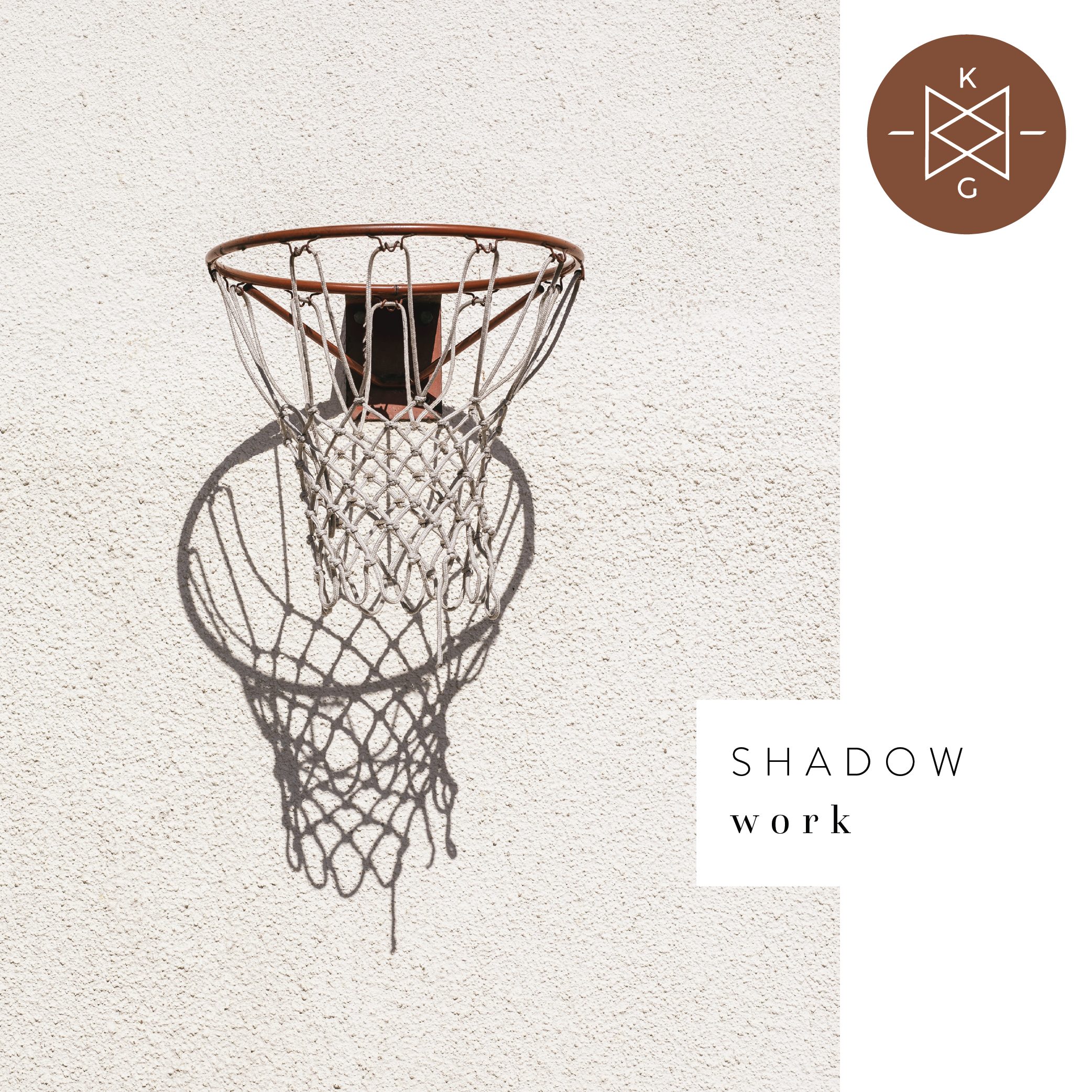
Shadow Work
“What you resist, persists.”
-Carl Jung
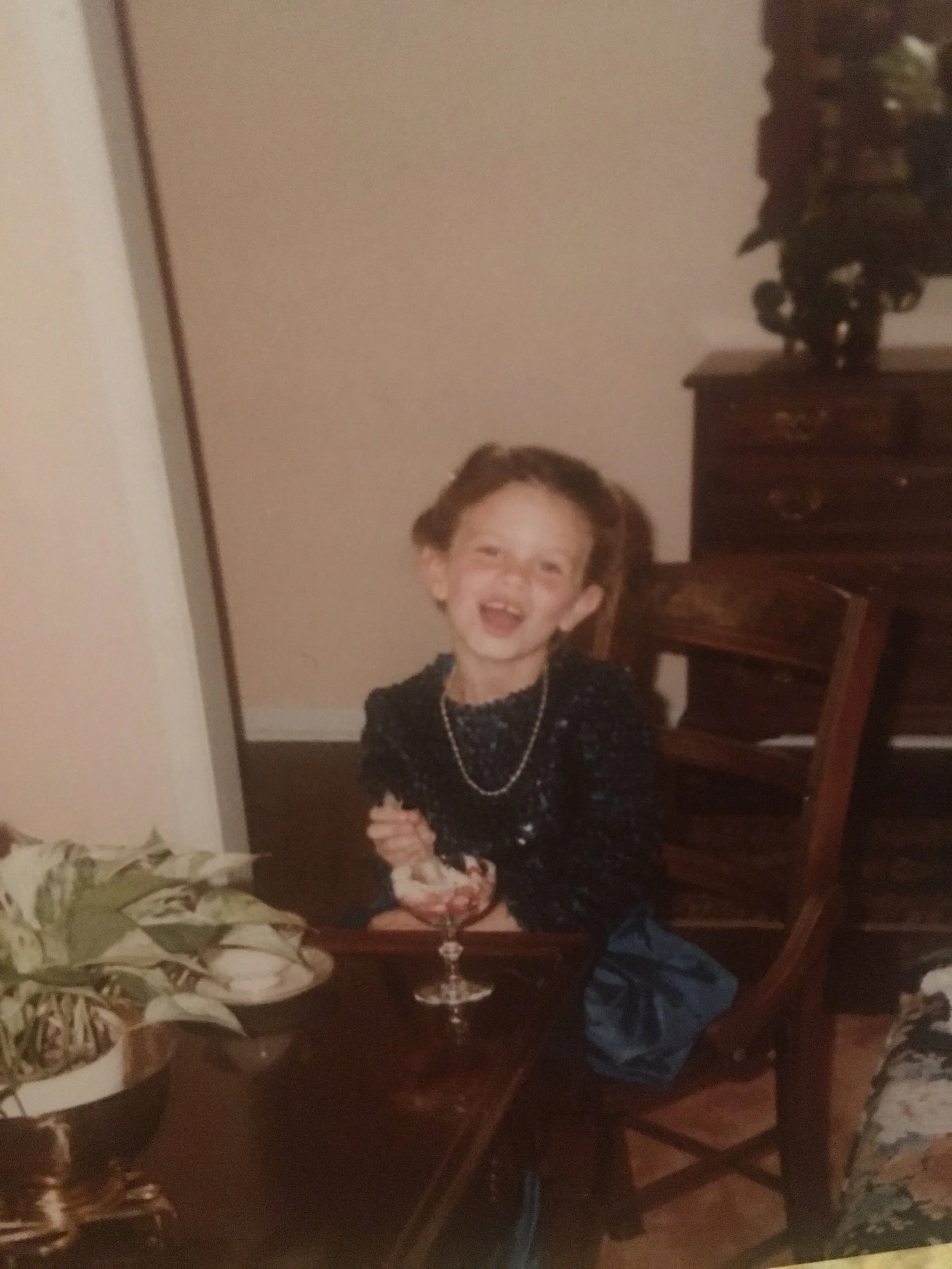
I grew up in the crown jewel of the deep south, Mobile, AL. We did many strange things like take ballroom dancing in fifth grade. It was hands down the most awkward thing I’d experienced until then, and I’ve always felt at home on a dance floor.
This was different though. Kids from a couple neighboring schools would gather on a Thursday night at 5 o’clock in a big gymnasium at St. Ignatius Catholic church and learn all the old-school couples dances like the fox trot, waltz, and others I’ve purposely erased from my memory. The most unbearable part of it wasn’t learning the dances, it was learning the dances with the boys. They were hyper, smelly, and had no rhythm, yet somehow managed to have really big heads.
My favorite part of the night was when I spotted my mom’s minivan headlights in the carpool line. She’d swoop in and pick me up and we’d proceed to Checkers for the long-awaited chocolate milkshake(s). I had to take the edge off somehow.
Learning to dance with our shadow, or shameful parts, can feel just as unpleasant. They are those parts of us that we’d rather not talk about. Early on, we learned to hide them from the world around us for acceptance—for survival. They are the parts of you that if someone saw, they might ultimately reject. You may be found out…and deemed unloveable.
What are the shadow parts you’d rather forget about? Is it depression, body shame, singleness, financial troubles, or even sexual trauma as a child? Whatever they are, much like the smelly boys at ballroom, the invitation is to lean in, let go, and learn to slow dance with them.
The Enneagram is all about integration. The less compartmentalized, or fragmented we are, the more integrated and whole we will become. Just as we are made up of hundreds of different body parts, muscles, and organs, we also have so many different parts of our emotional, relational, and creative beings.
Oftentimes in therapy sessions with clients, these parts come up. Take anxiety for example. Anxiety is an emotion, or part of us that can be immobilizing. We often deal with it by numbing, fixing, or running from it. Anxiety is really just a shadow part of us that needs compassion and understanding just like, say, the creative part of us. When we stuff our anxiety and try to avoid it, we really just give it more power and as a result, create more imbalance.
What might dancing with this anxious shadow look like? Well, first of all we must listen to and get to know it. This allows us to cultivate compassion for her. After all, she has been working overtime for a while now to keep us performing, staying safe and “on the ball.”
Shadow work is really a reckoning with parts of ourselves we’ve misjudged for a long time. The payoff is wholeness—flow. It’s realizing those parts we’ve been hiding for so long aren’t so terrible after all. In fact, they end up being powerful because they’re the most thorough teachers.
That anxious part of you desperately wants you to see her for who she really is: someone who deeply cares about your future, yet may go about it clumsily. She wants you to sit with her, be with her, and realize the worst thing that can happen isn’t so bad in the end because you have other resilient parts of you that can step in and take over when she needs to sit the next song out.
Take a minute and visualize the part of you that you dislike, a lot. Perhaps you feel guilty about this part or constantly judge it. What does she look like? What is she doing? In the same minute, take one step towards her… then another, and another. You left her alone a long time ago and she feels abandoned, even scared. She knows you dislike her but she desperately longs to know you and feel seen as well. She needs you big time.
If this feels completely terrifying, it should. Your brain is freaking out because it has no idea what it’s doing. Hang in there though, this is perhaps the most life-giving work you’ve ever done. Dancing with shadows or smelly boys is probably not on your bucket list. Oh but I bet I know what is…
Freedom.
Love & Gratitude,
Katie
People Pleasers Anonymous
“No matter how difficult and painful it may be, nothing sounds as good to the soul as truth."
- Martha Beck
Are you a people pleaser?
I know I am. But I’m working on it.
And you know what? I think this whole topic of being one gets a bad wrap. We beat ourselves up for trying to shape-shift and accommodate, yet oftentimes, we never really had the chance to choose something different.
It’s rewarded culturally, relationally, and emotionally as the pay off is so BIG. We get to be liked. That’s a huge hit of dopamine to the system right there.
So why wouldn’t you be one?
Being a people pleaser is a learned skill, really. It can be baked into our personality type as well, so the skill forms unconsciously by learning what behaviors are praised by others around us growing up.
Some personality types have more of this tendency than others. For example, 2’s, 3’s, and 4’s are close to, if not at, the top as the heart types tend to be the most image conscious on the Enneagram. They depend on the opinion of others to give them information about how to be in the world. So they have to work a bit harder in order to balance out this tendency.
I believe any personality type can struggle with pleasing people to some degree, though. Beyond a type, we are humans and humans are in the big business of survival. I like how Lynda Roberts explains the ego. She says, “The ego is our survival strategy for planet earth.” Simply put, our ego helps us survive in a scary world.
If something has worked for you for a long time, it’s tough to suddenly shift gears. That positive feedback becomes so ingrained, it’s almost undetectable.
So what do we do?
I love what an old therapist of mine used to say, “People pleasing is really just lying.”
Ouch!
I’d never really thought of it that way before, but it makes sense. After reading Martha Beck’s latest book, The Way of Integrity, (which I HIGHLY recommend), I became so aware of how unhappy we are in life when we are not in integrity with our truth. Essentially, when we aren’t telling the truth, we suffer.
So, as I’ve started to become aware of my own subtle tendency to people-please, I now see it as not telling the truth, and as a result, damaging my life and the person I’m lying to in the name of being sweet.
I’ve become more comfortable with saying “no” as a complete sentence as well as using responses such as, “I don’t know,” and “Let me think about that,” or “That doesn’t feel true for me.”
If you’re a people pleaser, I challenge you to adopt these small movements, because over time, I believe they get us closer to where we ultimately want to be…home to the truth of who we are.

The Art of Unbecoming
“Maybe it's about un-becoming everything that isn't really you, so you can be who you were meant to be in the first place."
- Paulo Coelho

What if the real way of personal transformation is more about subtraction than addition?
What if, instead of white-knuckling our way through life, straining to gain more and more self-worth, meaning, and fulfillment, we could find a release in letting go?
When we use the Enneagram for deepening self-awareness and understanding, part of the special sauce includes unlearning—unbecoming the conditioned self or ego.
Sounds a bit wacky, right? I know...but doesn’t it also bring a bit of relief?
Part of the reason we get stuck in the first place is by living out of old, broken narratives that don’t fit and aren’t true for us anymore. Sure, they may have made sense to us early on in life when we were trying to navigate how to show up and be accepted in this world. Yet, as we mature and become adults, life becomes more complex—more nuanced.
The black and white stories of our youth won’t suffice in a world full of grey.
Consider this, the Greek word for “personality” is persona, meaning “mask.” Isn’t that interesting? This helps me understand just how much we wear our masks of personality in order to protect our true identity, or the more vulnerable parts of ourselves we aren’t too sure about.
I mean, what if I were to truly be seen for who I am? I could be rejected, found out, for the fraud I really am?
As an Enneagram four, I’ve had that thought more times than I care to count.
The great news is our Enneagram type actually helps us identify the personality story we’ve been living out of for better or for worse. By learning and understanding what that is, we bring more self-awareness into our moment by moment experience, allowing us to slow down our process and respond to life’s curve balls rather than reacting to them.
As we slow that process down, we can choose something novel, something different—and better. We can un-become the limiting parts of our stories that were written a long time ago and desperately need editing by our adult selves.
What parts of your personality story keep you stuck? What areas in your life do you long to unlearn—to release?
Simply start there. And ask yourself, “What would my life look like right now if I didn’t believe this story?”
Want to dig a bit further? I’d love to be your guide….
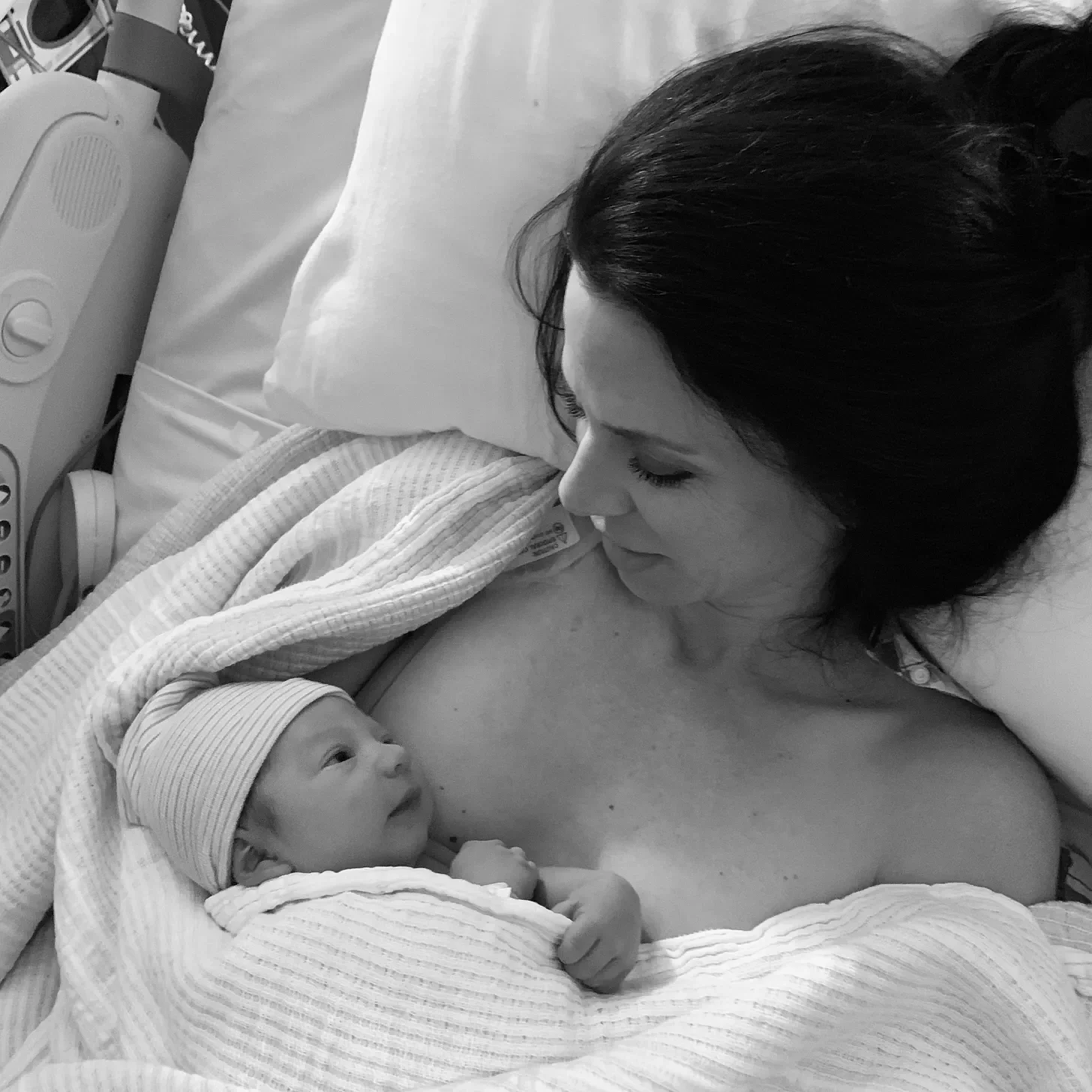
Thoughts on motherhood, breast cancer, and what attachment theory and the Enneagram taught me about being loved