

The Blog
Recently Featured


All Blogs








Enneagram Subtypes and My Chat with Beatrice Chestnut
“The opposite of home is not distance, but forgetfulness.”
-Elie Wiesel

May is Enneagram Exploration month here on the blog. Last Thursday, we celebrated this lavishly, kicking things off with an Instagram Live discussion on Subtypes with, as I’ve heard her called, the Grand Dame of Subtypes, Beatrice Chestnut.
Beatrice is an author of two books, The Complete Enneagram: 27 paths to greater self-knowledge and The 9 Types of Leadership: Mastering the Art of People in the 21st Century Workplace.
Both are must-reads. The Complete Enneagram is my absolute favorite comprehensive book on the Enneagram, hands down. Not only does it provide a deep dive into subtypes, but it also provides an academic overview of the Enneagram and its history.
Beatrice is also a psychotherapist and coach, training practitioners and leaders to take their Enneagram knowledge to a deeper understanding and application both in work and life.
This is my passion as well: helping people harness the transformational power of the Enneagram in their own healing, relationships, and work.
I’ll be releasing that interview later this month, yet in the meantime, I want to parse out the major takeaways of our conversation. Subtypes are, after all, a bit complex in nature, and can be easily misunderstood or glossed over.
I believe they are a game-changer, lending a whole new level of understanding into who we are and why we do the things we do.
Let me tee this up by giving a quick overview of this system:
The Enneagram can be broken down into three Centers of Intelligence: the head, the heart, and the body. Within each center, or triad, there are nine interconnected personality types. This we know. If we peel back the next layer, we discover each of the nine types is actually a triad in itself containing three more definitive subtypes within the type. So, we know there are actually 27 types as opposed to nine. The three subtypes within each of the nine types is also connected to three driving animal instincts: self-preservation, social, or sexual (or one-to-one).
Here are the three biggest takeaways from our discussion:
Subtypes help clarify type. Discovering type is often a difficult process. This is partly because there are only nine types and billions of us so it can feel downright limiting and often reductive to identify our dominant type as there is such variance within type. If you struggle to identify your dominant type, try on the subtypes within the types you feel closest describe you. You may discover a perfect match.
Subtypes are more helpful as a growth tool than wings. Wings are talked about much more than subtypes. I learned this is because there hasn’t been clear, compelling content written about subtypes readily available. Also, there is great confusion as The Wisdom of the Enneagram, the Riso/Hudson classic, calls them instinctual variants. Also, wings tend to be easier to identify. They are physically on either side of your dominant type. However, Beatrice explained that wings are more of a flavoring of type that can shift throughout life. Subtypes can be used in a deeper way to grow beyond limiting, unconscious behavior.
Instinct + Passion = Subtype. It’s so important to note the nuance of subtypes within each type. Like I said earlier, no two subtypes are alike even though there are the same three choices for each type. Instead, they can be explained by a person's predominant driving instinct (self-preservation, social, or sexual) fused with the specific passion, or emotional motivator, of a person’s type. This creates a distinct character type within each of the nine to really sink your teeth into. For me, this looks like the self-preservation instinct, as it is my dominant, mixed with envy, the passion of a type four.
To wrap it up and put a bow on it, I love working with subtypes because quite simply, they help us develop more balance where there is imbalance within our personality.
To learn more about the Enneagram and subtypes, join my monthly Enneagram and Self-Care program, The Practice.
Love & Gratitude,
Katie

Resilience and How to Practice Joy
“Joy, collected over time, fuels resilience.”
-Brené Brown
Are you afraid of joy?
I know…bizarre-o question.
Yet, after over a decade working as a therapist, I’ve had a curious finding. Humans are, indeed, scared of joy. Beyond anger, sadness, grief, shame, you name it, we are more resistant to feel prolonged joy than other emotions.
Why is this?
I call it “the other shoe syndrome.” If we bask in moments of joy, small though they may be, eventually, the other shoe will drop, leaving us disappointed, or perhaps ill-prepared. We’re so afraid of the let down that we settle for scarcity and self-protect.
In other words, joy is too risky. Something terrible might happen on the other side so we opt out altogether and dumb down desire. That way, if we run tactics on worst-case scenarios, we have nothing to lose.
After all, we have what’s called a negativity bias, or gravitation towards negative stimuli around us. Fear has kept us alive as a species through the ages, yet we don’t really need it to stay alive in the same way our primal ancestors did. This negativity bias has a strong evolutionary pull on our awareness, making joy more of a learned practice.
Brene Brown says it best, “When we lose our tolerance for vulnerability, joy becomes foreboding. As a result, we dress-rehearse tragedy and beat it (vulnerability) to the punch.”
Not so fast, Cowboy. As humans, we simply can’t opt-out of vulnerability.
We must risk something along the way. Expansion requires it. So does love. In both, there are no guarantees.
It’s worth noting that the goal here is not the absence of struggle. You may have noticed lately, struggle is an integral part of life. The goal is resilience, or the ability to recover quickly from life’s challenges.
As we learn to practice joy, this opening up to hope amidst life’s challenges, guess what grows? Yep…resilience.
How do we practice joy? I’m convinced it’s a three-fold process.
When Joy flashes her tooth-y grin in your direction, don’t look the other way—get curious. Flirt with her, even if she’s there for just a minute.
Then what?
Pivot to gratitude. Research shows the most joyful people in the world are also the most grateful. This blows far beyond circumstance. It’s a result of practice. When we pivot to gratitude instead of scarcity, we build up new accessory muscles we didn’t know existed. This, in turn, becomes habit over time.
In that practice of gratitude for this joyful moment—breathe it in—stay with it. Brain science tells us it takes three deep breaths or eleven seconds to form a new neuropathway in your brain. By basking in these joyful moments, you are literally rewiring your brain to make you a more wholehearted, receptive person.
These simple sightings of joy are oxygen for the soul. I think we can all agree, we need it — now more than ever.
Love & Gratitude,
Katie
P.S. Join me on Instagram Live this Thursday at 2 pm CT to talk Enneagram Subtypes with Author, Psychotherapist, and Expert Beatrice Chestnut. Follow me on Instagram.
Self-Compassion is the New Self-Care
“The most common form of despair is not being who you are.”
-Soren Kierkegaard
One of the first questions I like to ask clients I work with takes some by surprise. It helps me steer our entire therapeutic journey. It’s simple…and very complex.
Tell me about your relationship with you?
Typically, after a long stare back at me like I have eight heads, they respond, “Um…good question. I don’t think about it much.”
Exactly. How we relate to ourselves doesn’t exactly stay top of mind. Others, more likely.
Yet how I relate to myself—how I treat, take care of, and talk to myself directly impacts everything else in life. Everything.
Why? Because I can’t live and give out of an empty vessel.
Back in early February, (which seems like 12 years ago right now), I hosted a Self-Care Workshop alongside two dear friends. It was powerful because we realized how desperate our souls, especially as women, are for deep, true self-care.
I’m not talking mani-pedis and facials and wine nights with the girls. Those are all fabulous and can be nurturing, but let’s call a spade a spade. Those are forms of pampering…and pampering is a good thing! Yet we’ve sold self-care short if we deem it expensive beauty treatments and indulgences, especially right now. We approach it as a luxury—the stuff that ensues out of an abundance of time, energy, and resources.
And yet I firmly believe the less of those three resources we have, the more important it is to fight for self-care.
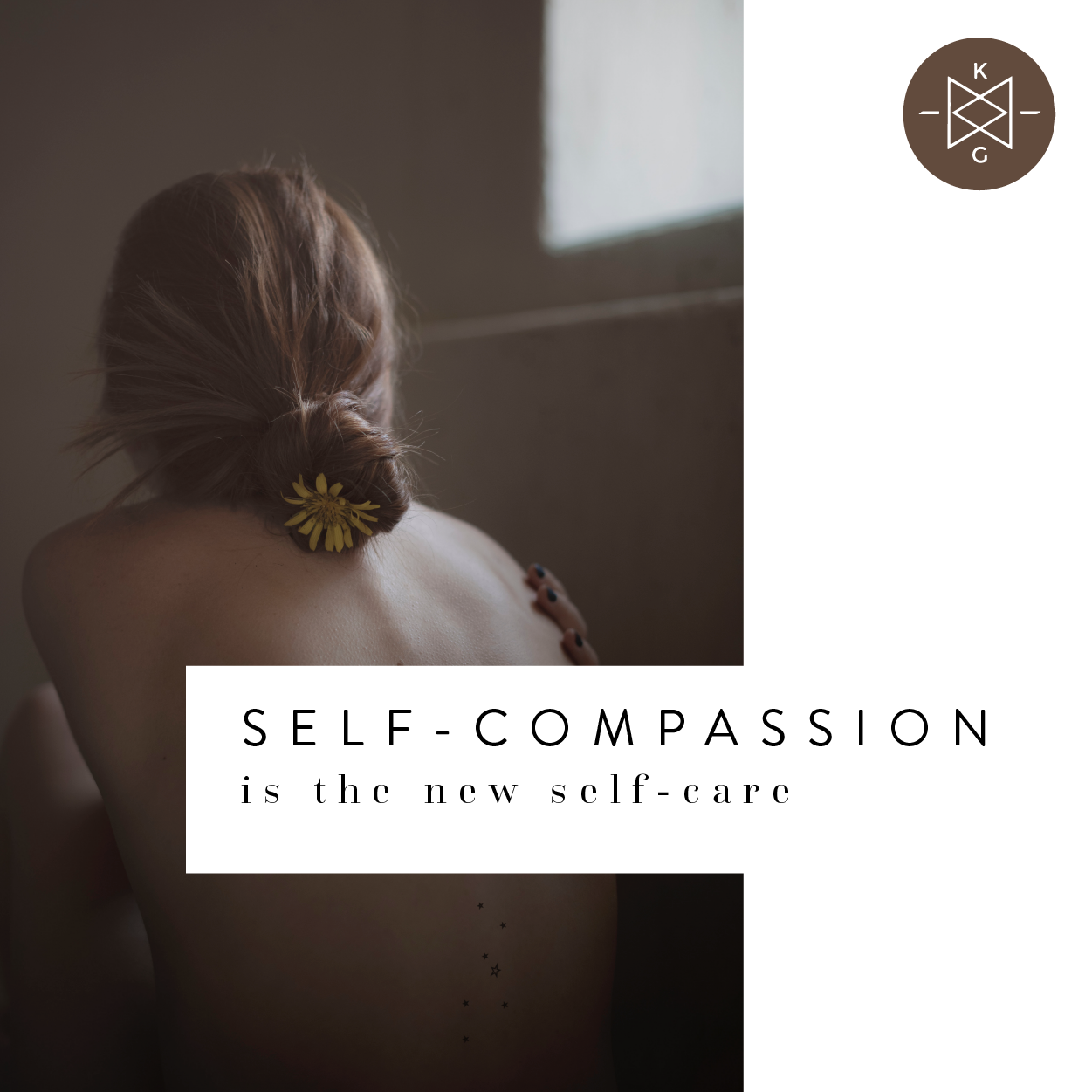
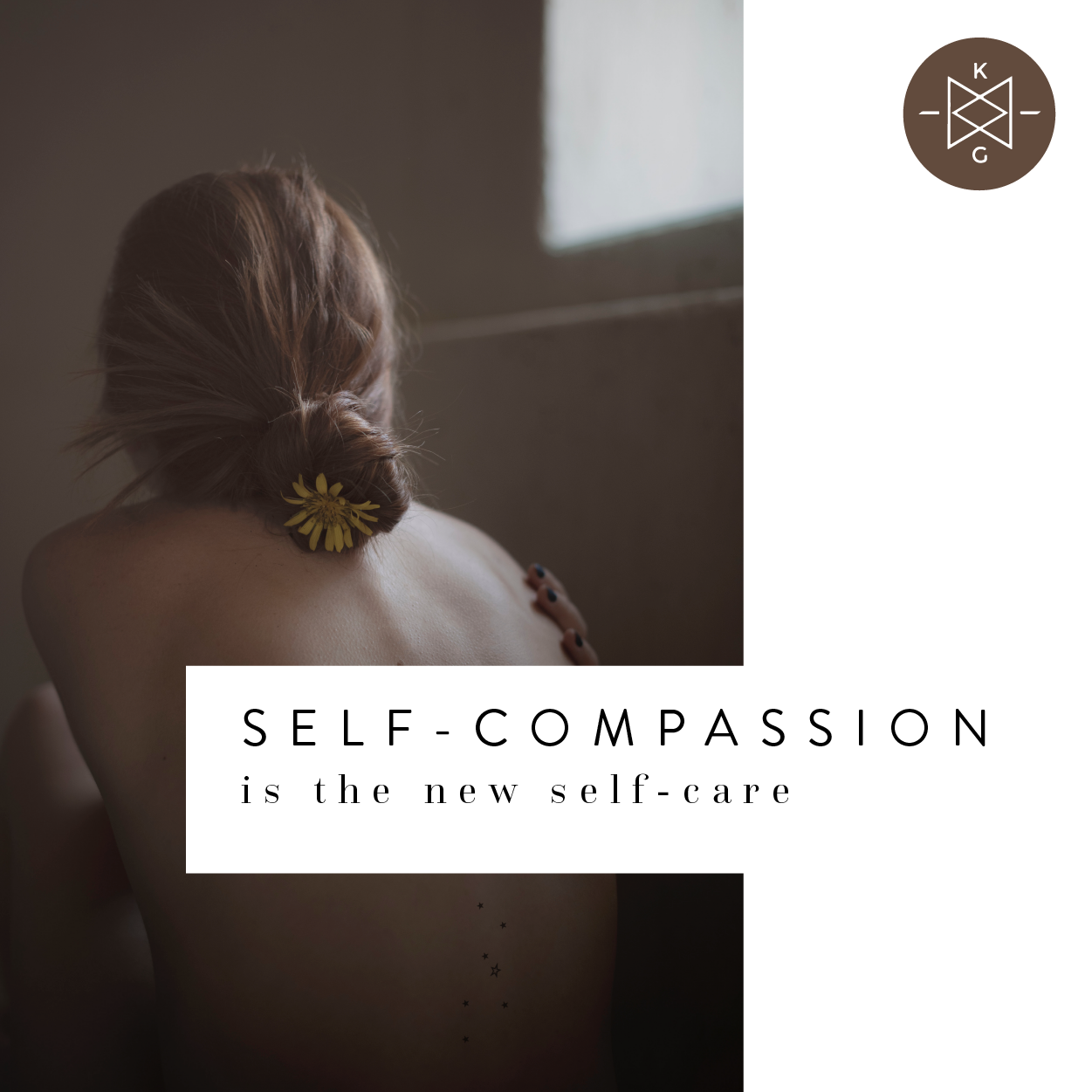
Actually, I’d like to rebrand self-care as self-compassion because I feel self-compassion looks more like true, life-giving self-care than spa treatments do. So what is self-compassion?
Self-compassion is the practice of befriending ourselves. It’s learning to think of, talk to, and treat ourselves with kindness and compassion like we would do a friend we deeply care about.
Self-compassion also takes notice of some important things.
It recognizes our hurt and suffering.
It moves towards this pain with a kind and open heart instead of trying to fix it, shame it, or numb it.
It is built on the foundation that the human condition is fragile and this frailty is the connective tissue that binds us all together.
Guess what? Whereas “self-care” in a traditional, indulgent context is tough for most of us right now, self-compassion is available and necessary at every turn. (Oh, and free!) I mean, raise your hand if your hair color has faded, your grey’s are popping, and you forgot where you last saw your makeup?
History has presented us with the perfect space and time to practice true self-care or self-compassion. I’ve got great news for you too!
Coming in May, you will get the opportunity to participate in our Online Self Care Workshop…for free! We’ve created an abridged version of the live weekend event and are bringing it to your living room. Stay tuned for more details and other free resources right here.
We’ve got an incredible opportunity right now to dig deep, love ourselves, and love our people well. I love supporting you in this process.
Love & Gratitude,
Katie

How to Grieve What Used to Be
“Let everything happen to you, beauty and terror. Just keep going, no feeling is final.”
-Rilke
How do you grieve?
Let’s back up. What do you know about grief? How is it different from sadness or depression?
We know they are look-a-likes. Both involve intense sadness and even despair. Grief, however, is the normal and appropriate response to a great loss, often the death of a loved one. Whereas grief and depression share several characteristics such as heightened emotions, fatigue, appetite disturbances, loss of pleasure, and inability to enjoy things, they are not the same. A big contrast is depression is usually marked by a tendency to isolate from others with little or no experience of pleasure.
The grieving person usually stays connected to others through the process and hopefully experiences pockets of joy or pleasure along the way. Something I learned from the grief guru himself, David Kessler, is that grief must be witnessed—loved one(s) hopefully walk alongside and see this pain integrating into our lives so we can process it better.
There’s also this thing called anticipatory grief: deep sadness for what will be lost. The fact that life will never fully go back to the way things were is what that tastes like. Just as air travel did after 9/11, this virus will mark history in an unprecedented way.
You may know there are five main stages of grief: denial, anger, bargaining, sadness, and acceptance. So here’s how those stages pertain to the pandemic that’s coursing through the unwilling veins of our world:
Denial: This won’t affect me.
Anger: I’m so pissed we didn’t act faster as a nation. And I hate staying at home all the time without work and independence!
Bargaining: If we wear a mask and keep our distance, this will all be over, yes?
Sadness: I feel helpless because there’s no real endpoint.
Acceptance: This is really happening and I can do my part to help out.
Grief is complex and not linear. For all you type A’s out there, beware of trying to grieve neatly. It won’t happen. It’s messy, cyclical, and much like whac-a-mole.
One day we can be fairly poised, the next mad as hell, and the next denying anything’s actually happening because the weather’s finally warm and sunny.
As you can imagine, the real power lies in the acceptance piece. When we are able to simply allow what’s coming up emotionally and let it move through us, we can access acceptance more quickly. After all, the word “emotion” is mostly comprised of the word “motion.” That said, we must allow emotions to come up and move through us as they are created in our bodies. If we don’t do this, we create bigger problems down the road.
So how do we grieve what used to be? The lovely life you’d grown accustomed to? The lifestyle and rituals you carved out over the years? How do you make sense of this new normal?
By assigning meaning to it.
We must appropriate purpose to our grief. Eventually, we must be the hero in our grief story as opposed to the victim.
David Kessler actually built out the grief process to include meaning as the sixth stage. How powerful is that?
Let your grief work for you and create deeper, richer meaning in your life right now. Your shock is appropriate, your tears are precious, your anger—valid. We are all on this spiritual journey together as we are becoming more real through our pain.
Love & Gratitude,
Katie
P.S. Need a safe space to process and grieve? I’d love to have you join my Online Support Group called Bloom. Click here for more info.

Pick Two Things: How to Avoid Self-Sabotage
“The real voyage of discovery consists, not in seeking new landscapes, but in having new eyes.”
-Marcel Proust
If history ever presented us with the opportunity to do some serious personal inventory, it is surely now. In fact, you may find yourself with quite a bit more time on your hands sans the limitless distractions of the normal hustle and bustle of life and work. (That is…unless you have kids at home!!!)
Personally, I don’t think this is a space in time to “hunker down” as we anxiously await the return to business as usual. Sure, I miss hugs and coffee shops and frivolous errand running just as much as you. However, I believe we can learn some invaluable lessons from this time if we let it teach us what it wants. Also, I’m not so sure returning to “normal” is where we are headed…I think it’s somewhere much better. It will hopefully include more intention and less trance, more gratitude and less impatience, more “we” and less “I.”
The invitation we are being presented with is quite simple: to wake up. Isn’t that what any crisis does? Nudge…or jerk us awake?
Well, I’m pretty sure Miss Corona has our full attention.
Now what?
Helplessness is incredibly hard to stomach. I want to help and yet I don’t feel like my help makes a dent. Even in my best effort, there is so much out of my control. That is…if we are looking “out there.”
One of the most loving and powerful things you and I can do to help shift this global health and economic crisis is to tend to our own garden. By this I mean, nurture, grow, and prune our lives in a way that adds to a greater, more beautiful collective human consciousness. In essence, if you take good care of you, practicing that which you want to grow and cutting back that which you want to weed out, you’re making a huge difference.
Why does this matter when so many are losing their jobs, fighting to put food on the table, on the frontlines of hospitals, and suffering crippling anxiety about the future?
It matters because what we believe about our situation has the power to shift everything. If this sounds esoteric and intangible, it’s not. A belief is just a thought you keep thinking, over and over again. We can practice our thoughts just like we can practice piano. A practice helps us improve anything over time.
It’s dig deep time right now, friend. As tempting as it is to numb out right now with food, wine, Netflix—you name it, (no shame!!!) we must balance our response to this history-making invitation. The invitation is to respond, not react. Sure, we can have fun in the process, too. It’s more about honoring our future selves—the beings we’re becoming.
How do we do this? NOT by reacting extremely, taking on every hobby, self-help book, and at-home exercise regime on the market.
We do this by believing what we want to create more of in our life and community. Belief has the power to shape your perception and change your reality.
What will you believe about yourself and this time right now? What thoughts will propel those beliefs? Are they thoughts that tend to your soul’s garden? Do they promote hope and possibility? Don’t worry about all of them…
Just pick two—two thoughts that will directly impact and grow the beliefs you want to have for yourself and your life right now. Practice thinking those thoughts, over and over, especially when fear floods in. It’s okay if they feel weird. Your brain probably isn’t used to them.
Here are my two thoughts. You can use them for now if you’re needing some inspiration:
1) I am fully supported by God, or Higher Power.
2) I am totally in control of what I want to create in my life.
3) (BONUS) I choose to create more love towards myself and those who are in need.
On that note, sending you a massive virtual hug right now.
Love & Gratitude,
Katie
P.S. Join me and best-selling author Ally Fallon Wednesday at 2pm as we go live on IG and discuss the writing process, Enneagram 4’s, and self-care!
Thoughts on motherhood, breast cancer, and what attachment theory and the Enneagram taught me about being loved