
The Blog
Recently Featured

All Blogs








Do It Afraid
“Courage isn't the absence of fear, it is acting in spite of it.”
-Mark Twain
Halloween is one of those holidays that’s not hot on my radar. I don’t have a problem with it, I just don’t have much buy in. And here’s why: growing up, my siblings and I weren’t allowed to trick-or-treat, let alone decorate the yard with creepy hollow-faced ghouls and witches riding rickety broom sticks. You may have had friends like me growing up whose conservative Christian upbringing left little room for Halloween hoopla. Instead, we were dropped off at a youth-group “fall fest” wearing plaid flannel, with a bonfire, some s’mores, and a singalong in our very near future.
I’ve got a confession to make: To this day on Halloween, I turn all the lights off in the house, build a fire, and watch something relatively scary on Netflix over my favorite frozen pizza and a handful of the choicest Halloween candy. Yep, I’m that girl who pretends not to be home. Okay, okay, I do leave a huge plastic pumpkin full of the candy dregs I passed on out on the front porch for those sugar-crazed tricksters who come around. I’m not apathetic and heartless.
It’s very curious to me that we celebrate a holiday that actually capitalizes on the emotional response of fear.
I actually love it.
I love it because in a peculiar way, Halloween takes all those things we’re supposed to fear—grotesque monsters with missing eyeballs, zombies, skeletons with strange looking hats on, and the like—and brings them out of the mysterious dark corners of our bedroom at night, placing them smack dab on the front lawn in broad daylight. Then, we take it a step further and slap on a sugar-buzz that carries us right on through to Thanksgiving. Brilliant, don’t you think?
It’s an invitation to stare down, and even mimic, the things that scare us.
Not only is it an invitation to engage our fear, it’s also a reminder that our biggest fears are, in actuality, about as imminent—and convincing—as that rubber mask you dressed up in as a kid.
In fact, ninety-nine percent of our fears don’t even happen. Sure, fear has kept us alive as a species for centuries, however, we don’t necessarily need it for survival anymore as our primal ancestors once did.
As you know, I’ve been radio silent ever since my trip out to the “Enneagram Camp” in California this past August. My time away was simply transformational and quite honestly, I’ve been gun shy to unpack it fully here on the blog. In fact, the experience felt like holy ground—a sacred passageway I’ll never forget.
Perhaps this is because it was such a safe and inspired space to explore the fears that keep me operating out of my ego-or Enneagram type Four structure. I spent lots of time exploring the masks I hide behind in order to show up in the world as special or significant, because if I didn’t, I might be found out as simply inadequate or worse—ordinary—an Enneagram type four’s living hell.
One day I’ll unpack the whole experience. For now though, I want to invite you to join me in facing those very things we fear the most. This could be a part of you that isn’t serving you well, or perhaps a creative endeavor you’ve been putting off for a long time because it’s simply “too big.” It’s time we embrace those fears for what they really are and see them up close in broad daylight. You know what Fear stands for, right?
False Evidence Appearing Real.
This season, I’m excited to invite you into more opportunities to break through all those old narratives of fear. Stay tuned for lots of exciting Enneagram as well as community opportunities to connect in powerful ways coming your way soon.
In the mean time, it’s time to decide what the next courageous step in your journey of self-discovery and expansion is and say yes to it. Sounds terrifying, right? Perfect, you’re on the right track.
Just Do it… afraid.
Love & Gratitude,
Katie
Dancing With Shadows
“What you resist, persists.”
Carl Jung
I grew up in the crown jewel of the deep south, Mobile, AL. We did many strange things like take ballroom dancing in fifth grade. Yes, you heard me, fifth grade. It was hands down the most awkward thing I’d experienced until then, and I’ve always felt at home on a dance floor.
This was different though. Kids from a couple neighboring schools would gather on a Thursday night at 5 o’clock in a big gymnasium at St. Ignatius Catholic church and learn all the old-school couples' dances like the fox trot, waltz, and others I’ve purposely erased from my memory. The most unbearable part of it wasn’t learning the dances, it was learning the dances with the boys. They were hyper, smelly, and had no rhythm. They also thought they were beyond cool. Ya’ll, it was torture. My favorite part of the night was when I spotted my mom’s minivan headlights in the carpool line. She’d swoop in and pick me up and then we’d proceed to Checkers for the long-awaited chocolate milkshake(s). I had to take the edge off somehow.
Learning to dance with our shadow, or shameful parts, can feel just as unpleasant. Oh you’ve got them too, I promise. They are those parts of us we’d rather not talk about. In fact, we try desperately to hide them from the world around us. They are the parts of you that you swear, if someone saw, they’d ultimately reject. It might cost you their affection—their acceptance. You'd be exposed…and deemed unloveable.
For so long, I tried to hide and change the fact that I was a quiet observer as opposed to the popular party girl. Large groups of girls made me uncomfortable. I absolutely hated summer camp, gossip, and sleep-overs. I followed southern suit and joined a sorority in college, but it was really more for my mother than for me. Eventually, I dropped out but nearly died trying to show up and fit in. I’d much rather hang with my older friend, Liz. We’d smoke Marlboro lights, listen to Dave Matthews, and talk about evolved things like boys, music, and what we dreamed of doing when we “grew up.”
More recently in my late thirties, I’ve felt shame around not taking the traditional route as a stay-at-home mom. Instead, I’ve chosen, albeit indirectly, to focus on my career, (or that’s what I tell myself and others). At 39, I may or may not ever be a mother of children. Even though the ballot’s still out, this feels a bit shameful to me. Regardless, I build up the more admirable, palatable case that, “I’ve chosen to build out other areas of my life.” It feels cleaner—safer. At the core, however, this is really my shadow part and her name is inadequacy. I’ve never really cared for her.
What are the shadow parts you’d rather forget about? Is it depression, body shame, singleness, or even sexual trauma as a child? If so, I can fully resonate with you. Guess what? Just like the smelly boys at ballroom, we’ve got to learn to lean in, let go, and learn to dance with them.
One of my favorite concepts in self-development is integration. This feels incredibly expansive and powerful to me. The less compartmentalized, or fragmented we are, the more integrated and whole we will become. Just as we are made up of hundreds of different body parts, muscles, and organs, we also have so many different parts of our emotional, relational, and creative beings.
Oftentimes in therapy sessions with clients, these parts come up. Take anxiety for example. Anxiety is an emotion, or part of us that can be immobilizing. The common misconception is in order to deal with anxiety, we must numb, fix, or run from it. But anxiety is really just a shadow part of us that needs compassion and understanding just like, say, the creative part of us. When we stuff our anxiety and try to avoid it, we really just give it more power and as a result, create imbalance.
What might dancing with this anxious shadow look like? Well, first we must listen to and get to know it. This allows us to cultivate empathy for that anxious part of us. After all, she has been working overtime for a while now to keep us performing, staying safe and “on the ball.”
Shadow work is really a reckoning with parts of ourselves we’ve misjudged for a long time. The payoff is wholeness—flow. It’s realizing those parts we’ve been hiding for so long aren’t so terrible after all. In fact, they end up being the best parts because they are the most loving, consistent teachers.
That anxious part of you desperately wants you to see her for who she really is: someone who deeply cares about your future yet may go about it clumsily. She wants you to sit with her, commune with her, and realize the worst thing that can happen isn’t so bad in the end because you have other resilient parts of you that can step in and take over when she needs to sit the next song out.
Second, simply take a minute and visualize the part of you that you dislike, a lot. Perhaps you feel guilty about this part or constantly judge her. What does she look like? What is she doing? How does she seem? In the same minute, take one step towards her… then another, and another. You left her alone a long time ago and she feels abandoned, even scared. She knows you dislike her but she desperately longs to know you and play on the same team. She needs you big time.
If this feels completely terrifying, it should. Your brain is freaking out because it has no idea what it’s doing. Hang in there though, this is perhaps the most life-giving work you’ve ever done. Dancing with strangers or smelly boys is probably not on your bucket list. But I bet I know what is…
To be loved…fully.
Love & Gratitude,
Katie
Reaction Formation
“Between the stimulus and the response there is a space. In that space, there lies your freedom and power.”
-Victor Frankl
Back in May, I attended an Enneagram retreat led by Ian Cron, author, Enneagram Jedi, songwriter, priest, and therapist. (Yeah, he’s a real bump on a log.) It’s taken me nearly a month to fully unpack it… SO good. I consider myself an Enneagram enthusiast. I’m no expert, yet I’m eager to grow that base of knowledge because I still feel, after a decade of self-study and implementation, it is the most powerful tool for self-understanding and transformation we have. Ian took around forty of us deeper into the tool over the course of two and a half days, and I’m beyond grateful for the new and powerful insight gleaned.
One of the many golden nuggets I walked away with was the above Victor Frankl quote. It kills me. I sincerely believe that most of our perceived problems would dissolve if we cultivated, or grew, that space between what life throws at us and how we respond. Let’s stop right there. Even just the word “respond” is generous. I tend to default to cruise-control living more days than not, reacting out of emotion instead of responding out of presence. Why? Because the space between the stimulus and response is so stinking small! What is not so small, however, is the old ego blaring at full-volume when I live like this.
For example, let’s look at a scenario we can all relate to—traffic. If you live in a large-ish city like Nashville (especially in the last 2-3 years), chances are, you have been tweaked by traffic. One of my absolute biggest pet peeves is when I’m stopped at a four-way stop and instead of obeying traffic laws, people try to be sweet and “let you go” when it’s not your turn. I’m all for southern charm and hospitality, but somebody’s going to get hurt if we all play nice instead of following the basic order.
This happened the other day. A well-meaning lady in a heavy black sedan with red lipstick and statement earrings sat across from me at a four-way stop. It was her turn to go. She flashed a toothy grin my way and waved her hand for me to go. I mean come ON. I played along but rolled my eyes and may have even shrugged my shoulders very dramatically. Small space alert! I reacted out of frustration instead of responding from curiosity and openness. Ew.
I was also asleep in trans, living out of a really crappy story that read something like this, “Why are people so lame? She should see traffic laws (and life for that matter) the way I do.”
Zero compassion. Zero patience. Bags of judgement.
Sure, anger was at the surface. But guess what was really going on underneath that jagged reaction? The real underlying story was fear. It went something like this, “Things won’t work out unless I try to control them.”
Do you have a particular narrative that gets you into trouble?
Here’s some good news: the thing that separates us as humans from animals is the ability to make up stories. We’ve also been given the glorious gift of imagination in order to write them well. Guess what we need in order to write good and truthful stories? We need space. Why? Because we write best out of stillness, not chaos. Also, because reactionary, fear-based living will drive us mad (and others away).
If you and I are courageous enough to sit in that space, feel our feelings, and simply observe the moment at hand, we have stepped out of ego— the need for control—and into the freedom of essence. By essence, I’m referring to the loving, open, and authentic “true self.”
From that space, you create meaning, thought, feeling, and action that is powerful beyond belief. This is the space where you get to use your God-given gift to write really compelling stories.
This all sounds so lovely and airy-fairy, but how do we grow that space and find our freedom— our power?
Meditation is the most effective tool I’ve found to cultivate the inner observer, or witness, we all have, yet tend to neglect. Any mindful awareness exercise or guided breathing and meditation allow us to relate to our thoughts and experiences in a softer, more open way. Most importantly, it broadens the space and cushions the fall when life throws us the inevitable curveballs.
Yes, it feels boring, uncomfortable, and frustrating at first, but after a while, you will start to crave it. If you’d like to deepen your own practice or learn more, I’d recommend a guided meditation app such as Headspace or Calm.
We are spirit beings living in a physical world. It’s time we tend to that pure, loving part of us in order to create some distance between how we experience the world and how we respond. Your imagination is your MVP here. Break it open. Look around. Make a home.
Stay awhile.
“The opposite of home is not distance, but forgetfulness.”
- Elie Wiesel
Love & Gratitude,
Katie

Humble Up: 3 Surprising Reminders about Humility
"Be who you were meant to be and you will set the world on fire."
-St. Catherine of Siena

When I flash the word “humility” in your face, what do you conjure up in that glorious mind of yours?
Don’t overthink it, just go there. What’s the picture that pops up?
Is it Mother Teresa in the slums of India? Is it that sweet, self-deprecating friend who constantly defers to your clever ideas? Is it your mother? Is it the classic portrayal of Jesus?
What do you see?
My hunch is, your first thought is NOT power or confidence. I could be wrong, but if you’re anything like me, here is where you’ve typically gone with this seemingly soft virtue called humility.
I used to immediately envision a lowly, bowing posture; someone trying to be small or unnoticed. If confidence and pride are the backbone of this body of virtue, then humility is surely the squishy, fleshy, underbelly that isn’t often seen. It’s always covered up.
I was lucky enough to tag along with my husband to the Grammys in New York City. It was a week-long, epic celebration of music, er, really the characters that bring the music to life. As a passionate observer of people and a lover of music, it really is a feast of a week for me. I got to peer into the glamorous, albeit tinted, windows of these talented and tenacious people doing what they do best— perform.
The ones I’m naturally drawn to, or fascinated by, are the ones who incidentally don’t draw much attention to themselves. They are the ones who, in my slim estimation, long to make the music about something bigger than themselves and work tirelessly to do so with excellence.
Yet, they are far from doormats. They have had to believe in themselves and their talent so deeply, even when there was no outside evidence to back them up. Their persistence to believe the truth about who they are and the value they offer the world informed every thought, feeling, and action, despite a slippery temptation to hide out in self-doubt.
Alicia Keys comes to mind, as does Chris Stapleton and Kevin Moore (Keb Mo). I know there are more, these are just a few I’ve observed over time, especially this last week.
In fact, celebrities aside, I believe the most effective leaders are truly humble. Why? Because effective leaders are secure enough in their identity to shut up and listen well to others. They don’t feel the need to constantly tighten the reigns of control.
Here are a couple of simple definitions I love about this thing called Humility:
C.S. Lewis says,
“True humility isn’t thinking less of yourself, it’s thinking of yourself less.”
Another C.S., that is, Charles Spurgeon, simply puts it,
“Humility is to make a right estimate of oneself.”
I hear far less shrinking and loads more honesty in these definitions. I hear truth—security.
What if humility is the fundamental building block of greatness? What if we could count on its staying power in a way that would allow for more of what we truly desire for ourselves and our loved ones? What if embracing humility could connect you back to your truest, most loving self so that you could love others more fully, more deeply?
As you chew on this idea of humility, take these three reminders with you:
- Humility is NOT playing small.
This may be the biggest misconception we have in terms of humility. In fact, we confuse the idea of “false humility” with actual humility. You know the stuff. It shows up in self-deprecating comments, constantly deferring to others because “They’re so much smarter or better than me” or “Oh, don’t mind me, I’m just fine staying back. You deserve to go have fun.”
If humility is being exactly who we were made to be then false humility is downplaying, or degrading the value of who we are. In that sense, false humility is really just the same as pride, but all dressed up in her Sunday best. Both are forms of self-absorption and indulgence.
- Humility affects great change.
Humble people aren’t dependent on bravado. They don’t need the hype, the show, and the ego. Perhaps they did at some point, yet part of our growth curve involves being knocked on our ass at some point. We like to call these “humbling moments.” When we lean into these moments, muscles build, perspectives shift, and an interior wisdom sets in that makes us more malleable and effective than we were before (if we allow).
True greatness emerges when that mask of ego comes off, and we begin using our unique voice and gifts to meet the world's aching need. It happens when we finally get out of our own way.
I love St. Catherine of Siena’s charge,
“Be who you were meant to be and you will set the world on fire.”
- Humility takes courage.
It takes loads of courage to show up, use your voice, share your truth, and say “yes” to your calling, however big or small it feels to you. It is far easier to play small and sit on the sidelines as a spectator. We get so used to wearing the mask of personality in order to keep us safe and fit in, yet when we rely on it too heavily, we mix up our true identity, our essence, with parts of our personality that are overgrown, or false.
You were born as a pure, loving, curious being. The world taught you fear, and for all intents and purposes, that fear kept you safe. However, today, you don’t need it in the same way anymore. Let’s move deeper into the current of courage. Let’s get knocked around a bit. I can’t promise you it's sterile and certain, yet I’m convinced it’s the path of true calling—identity. The humble path is truly a radical one. So, let’s make some waves, my Dear.
Love & Gratitude,
Katie
xoxo
Let Your Body Talk
"The human body is a river of intelligence, energy, and information that is constantly renewing itself in every second of it's existence."
-Deepak Chopra
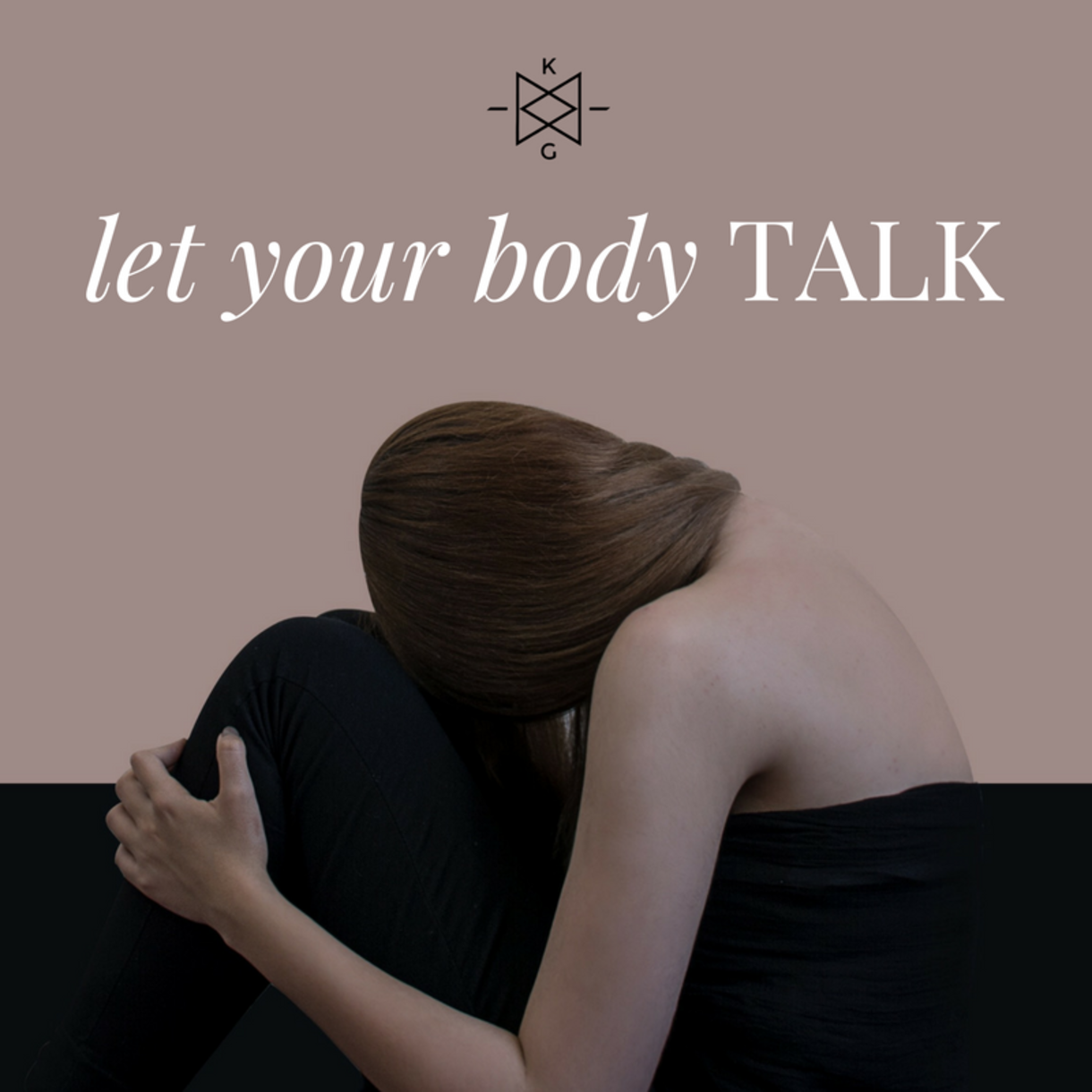
What if there was an untapped intelligence source you had an all-access pass to and it could give you accurate answers to questions you’ve been seeking for quite some time?
What if you could give that overworked, overdeveloped prefrontal cortex a rest. You know, that part of your brain that is responsible, highly analytical, and very adult? She makes to-do lists, gets you to appointments on time, edits what you say and write, and generally keeps you zipped up nicely in order to make a good impression.
And my oh my, is she exhausted!?!
I believe wholeheartedly, you most certainly can give her a well-deserved break.
So stop whatever highly important thing you’re doing right now and start by giving yourself a hug. Let your body know you’re listening and curious about what she has to say. I’m dead serious.
Backstory:
In 2016, I set out on a crucial journey to reconnect with my body. Sounds weird, right? Perhaps; however, for me, it was necessary.
Throughout my battle with an eating disorder back in high school and ongoing depression throughout my twenties and beyond, my recovery was largely cognitive (aside from the basic requirement of maintaining a healthy weight).
There were also traumatic experiences along the way that made some deep and painful imprints, emotionally and physically. I don’t think I even realized this then.
Now, when I say cognitive, I mean relying heavily on my thinking mind (prefrontal cortex central) and how to mentally process defeating thought patterns and behaviors in order to replace them with healthy ones. For example, therapy modalities such as Cognitive Behavioral Therapy (CBT) and partnering psychotropic medications, or antidepressants.
These were both helpful beyond belief and supported my healing in ways I’m eternally grateful for.
2016 came along, and I began experiencing all kinds of physical pain and tension, manifesting in my upper back, throat, and jaw area. It got so bad, I experienced difficulty singing and even carrying out conversation due to a feeling of extreme tightness.
This wasn’t going to fly as I was ramping up to start writing for a new music project. Discouraged and in pain, I put it on hold in order to find some answers I later learned were trapped inside my body.
It was a catch 22 in that I thought I’d found my voice, yet at the time, wasn’t able to use it.
I set out on a mission to crack this cryptic code within my body. After all, emotionally I felt stronger than I ever had, yet the pain I was experiencing set me back day after day into a downward spiral of discouragement. This mission would forever change the way I lived and worked.
I started knocking on every door. Over the course of a year, I did brainspotting, vocal training, yoga, body work, acupuncture, kinesiology, and tons of meditation, all of which were extremely helpful.
Curiously, though I knew this pain affected my voice, I knew this was not a “talking matter.” Hell, I had talked in circles trying to process this thing out, and apparently, my body would not let up.
From all of the incredibly patient and wise practitioners I worked with (whom I’ll thank here in just a moment), I learned that the body is one of three intelligence centers we have. The mind, heart, and body are all crucial in processing life around us, yet again, western psychology focuses mainly on the brain.
Has your body ever tried to warn you of potential sickness? Energy levels flag, soreness peaks, and all you want to do is crawl into bed with some hot tea and binge on Netflix? It’s trying to tell you to slow down, ramp up the vitamin C, because if you don’t, you might end up with the flu. Your body talks.
This is the first of a new blog series centering on this glorious mind-body connection and wisdom. I wanted to kick it off by telling you a bit of my story and dangling some of these alternative practices in your world as you may be in the market for some new ways of integrating.
Brainspotting is a brain-based therapy that jumpstarts the healing process by moving trapped trauma out of your brain and body. It was so powerful in my healing that I became trained in order to offer it in my practice. This was the first step for me. (For more info on brainspotting, check out an earlier post I wrote.)
Not that I remotely have a green thumb, but I’m well aware that the first thing to come up when you plant flowers is dirt. Metaphorically, this was spot on in my experience. As I began listening to, and planting seeds of physical connection and nurturance through brainspotting, body work, yoga, and meditation, you better believe years of emotional dirt— or pain started to come up.
Yet, instead of resisting or fixing the physical symptoms of pain as I’d done for months now, I leaned into its message with the help and support of this healing community.
What I learned from a wise chiropractor trained in eastern medicine is that my body had so many answers to help me along the way. Yet, by relying primarily on cognitive therapy and medication at points along the way, I had shut out this body intelligence.
Hear me out friend, I am a huge believer in talk therapy as well as psychotropic medication such as antidepressants. Yet, we must not ignore the invaluable intelligence source we have in our bodies. It all works together. Working with the pain instead of against it allows all that dirt to finally come up and out, so we can fully process it.
We must befriend this brilliant body of ours and learn how to feel safe inside its skin.
In The Body Keeps the Score, Bissel Van der Kolk shares:
“Neuroscience research shows that the only way we can change the way we feel is by becoming aware of our inner experience and learning to befriend what is going on inside our selves.”
Fast forward to today. I have spent the last year reconnecting with my body’s intelligence and healing capacity with the support of wise practitioners. Decades of depression and toxicity trapped inside my body needed to get out. Even though I’d done so much of my own work, I learned I was still fairly detached from my body.
I’m beyond grateful for people like Dr. David Grand, who invented brainspotting and was gracious enough to work with me last spring in his NYC practice. Laura Donohue, my vocal coach for the past ten years, you safely held space for my countless emotional breakdowns in your studio because I couldn’t sing a simple note without streaming tears and inexplicable pain. Dr. Suman Chaudhuri, chiropractor and alternative medicine Guru, thank you for connecting the dots and reassuring me I wasn’t crazy, I just had residual emotional pain and trauma that was looking for an exit. Also, to my favorite English healer, Linda Penney (whom I affectionately call Money Penny), thank you for your pristine intuitive work and for helping me uncover the truth in my body through kinesiology and realignment on your table in Marina Del Rey, CA. Our time together was truly life-changing.
There have been so many others, yet I won’t drone on like some lame awards speech. I wanted you to know it takes a village. It takes asking a lot of questions and reaching out. It has forever changed the way I approach my work as a therapist, so as to offer more experiential, brain-based therapies. I’m passionate about supporting you on the journey of total connection, mind-body-spirit.
Transformation and healing is where we’re headed. I do hope you’ll continue to join me on this next exciting leg of the journey. Today especially, if you have any questions regarding this new conversation, I hope you will reach out. It can feel overwhelming, believe me…I fully understand this.
It’s worth every wobbly step.
Love & Gratitude,
Katie
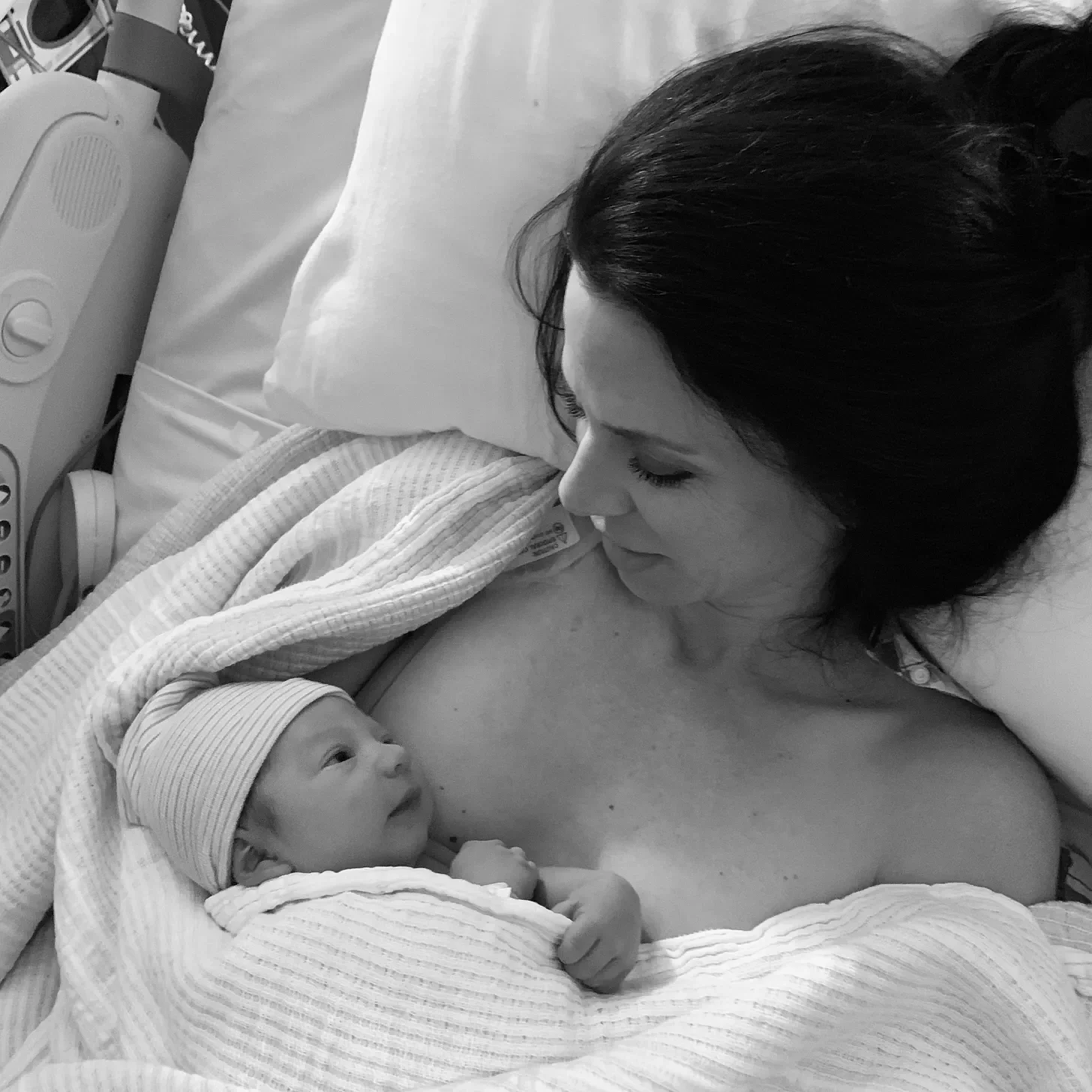
Thoughts on motherhood, breast cancer, and what attachment theory and the Enneagram taught me about being loved