
The Blog
Recently Featured



All Blogs






Loving What Is
“I am a lover of what is, not because I'm a spiritual person, but because it hurts when I argue with reality.”
– Byron Katie, Loving What Is: Four Questions That Can Change Your Life
What if the real way of personal transformation is more about subtraction than addition?
What if, instead of white-knuckling our way through life, straining to gain more and more self-worth, meaning, and fulfillment, we could find a release in letting go?
When we use the Enneagram for deepening self-awareness and understanding, part of the special sauce includes unlearning—unbecoming the conditioned self or ego.
Sounds a bit wacky, right? I know, but doesn’t it also bring a bit of relief?
Part of the reason we get stuck in the first place is by living out of old, broken narratives that don’t fit and aren’t true for us anymore. Sure, they may have made sense to us early on in life when we were trying to navigate how to show up and be accepted in this world. Yet, as we mature and become adults, life becomes more complex—more nuanced.
The black and white stories of our youth won’t suffice in a world full of grey.
Consider this, the Greek word for “personality” is persona, meaning “mask.” Isn’t that interesting? This helps me understand just how much we wear our masks of personality in order to protect our true identity, or the more vulnerable parts of ourselves we aren’t too sure about.
I mean, what if I were to truly be seen for who I am? I could be rejected, found out, for the fraud I really am?
As an Enneagram four, I’ve had that thought more times than I care to count.
The great news is our Enneagram type actually helps us identify the personality story we’ve been living out of for better or for worse. By learning and understanding what that is, we bring more self-awareness into our moment-by-moment experience, allowing us to slow down our process and respond to life’s curve balls rather than reacting to them.
As we slow that process down, we can choose something novel, something different—and better. We can un-become the limiting parts of our stories that were written a long time ago and desperately need editing by our adult selves. We can…wait for it…Love what is underneath all that hustle and exhaustion.
What parts of your personality story keep you stuck? What areas in your life do you long to unlearn—to release?
Simply start there. And ask yourself, “what would my life look like right now if I didn’t believe this story?”
Want to dig a bit further? I’d love to be your guide…
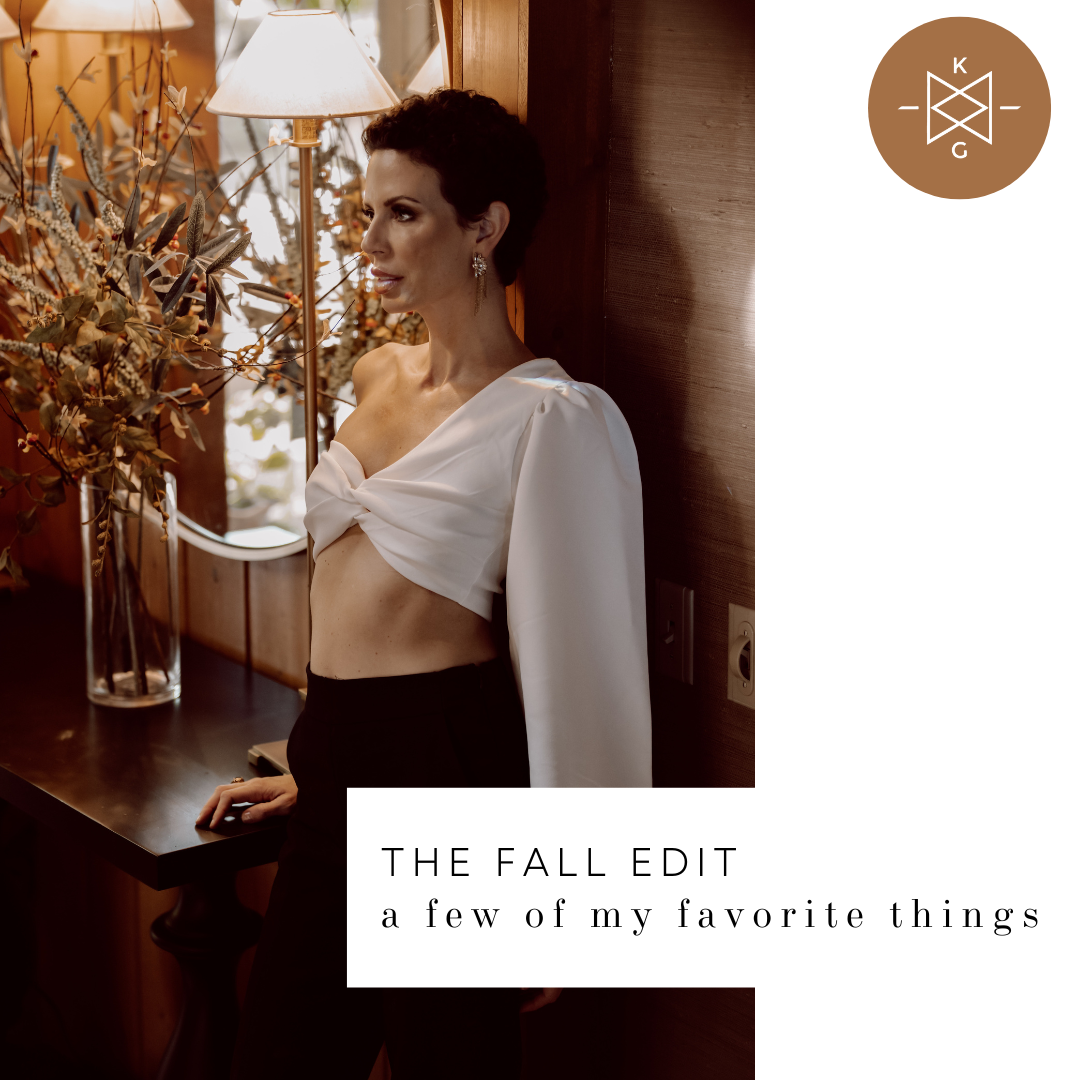
The Fall Edit: 2022
“Life starts all over again when it gets crisp in the fall.”
-F. Scott Fitzgerald
Fall is undoubtedly my favorite season. I feel a bit like Mr. Fitzgerald in that life seems to offer a second, and equally romantic, Spring, or new beginning when early October rolls around. Yet I’m also well acquainted with the struggles and temptations that come along with the changing seasons. The days get shorter, schedules mount up, self-care tends to wane, and I often feel a dank, subtle chill of loneliness sneak in.
Have you struggled much with seasonal depression?
I have…big time. That said, I’ve learned the hard way how vital it is to intentionally manage expectations and routines in order to stay connected to daily hope and healing. In light of this, I like to send out a Fall Edition of sorts—full of new ideas and opportunities to stay on top of our self-care game as we head into the coming months. If you follow fashion, it’s a bit like that thick, bounding, September Vogue edition boasting fall’s most delicious offerings. Pure magic.
This year, I’m more excited than ever to explore some new opportunities to connect to yourself and your community in life-giving ways.
All too often we’re tempted into autopilot—that sleepy trance of contained chaos—and end up just going through the motions. I don’t know about you, but I want to feel alive and awake in my experience this fall, savoring each moment like a gift—or that inaugural pumpkin spice latte.
Here are a few ideas to support you in this pursuit. I think you’ll find something you can enjoy despite the hectic demands of the season.
1. Virtual Group Enneagram Coaching: I’m thrilled to get back into the classroom, so to speak, this fall as I am now offering Group Enneagram Coaching from the comfort of your own laptop. The Practice is a self-development toolkit that combines practical ways to use the Enneagram, mindfulness, writing, and yoga in your daily experience in order to truly thrive and create the optimal life and relationships you desire. I created this self-care tool kit for clients who needed an extra nudge in their work outside of therapy. The constant drone I’d hear in my work with clients is simple: I need tools! So I developed the Practice to serve as a therapeutic tool kit combining meditation, writing, yoga, and of course, the enneagram, to support you in your ongoing self-development work. Sign up today and be a part of this powerful enneagram community.
2. Infrared Sauna: Need a detoxification boost? I sure did after going through chemotherapy last year for breast cancer. I decided to do everything in my power in order to support the highest immunity possible. I joined Pure Sweat Sauna Studio. Pure Sweat Sauna Studio is a space for wellness, rooted in community and connection, offering state-of-the-art, full spectrum, infrared saunas.
Acclaimed by the world’s leading health experts, elite athletes, and people just like you, Infrared Saunas deliver an abundance of clinically tested and research-based health and healing benefits, including detoxification, pain relief, weight loss, reduced inflammation, and deep, mental + physical relaxation.
3. Self-Care Workshop: When it comes to self care, you need a plan.
This weekend workshop will help you create a self care plan that gets you where you want to be. Join Ally Fallon, Koula Callahan, and myself, FEBRUARY 25, 2023 in Nashville, TN for a restorative and inspiring day you won’t forget!
Do you feel like you’re just ‘winging it’ when it comes to self care? Honestly — I get it. It’s hard to know what to spend your time on and what will actually contribute to your personal growth.
But self care doesn’t have to be complicated. You don’t have to guess anymore.
The Self-Care Workshop will help you create a simple self-care plan you can use daily to create lasting, positive change in your life. With a daily self-care routine you can practice on your own, you’ll gain clarity in your life and pave the path towards growth.
It’s simpler (and cheaper!) than you think.
Deepen your self-awareness with the EnneagramUnderstand why you think, feel and act the way you doDevelop healthier relationships with yourself and othersReduce anxiety and improve your mood
Don’t leave your self care up to chance. Come learn how to nurture yourself in a way that creates positive change in your life. Stay tuned for registration details coming soon!
You deserve this.
4. Breathwork: Breathwork is an active meditation technique that facilitates powerful emotional+energetic release. It can change emotional default settings, lifetime patterns of depression, anxiety and addiction, connect you to your intuition, and open your heart to increased gratitude and self-love. It is an efficient and effective way to emotionally detox. We receive 90% of our daily energy from breath alone and 70% of our bodily toxins are meant to be discharged through breath. What are the benefits? Release tension and everyday stress that makes you feel anxious, burned out, and overwhelmed.
Creates a renewed sense of vitality
Supports healing on all levels—physical, emotional, mental, and spiritual
Brings balance to your life, allowing you to tap into your inner peace and joy
As the energetic blockages are cleared, you are able to manifest what you want in your life effortlessly
Leaves you with a deeply relaxed and calm state of being
Breathwork engages the nervous system to release tension and distress that negative thoughts and traumas cause in the body. Over time, healthier new neural pathways are developed and the nervous system is re-calibrated to bring optimal well-being.
For more info or to book a Breathwork session, contact the lovely Sarah Richey and take your wellness journey to a whole new realm.
5. Holiday Meditation Challenge: This Holiday season starting in November, I’m inviting you into an eight-week meditation challenge. You’ll receive a (free!) meditation each week with a specific grounding focus. For example, gratitude, self-compassion, presence, creativity, expectations, rest, etc. Meditation is an incredible way to deepen self-awareness, foster a sense of calm, as well as build out resilience in the midst of chaos. Plus, there will be a fun surprise give-a-way at the end of the year you WON’T want to miss!! Follow me on Instagram at @katiegustafson.co to join the party. :)
That’s a wrap! I can’t wait to hear how you’re taking care of you this fall…and hopefully see you at the Practice or in early 2023 for the Self-Care Workshop!
5 Things to Consider when Seeking an Enneagram-informed Therapist
“I believe that a different therapy must be constructed for each patient because each has a unique story.”
– Irvin D. Yalom
Finding a therapist is tricky. Or it can be, rather. If the last few years has given us a gift, it has been the normalization and heightened conversation around mental health wrapped up in one whacky bow. Sure, physical health took center stage in every news channel, commercial, blog post, and email. Yet I’ve been grateful for the inextricable link those sources have made between our bodies and emotions.
I’ve also been pleasantly surprised by the overwhelming number of online inquiries I’ve gotten seeking out therapists who use the Enneagram in their work with clients. As someone who knew about the Enneagram before I went to grad school to become a therapist, I’m passionate about honoring the system—using it with the care and respect with which it was meant to be handled.
In my mind, it is the most powerful spiritual and psychological tool we have access to. To reduce it to a personality test that stays on the surface of type is such a shame! It’s like ordering chicken tenders to-go at a 5-star Michelin restaurant.
In light of this, I wanted to put a quick little cheat sheet together. Something you can tuck away in your back pocket if you think you might be in the market for a therapist. Here are my top 5 traits:
Holding Space: Whereas formal Enneagram training and certifications are ideal, I believe having a therapist who is expert in holding space for you and your story is more important than touting a ton of knowledge on the topic. After all, that is hopefully what we will get better and better at while using the Enneagram: creating more space to observe ourselves and surroundings so we can respond rather than react. The best therapists are the best space holders.
Type Structure: Find someone who understands and appreciates type structure, or the deeper parts of what it means to be your type, rather than someone who stays on the surface of personality traits. The Enneagram is all about the deeper motivation rather than mere behaviors and tendencies. Transformation comes when we seek healing and change from the root.
Somatic: The Enneagram is a holistic program: Mind-Body-Heart. It’s one of the reasons I love it so much. Each type has a somatic profile that is so important to the makeup of type structure. I believe having a therapist that really gets the importance of somatic work within the Enneagram construct is amazing and worth searching for. The body is a storehouse of information as it pertains to our healing and self-understanding.
Contemplative practice: Much of Enneagram application is built on contemplative practice. Not only is it key to find someone who can support you in building this out through meditation, yoga, or other forms of mindfulness, look for a therapist who has a strong practice of their own.
Narrative: Bringing our personal narratives into any type of psychotherapy is necessary. Finding someone who appreciates type through a narrative lens is so powerful as well. We understand type in order to identify the parts of our story that are stuck and need editing. I believe we are all constantly writing and rewriting our stories. The Enneagram undoubtedly supports this process.
Alright friends! I hope this was helpful. If you get stuck along the way, you know where to find me!

Extreme Much? Here's another way...
Our Western dualistic minds do not process paradoxes very well. Without a contemplative mind, we do not know how to hold creative tensions. We are better at rushing to judgment and demanding a complete resolution to things before we have learned what they have to teach us.
― Richard Rohr

I remember sitting in my therapist’s office several years ago. Probably twelve. Gail was everything a brilliant therapist is in my mind: accepting, compassionate, wise, firm, seasoned by her own broken story, and the kind of listener that makes you feel like you’re the only soul on the planet.
I was in the chapter of my life I refer to as the “falling” stage. Everything around me seemed to be crumbling and my only job was to let it do so against every ounce of my will. She held the sacred space for that painful season to unfold. At every break, she simply wanted to better understand me, not try and fix me. Gail saw me.
Have you ever been in that frustrating place where the best and safest thing to do is NOT break the fall? Just surrender? Just like with surfing or skydiving, the safest way to fall is to let go and lean into the plummet.
Resisting the challenge with tension, grit, and that secret stash of Xanax bars you snaked from your mama’s medicine cabinet aren’t included.
Gail patiently taught me how to fall, over time. Something she said to me one day, in the vortex of my despair was this: “Katie, it doesn’t have to look a certain way. You get to choose.”
This stuck with me perhaps more than anything she ever said. Funny how that works isn’t it? We remember much more poignantly how people make us feel, not necessarily what they say. However, these are some of the few words still glued on.
Much of my struggle was existing in a world of extremes, all-or-nothing thinking—you know— either-or—black or white. Either I would be alone and depressed my whole life with little hope for anything or I’d be Miss Perfect: married with kids, a clear cut path forward, an enviable career, oh, and liked by all.
Looking back, I’m so grateful that buttoned up idea of success stayed just that, an idea.
Falling for me meant moving from this dualistic, binary brand of extremes and living into the open relief that life, in fact, didn’t have to look a certain way. It could be the messy middle, or, the both-and.
I could feel sharp depression and understand hope was available. I could feel lonely, longing for relationship and community and know it very well may look different in several weeks time. I could long for certainty and lean into the unknown. Richard Rohr calls it “holding creative tensions.”
Holding the tension between a longing and its unmet fulfillment is indeed a creative, tight space. It looks a whole lot like faith.
Does your extreme thinking feel exhausting? Do you find yourself awfulizing situations by projecting worst-case scenarios onto perfectly neutral possibilities? If so, I feel you. It’s a relentless crapshoot.
I believe that old way of ‘either-or’ is how we learned to make sense of the world growing up as kids. However, as adults that rigid mindset needs some revising. What if we could practice a softer, more curious approach?
Let’s lean into the contemplative, creative space that invites more possibility, yes?

Detaching in Love
“Detachment is based on the premises that each person is responsible for himself, that we can’t solve problems that aren’t ours to solve, and that worrying doesn’t help.”
― Melody Beattie
Co-dependency. We’ve all slung that word around a time or two. Lord knows it gets a really bad wrap, too. Truth be told, I struggle with that word—and overall label. Why? Because I believe humans, by nature, are needy creatures. Straight out of the womb, we wouldn’t make it very long without the nourishment and care of parents, guardians, and loving community. I don’t think this is an accident. I think it’s a beautiful model for the primal humility baked into our human expression. It’s the purest version of vulnerability in my mind. Survival requires connectedness in relationship.
And yet growth, maturity, and adulthood require a measure of responsibility and individuation in order to balance this developmental process, continue parenting ourselves, and truly thrive. This process is based on loving trust built with ourselves and others.
Sounds so easy, right?
In my experience, not so much. It’s a bit more complicated than a college degree, a flow chart, and a driver’s license. This newfound responsibility of adulting, or freedom in essence, comes with all sorts of complicated emotions. At the center of them is a deep, loud longing for acceptance—for love.
Many of us learned early on exactly how to get this need for acceptance met by shape-shifting in order to please others. If I do or say what makes you feel good, this in turn will give me entrance into that grand room of belonging. Call it people-pleasing, call it co-dependency, call it whatever you want. At its core, it’s really just dishonesty and manipulation.
I suppose here’s where I draw the line: we all have the God-given birthright to have needs and wants and get them met by asking for help. When I feel lonely, I need to reach out and connect with safe people. Again, being needy is a human thing not a weak thing. However, when our internal well-being and sense of belonging is propped up by external circumstances, especially the agenda or approval of others, that line gets blurred real fast.
When I’m feeling insecure, I tend to slip into this brand of co-dependency. For example, I’ll do unnecessary damage control after having a difficult conversation or interaction with a friend. Or there’s the classic over-explaining after I’ve set a healthy boundary for myself in order to soften the blow or bypass any possible friction.
We tend to mistake this controlling behavior for care and kindness. No dice. Why? Because it’s based in fear and scarcity. Worrying, manipulating, and controlling behavior only hijacks another’s process, and in doing so, steals their opportunity for emotional exploration and growth. Not only that, we basically assume a God-role. We buy into thinking it’s all up to me to move the the needle forward. Last time I checked, God doesn’t need my expertise, well-intentioned as it is.
As we grow in self-awareness and compassion, letting go and detaching in love is crucial. Though it seems counterintuitive and cold, detachment is a deeply loving practice.
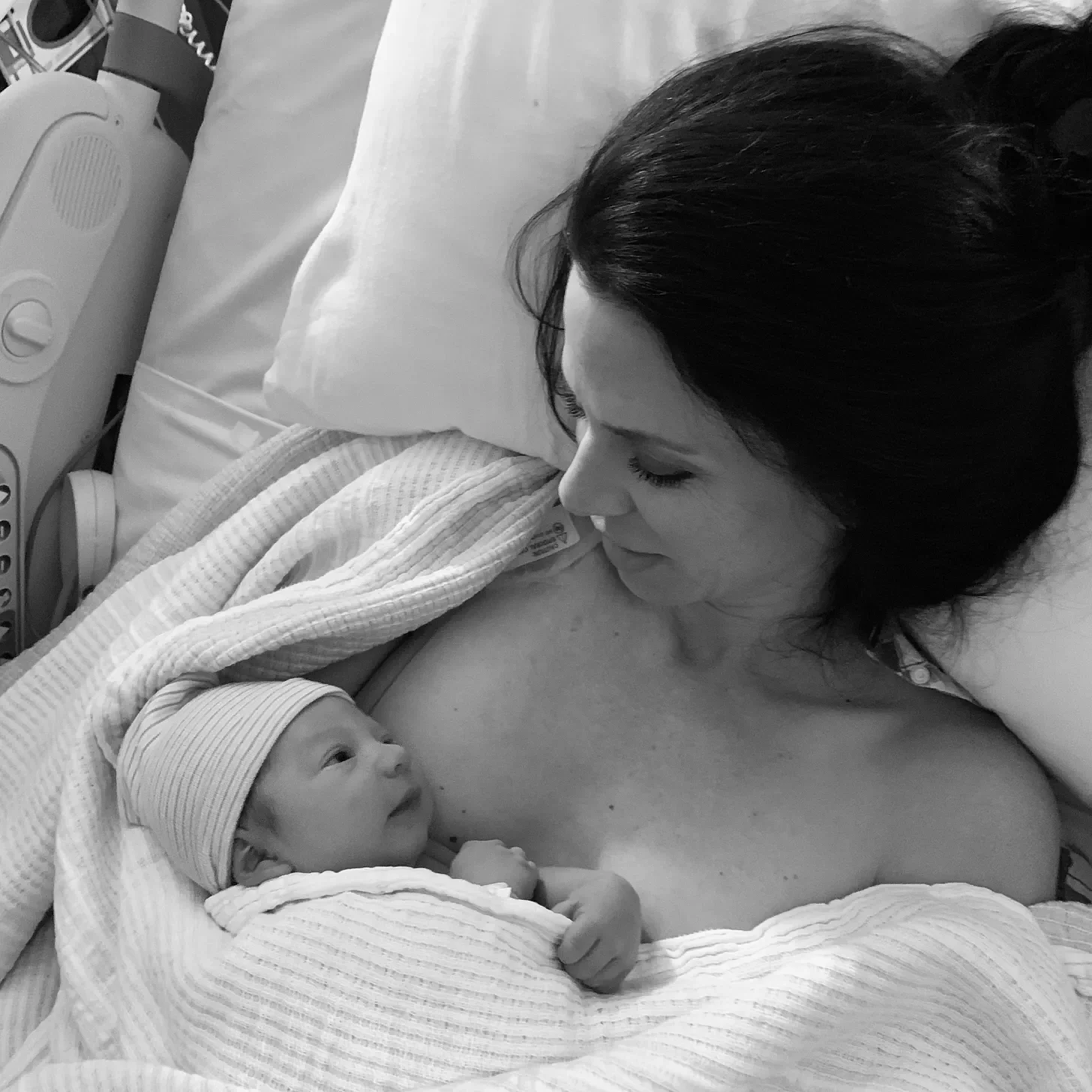
Thoughts on motherhood, breast cancer, and what attachment theory and the Enneagram taught me about being loved