

The Blog
Recently Featured


All Blogs
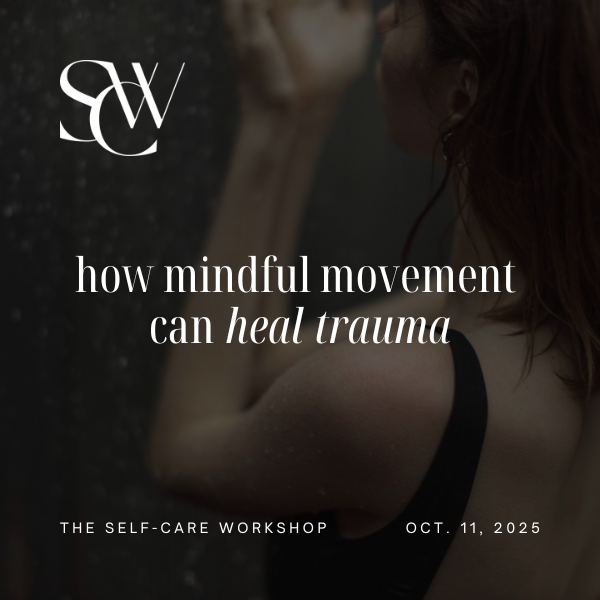









I Wish I Had Known This at Twenty-Five
“Where we think we need more self-discipline, we usually need more self-love.”
-Tara Mohr

What piece of advice would you give your 25-year-old self? Sure, she may not have listened, but like any loving parent, you do what you can to steer your children in the right direction. That head-strong seeker was only doing her best. And yet today, you have matured into the space of a bit more perspective and balance. You have a lot to offer your younger, stubborn self.
Me? I would have a spirited come-to-Jesus about how to relax into the unknown one brave and wobbly step at a time. I’d tell her that having all the answers isn’t half as important as asking honest questions.
Specifically, I’d love for her to understand what it means to have a growth mindset as opposed to a fixed one. Less either-or and more both-and.
As a recovering perfectionist, I’ve been all too familiar with what it means to have a fixed mindset. Let me explain. A fixed mindset is a way of thinking that is rigid and narrow. It’s all about pass or fail, win or lose, good or bad, black and white. It’s rooted in judgment rather than curiosity. It’s refusing to take myself on a brisk 20-minute walk because I didn’t have enough time to do my hour-plus high-intensity workout.
Here’s another example, you have your 6-month review at work. Your boss gives you high marks in several areas but points out one specific necessary improvement in your performance on a big project.
A fixed mindset self-criticizes, labeling your performance as a failure. It disregards the praise and zeros in on the area of improvement.
A growth mindset celebrates positive feedback and understands the value of constructive criticism for future success. It sees life as a slew of peaks and valleys all leading to personal evolution and expansion.
A growth mindset is the Petrie dish that breeds resilience. Whereas a fixed approach creates rigidity, closing us off from abundance and opportunity.
This isn’t about glossing over reality. It’s about softening your approach to the inevitable ebbs and flow of life.
Spend some time this week pondering this:
What area of your life could you stand to soften into?
Is it your relationship with food, your body, parenting, or work?
Is it your self-care?
Whatever it may be, I believe a great way to find out is to pay attention to our self-talk, that often nagging inner critic that rages on, involuntarily.
Write it all down.
I love what Tara Mohr says, “Where we think we need more self-discipline, we usually need more self-love.”
Love & Gratiitude,
Katie
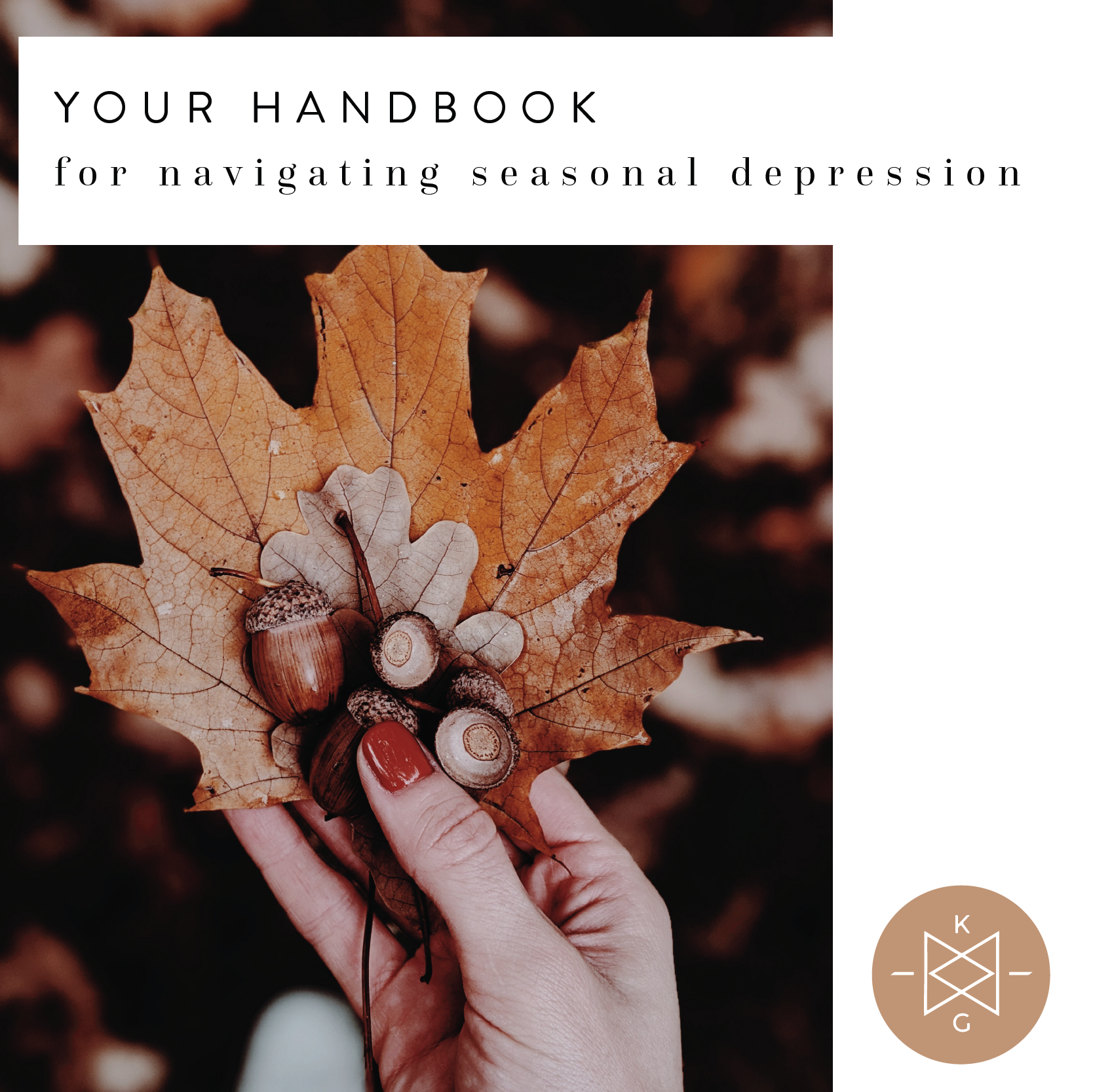
Your Handbook for Navigating Seasonal Depression
“It is during our darkest moments that we must focus to see the light.”
-Aristotle Onassis
For some, it’s the most wonderful time of the year. We’ve been patiently waiting on the edge of our seats since Home Depot rolled out their Halloween decorations back mid-August. The anticipation of fall weather, the slew of heavy-hitting holidays, the countless excuses to consume creative forms of sugary carbs at every turn, the invasion of busyness, what have you.
For others of us, this season is painfully sad—even frightful. The days get shorter, precious sunlight is snuffed out hours earlier, physical energy is drained, and loneliness rolls in like dark, bulbous clouds before a hurricane.
I have definitely experienced more of the latter. Seasonal depression is slang for Seasonal Affective Disorder (SAD…aptly). It’s not “depression light” and it shouldn’t be dumbed down to the “winter blues” either. It is a subtype or specific kind of major depression that is symptomatic with the changing seasons, especially fall and winter months.
There is so much pressure to be “merry and bright” leading up to the holidays, which can really leave those of us seasonally-challenged feeling misunderstood, if not pissed off.
In my experience, I remember years when all I could think about was surviving the weeks and months of cold and dark—Thanksgiving and Christmas were simply another reminder that I felt so alone and afraid. Afraid of what? Perhaps afraid that there was something wrong with me or it would always be this way. Or maybe I was scared of being untethered and insecure in life. Whatever the reason, I just wanted to get through it all and land safely on the other side when the days would contract even just a minute or two each day.
I’ve been pretty open about my experience with depression, so you might guess that those of us who deal with major depression also deal with SAD. This can be true but doesn’t have to be. Similar to Postpartum depression, existing depression doesn’t always set the stage. Oftentimes, they do go hand-in-hand.
It was always so helpful for me to know that I wasn’t alone in my struggle with SAD, or ongoing depression for that matter. That said, I want to open up the dialog here today and cut through all the fluffy expectations we fall prey to around this time of year as well as drop some helpful ways to readjust and navigate the season a bit differently.
If you experience a noticeable shift in mood, physical activity, patience for people, energy level, sleep, and desire to participate...keep reading. If you are a human being with a heartbeat...keep reading. I have a hunch someone in your life needs your grace and support because they suffer from SAD.
There are obvious and not so obvious reasons for SAD. The ones we all agree on are simple though: with less exposure to sunlight during the fall and winter months, our biological clock can often get pummeled, leaving depleted levels of serotonin (a brain chemical that helps govern and boost our mood) and melatonin...that gorgeous stuff of sleep.
I’m hugely light-sensitive. Visualize that bratty kid who screams at the top of her lungs when she stubs her big toe. Yep, that’s about my pain tolerance to diminishing light. Even walking into a dark house at the end of the day can viscerally affect my mood. Windows are also my best friend. I’m a total extrovert when it comes to windows—the more the merrier.
So, when the world goes dark around 4:30 pm, you better believe I’ve learned to emotionally rearrange my experience after 41 years.
Here are some helpful tools I’ve come to rely on in the dim days ahead.
Routine
Structure is the sensitive soul’s best friend. Oh, how I’ve come to love structure. For me, this looks like intentionally planning out my days from week to week. In the fall and winter months, it looks like starting a bit earlier so I can enjoy more sunlight, even just 30 minutes.
When emotions whip us around, taking their throne in the driver seat of life, it can be so easy to slip into the victim mentality, feeling powerless. Having a set structure, or routine for our days helps us reclaim the steering wheel.
My morning ritual is everything to me. It allows me time and space to practice the things that ground me like meditation, writing and reading. In the coming days and months, experiment by putting some new structures into place to facilitate a more ordered interior landscape.
Exercise
Exercise has officially become my antidepressant of choice throughout my lifetime. Hear me out, antidepressants can be a very helpful piece in the emotional puzzle when necessary, they most definitely have for me in dark places along the way. However, exercise is one of the most effective and proven ways there is of improving overall mood and stress levels. Getting a good sweat also helps us sleep more soundly.
It’s tempting to let workouts trail off around the holidays, but I say we fight for them. Make it a daily routine, like brushing your teeth. We owe it to ourselves. Procrastinate that leftover apple crumb cake, it will still be there on the other side.
Avoid Numbing
I get it. When depression sneaks in, we often lose a desire for the things we typically love to do. We want to isolate, sleep, numb. It’s so much easier, right?
Couple this with the fact that these coming months are like an open invitation to indulge whether that be with food, booze, online shopping, social media, you name it. There may be a temporary relief to our pain, however, we're also numbing positive emotions as well. Happiness, excitement, and gratitude are harder to come by and we get thrown right back into the tangled thicket of depression once again.
Support
So rather than numb, reach out. This time of year can indeed be a wonderful time of year when we reach out for the support we need. Identify “safe people” who know and accept you where you are. Make a list of two or three and reach out to them and let them know your struggle with SAD.
If you don’t have said 2-3 people, a good place to start is therapy. I can count several times I relied heavily on my therapist for support during these crucial months when all of the “stuff” listed above seemed impossible. There is absolutely no shame in seeking professional help. It is a courageous act of self-compassion.
I’m here for you on this journey. Again, you’re not alone. This is all part of learning to trust the process, even when hope feels distant and the light grows dim. There is a bold light within you, this may be the perfect opportunity to find its glow.
Love & Grace,
Katie
Resilience: The Ultimate Life Hack
“Rock bottom became the solid foundation on which I rebuilt my life.”
-J.K. Rowling
Do you ever get discouraged because you feel like you can’t seem to get unstuck? Maybe you’ve tried therapy or read some self-help books and they bring relief temporarily but leave you wanting in the long run?
Or, perhaps you make progress along the way yet inevitably find yourself bumping up against the same flipping roadblocks, over and over.
If your hand is raised, you’re in good company. I’m here for it too.
I’m reminded that we aren’t here to finally get it right—to one day fully “arrive” and have it all figured out. If that is your goal, I hate to break it to you, you’re hosed.
As humans, we have something undeniable in common. We are imperfect—flawed at best.
I don’t believe we ever fully arrive. I believe we get good at resilience.
Resilience is simply the ability to recover (quickly) from difficulty.
The problem is when we get so thrown off our game, we stay down too long, and in doing so, become calloused or defined by our struggle.
So how do we become more resilient? If this is the secret to moving through life with more ease and confidence, how do we condition ourselves to get back up after the fall, no matter how many times we stumble?
I believe we must reframe failure. Instead of seeing it as an ending, we must see it as an opening. Instead of seeing it as a personal blow, we must see it as a wise teacher who comes around from time to time. She has way more to say than her distant cousin, Success.
I know, Success is far prettier, but Failure is more than meets the eye. She has a depth and insight about her that comes from the humility only difficulty can form.
So next time you feel stuck, broken, or discouraged, I pray you won’t lose heart. Instead, perhaps the invitation to sit with yourself in the space—to hold yourself in kindness—and to speak to yourself with patience, will become the strongest parts of you. Perhaps they will be the conditioning that over time, just like a muscle—grows bigger and more pronounced.
Perhaps the goal will not become perfection…but excellence tethered in compassionate resilience.
Love & Grace,
Katie
5 Things to Consider When Seeking An Enneagram Therapist
“Your Enneagram type is both your opening to love and your obstacle to love. It is so much more than a type or a typology system. It’s a tool for spiritual conversion.”
-Leslie Hershberger
Finding a therapist is tricky. Or, rather, it can be. If 2020 has given us a gift, it has been the normalization and heightened conversation around mental health wrapped up in one whacky bow. Sure, physical health has been at the forefront of every news channel, commercial, blog post, and email. I’ve been grateful for the inextricable link those sources have made between our bodies and emotions.
I’ve also been pleasantly surprised by the overwhelming number of online inquiries I’ve received from those seeking out therapists who use the Enneagram in their work with clients. As someone who knew about the Enneagram before I went to grad school to become a therapist, I’m passionate about honoring the system—using it with the care and respect with which it was meant to be handled. In my mind, it is the most powerful spiritual and psychological tool we have access to. To reduce it to a personality test that stays on the surface of type is such a shame! It’s like ordering chicken tenders to-go at a 5-star Michelin restaurant.
In light of this, I wanted to put a quick little cheat sheet together. Something you can tuck away in your back pocket if you think you might be in the market for a therapist. With the holidays approaching and our sideways world kicking up all kinds of emotions, it might just come in handy. Here are my top 5 tips for finding an Enneagram therapist:
Holding Space: Whereas formal Enneagram training and certifications are ideal, I believe having a therapist who is an expert in holding space for you and your story is more important than touting a ton of knowledge on the topic. After all, that is hopefully what we will get better and better at while using the Enneagram: creating more space to observe ourselves and surroundings so we can respond rather than react. The best therapists are the best space holders.
Type Structure: Find someone who understands and appreciates type structure, or the deeper parts of what it means to be your type, rather than someone who stays on the surface of personality traits. The Enneagram is all about the deeper motivation rather than mere behaviors and tendencies. Transformation comes when we seek healing and change from the root.
Somatic: The Enneagram is a holistic program covering Mind-Body-Heart. It’s one of the reasons I love it so much. Each type has a somatic profile that is so important to the makeup of type structure. I believe having a therapist that really gets the importance of somatic work within the Enneagram construct is amazing and worth searching for. The body is a storehouse of information as it pertains to our healing and self-understanding.
Contemplative practice: Much of Enneagram application is built on contemplative practice. Not only is it key to find someone who can support you in building this out through meditation, yoga, or other forms of mindfulness, look for a therapist who has a strong practice of their own.
Narrative: Bringing our personal narratives into any type of psychotherapy is necessary. Finding someone who appreciates type through a narrative lens is so powerful as well. We understand type in order to identify the parts of our story that are stuck and need editing. I believe we are all constantly writing and re-writing our stories. The Enneagram undoubtedly supports this process.
Alright friends! I hope this was helpful. If you get stuck along the way, you know where to find me!
Love & Grace,
Katie

Why Comparative Suffering Doesn't Work
“When we deny our story, it defines us. When we own the story, we can write a brave new ending.”
-Brené Brown
How are you doing? The operative word here is “you.” Not your neighbor, not your grandmother, not your best friend who’s a nurse working on the front lines down at the hospital. I want to know about you.
Oh, and there’s another caveat. I don’t want you to qualify it with gratitude or downplay it with shame. That’s flat out exhausting.
I’m talking about comparative suffering here, a phrase Brené Brown made uber popular when she poignantly talked about it on her podcast, Unlocking Us, earlier this year. By the way, if you haven’t dipped into that program, you’re missing out. It’s so powerful.
Yet, I want to share a bit of my experience with comparative suffering from a psychotherapist’s perspective as opposed to a researcher’s. It’s honestly, very simply...
A crapshoot.
No really, it might be the top broken record of 2020. “My pain is a 5, her pain is a 12. So, mine doesn’t really matter.” The logic is tempting, and yet it’s just flat out problematic.
As a refresher, comparative suffering is basically when you compare or rank your suffering with that of another’s, the other’s typically being more pronounced or overt.
For example, “I really shouldn’t complain. I still have my job, I’m healthy, and have my family here with me. I see so many on the news that are out of work and can’t pay their mortgage. But the truth is I’m lonely and afraid.”
Are you guilty of comparative suffering? (I know I am.)
And yet it doesn’t lessen the blow of suffering for someone else if you and I ignore our story, and the pain we feel, whatever our situation may be. By depriving yourself of acknowledgment and compassion, you’re not helping anyone—period.
In fact, it’s quite the opposite.
When you acknowledge your suffering, name it, and practice self-compassion, you’re processing the reality of your situation which helps you move through it. As you practice this brand of kindness towards yourself, you’re activating more love and energy to focus in the direction of others.
Ignoring your suffering is dangerous territory because, just like a physical wound, if we don’t create an environment for healing, it will only metastasize, and become a much larger problem down the road.
Dr. Brown explains, “there is no shortage of empathy.” It actually grows the more we practice vulnerability by consciously processing our painful emotions. That word is so important—consciously. We do need to practice awareness, maintaining a global outlook, as we grapple with suffering. Perspective is our friend right now. And yet your pain is part of your story. Owning our story as humans gives us agency to write a new ending.
And so, my friend, we absolutely must hold ourselves in love no matter what our circumstance looks like. Yes, our stories look different, and yet pain is a non-negotiable in this life. We can’t opt-out. Let’s commit to honoring and processing the pain of our stories with safe people we trust and maintaining an outward flow of love and empathy to others in need.
It’s that both-and thing again...
Love & Grace,
Katie
Thoughts on motherhood, breast cancer, and what attachment theory and the Enneagram taught me about being loved