
The Blog
Recently Featured
In April, I bombed a keynote—45 minutes late, broken A/V, a room that wanted their drink tickets.
Here's what that failure taught me about participation, discernment, and why every Enneagram type has its own sophisticated reason to wait until it's "ready."

What if becoming someone was never the goal? A therapist and Enneagram facilitator on shedding the personas we mistake for our true selves.
All Blogs
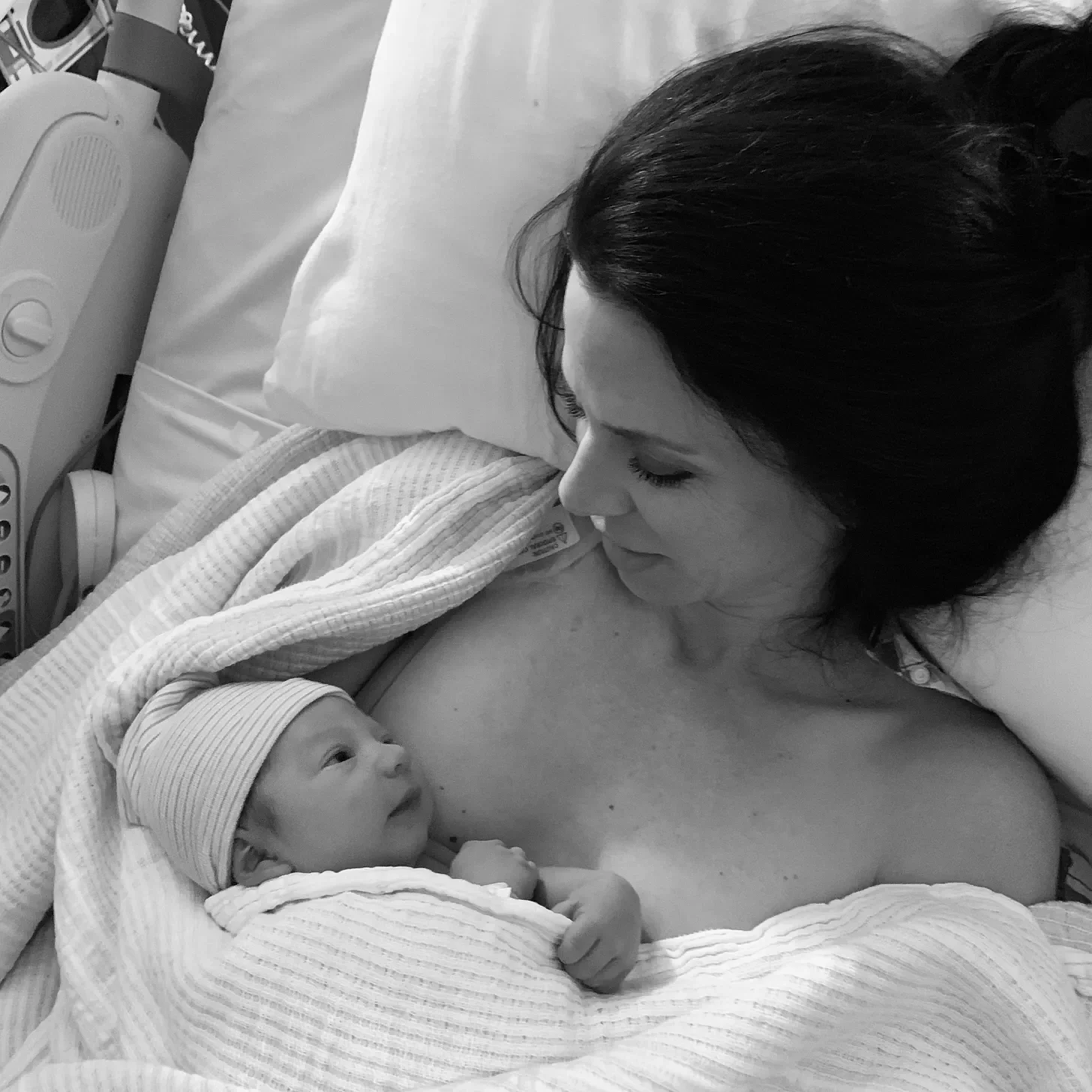
Thoughts on motherhood, breast cancer, and what attachment theory and the Enneagram taught me about being loved
In April, I bombed a keynote—45 minutes late, broken A/V, a room that wanted their drink tickets.
Here's what that failure taught me about participation, discernment, and why every Enneagram type has its own sophisticated reason to wait until it's "ready."
What if becoming someone was never the goal? A therapist and Enneagram facilitator on shedding the personas we mistake for our true selves.
Today you’re in for a treat! I’m bringing my pal Koula Callahan, master yoga instructor and speaker for the Self-Care Workshop, on the blog to share why movement, namely yoga, is incredibly powerful and important for us to practice as we move through our days. If you’ve always wondered what all the fuss is about —and yoga and why is really effective, today is the day—you’re going to get some answers.

Six months before my breast cancer diagnosis, I was quietly falling apart. This is my story and the heart behind why I created the Self Care Workshop.

Discover how each Enneagram type relates to structure—and why the right kind of rhythm can help you thrive. Learn how to create supportive routines without stifling growth.

When we hear the phrase self-care, most of us picture bubble baths, yoga classes, or carving out an hour to finally read that book on our nightstand. And while those things absolutely have their place, if we stop there, we miss the deeper, sustaining work that actually helps us thrive.
What I’ve learned in my own healing and in my work with clients is this: self-care without self-compassion can feel more like another to-do list item when it’s really a relationship to nurture.
There’s a moment, sometimes subtle and sometimes seismic, when you realize you have the chance to begin again. Maybe it’s the first crisp morning after a long summer. Maybe it’s a job change, a new relationship, or even the quiet decision to show up differently in the one you’re already in.
I’ve learned that beginnings—whether chosen or thrust upon us—are vulnerable places. They ask something of us: a willingness to step into what we don’t yet know. And if you’re anything like me, that’s both exciting and a little unnerving.
This is where curiosity comes in.

Are you ready to stop running on empty and start living from a place of wholeness?
Join me, alongside Ally Fallon (best selling author + writing coach) and Koula Callahan (yoga teacher + speaker), for an unforgettable day of enneagram insight, intentional writing, and embodied movement — what I call the trifecta of true self-care.

Somewhere between the smell of freshly sharpened pencils and the first rustle of fall leaves, we’re invited into a familiar rhythm—one that feels both nostalgic and energizing. Whether or not you have a backpack in your life anymore, the back-to-school season has a way of nudging us to recalibrate, recommit, and reset. It’s not just for students. It’s for all of us seeking a deeper sense of alignment and intention.
So, in the spirit of fresh starts and The Back-to-School Edit.

“You can’t stay in your corner of the Forest waiting for others to come to you. You have to go to them sometimes.”

“Almost everything will work again if you unplug it for a few minutes…including you.”
— Anne Lamott


“The way you get meaning into your life is to devote yourself to loving others, devote yourself to your community around you, and devote yourself to creating something that gives you purpose and meaning.”
Mitch Albom


“The Enneagram helps you discover who you were before the world told you who you were supposed to be.”
-Ian Cron

“Distractions are everywhere. Notice what takes your attention, acknowledge it, and then let it go.”
-Andy Puddicombe, Founder of Headspace
Perfectionism is the voice of the oppressor, the enemy of the people. It will keep you cramped and insane your whole life.
-Anne Lamott

“As long as you keep secrets and suppress information, you are fundamentally at war with yourself…The critical issue is allowing yourself to know what you know. That takes an enormous amount of courage.”
Bessel van der Kolk


“Yesterday I was clever, so I wanted to change the world. Today I am wise, so I am changing myself.”
-Rumi

“Where we think we need more self-discipline, we usually need more self-love.”
- Tara Mohr

“The human body is a river of intelligence, energy, and information that is constantly renewing itself in every second of our existence.”
- Deepak Chopra

“When I look back on all these worries, I remember the story of the old man who said on his deathbed that he had had a lot of trouble in his life, most of which had never happened.”
– Winston Churchill

“If we observe ourselves truthfully and non-judgmentally, seeing the mechanisms of our personality in action, we can wake up, and our lives can be a miraculous unfolding of beauty and joy.”
-Richard Rohr

“People will forget what you said, forget what you did, but people will never forget how you made them feel.”
-Maya Angelou
Your Brain on the Enneagram: A Chat with Dr. Jerome Lubbe
“Neuroplasticity tells us that we are capable of change. If we understand the function of the brain, we can improve our way of life.”
-Dr. Jerome Lubbe
I had the pleasure of interviewing Dr. Jerome Lubbe, an innovative thinker, functional neurologist, and author of The Brain-Based Enneagram: You are not a Number, to talk Enneagram and the brain. It was truly fascinating.
The Enneagram stole my heart 17 years ago, but neuroscience and specifically, neuroplasticity came in hot on my radar soon thereafter. It was around then that I started studying trauma and it’s effect on our brains and bodies.
You may be wondering what the heck the brain has to do with the Enneagram. And that would be fair. That’s why I’m excited to unpack it a bit here today.
According to Dr. Jerome:
Neuroscience tells us that our brains are plastic. They can and do change. Brain anatomy reveals that our operating system is composed of three primary components which mirror the structure of the Enneagram--Brain-stem (instinct triad), Right hemisphere (intuition triad), and Left hemisphere (intellect triad). Functional Neurology shows us how to target areas of the brain in order to physically improve the efficiency of the distinct natures of our identity.
The Enneagram integrates seamlessly. It provides language and definition for the process of development. It opens channels for growth by connecting values and expressions to brain function. It offers a guide for increasing physical, mental, and emotional efficiencies by practically implementing effective methods at effective times in effective ways. The Brain-Based EnneagramTM empowers every human being on the planet to engage with the brain, heal and rebuild after trauma, encourage and strengthen efficiencies, and nourish the relational, integrated nature of our whole identity.
Simply stated, understanding how our brains work and develop habits of attention, thought, and emotion over time directly affects our behaviors and the arc of our wellbeing and experienced reality. When you integrate this knowledge of the brain with the effective self-understanding tool of the Enneagram, you are able to understand how you got where you are and can begin putting into practice a new, empowered way forward.
Sure, knowledge is power. However, once we are able to implement tools (the Enneagram) with this knowledge, power translates to growth and transformation.
Something I appreciate about Dr. Jerome’s approach to the Enneagram is his advocacy in our capacity for all nine types. He provides in his extensive research and testing that we can’t be reduced to one number. Instead, we have fluid elements of all nine that ebb and flow with life’s unfolding. This allows for the complexity of the human identity and is a sigh of relief to the boxy, stereotypical reign of type.
As I like to say, we have a dominant type (in my case, a four), yet also have strains of each of the other eight in my Whole Identity Profile, as he has pioneered.
His personal journey, breadth of work, and available resources for us is simply stunning. I hope you’ll check out his book, especially if you’ve experienced frustration around knowing your type!
Thoughts on motherhood, breast cancer, and what attachment theory and the Enneagram taught me about being loved